Sebald Beham, c. 1527
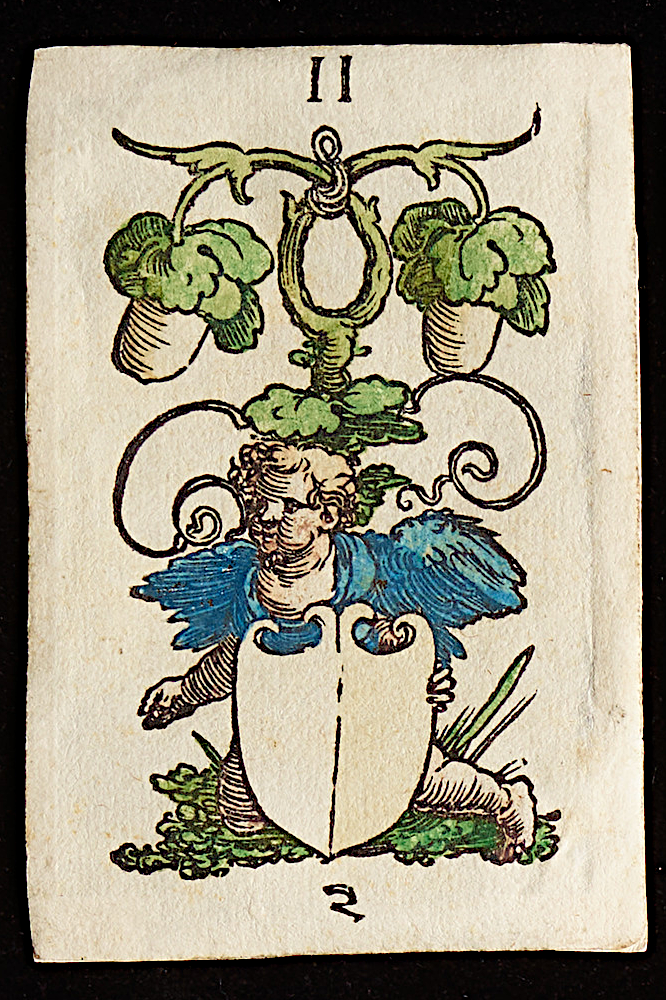
These cards are undated and unattributed except for the initials F. C. Z. and the coat of arms of Nuremberg on the deuce of acorns. The initials are those of Christoph or Franz Christoph Zell, who was active as a publisher from 1527 to 1542. His initials is also on the same card in the pack of Peter Flötner from around 1540. A complete pack is located in the Bodleian library, where the listing speculates that it might be by Jost Amman, and thus possibly from around 1580 which does not fit with this. The entry for fragments of an inferior copy in the British museum is described as being in the manner or style of Sebald Beham. This fits perfectly, as there are striking parallels with Beham’s c. 1523 cards. As Beham left Nuremberg in briefly in 1525 and permanently in 1528, the overlap with the activity of Zell dates the cards to c. 1527.
| Eicheln ❖ Acorns | Sittiche ❖ Parrots | Rosen ❖ Roses | Schellen ❖ Bells | |
|---|---|---|---|---|
| 2/ Daus ❖ 2/ Deuce | 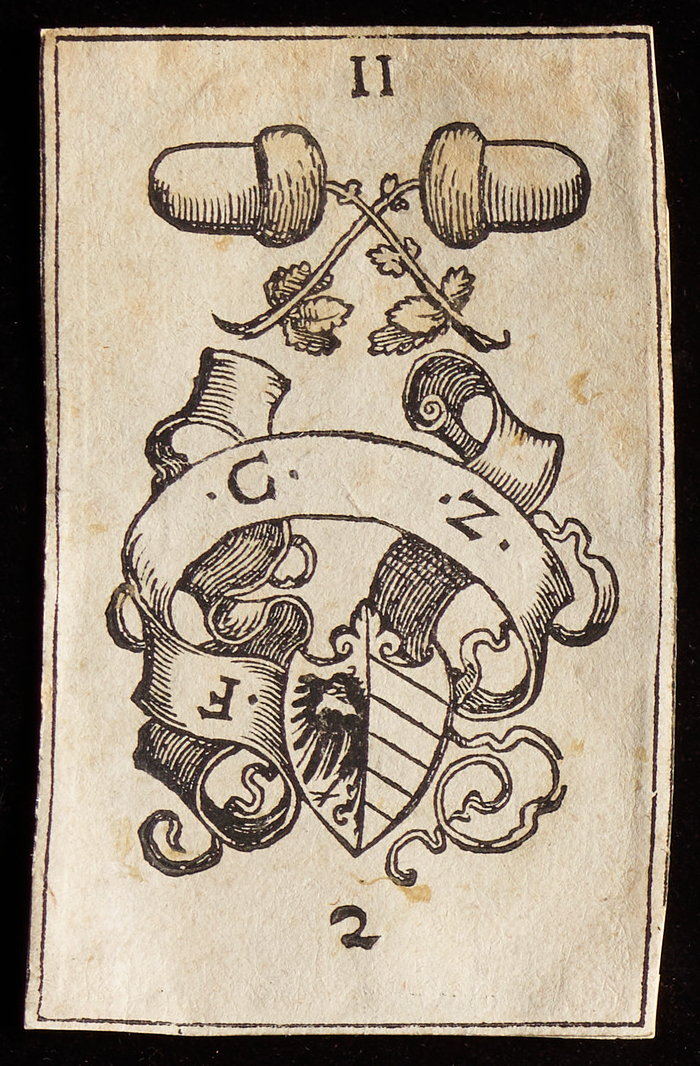 | 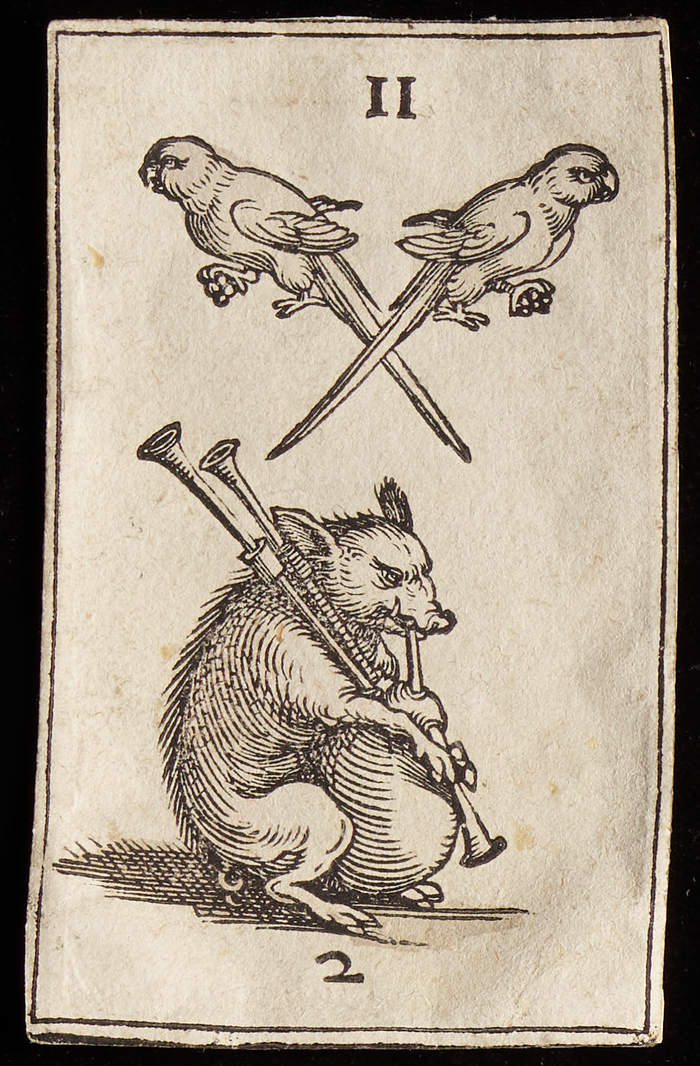 | 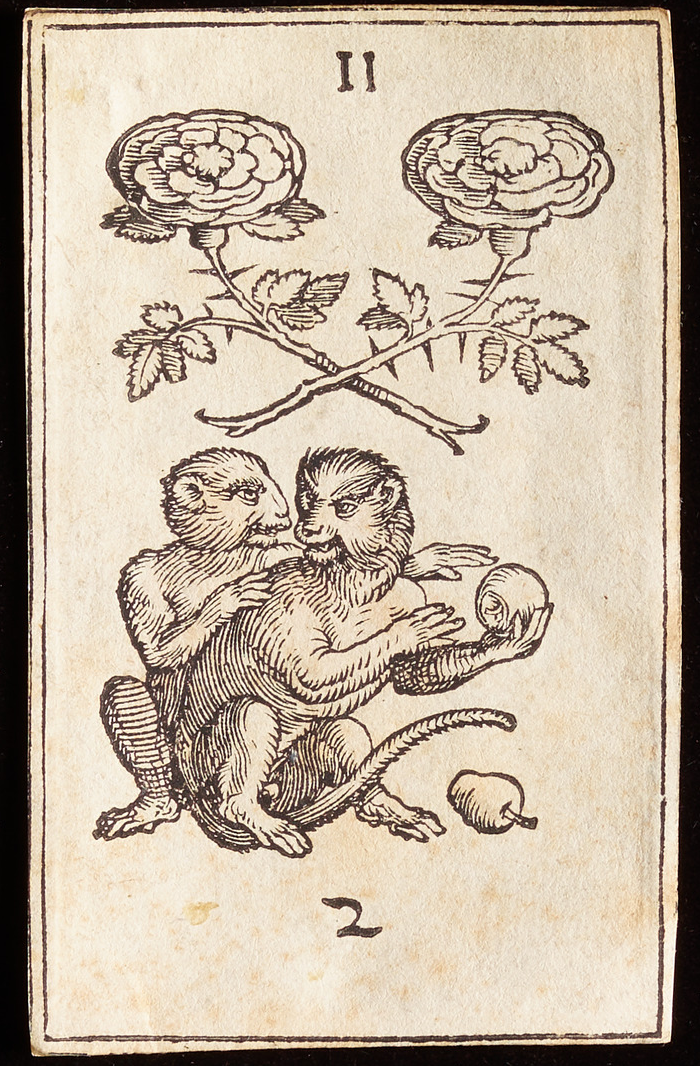 | 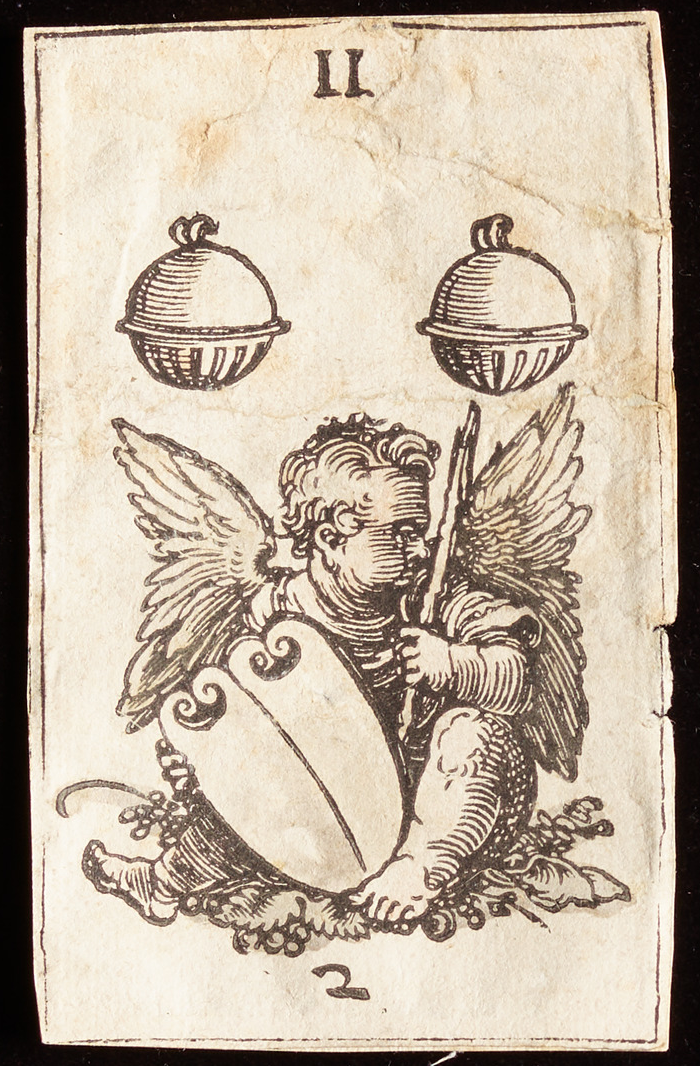 |
| 3 | 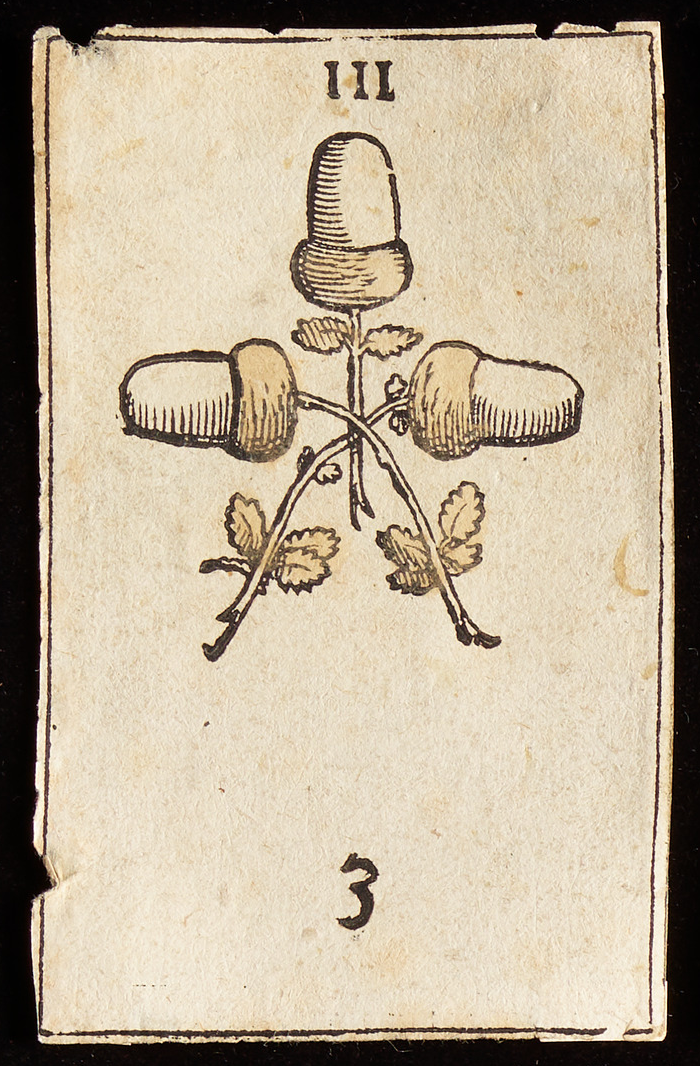 | 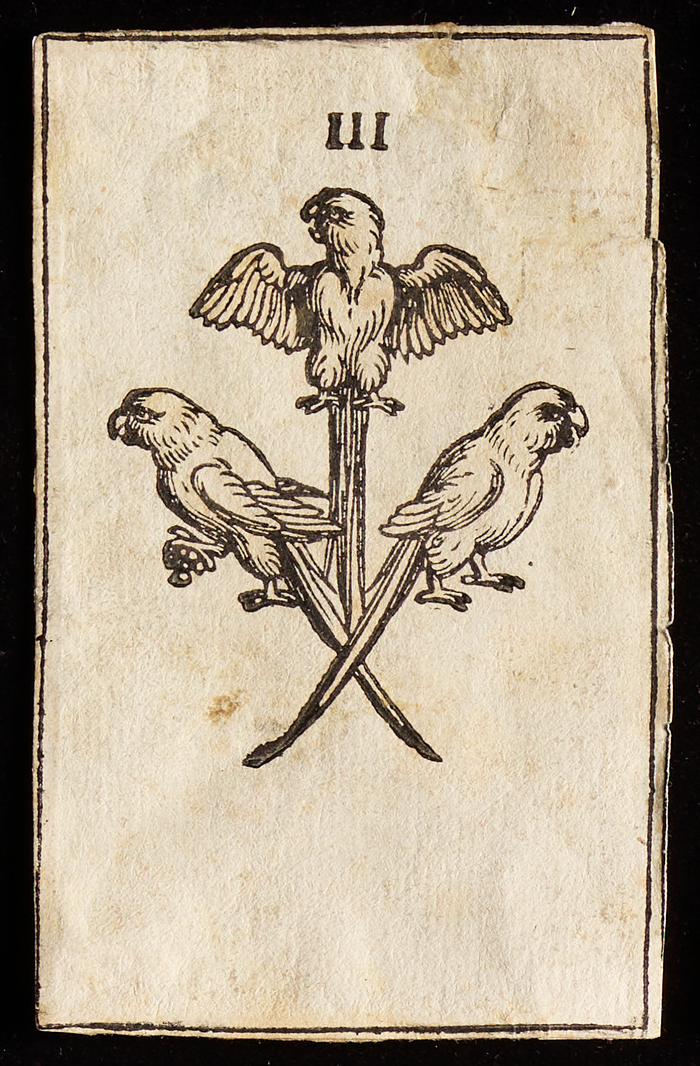 | 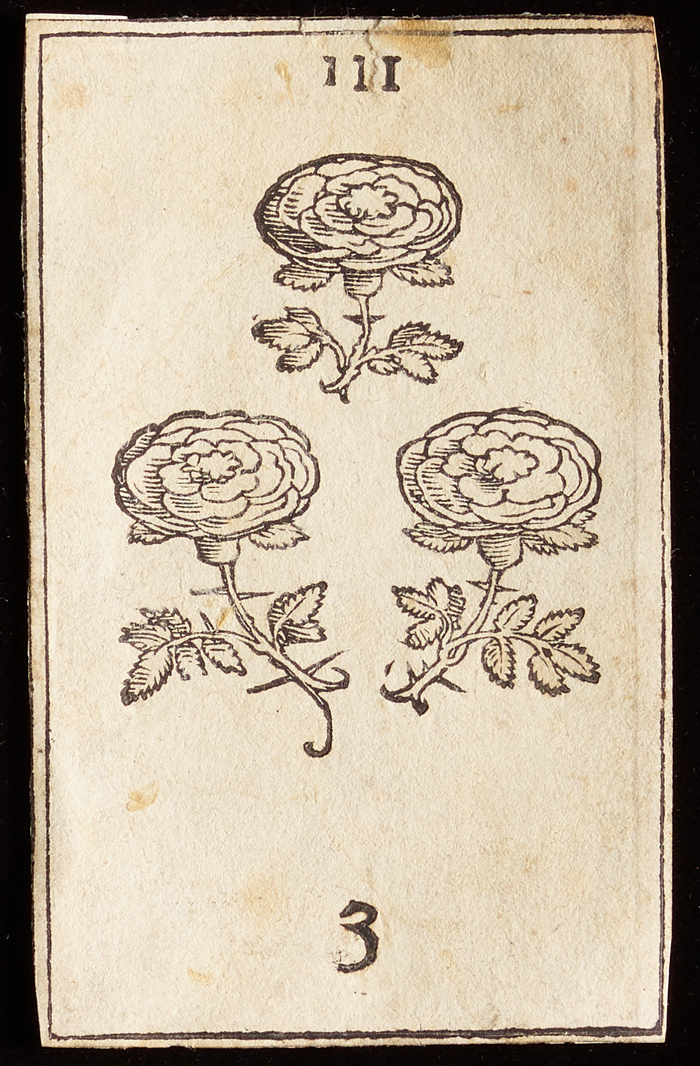 | 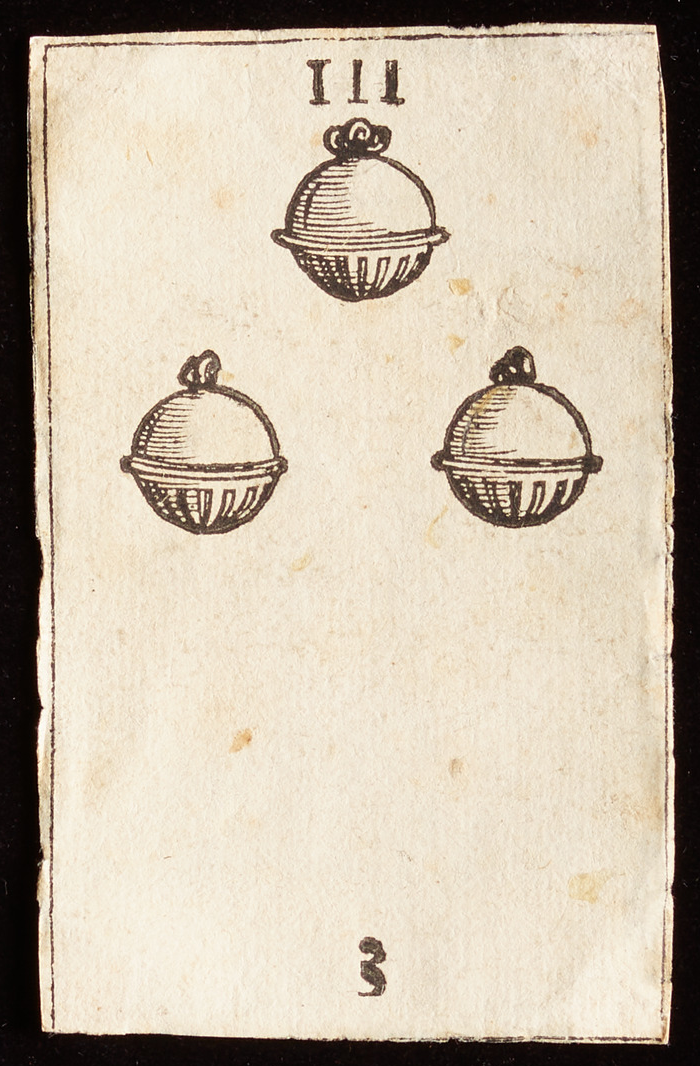 |
| 4 | 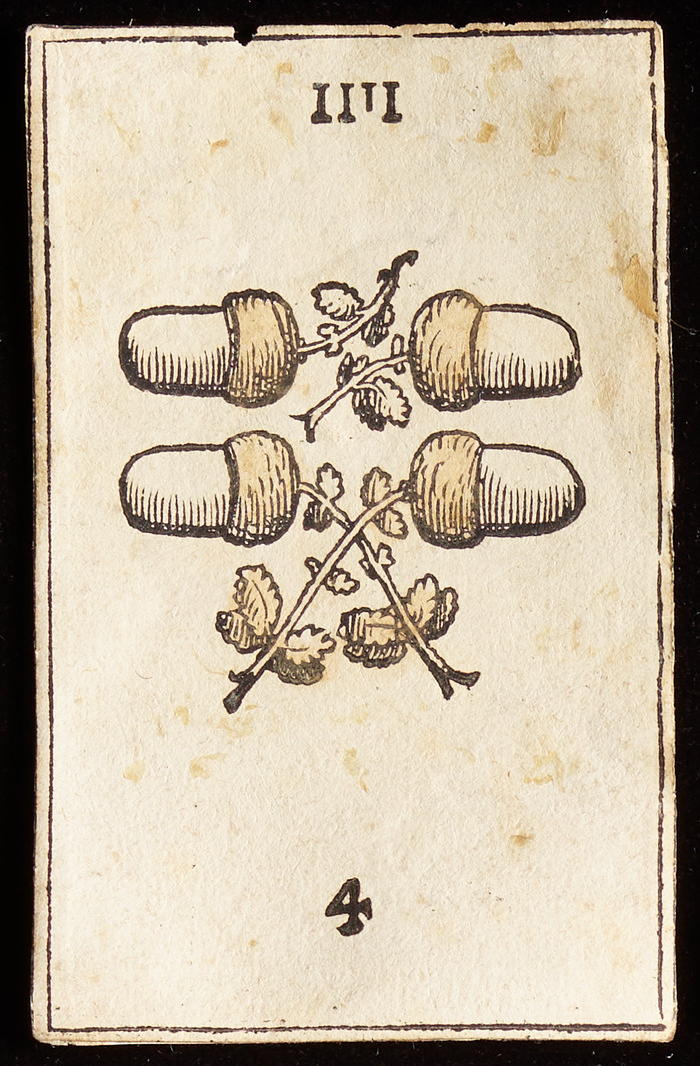 | 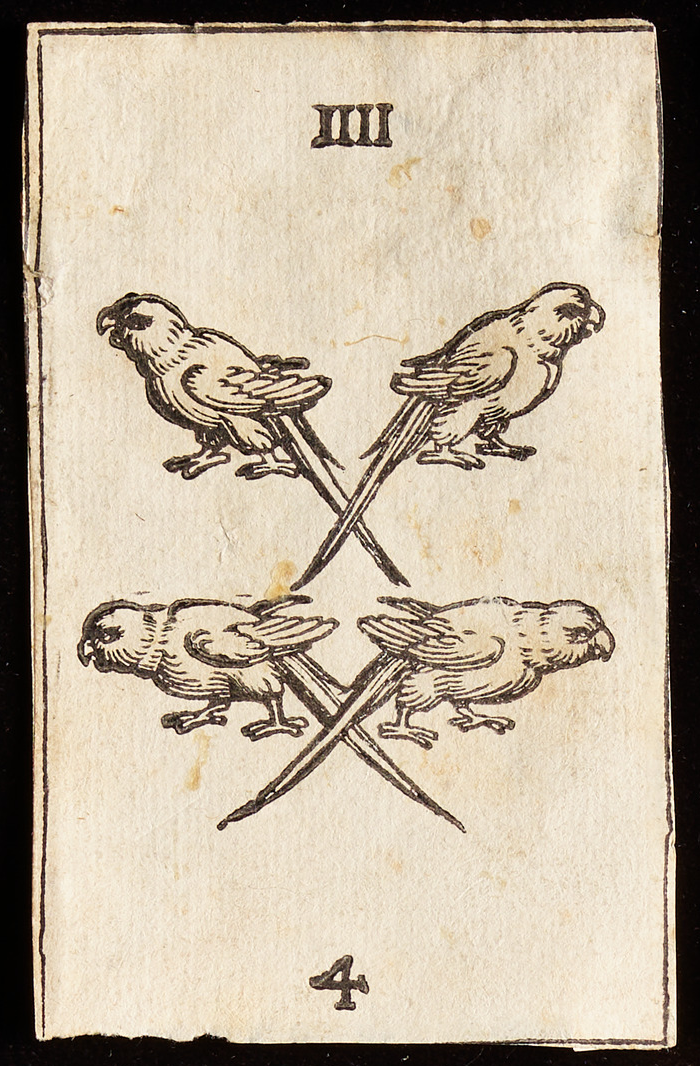 | 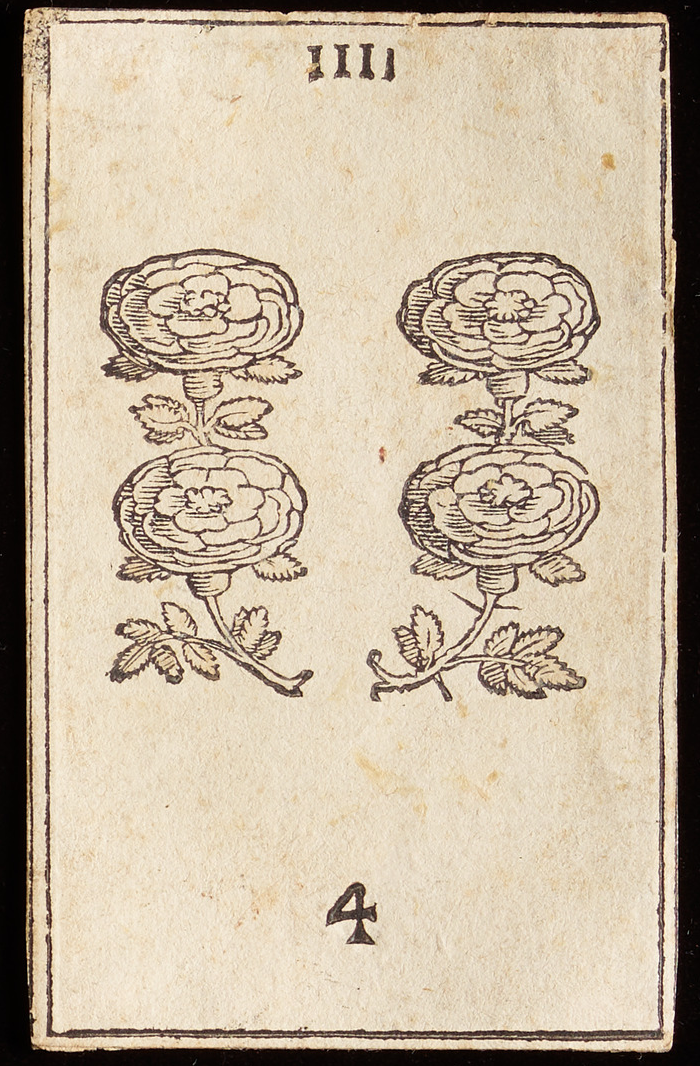 | 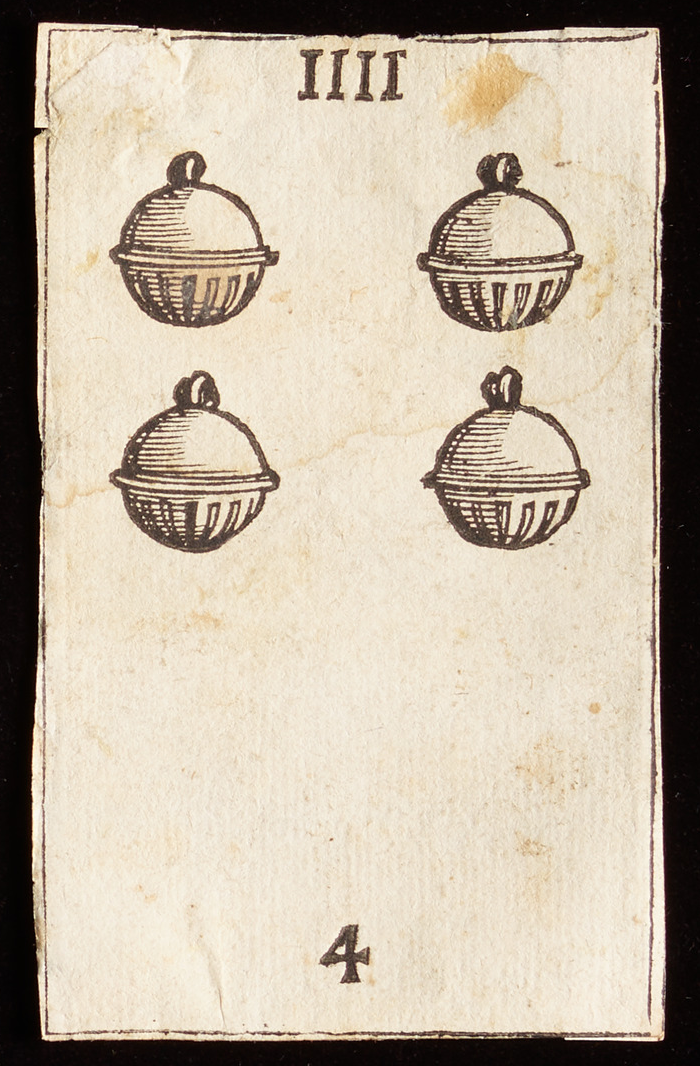 |
| 5 | 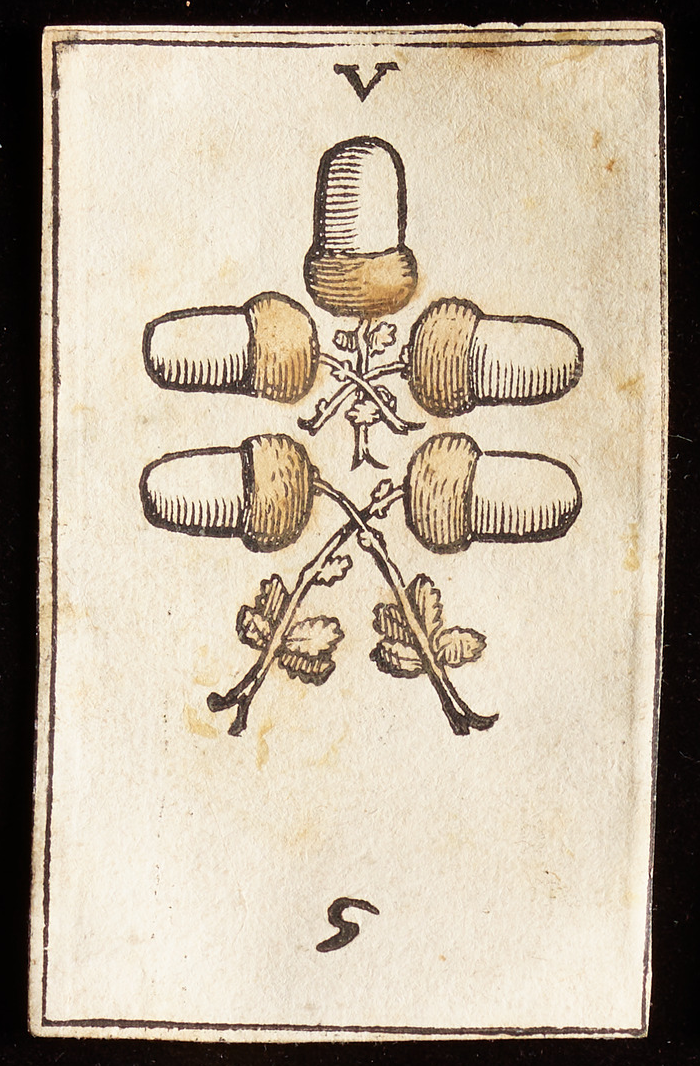 | 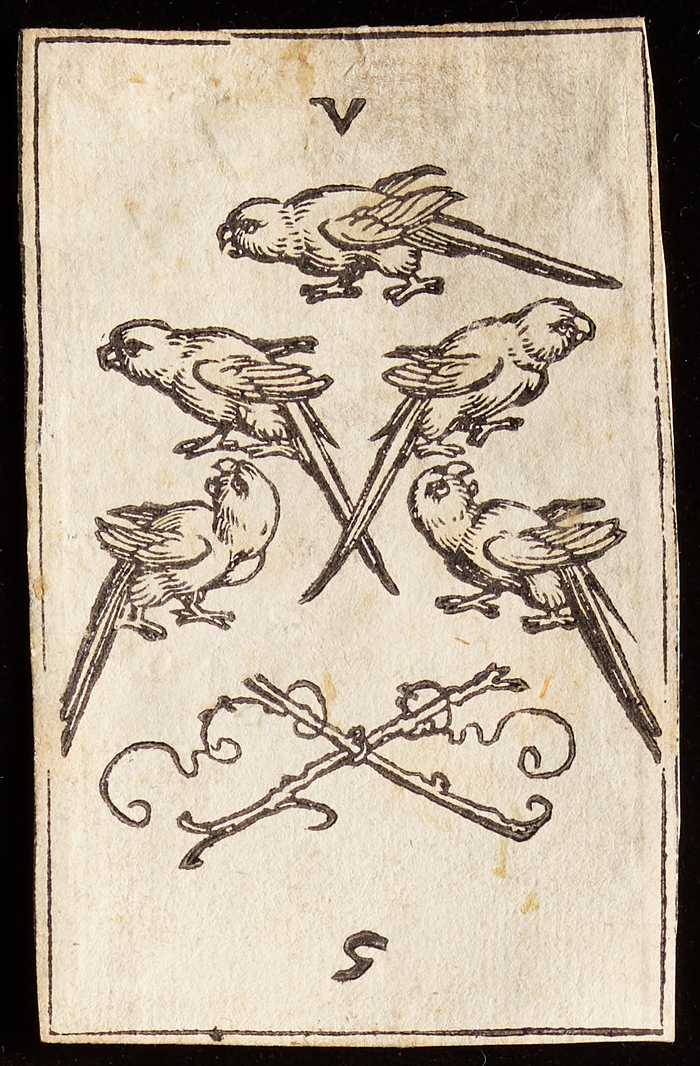 | 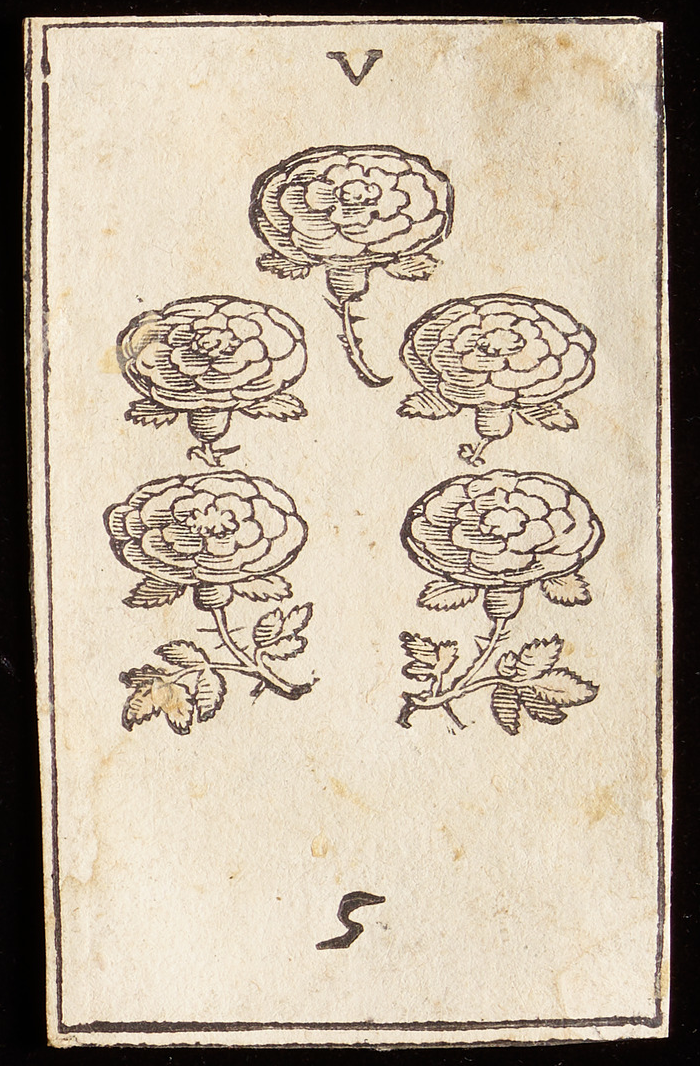 | 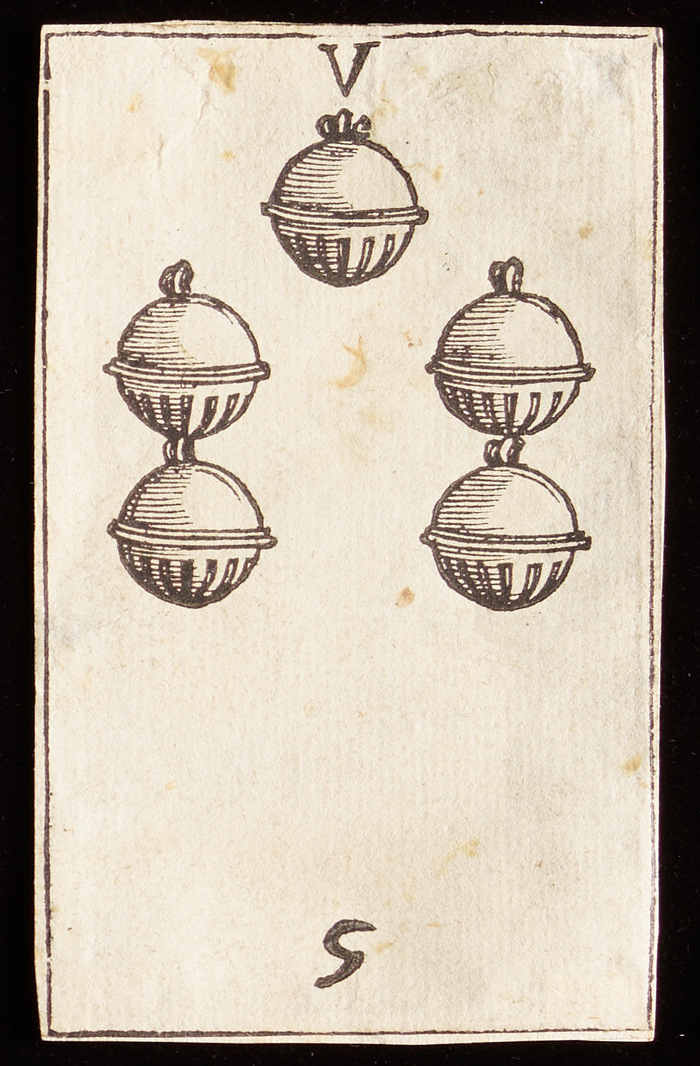 |
| 6 | 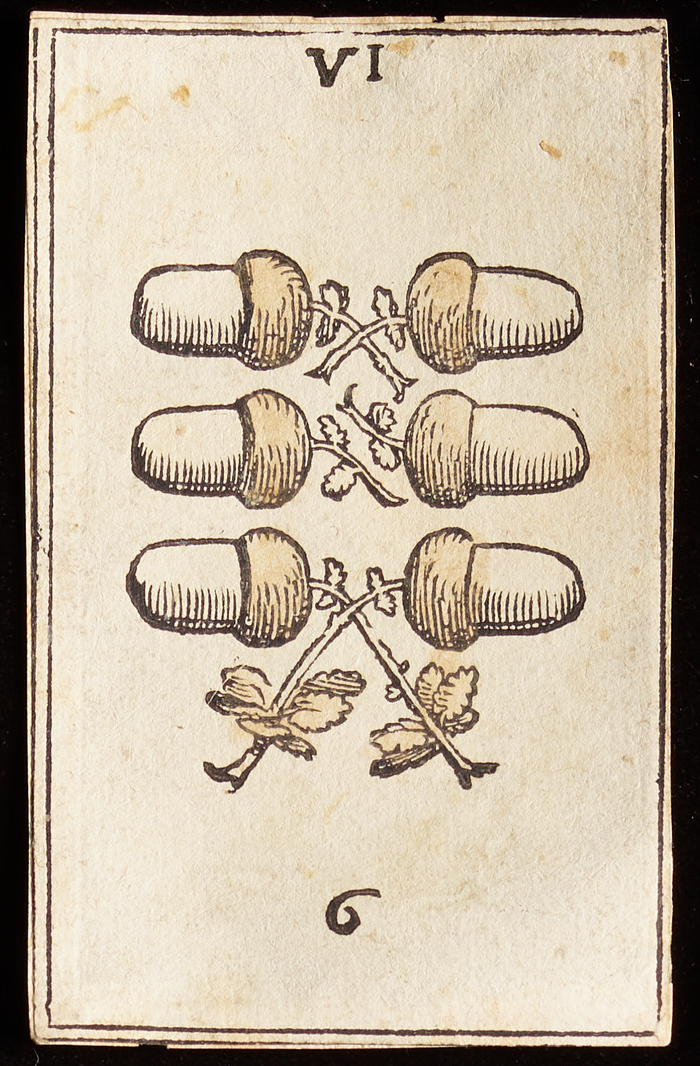 | 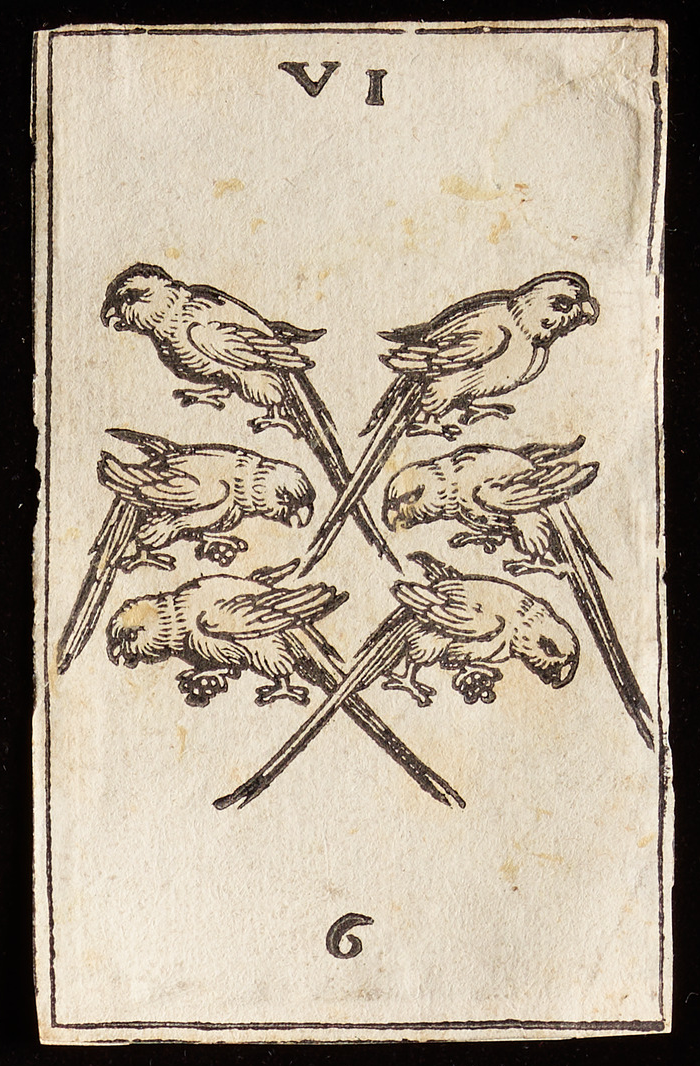 | 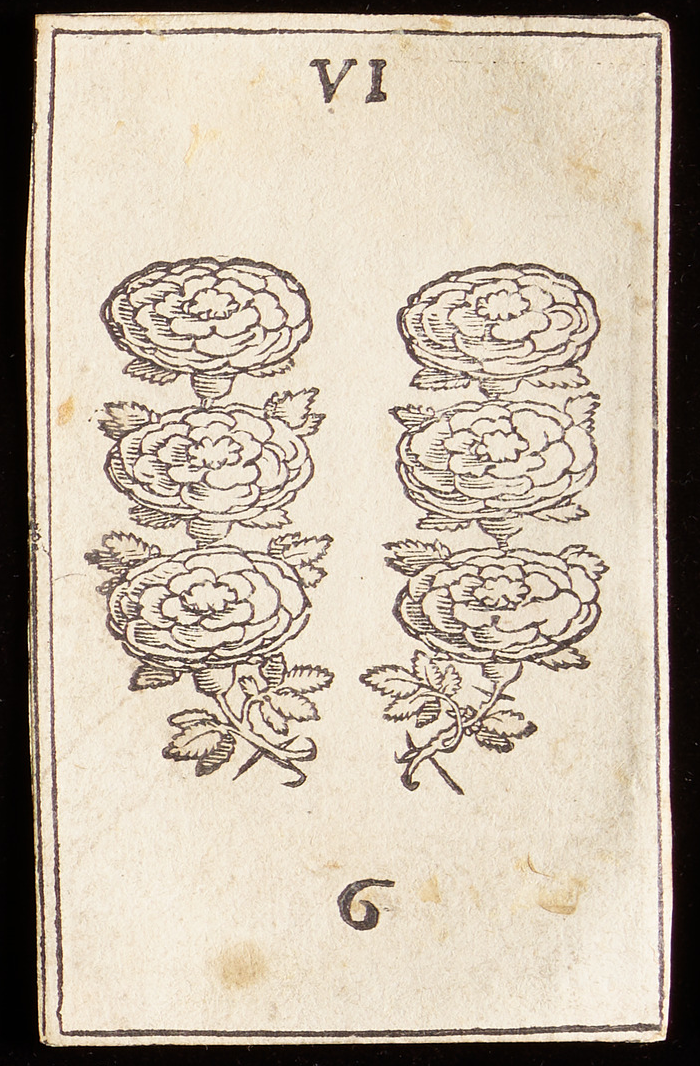 | 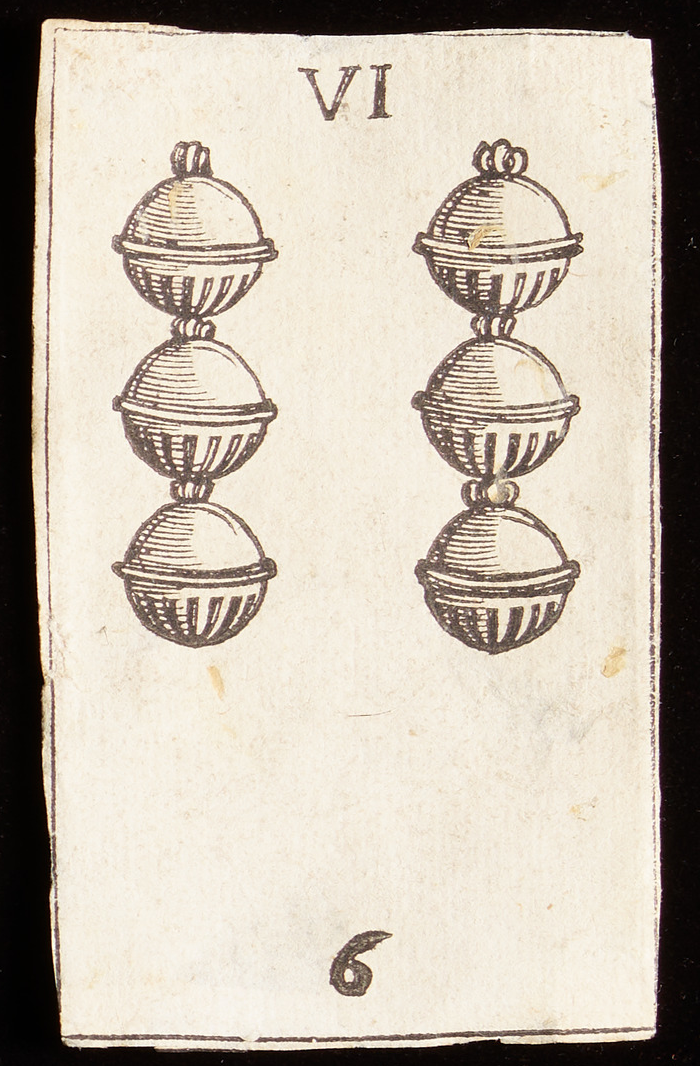 |
| 7 | 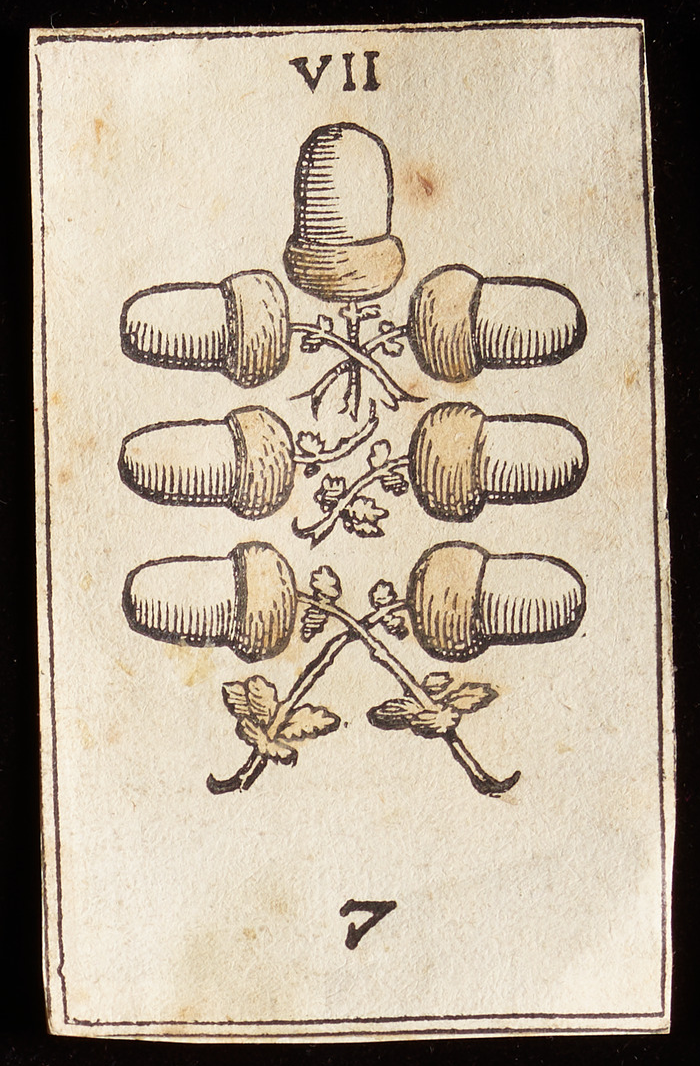 | 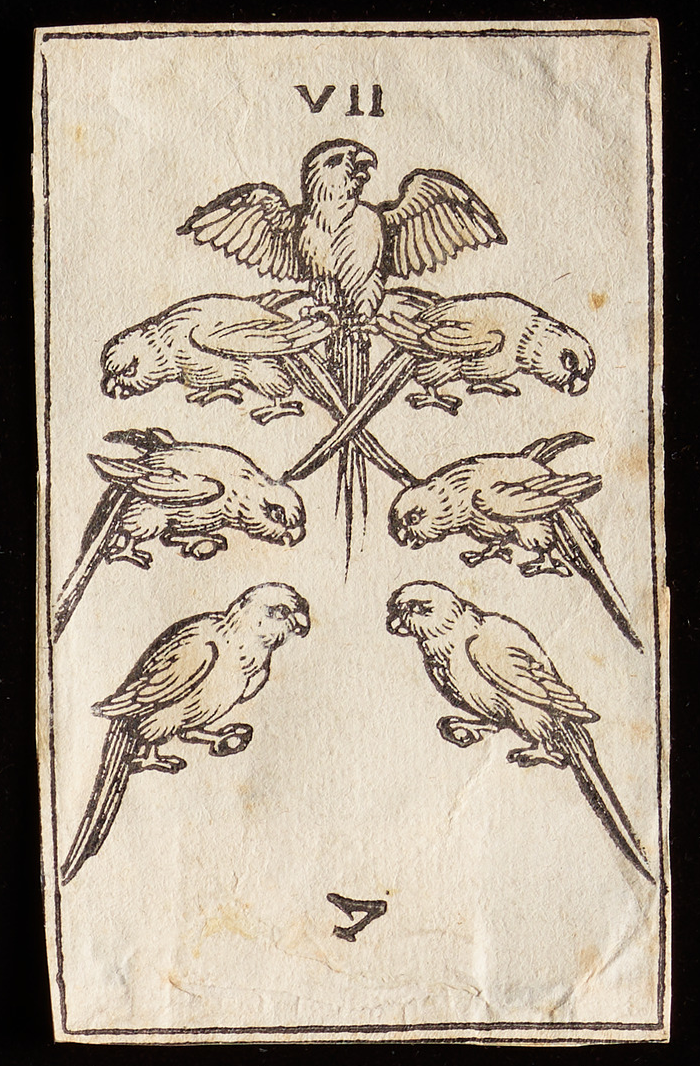 | 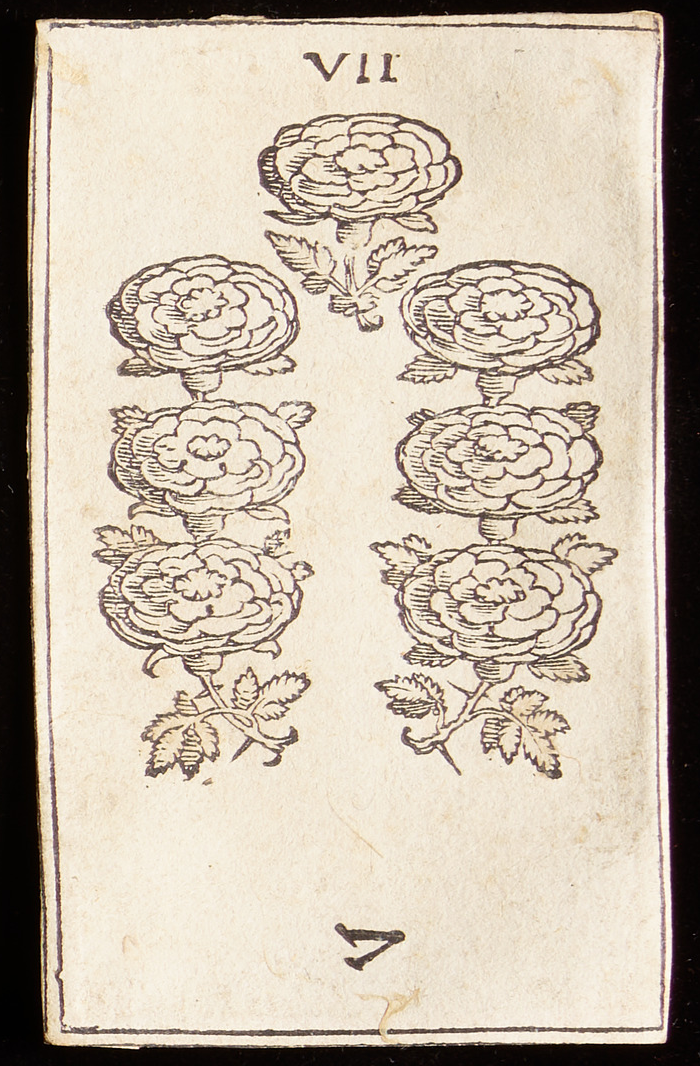 | 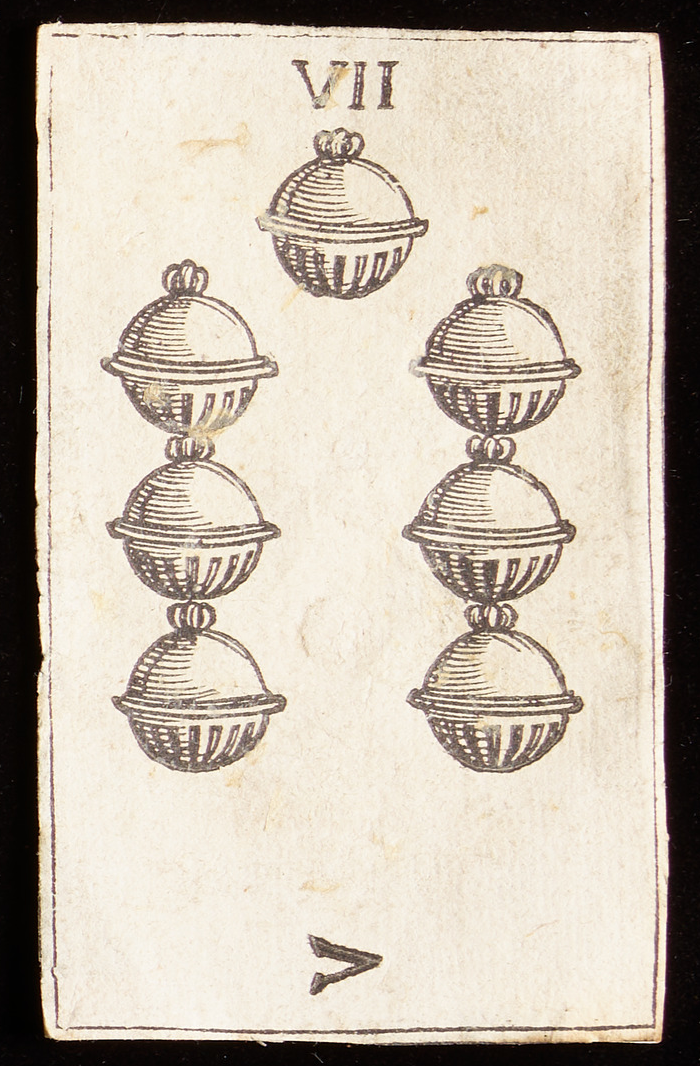 |
| 8 | 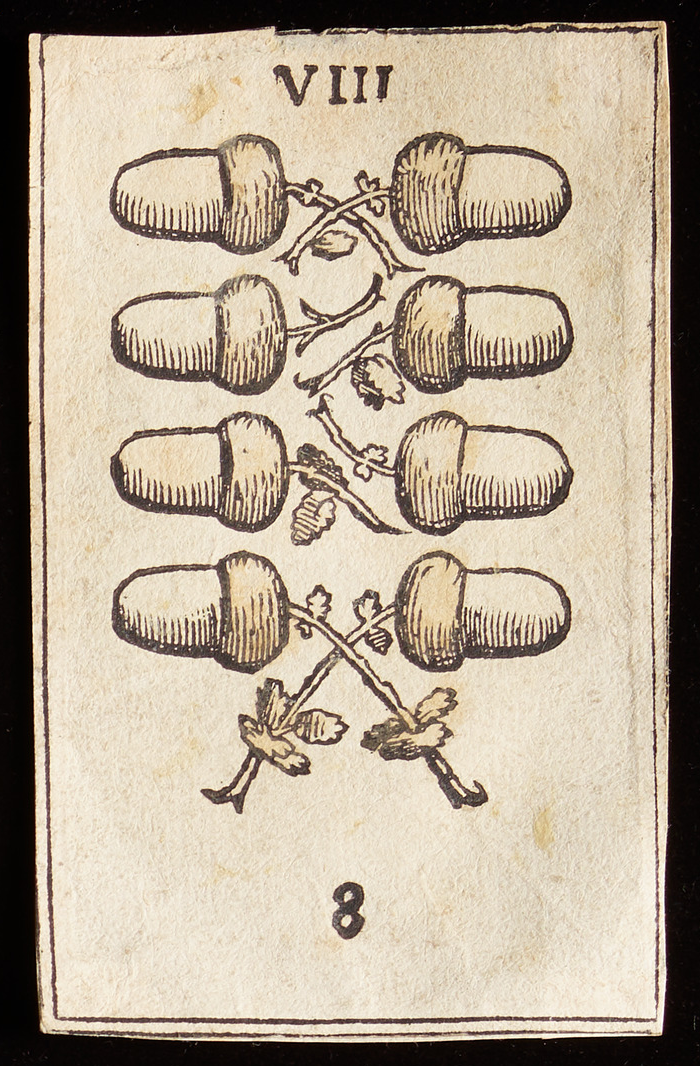 | 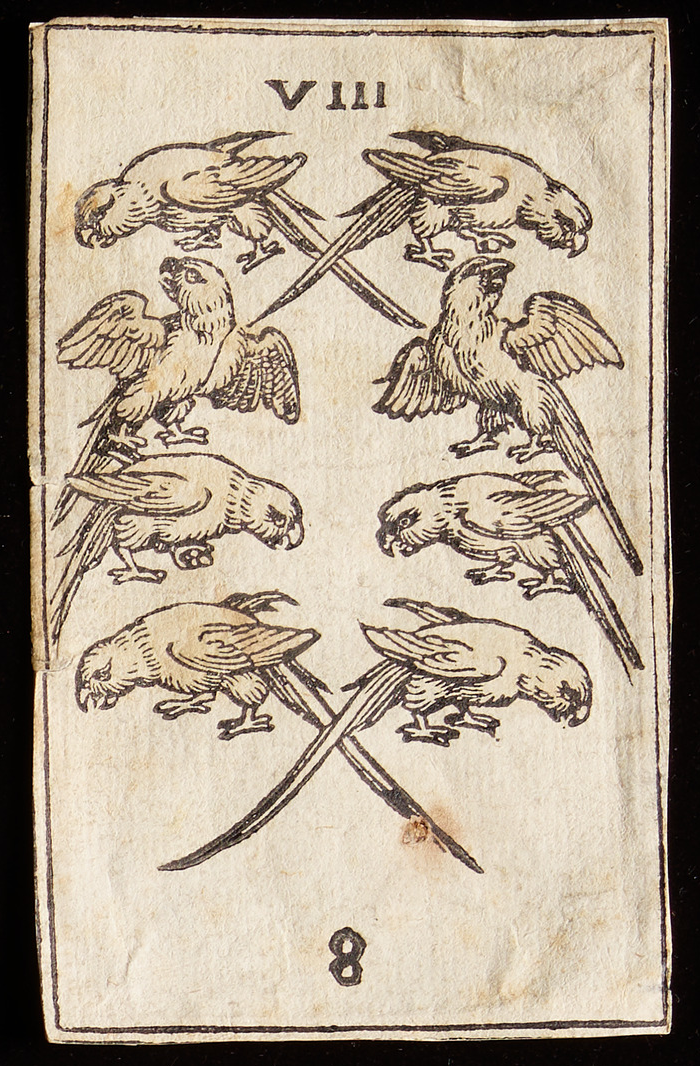 | 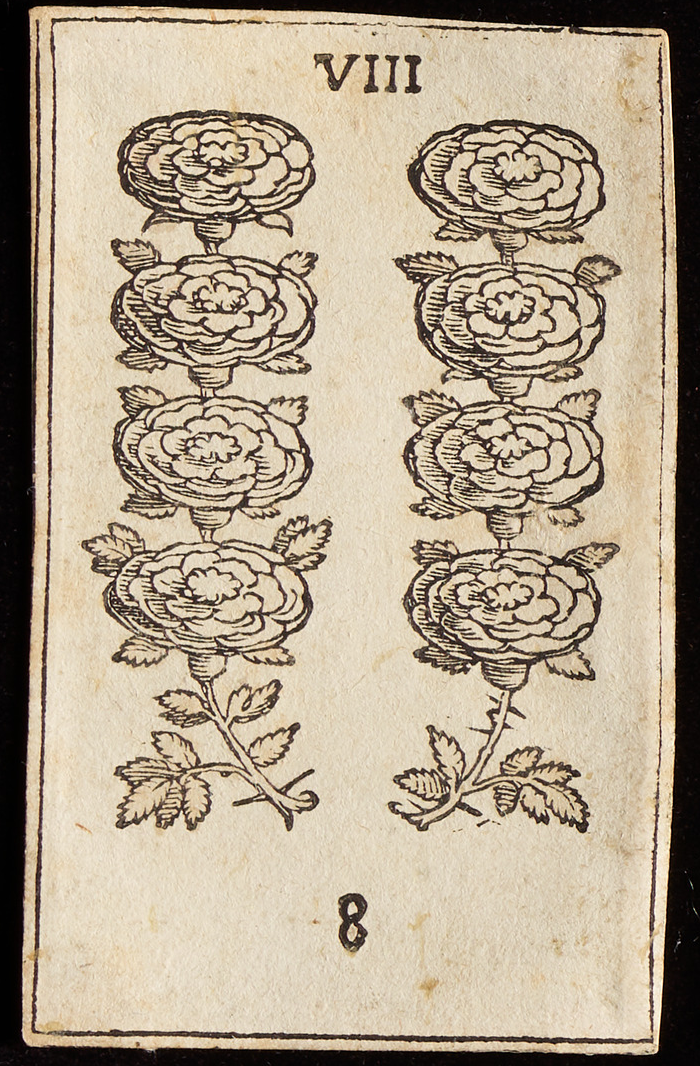 | 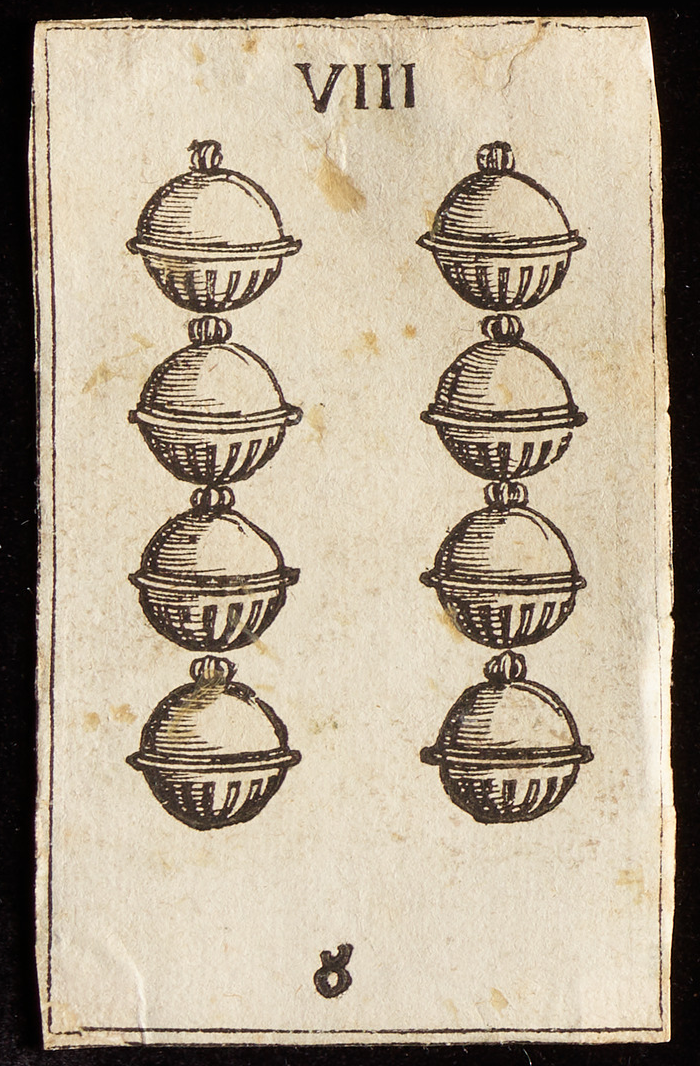 |
| 9 | 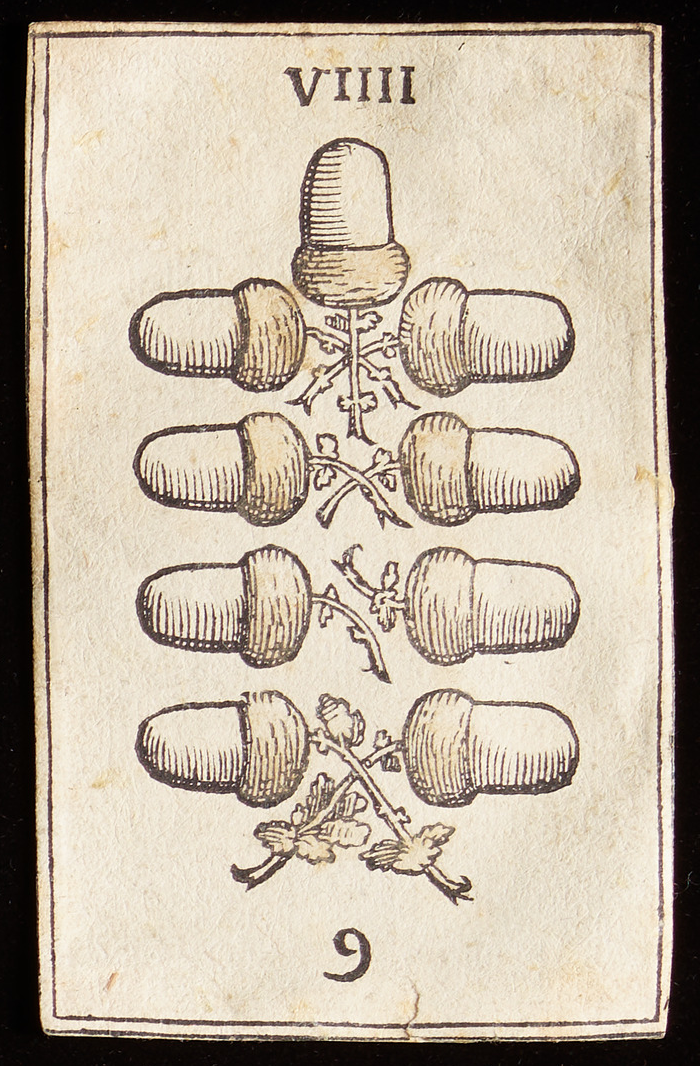 | 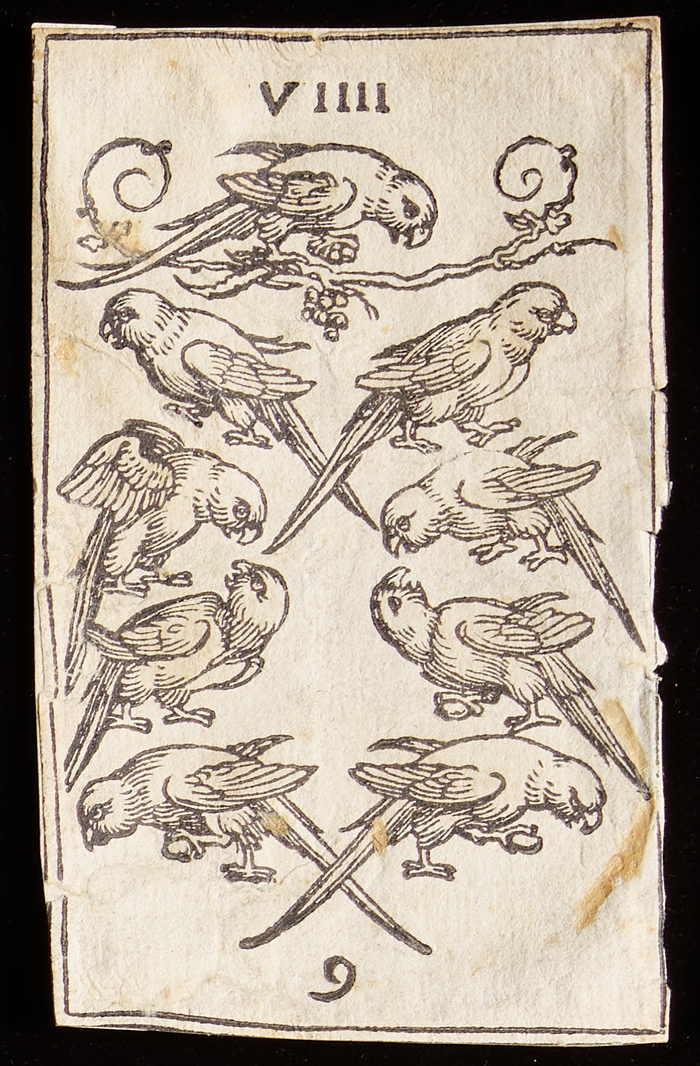 | 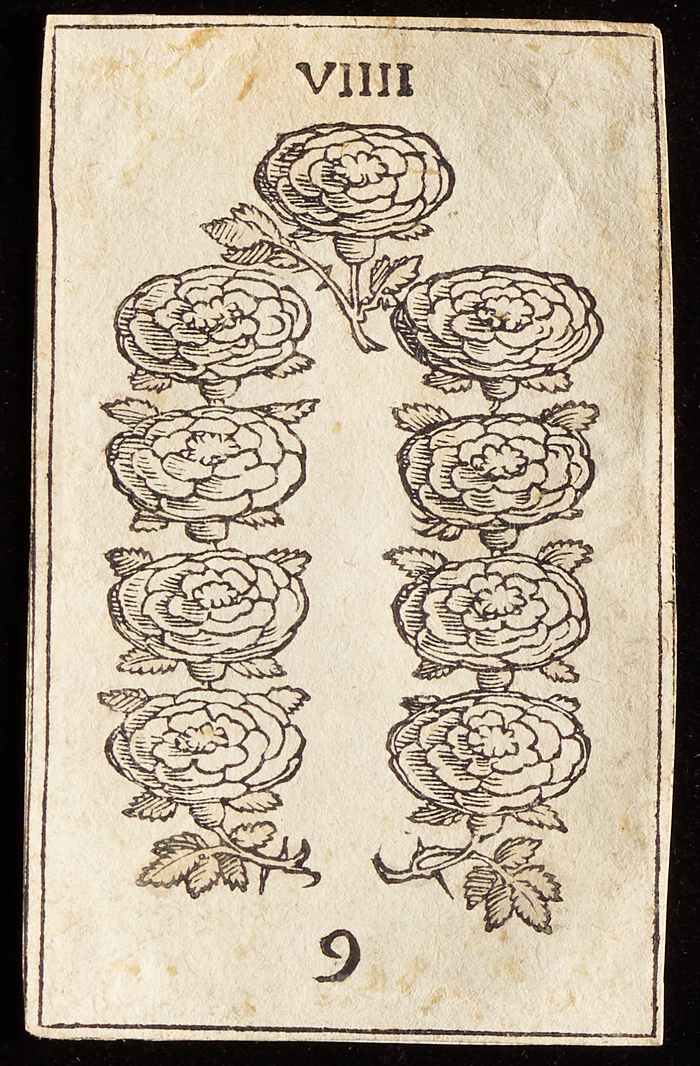 | 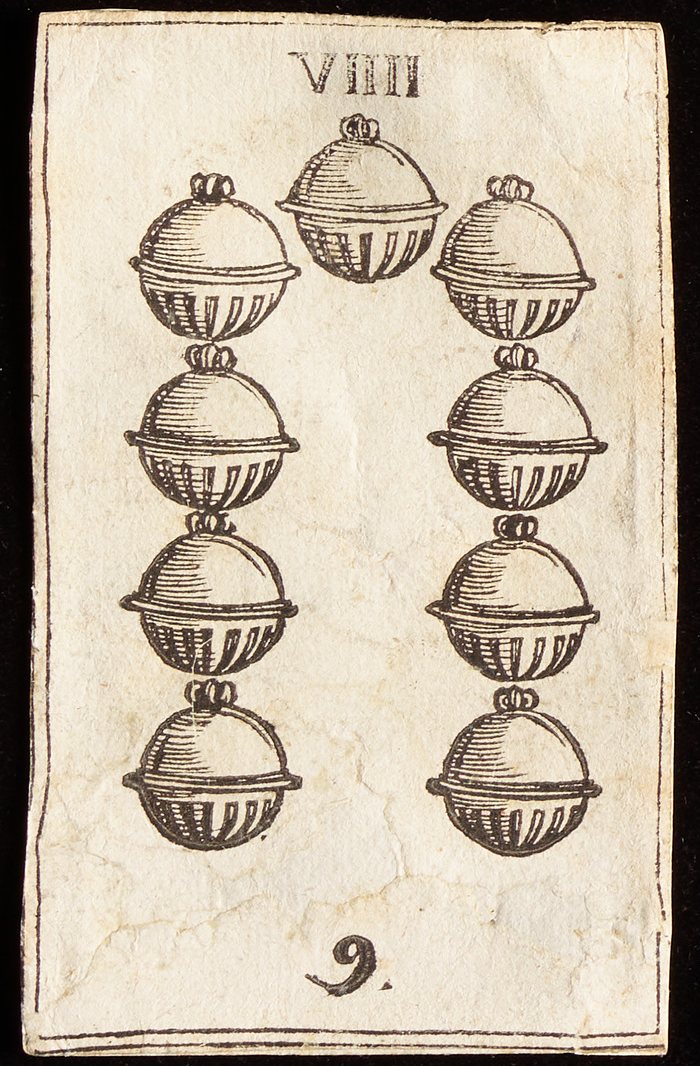 |
| 10 | 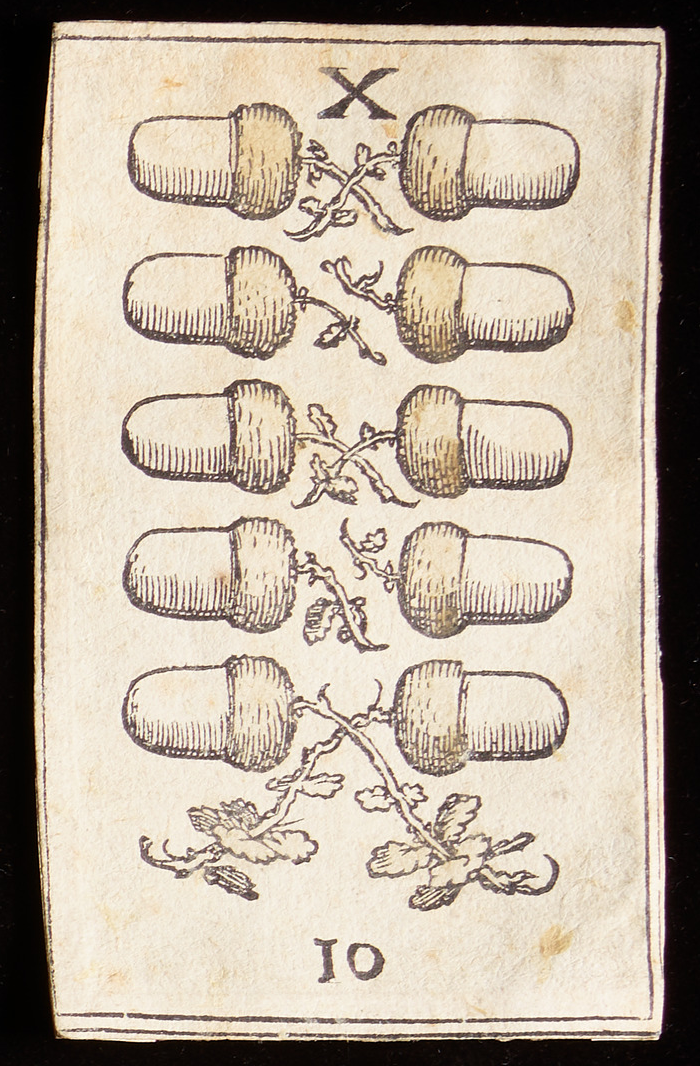 | 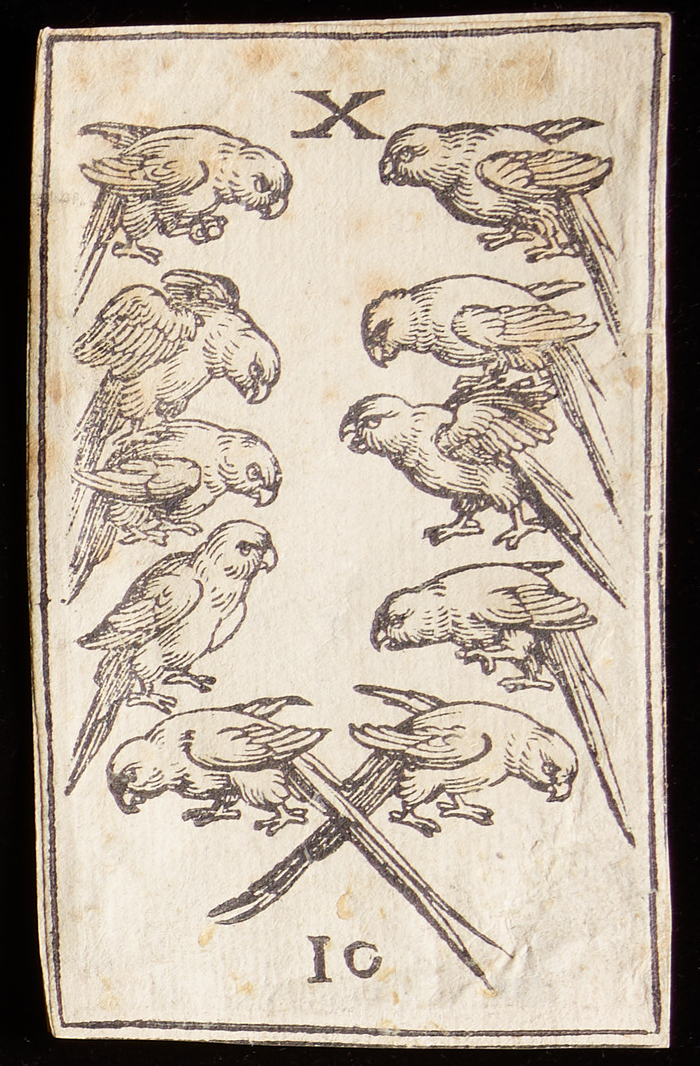 | 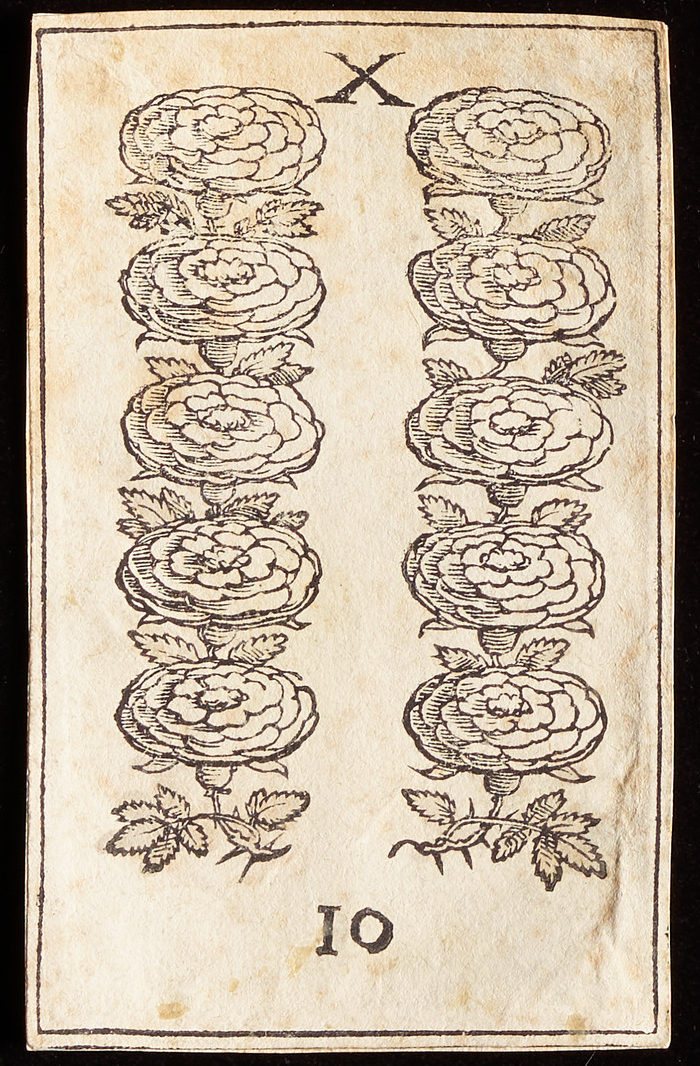 | 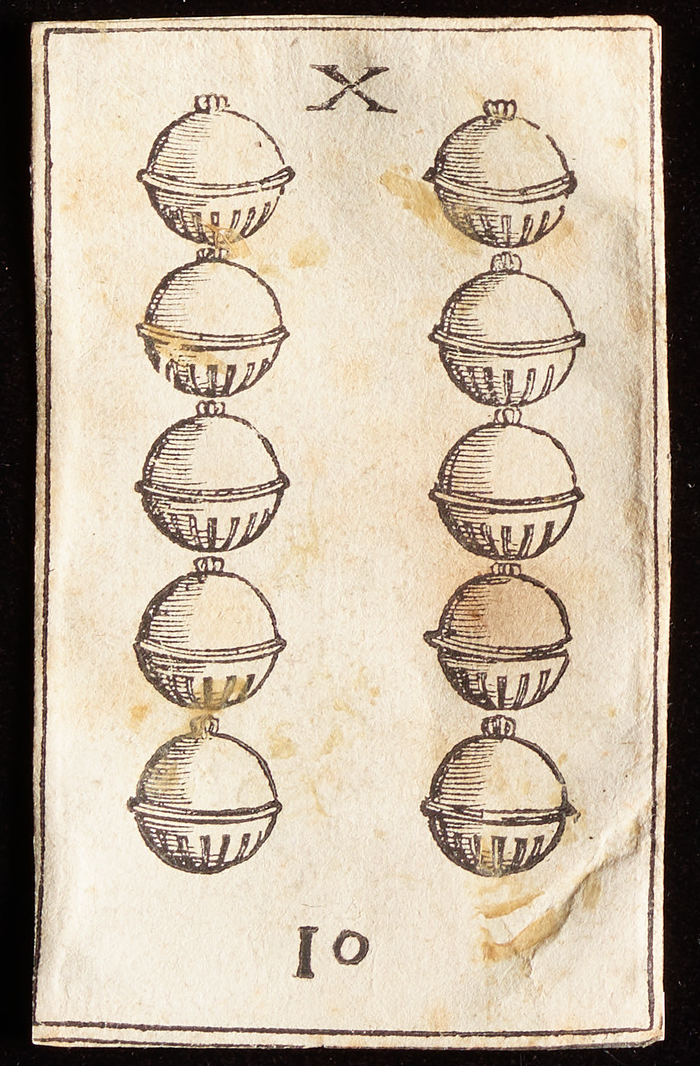 |
| Unter ❖ Under-knave | 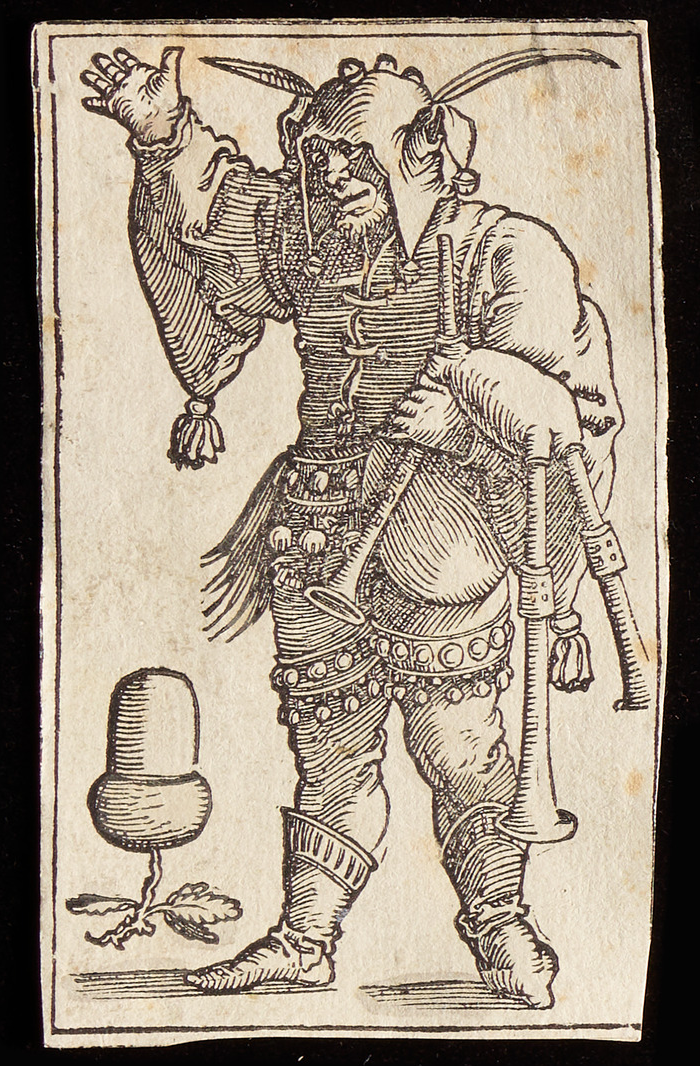 | 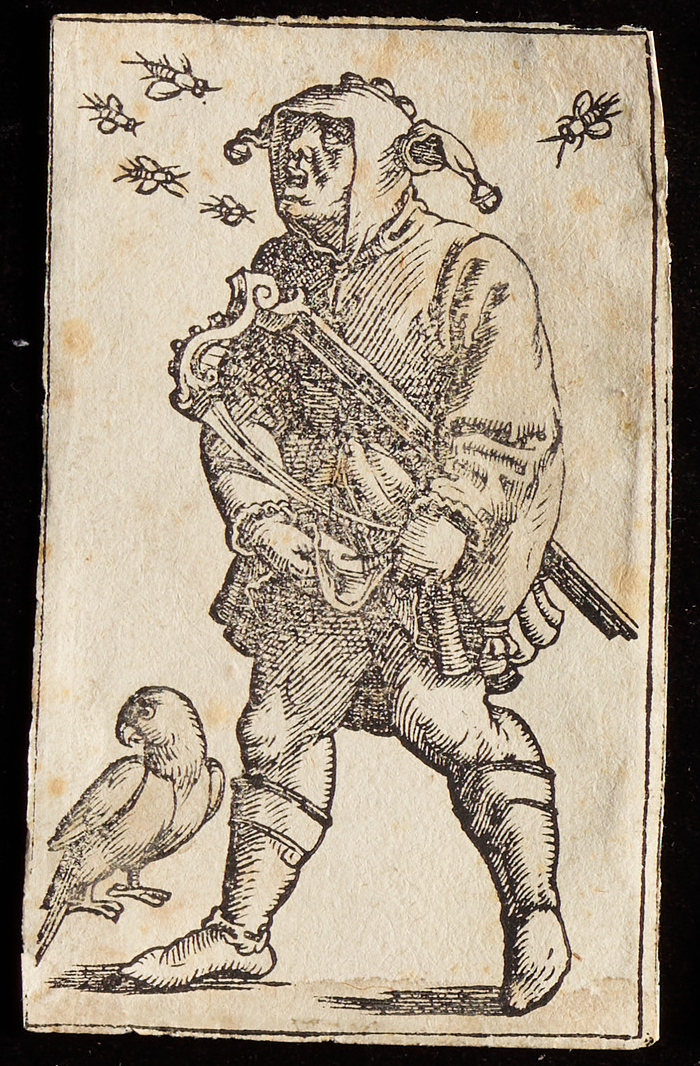 | 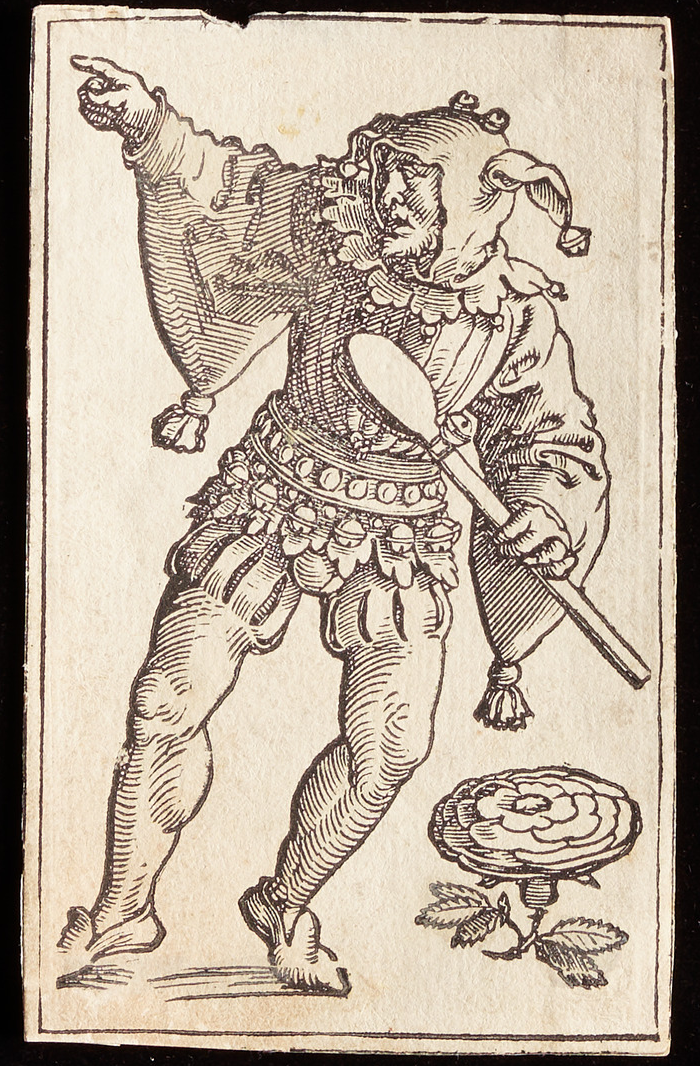 | 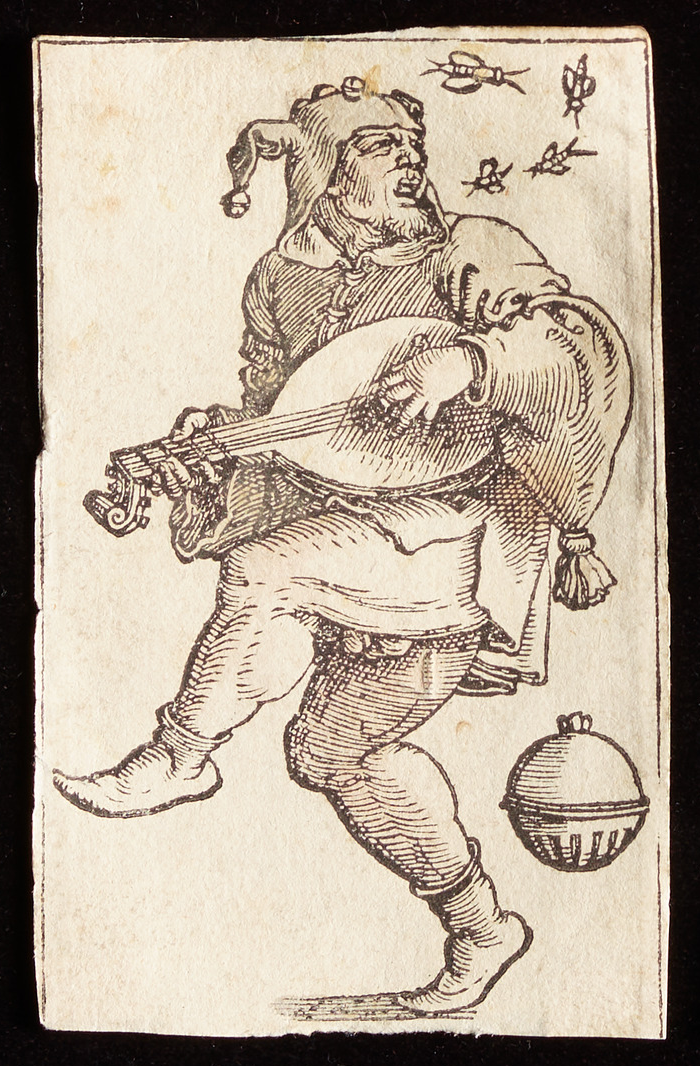 |
| Ober/ Königin ❖ Over-knave/ Queen | 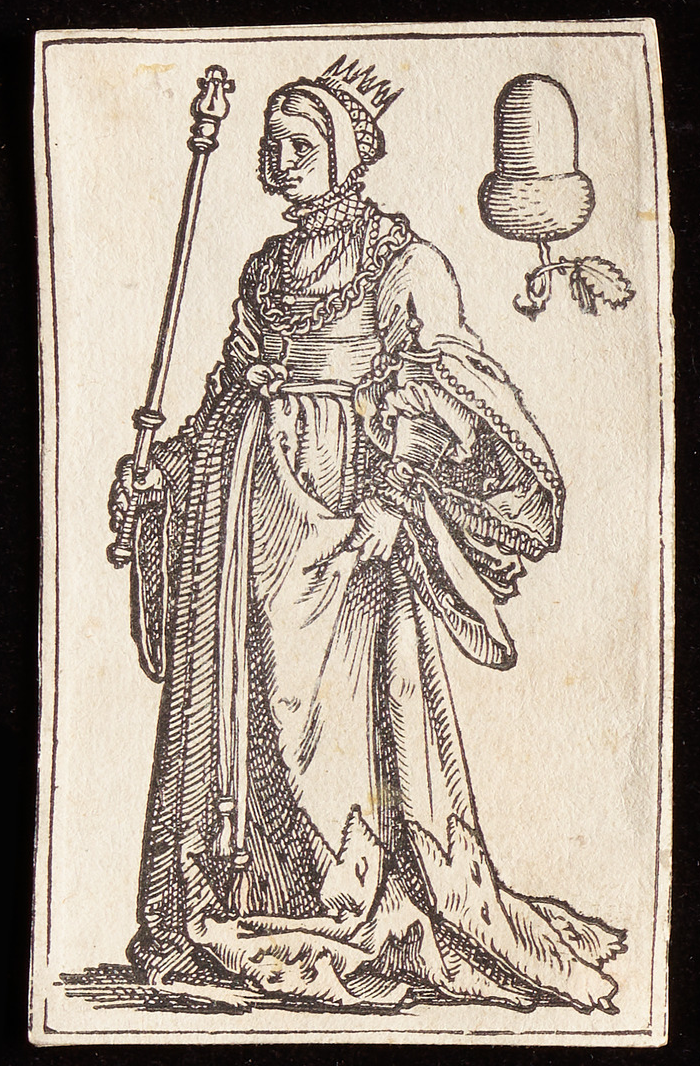 | 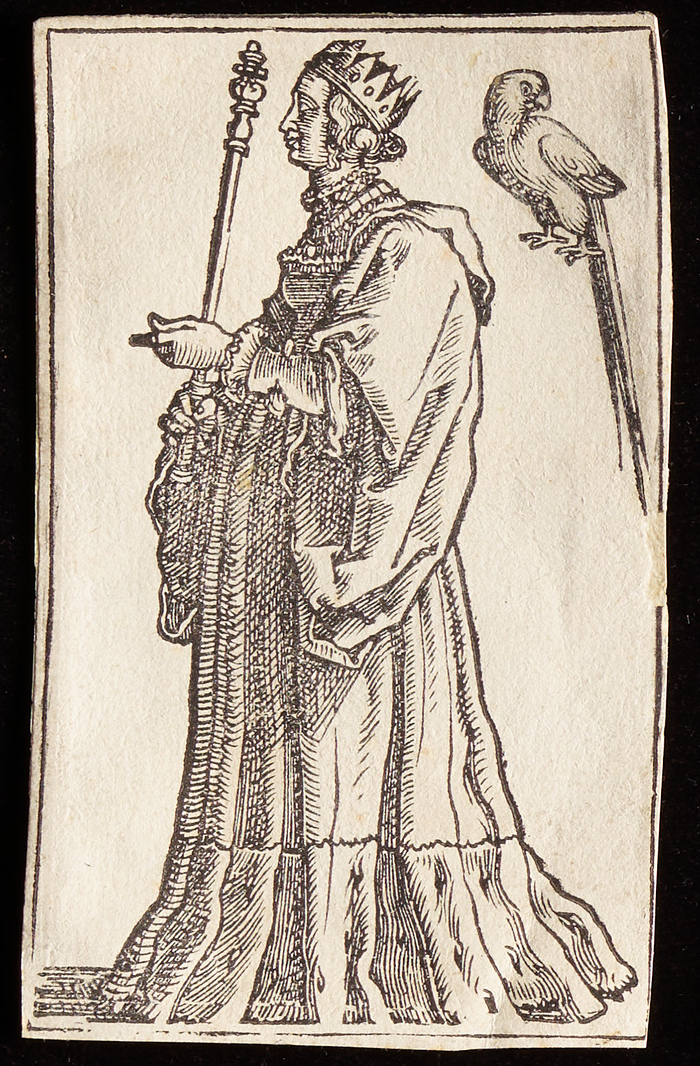 | 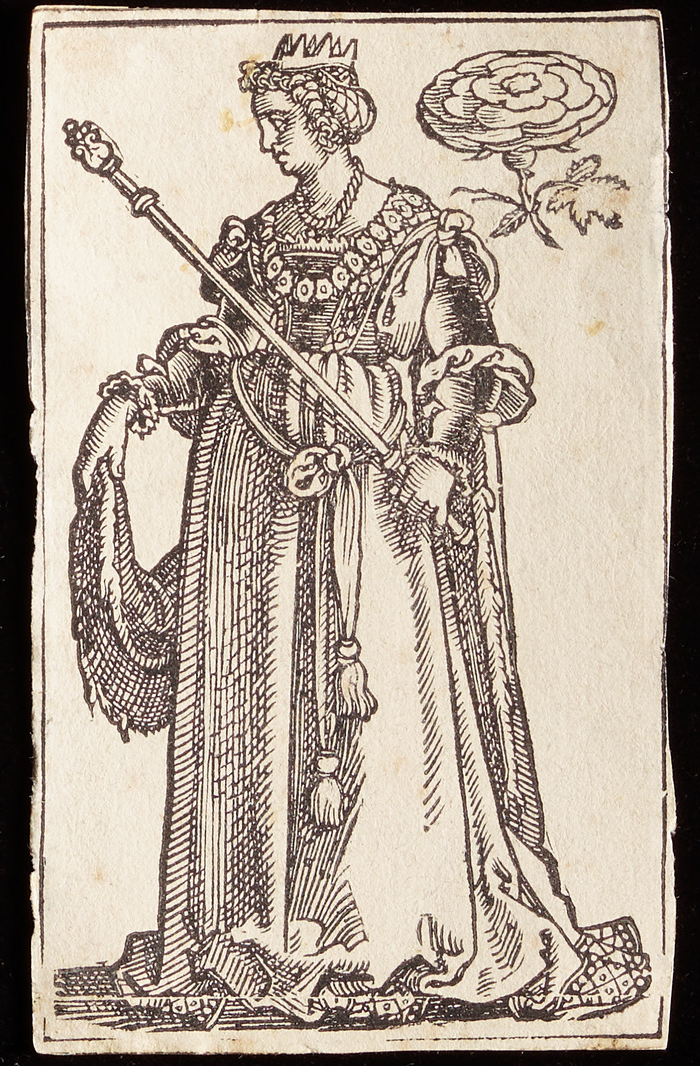 | 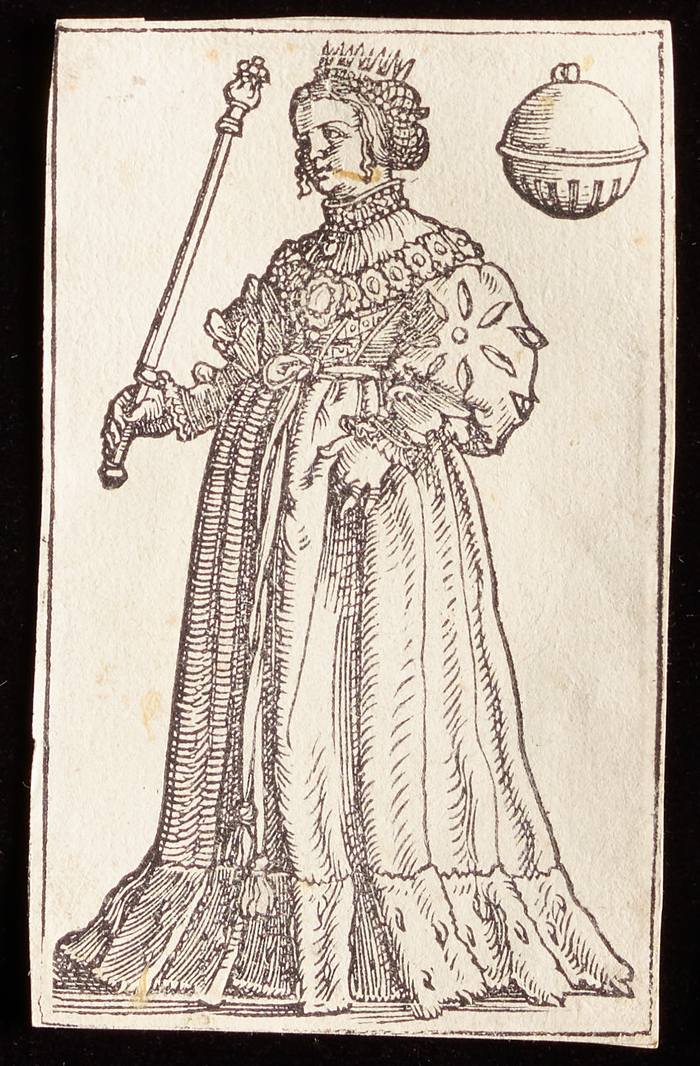 |
| König ❖ King | 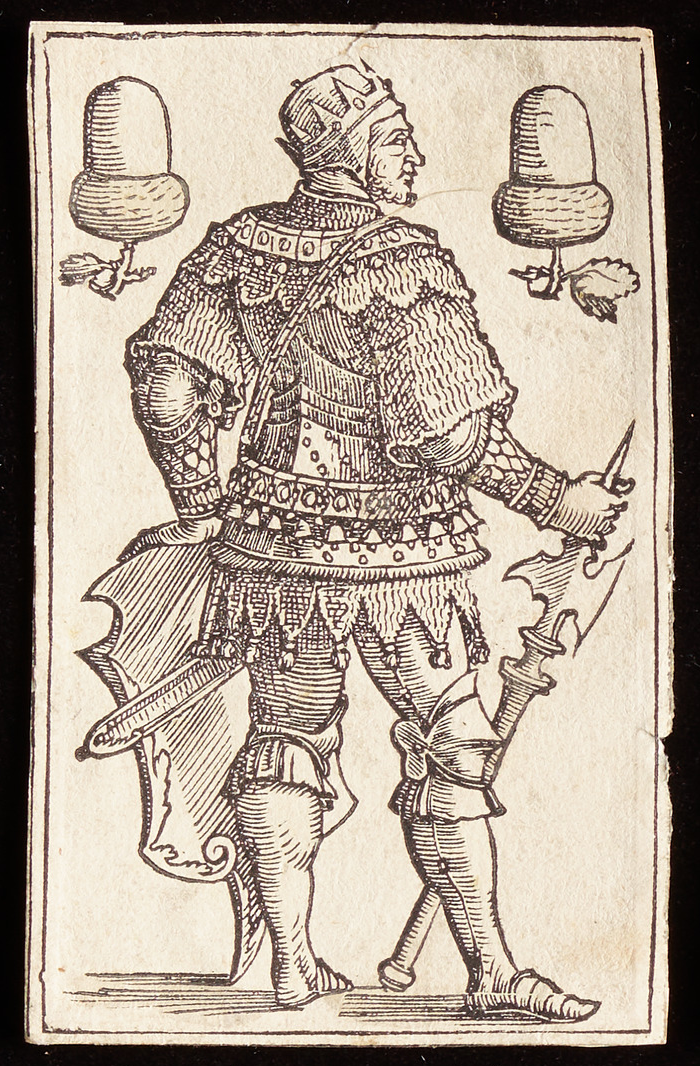 | 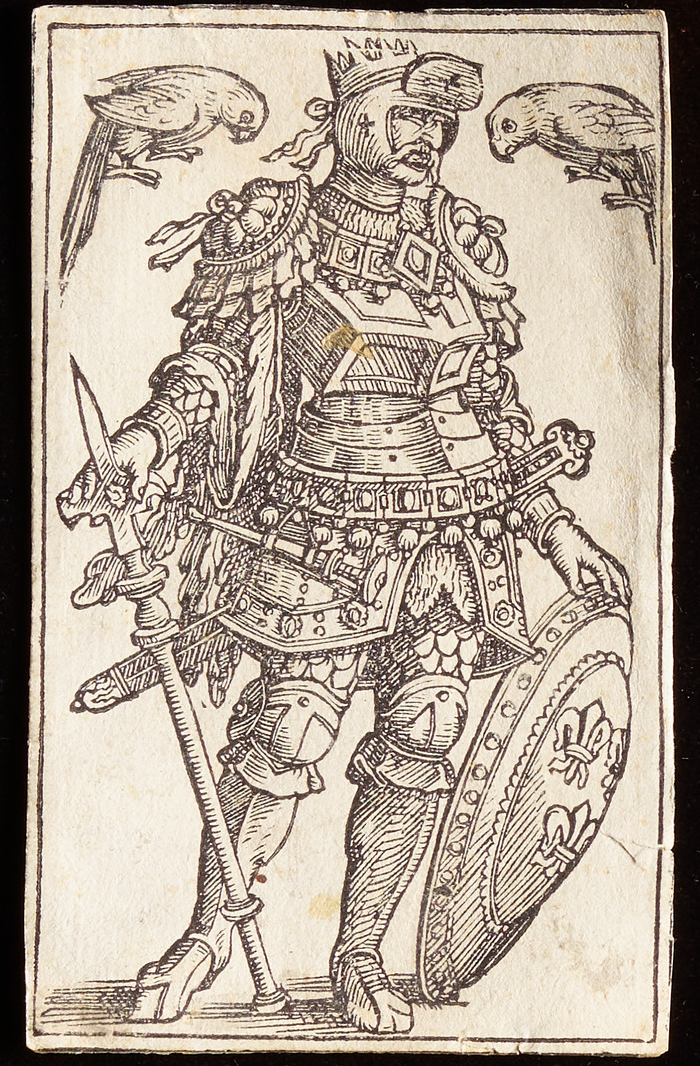 | 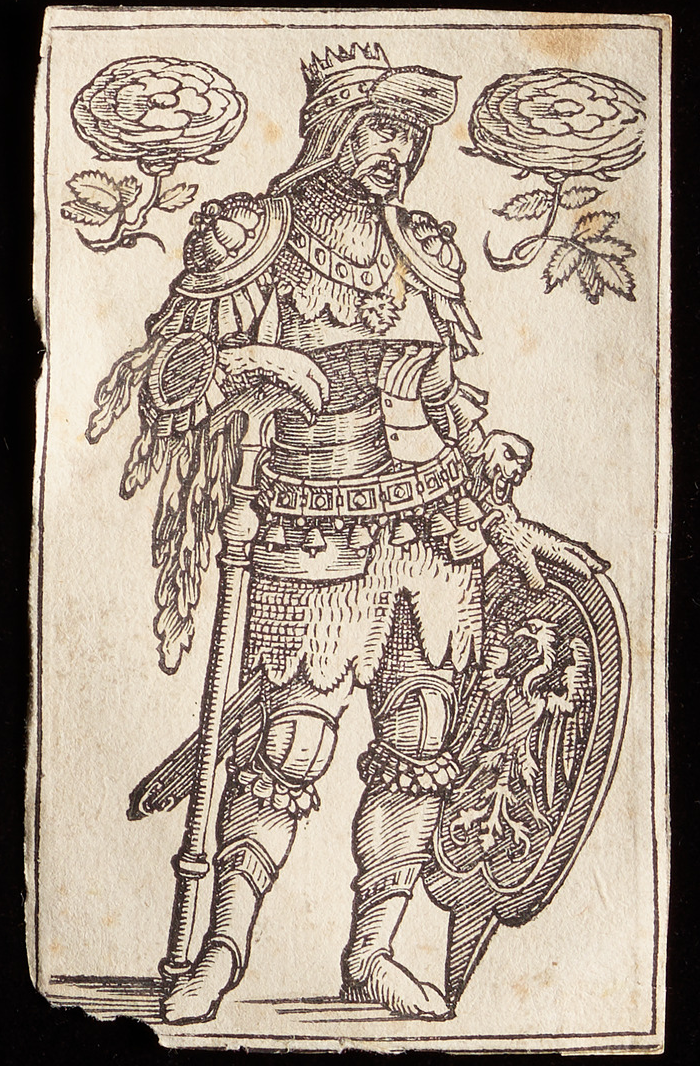 | 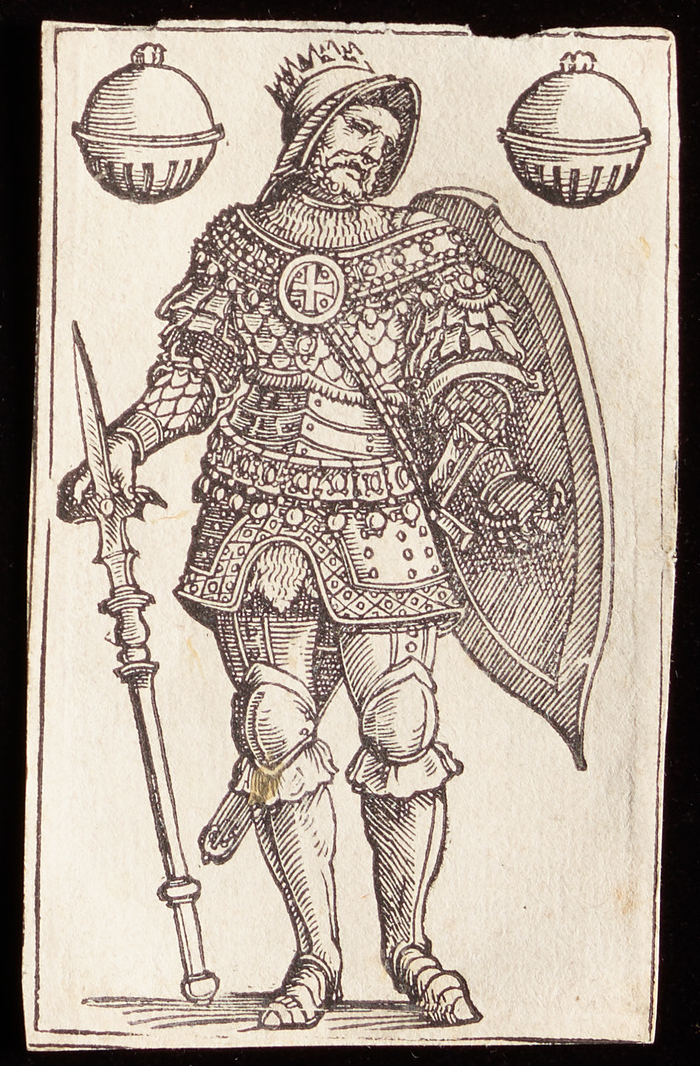 |
Features of the pack, including similarities and contrasts to Beham’s c. 1523 cards
Both packs have the structure of standard 48-card German cards, but
with two of the suits replaced. Here the suits of leaves and hearts
replaced by parrots and roses. Because of their characteristic colours,
the standard suits are also called grün (green) and rot (red). As the at he time most well-known type of
parrot, the ring-necked parakeet, are characteristically green and roses
archetypically red, although variations occur, the replacements would
feel familiar to players. This is a similar concession to that of the
1523 pack, where hearts also is replaced by roses and the colour scheme
is likewise maintained. Where that pack changes the suits so that all
four grows from trees as only acorns and leaves do in standard cards,
they are here instead changed so that all are floating
like
hearts and bells normally are; both changes makes the packs more
stylistically cohesive.
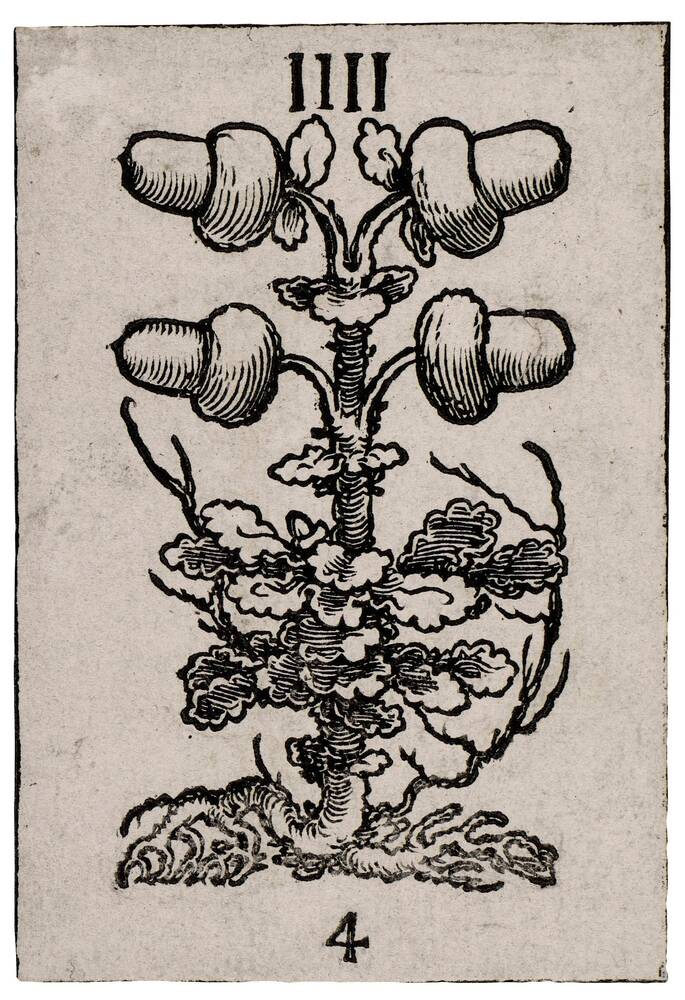
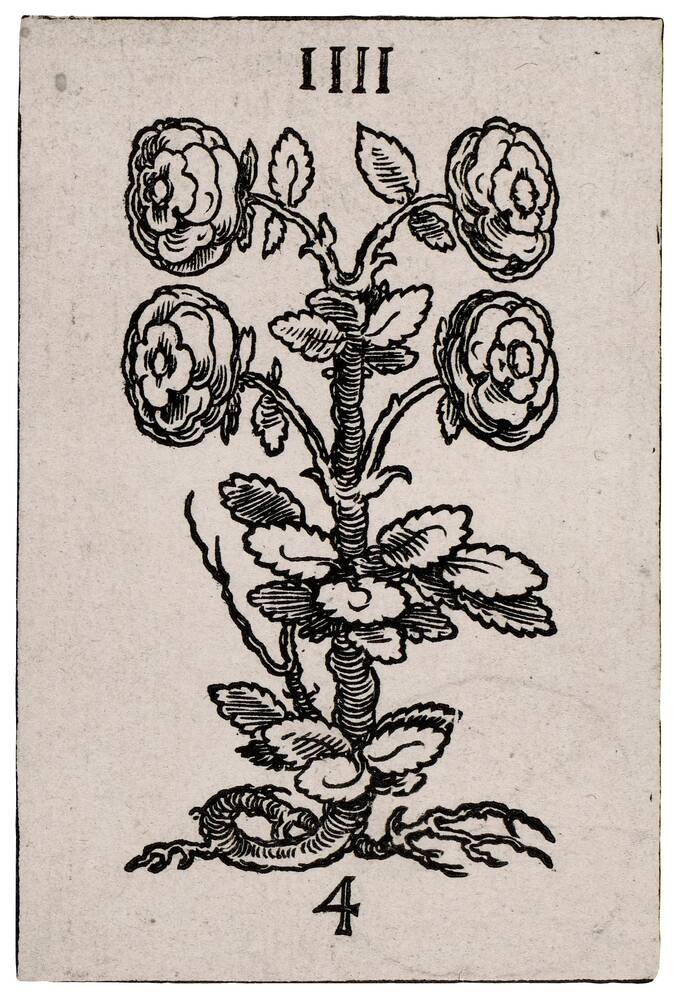
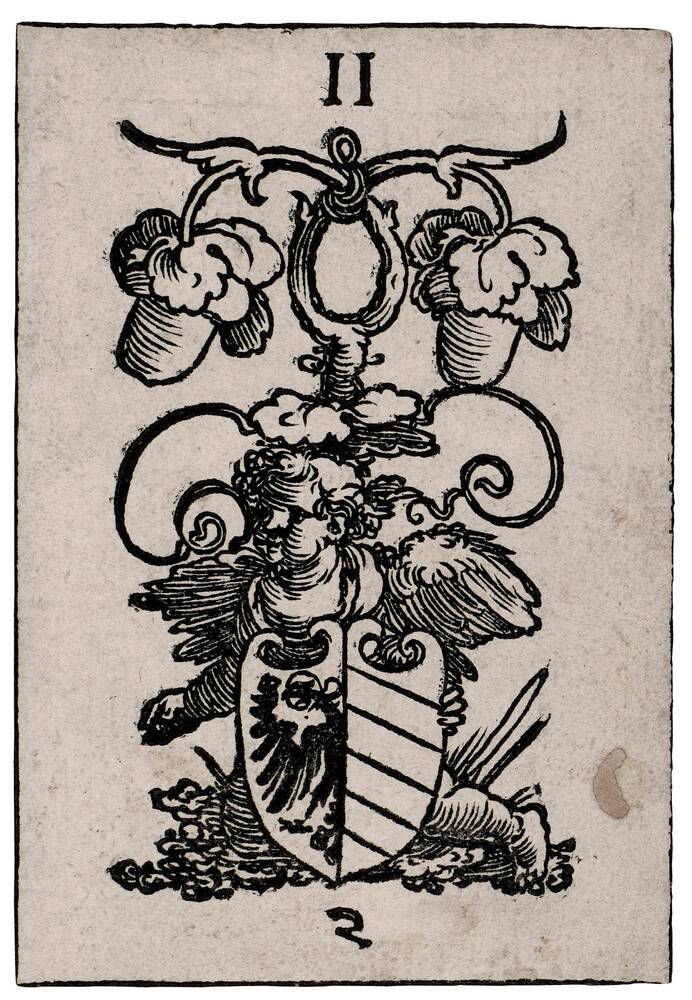
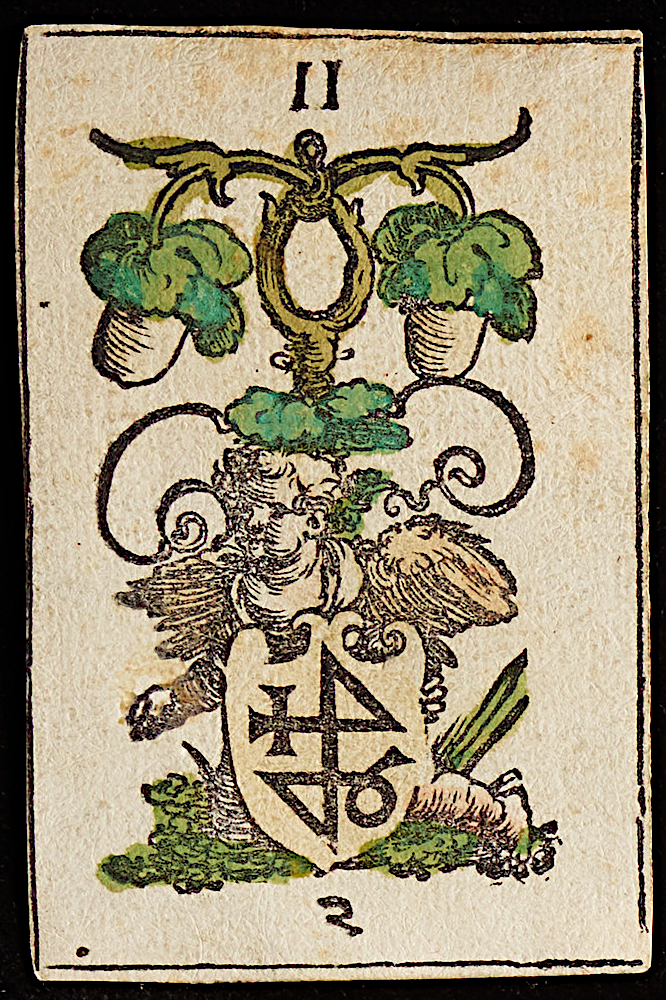
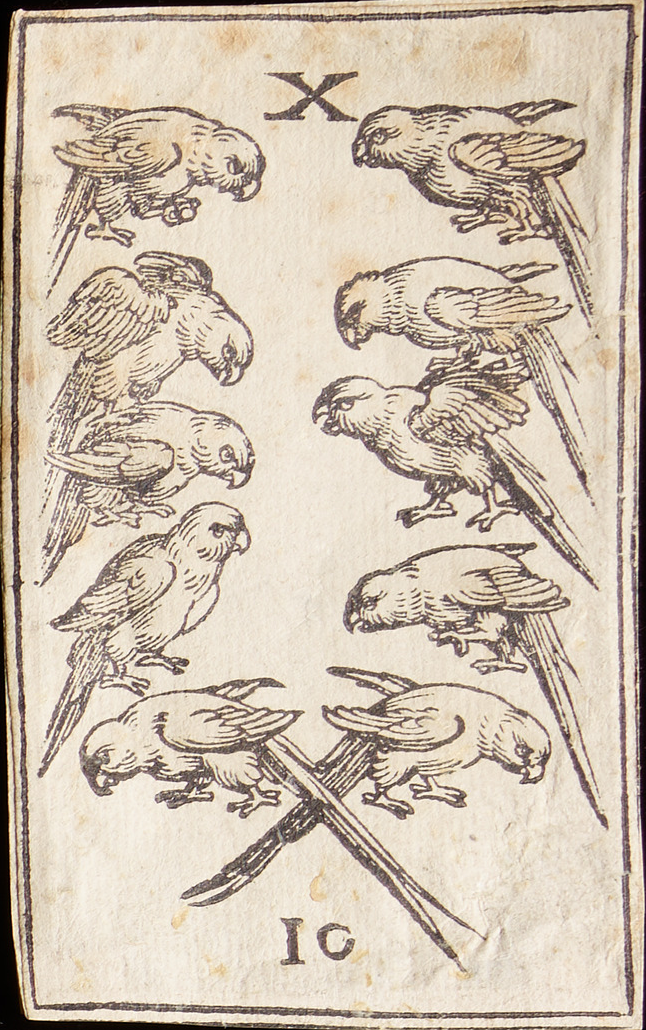
In both packs, the value of pip cards are unusually indicated by Roman numerals at the top and Arabic ones at the bottom in addition to the number of pips. Both have tens in the same style as the other pip cards, and deuces largely so. One difference is that here all four deuces also have an illustration below the pips, whereas the 1523 pack only has this for the deuce (and the three) of acorns, as the trees fill out the cards sufficiently for low-numbered cards not to look too empty.
 |
|
 |
|
Example pairs showing the similarities in card layout, general style, and specific treatment of the suit symbols. |
|||
   |
|||
Comparison between three versions of the deuce of acorns in the other pack and the deuce of bells in this. Both designs have a winged putto sitting in the grass holding an escutcheon with a very peculiar shape. |
|||
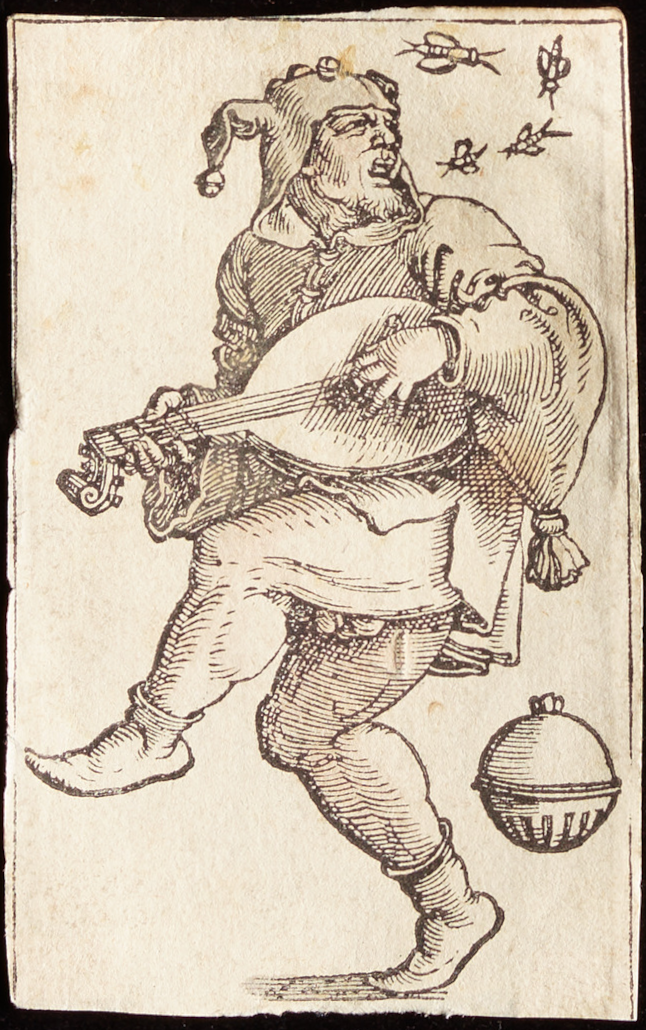
With regards to the court cards on the other hand, the packs diverge markedly. In this pack, the kings are of the standing type, with weapons, shields and heavy armour, and with double suit symbols. The under-knaves are all jesters with musical instruments. While this is not an unusual design for a single card, making all of them variations on this theme is a very conscious stylistic choice. The most unique feature, however, is that the over-knaves takes the form of queens, which in contemporary luxury cards form a distinct rank above this.
Inspiration from Master PW
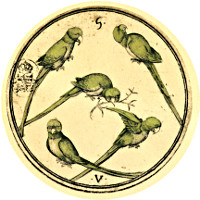
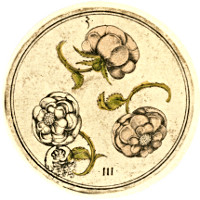
The combination of parrots and roses as suit symbols and the use of both Roman and Arabic numerals on the pip cards is clearly taken from the circular cards of monogrammist PW or Master PW. As a luxury pack, these have ones/aces as well as twos/deuces in each suit, and queens as a separate rank between over-knave and king. The latter might very well also be the inspiration for using queens as over-knaves.
|
Fragments of an inferior copy
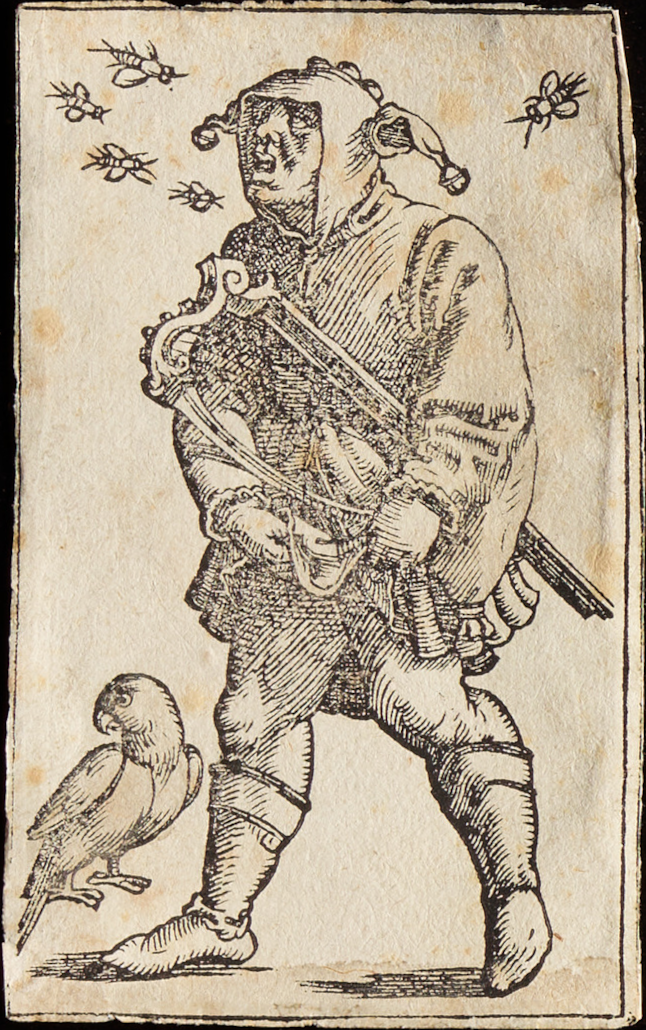
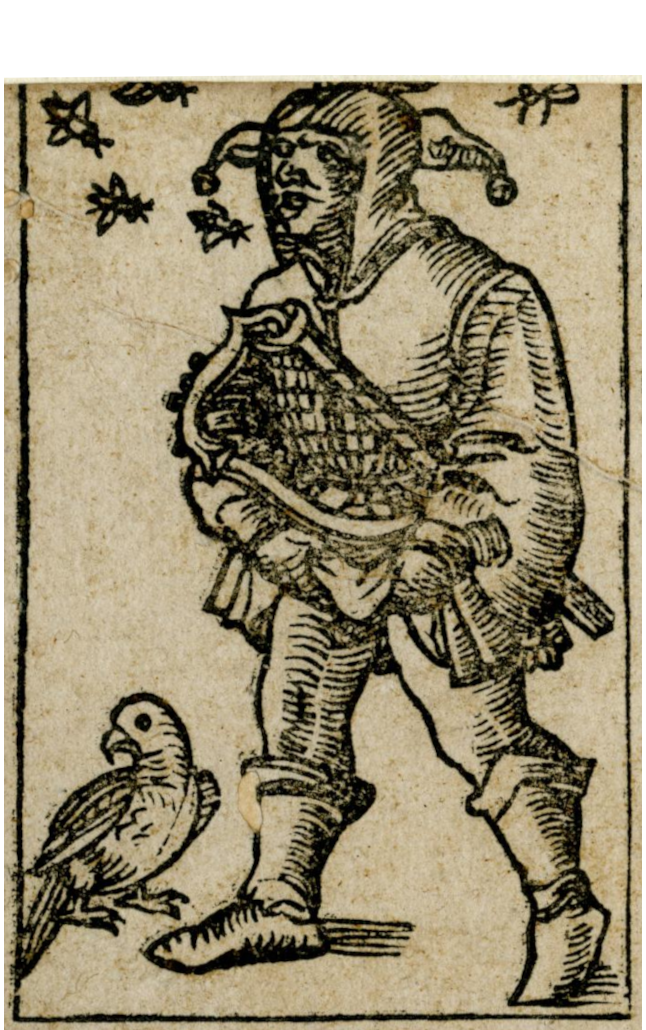
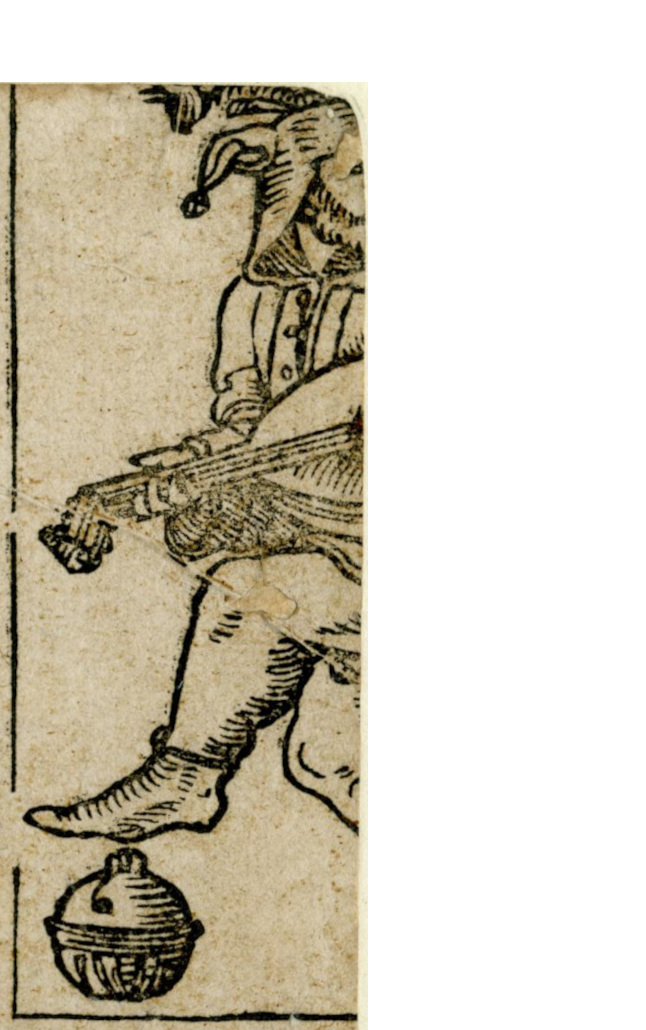
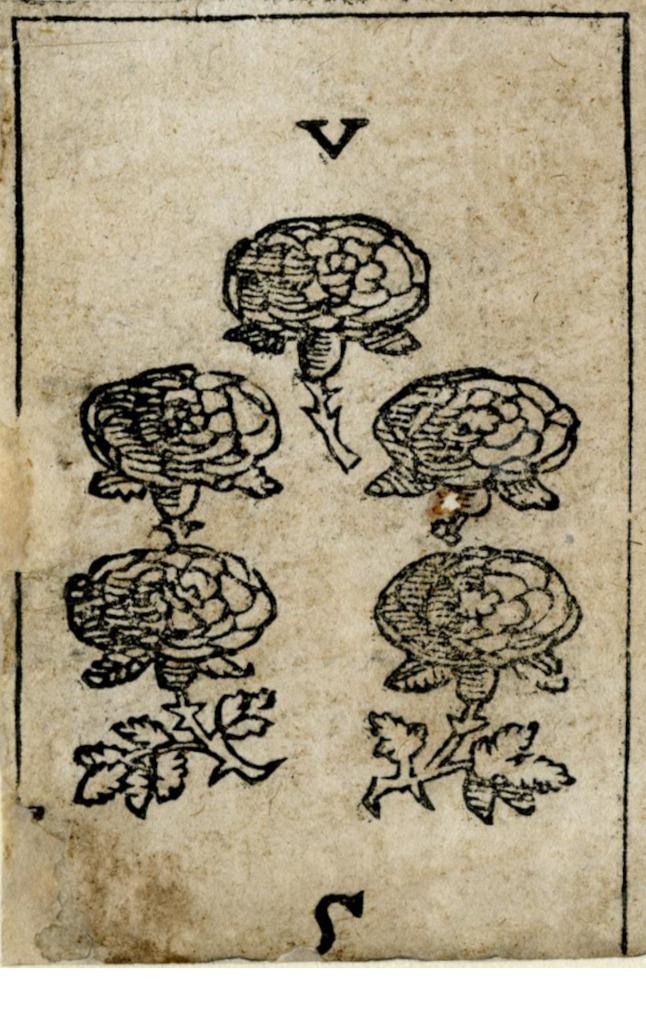
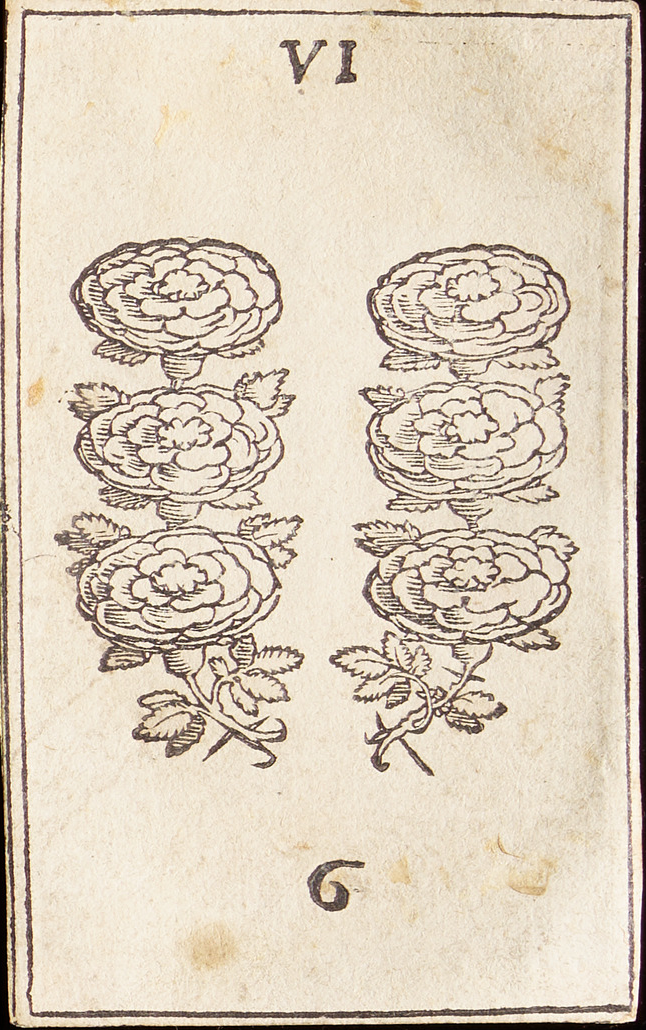
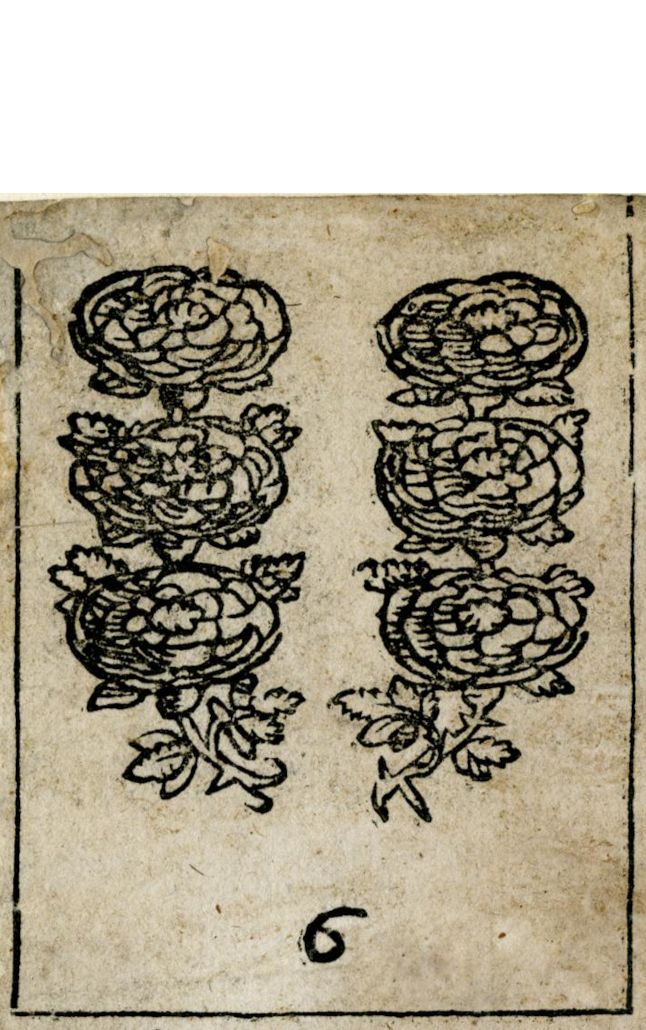
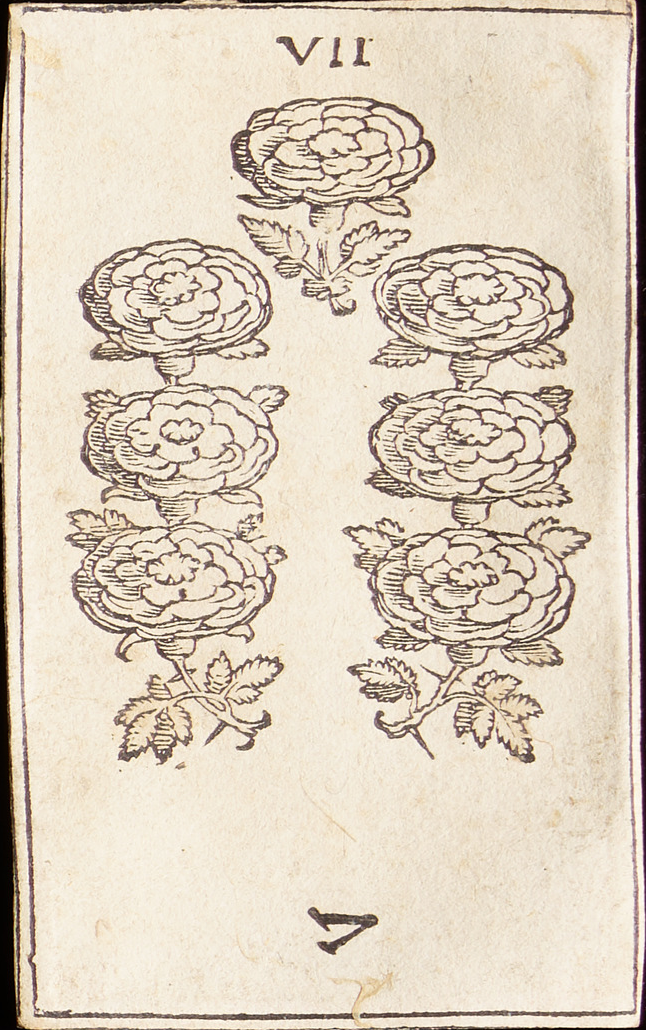
Three fragments from a copy of this pack, two of which are duplicates, are located in the British Museum. Each fragment contains large parts of four cards each, and undoubtedly belong together. They form part of a copy of Beham’s pack, although the faithfulness of the copy varies between the two fragments, and some alterations are apparent.
 |
 |
 |
 |
|||
The two under-knaves are markedly more coarsely drawn than the originals. They are also mirrored, but the images presented here are reverted back for easier comparison. Note that the suit symbol is moved in the under-knave of bells. |
||||||
 |
 |
 |
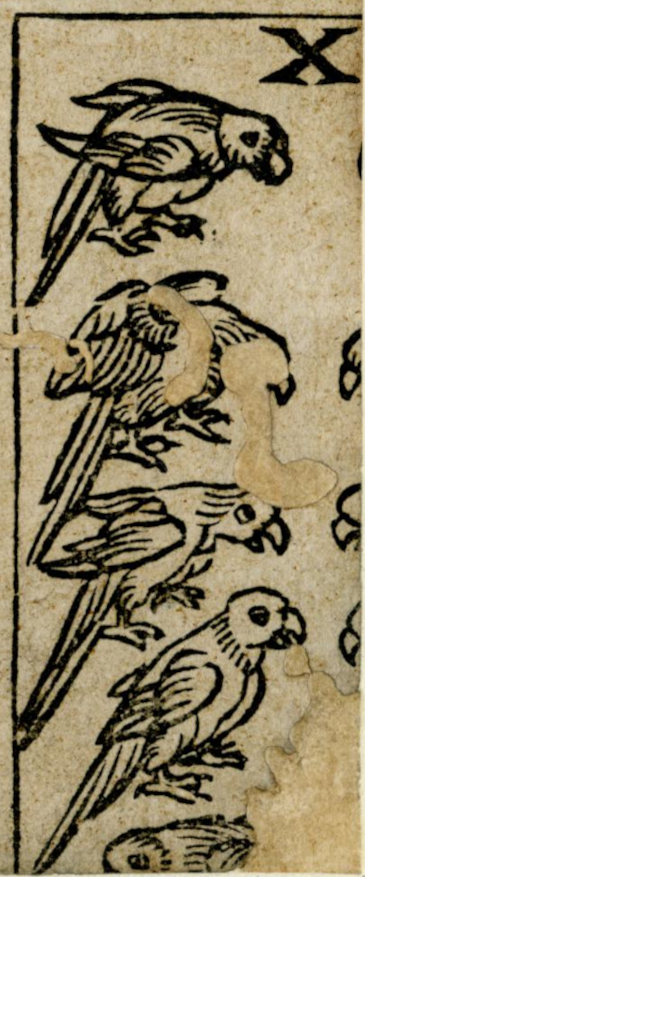 |
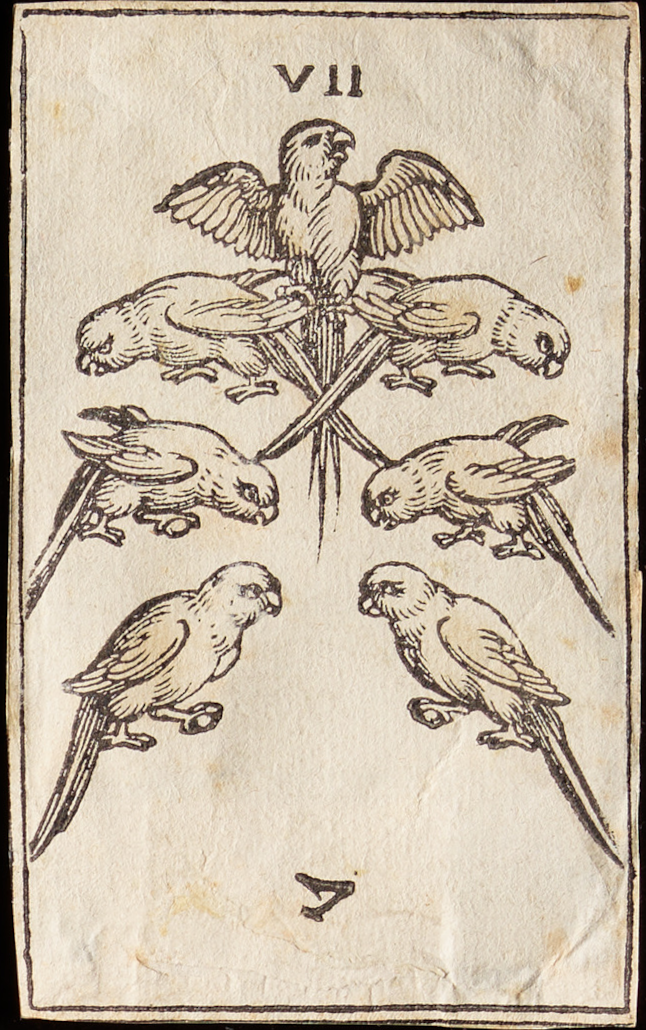
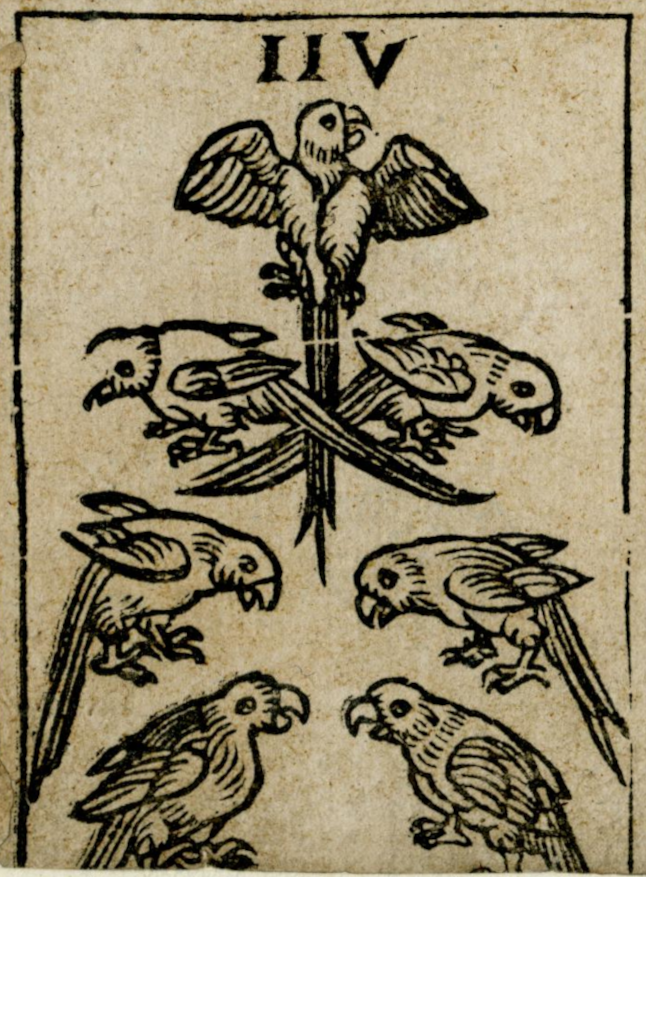
The seven and ten of parrots that survive on the same sheet fragment as the under-knaves are likewise coarser and mirrored. |
||
 |
 |
 |
 |
 |
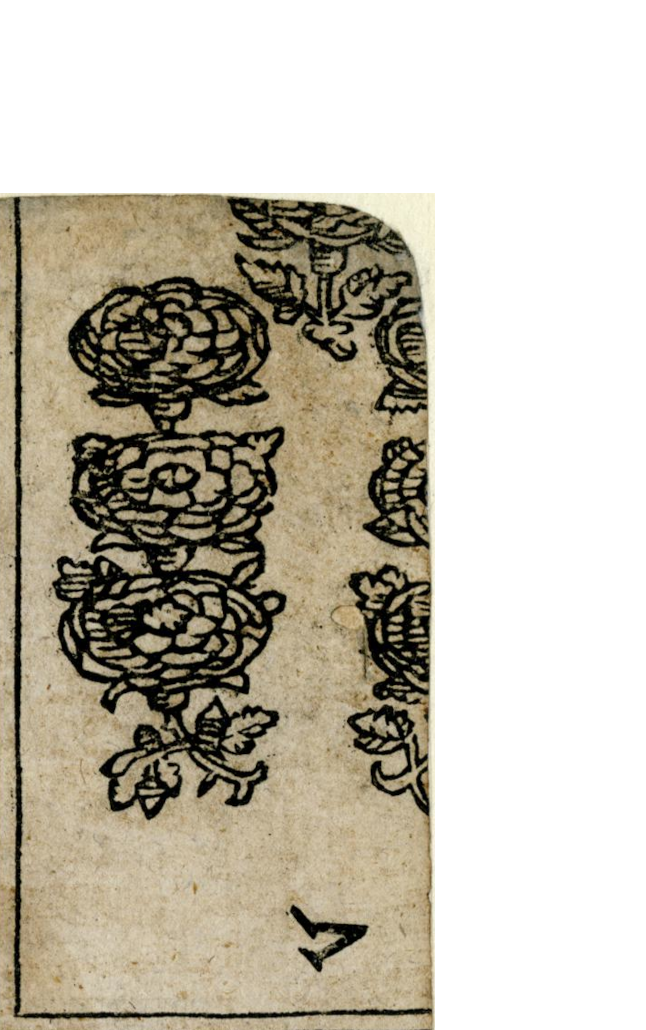 |
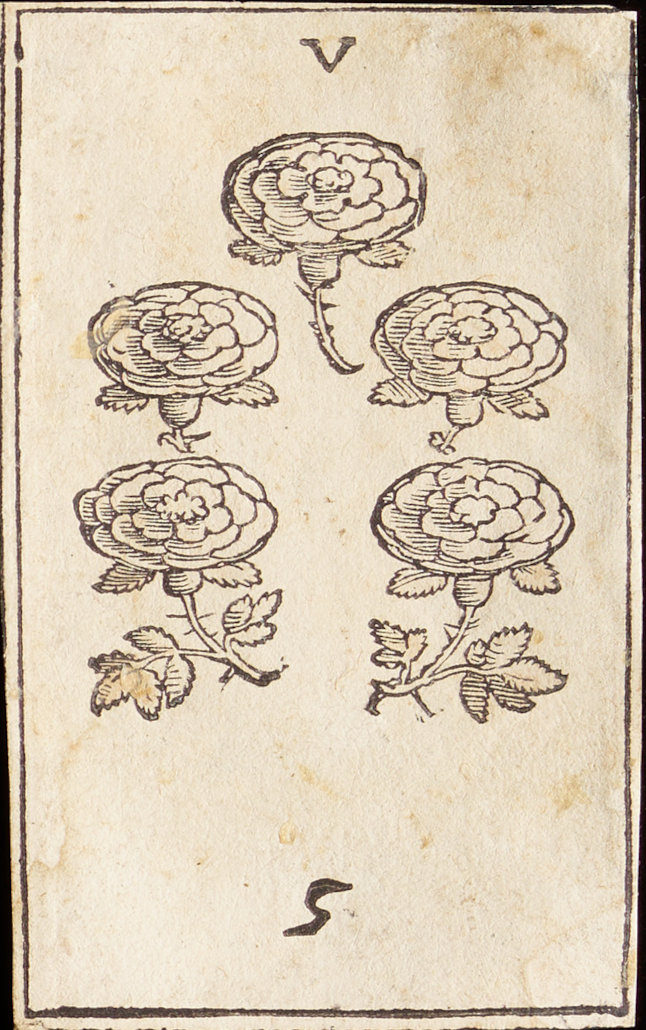
The five, six and seven of roses on the other fragment are much closer to the original designs, and not mirrored. |
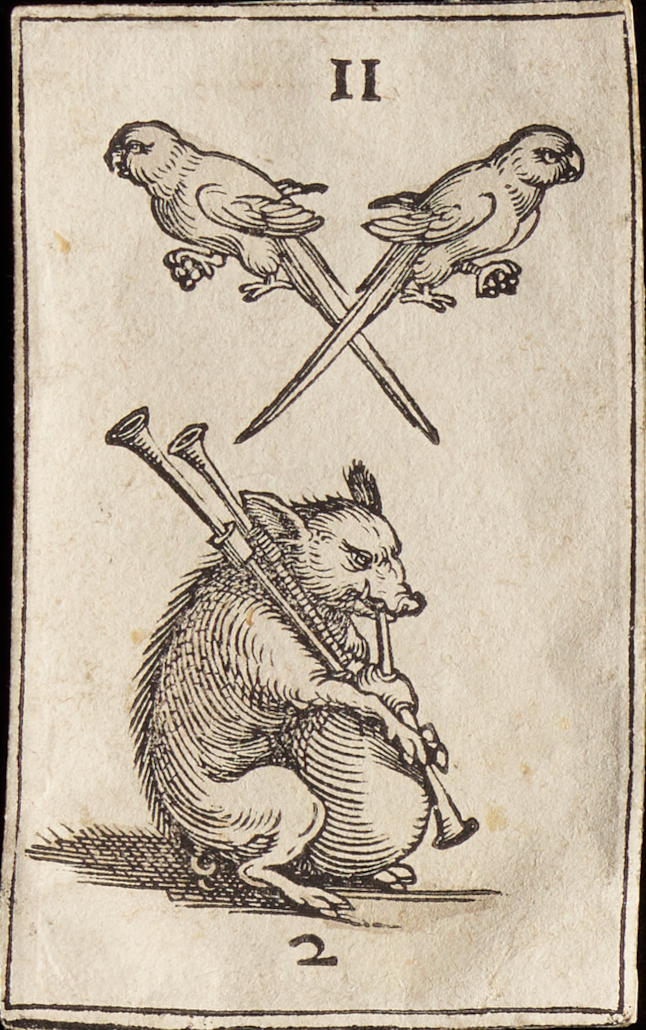 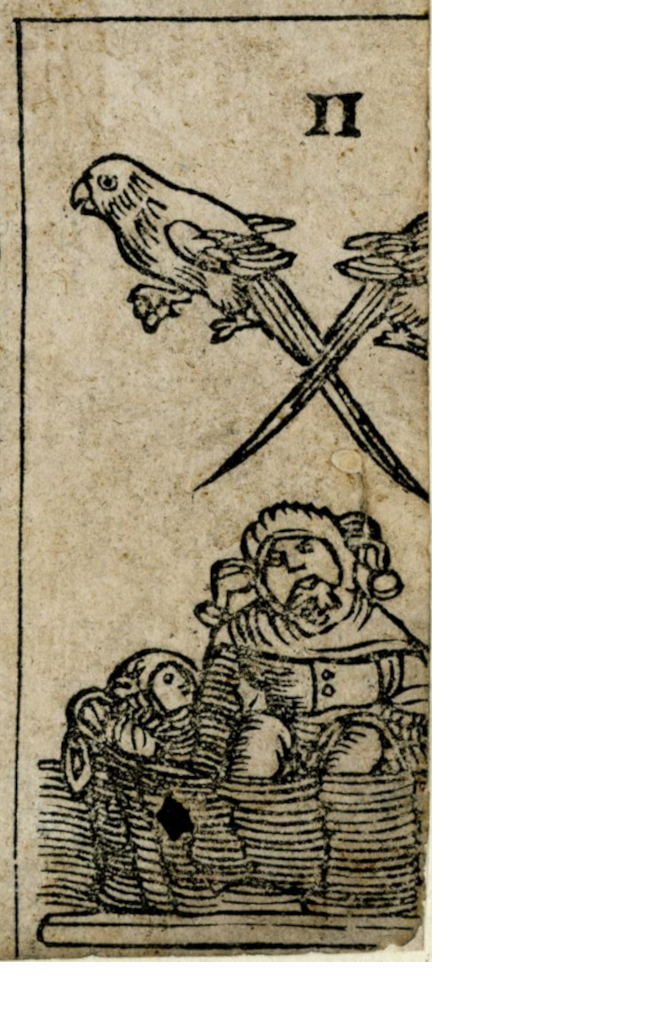 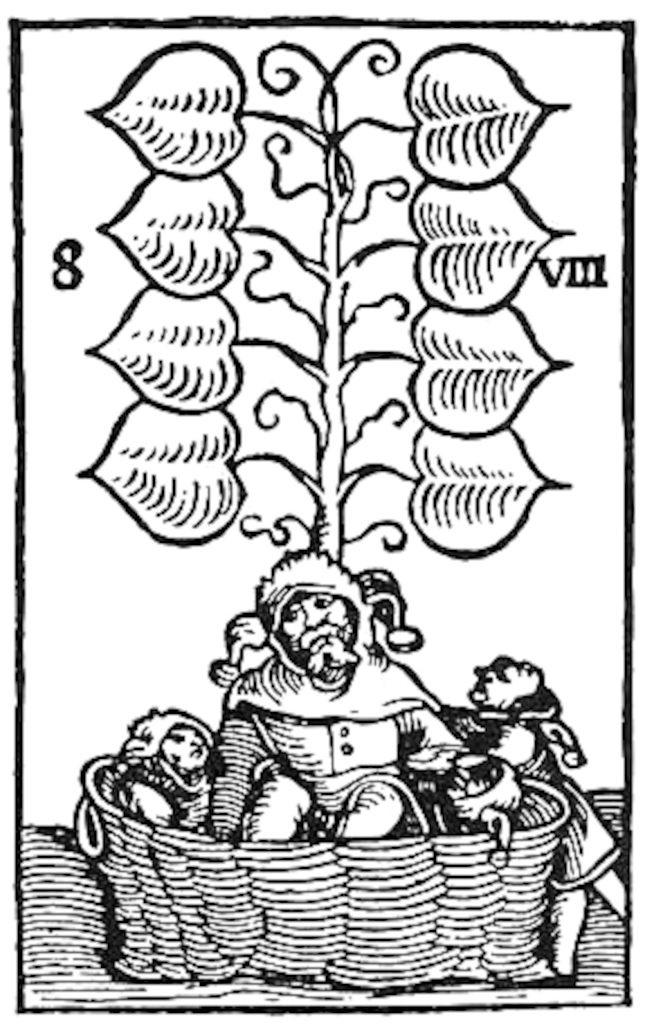 |
The fourth card on this fragment is the deuce of parrots. Like in the rose cards, the pips are not mirrored and are more faithfully copied than in the mirrored parrot cards. The illustration below these, however, is replaced by a copy of the illustration from the eight of leaves in the c. 1535 pack of Hans Leonhard Schäufelein. |
|||||
Later imitations
Both Heinrich Hauk (Frankfurt, 1585) and
Hans Braun (described on the same page) made miniature packs copying
this selection of suits, but rendering the parrots much more
generically, leading to these rather being described simply as
birds
. Both also reinstated the stylised trees carrying the
acorns, and also introducing these in the suit of roses.
 Tor Gjerde <i@old.no>