Hans Leonhard Schäufelein, c. 1535
This pack, made in Nuremberg by Hans Leonhard Schäufelein around 1535, is an early example of cards with satirical scenes as vignette illustrations below the suit symbols in the pip cards. It appears in several slightly different versions, with 48, 52 or 56 cards. The suits and the court cards are those of the standard 48-card German cards. The kings are seated, and the tens are normal pip cards. The value of the pip cards are indicated by both Arabic and Roman numerals besides the pips themselves, just like both packs made by Sebald Beham in the same city only a few years earlier. At 52 by 87 mm, the cards are slightly smaller than those.
48-card pack
This seems to be the original version, as there are no visible cuts between the top part with the pips and the vignette illustrations as can be seen in some of the variants. If so, it is slightly surprising that there is no coat of arms or maker’s mark on any deuce or other card.
| Eicheln ❖ Acorns | Laub ❖ Leaves | Herzen ❖ Hearts | Schellen ❖ Bells | |
|---|---|---|---|---|
| 2 / Daus ❖ 2 / Deuce | 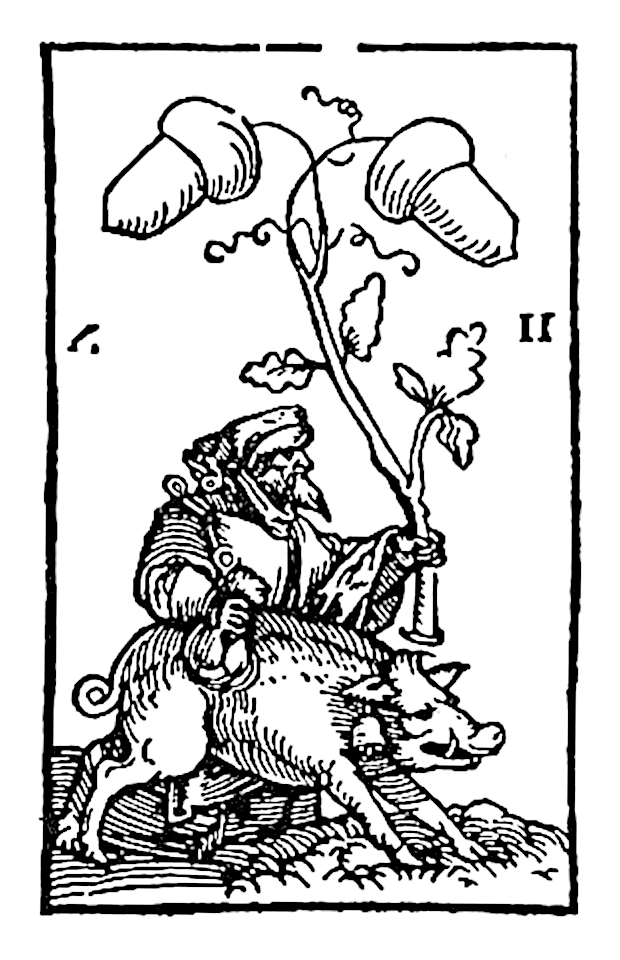 | 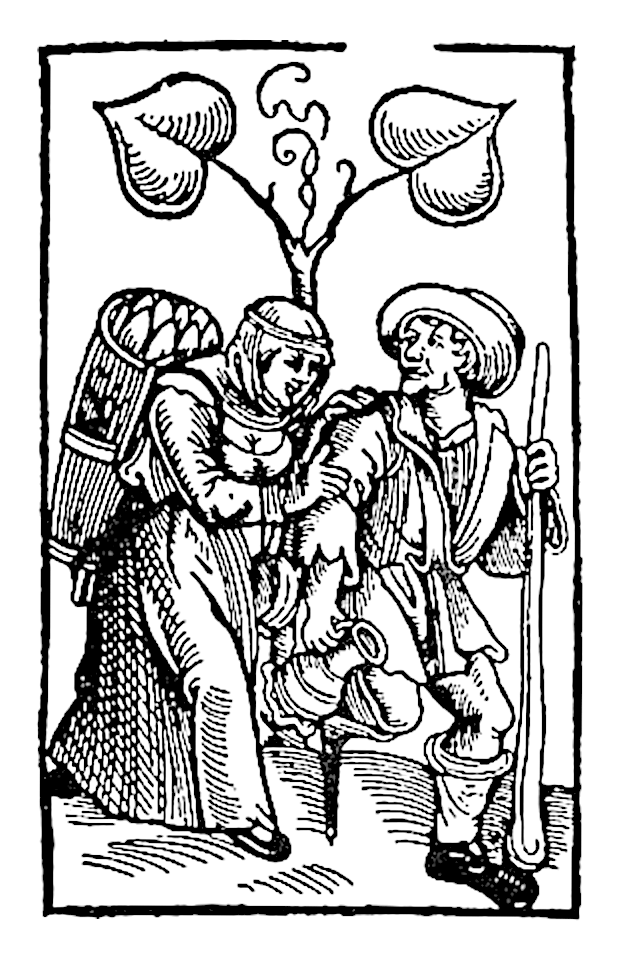 | 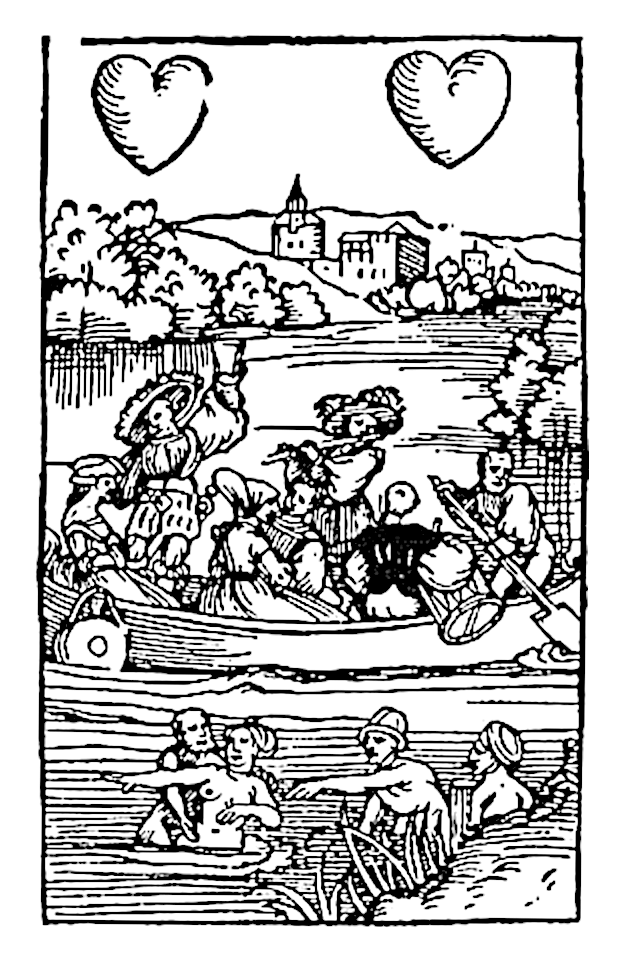 | 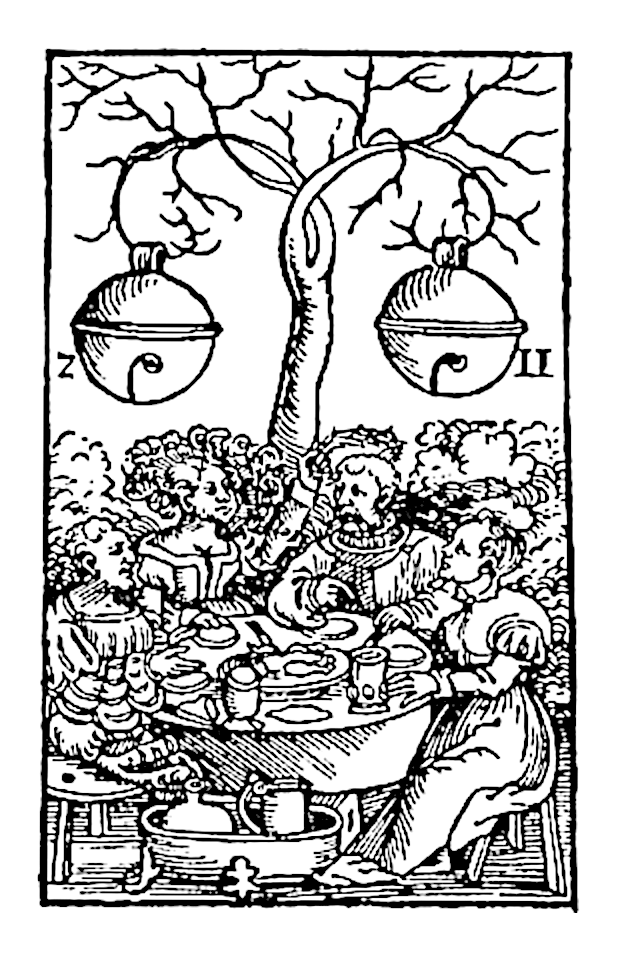 |
| 3 | 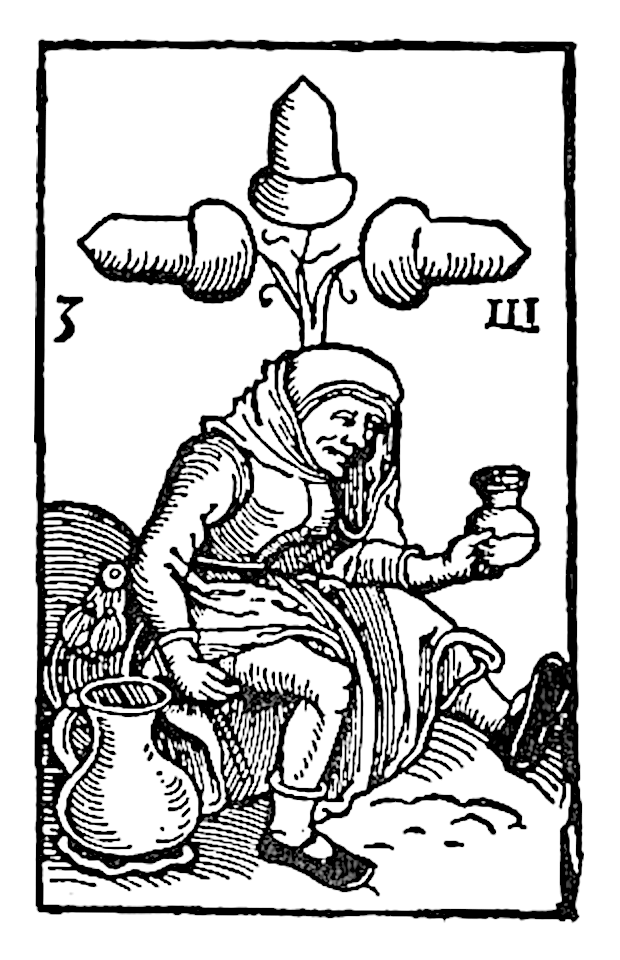 | 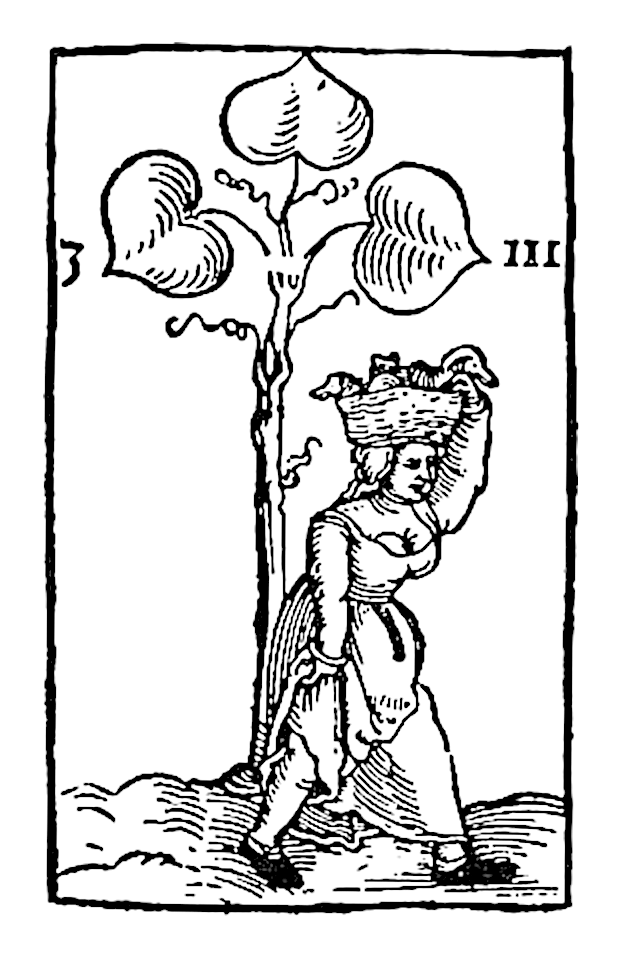 | 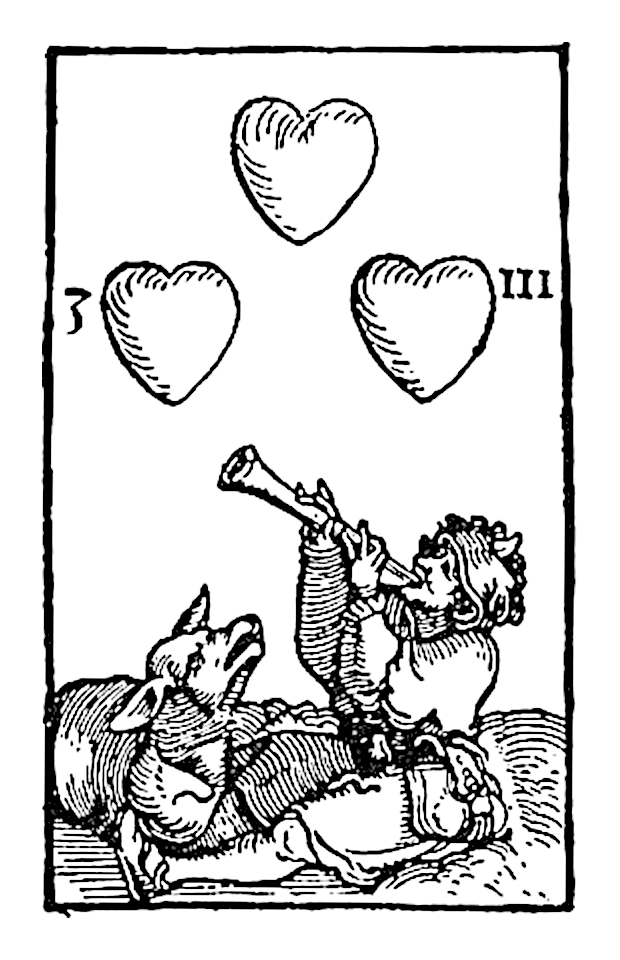 | 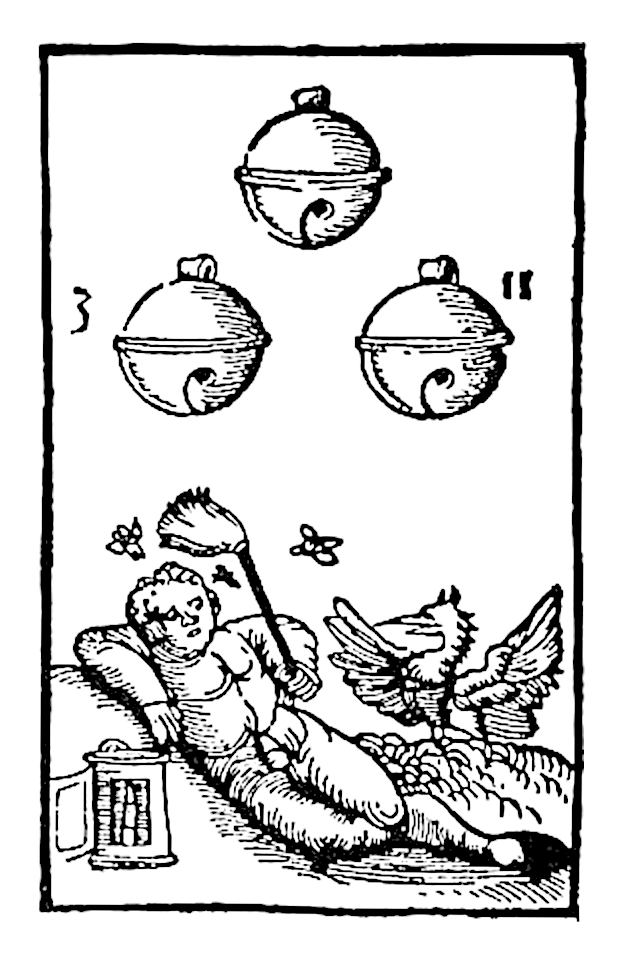 |
| 4 | 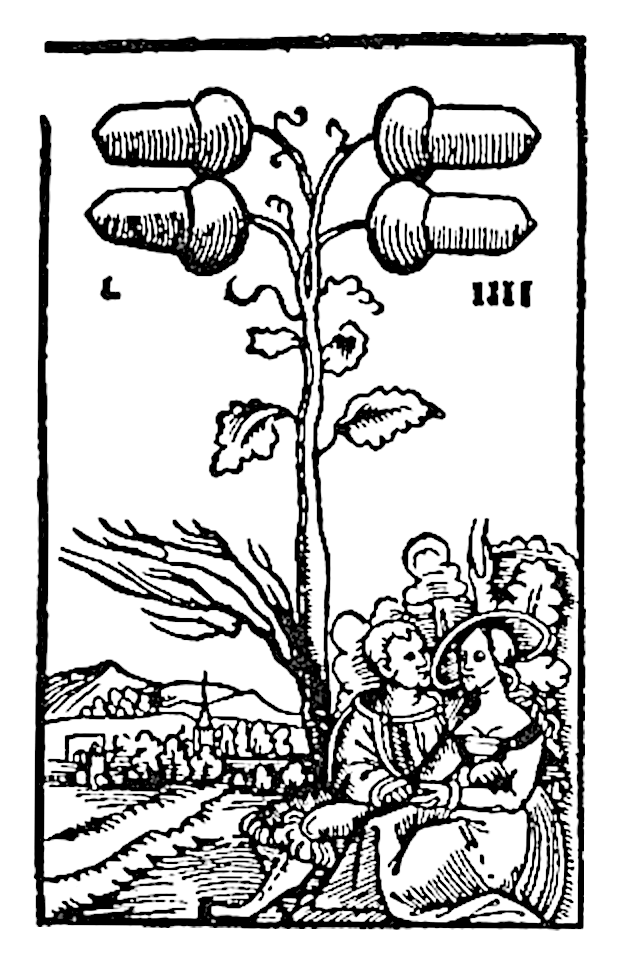 | 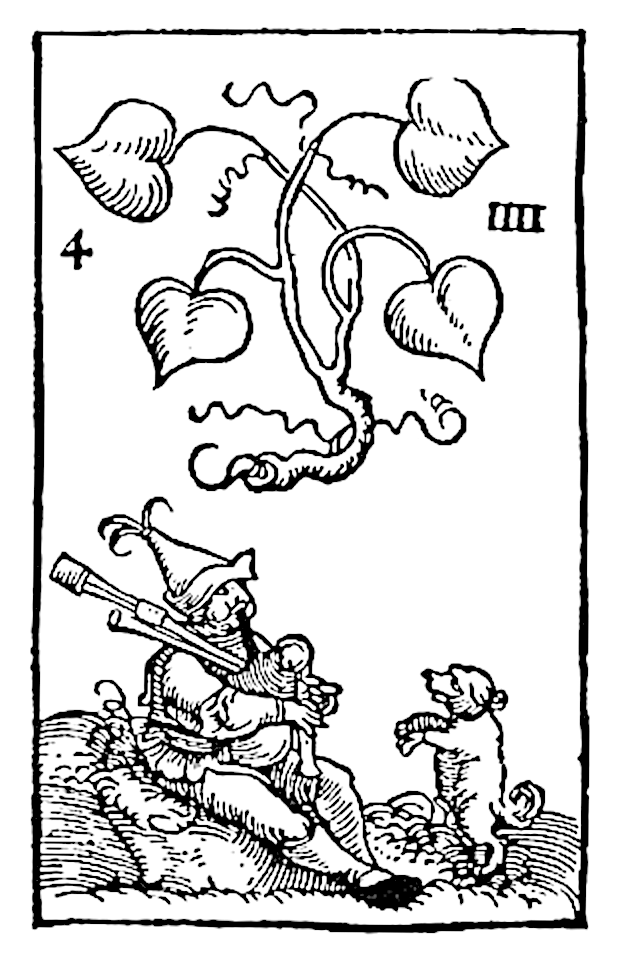 | 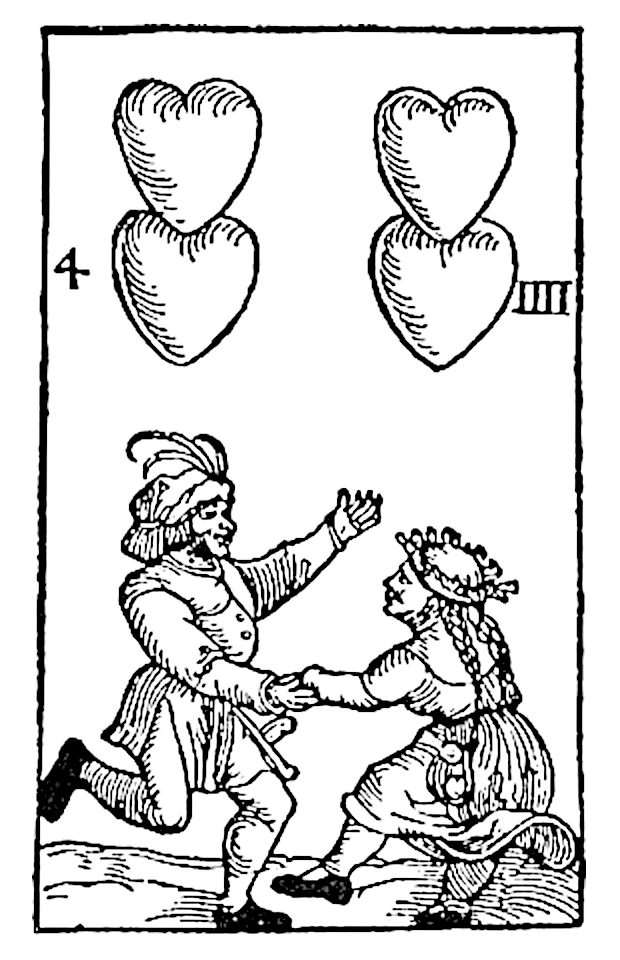 | 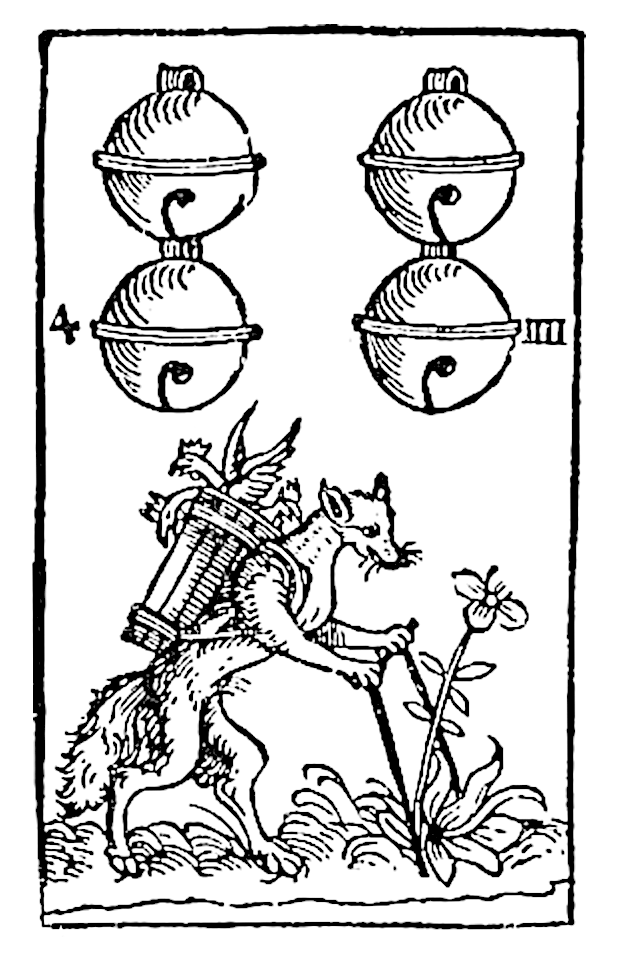 |
| 5 | 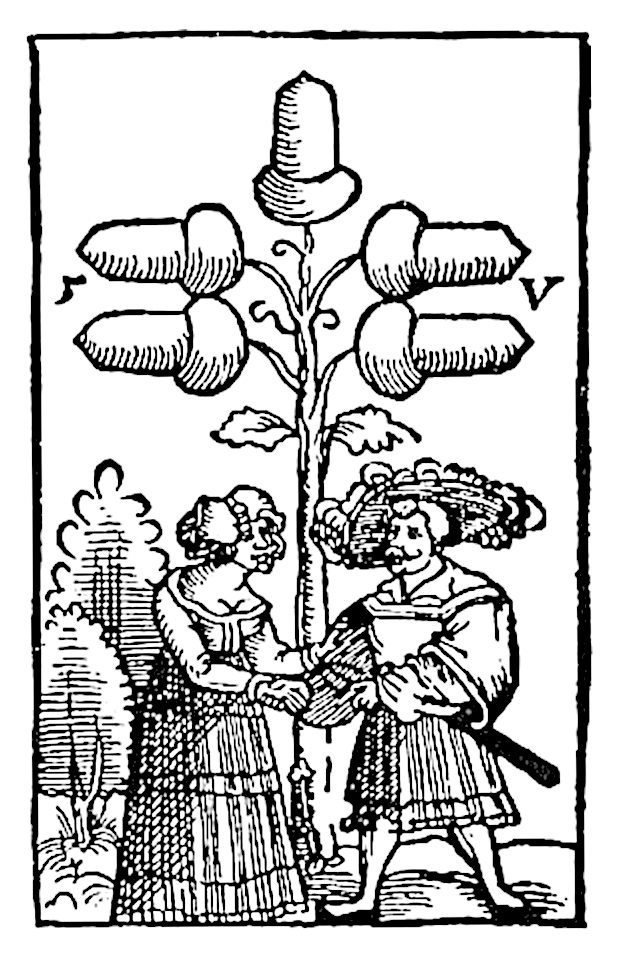 | 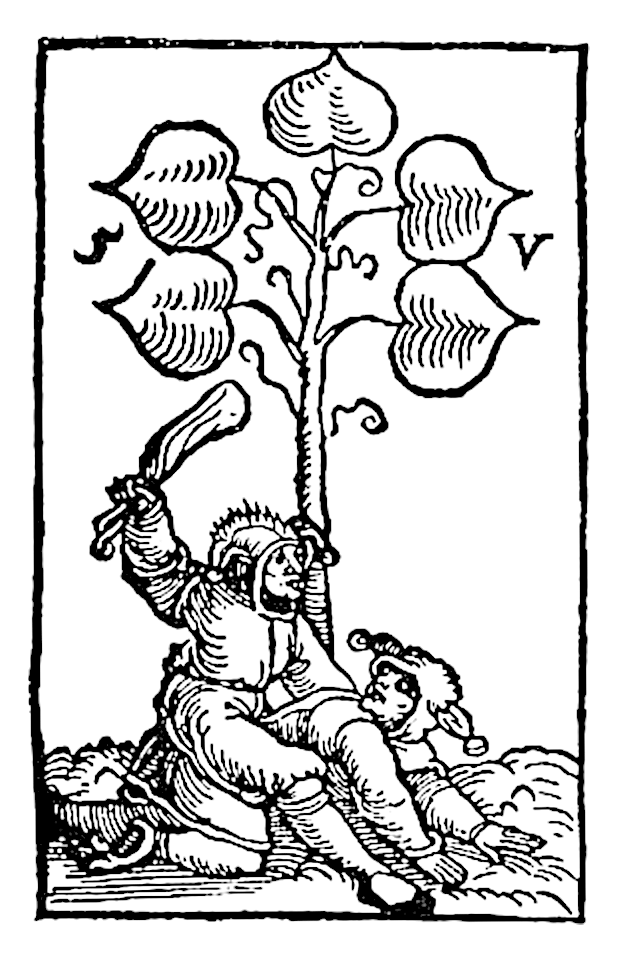 | 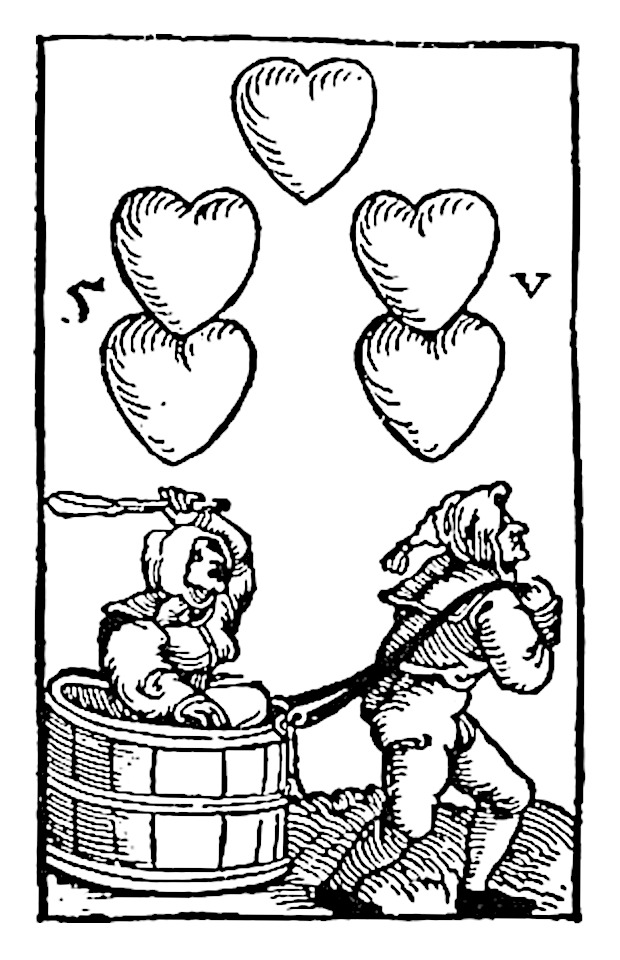 | 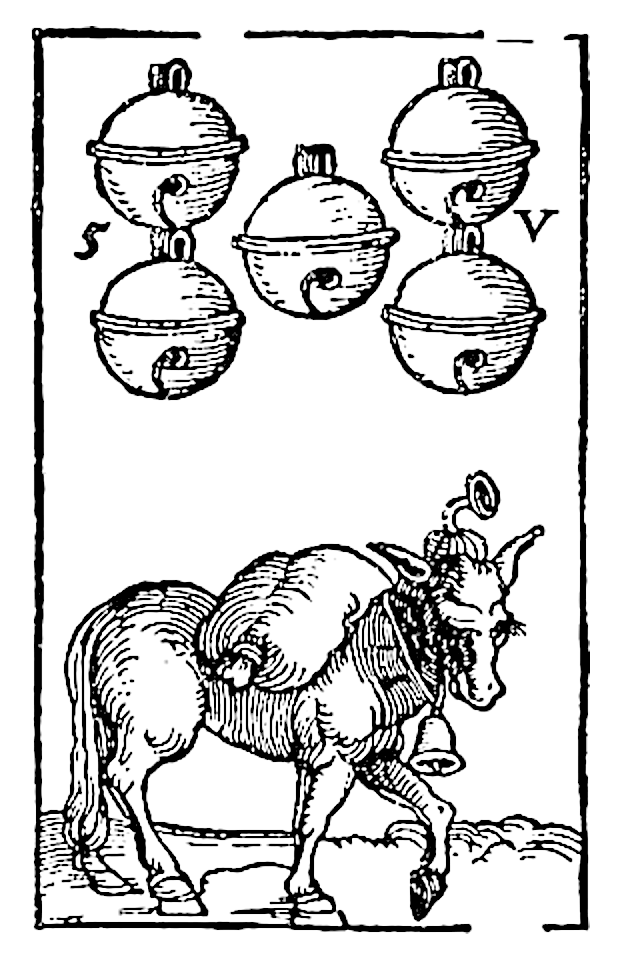 |
| 6 | 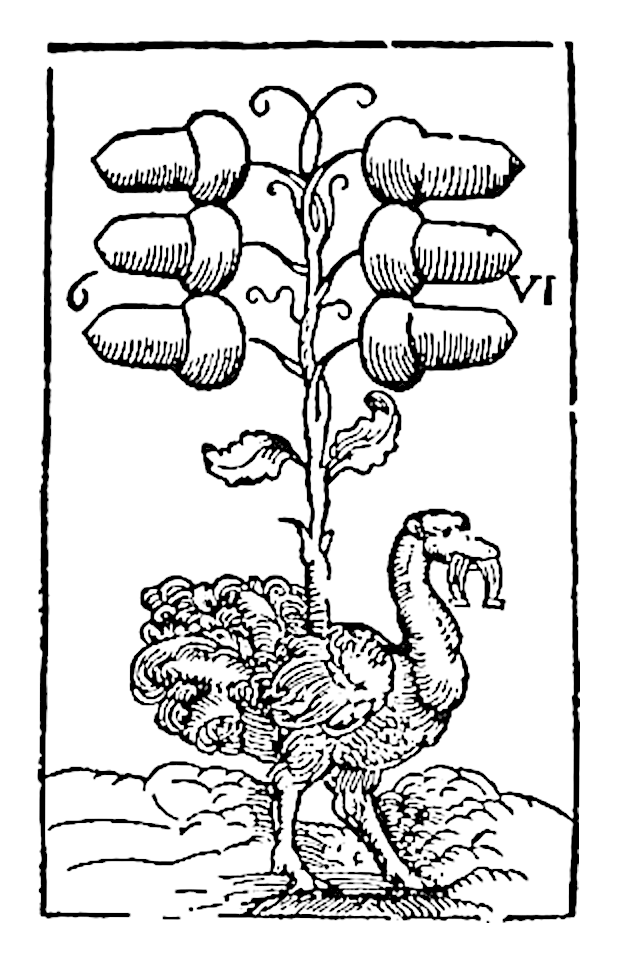 | 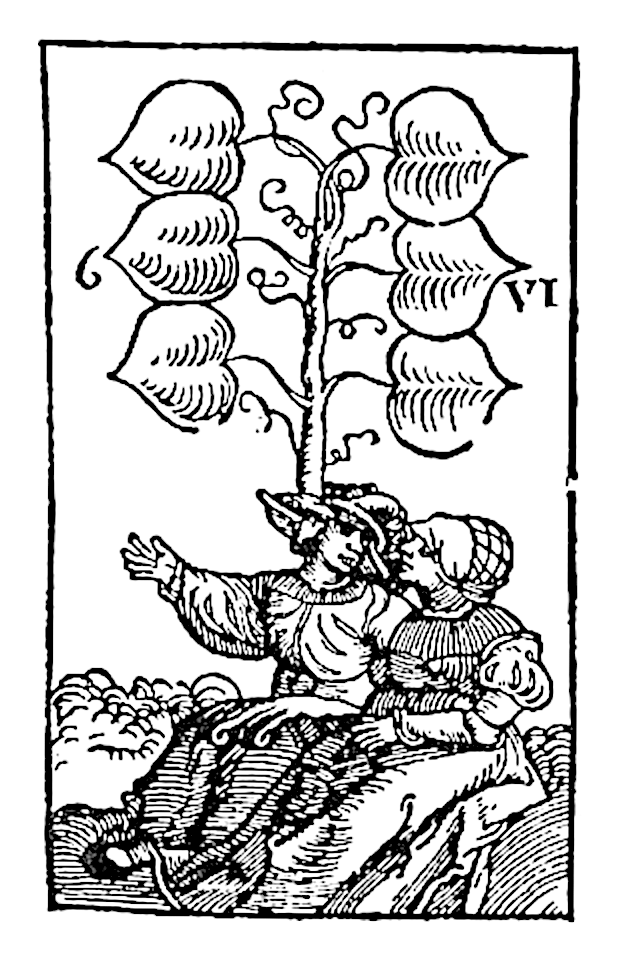 | 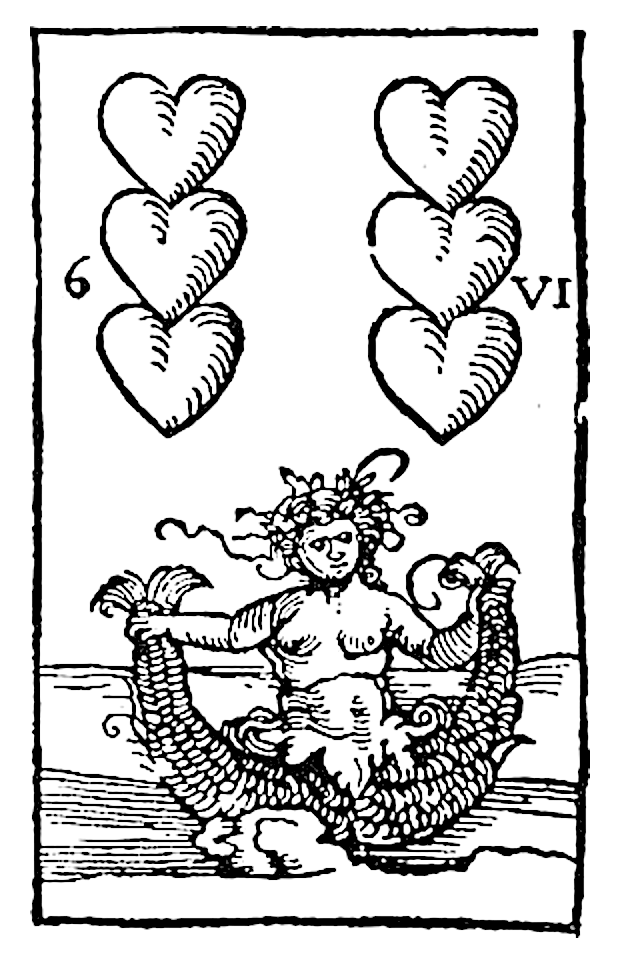 | 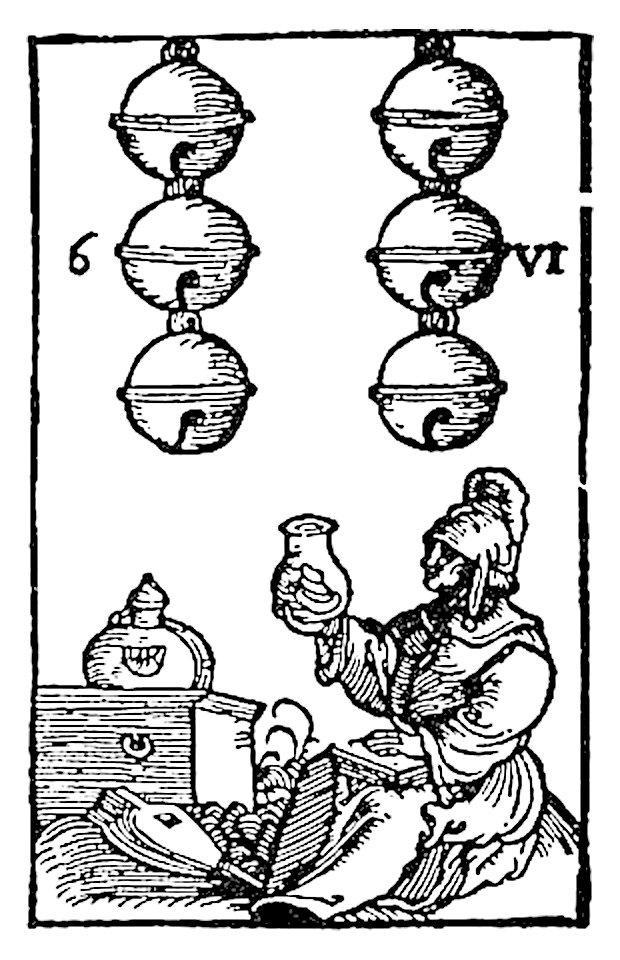 |
| 7 | 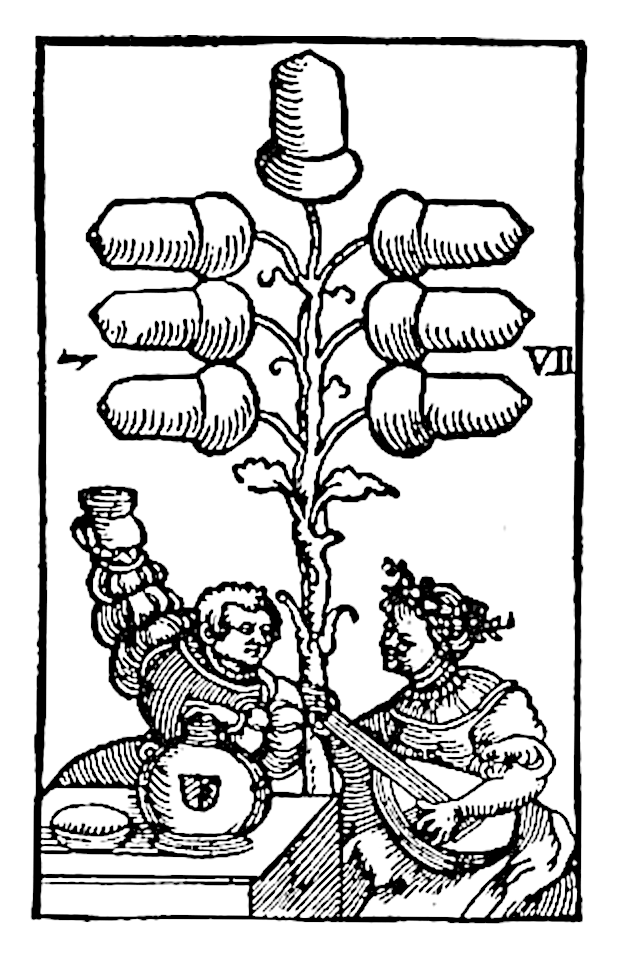 | 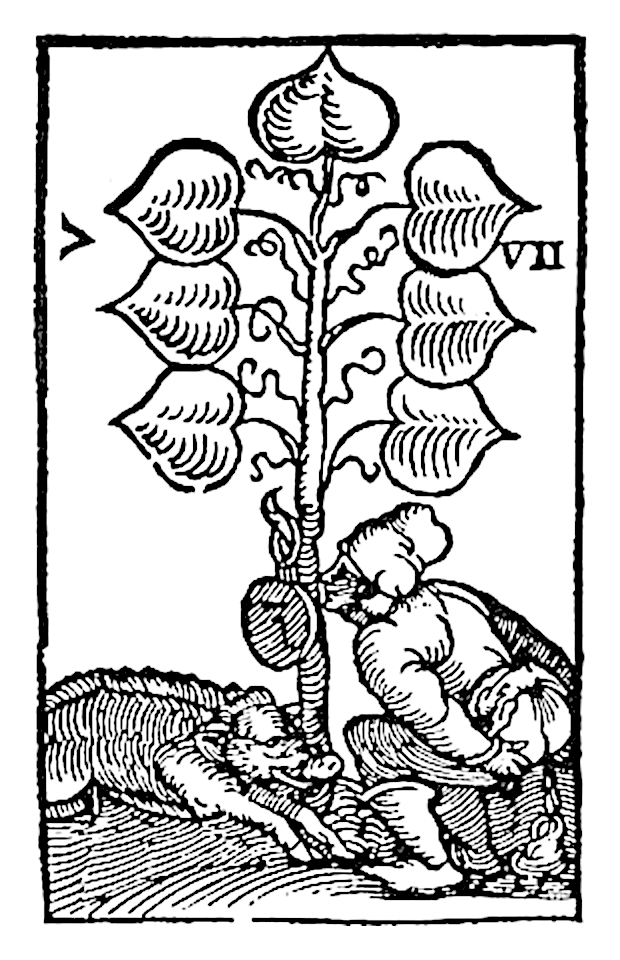 | 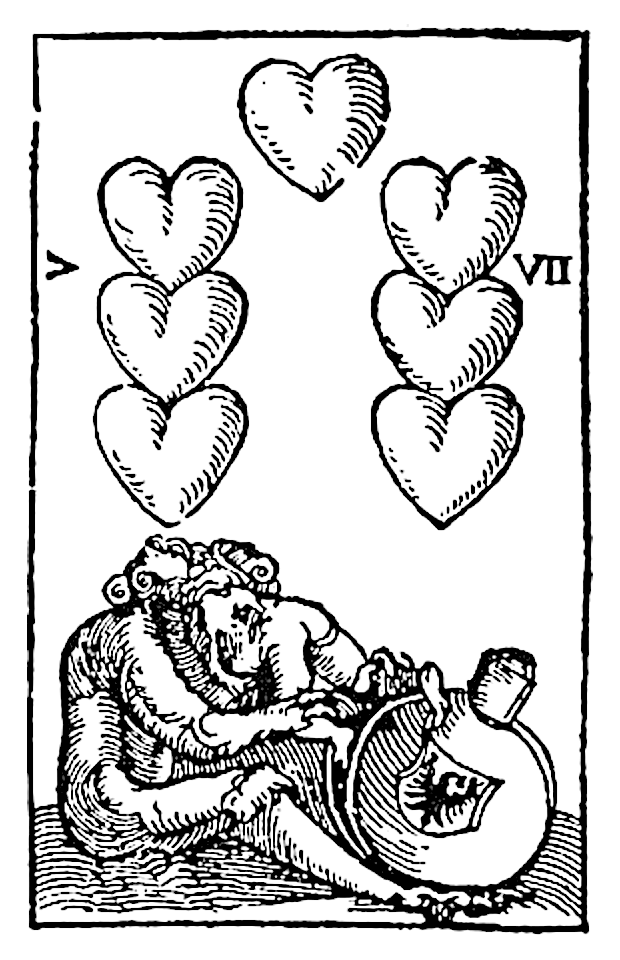 | 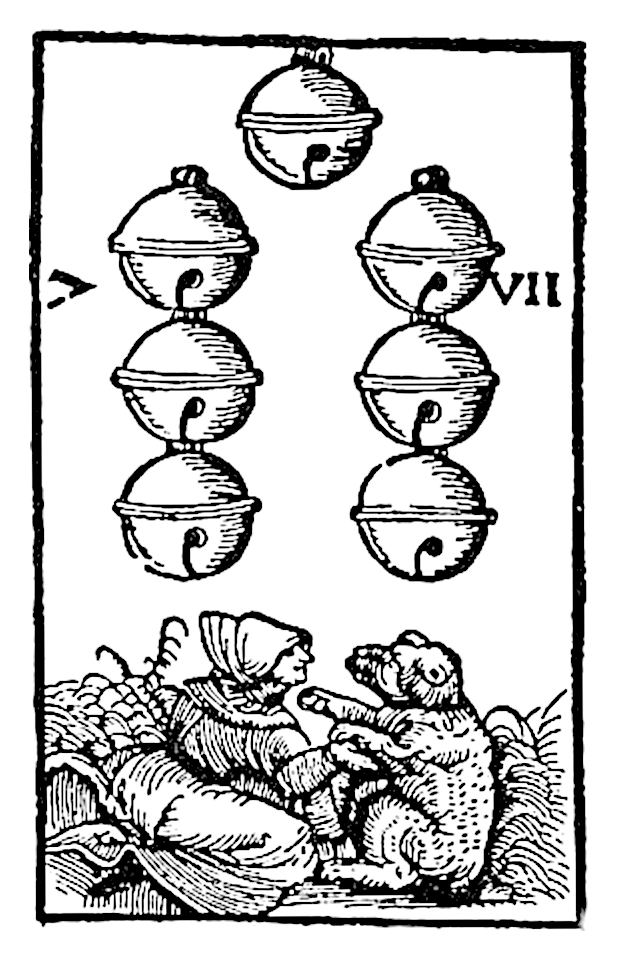 |
| 8 | 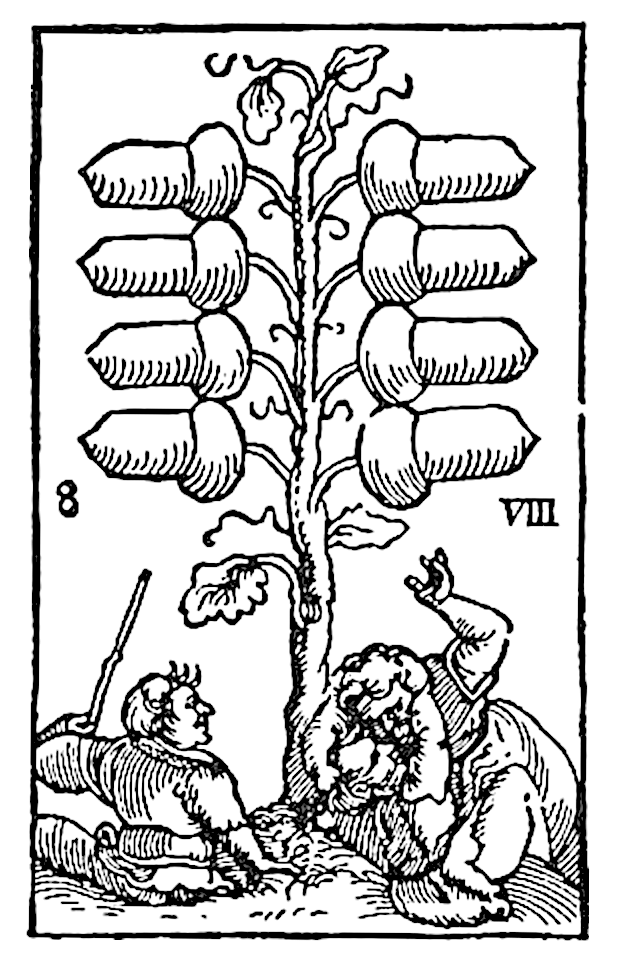 | 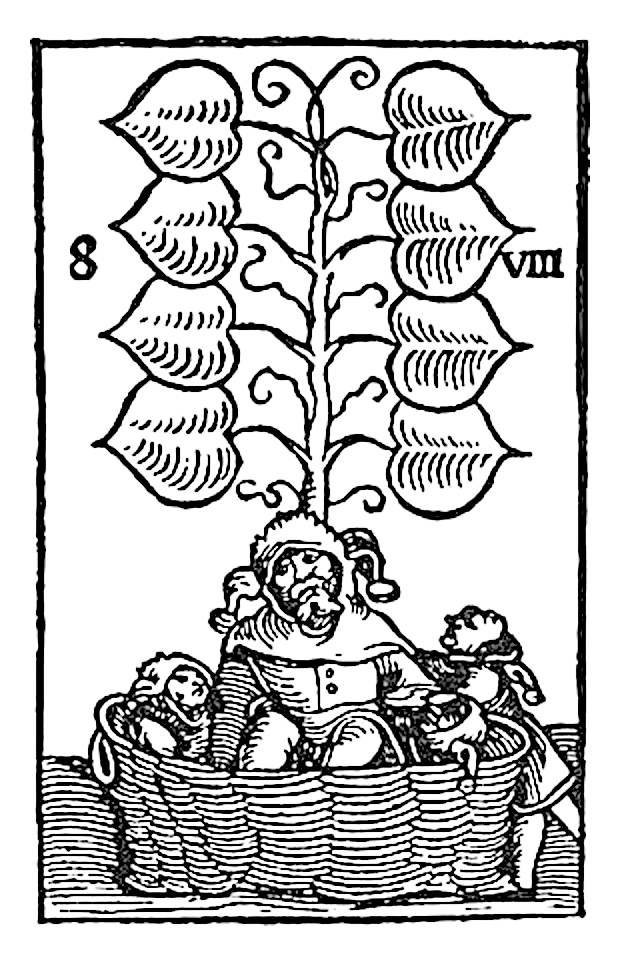 | 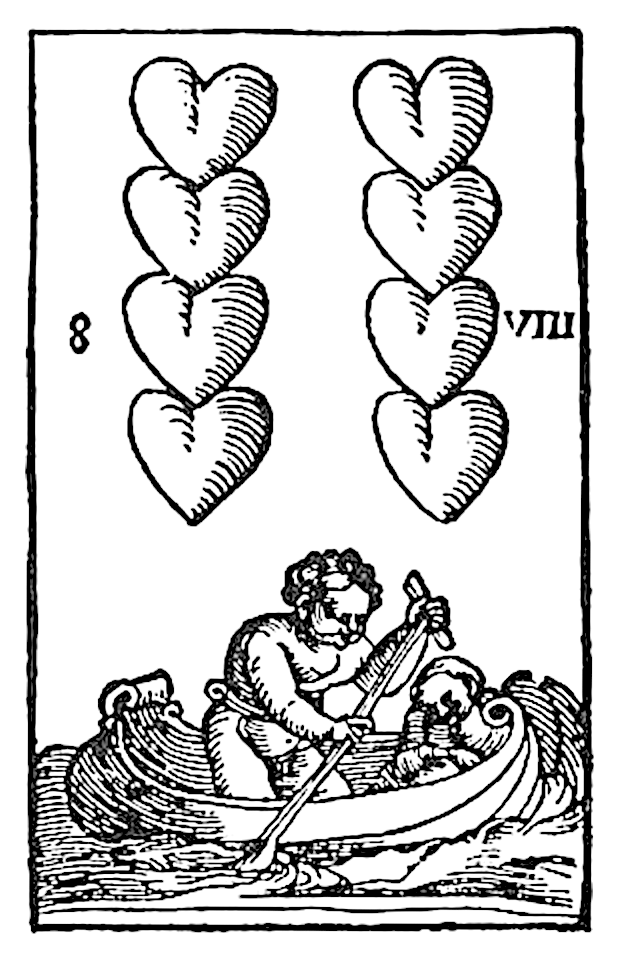 | 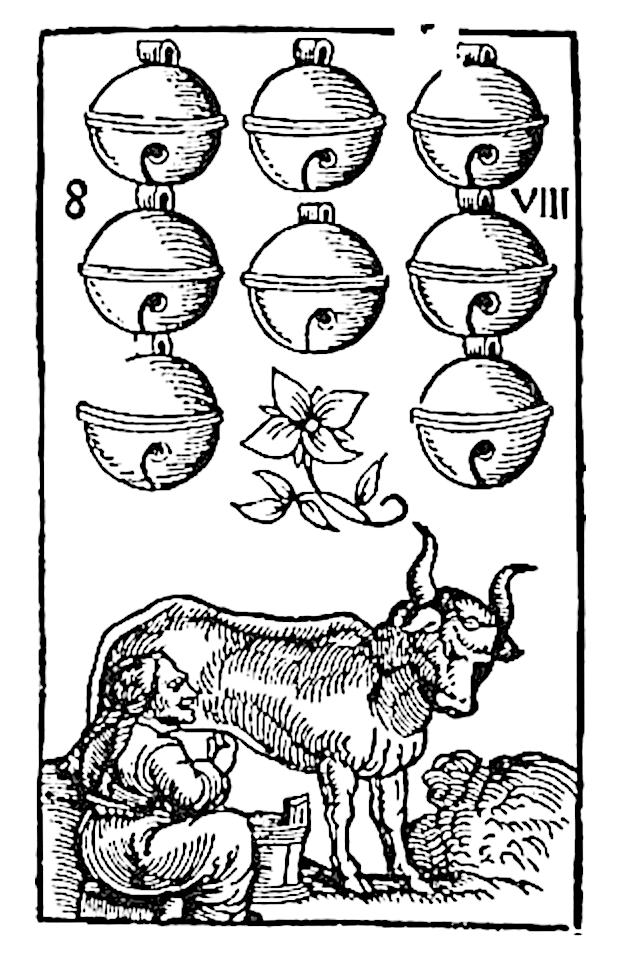 |
| 9 | 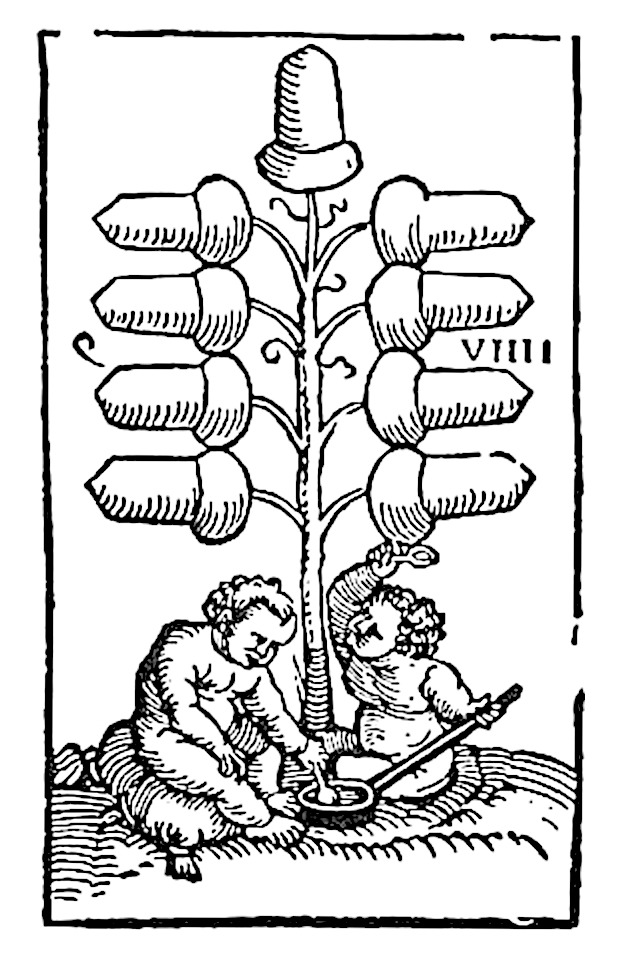 | 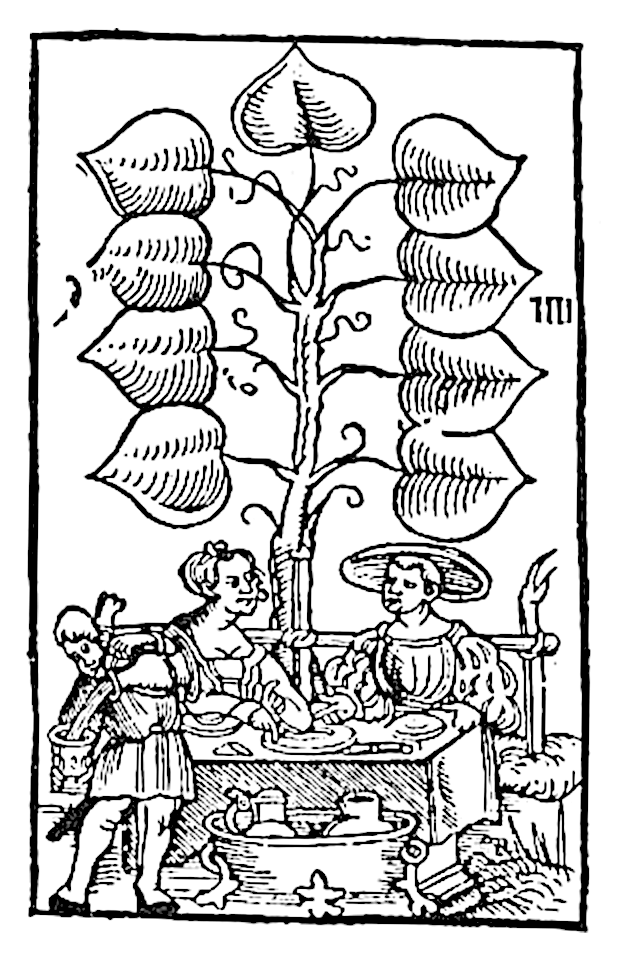 | 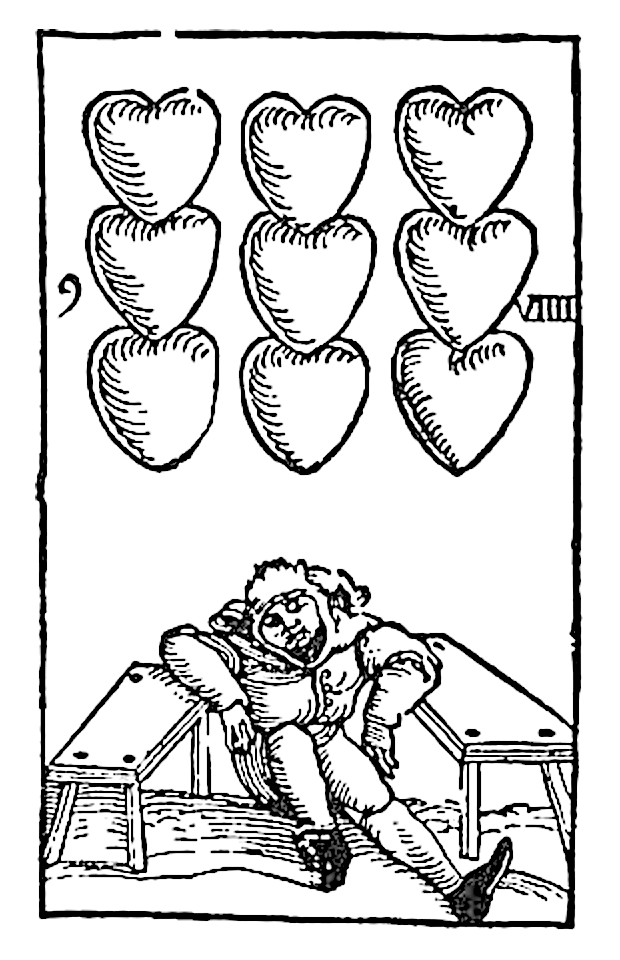 | 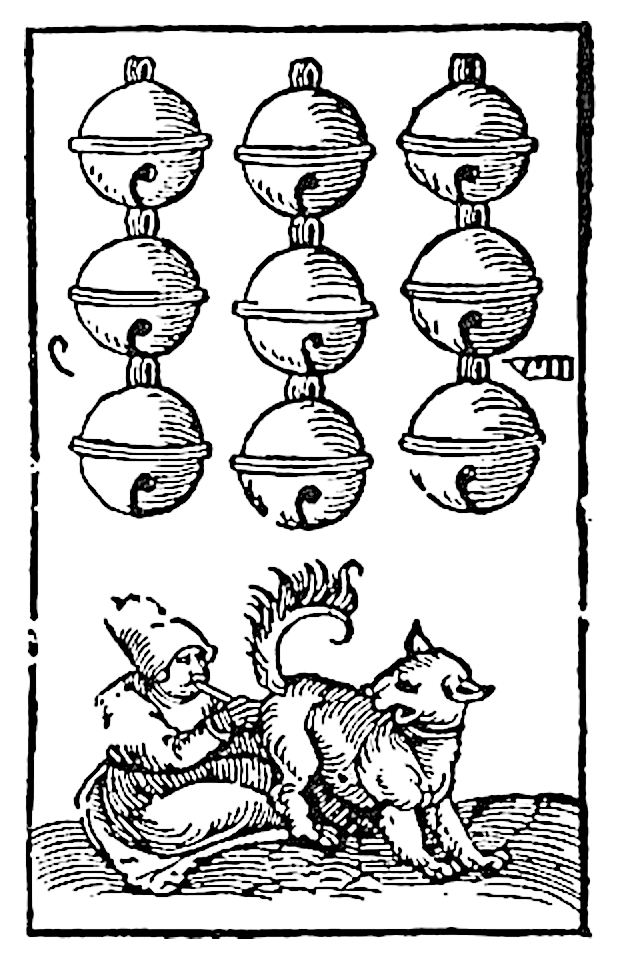 |
| 10 | 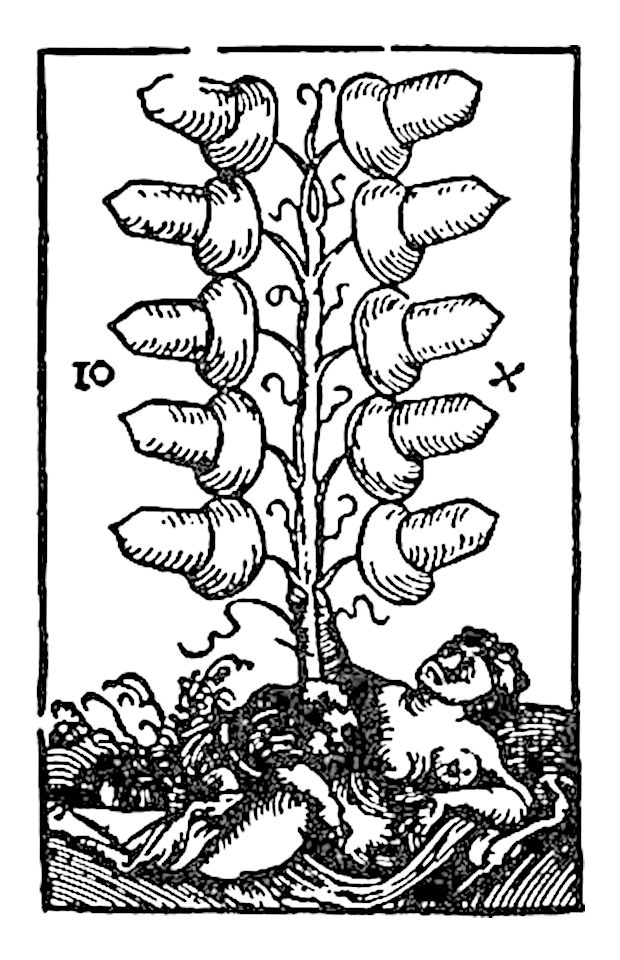 | 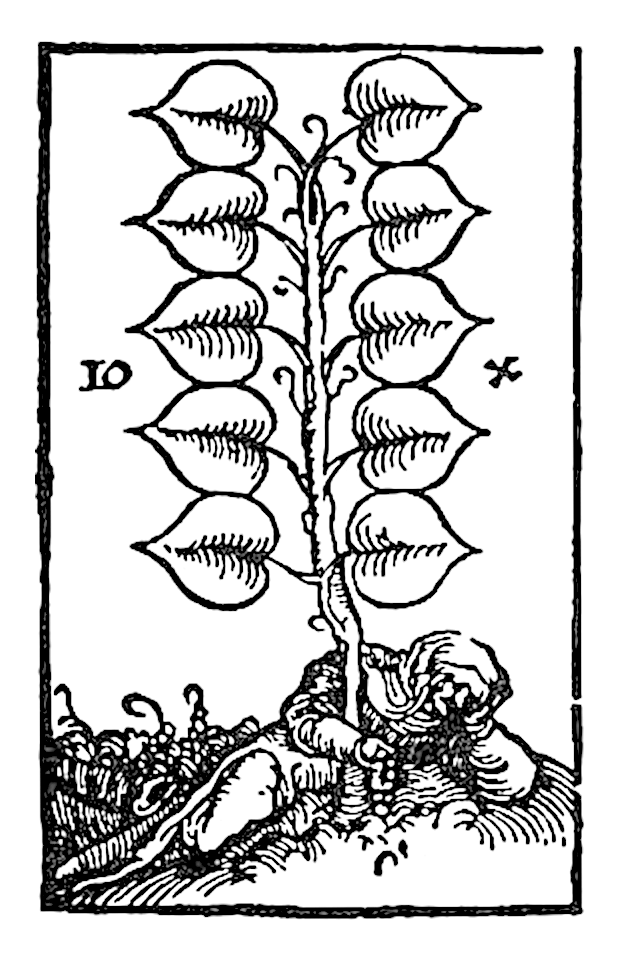 | 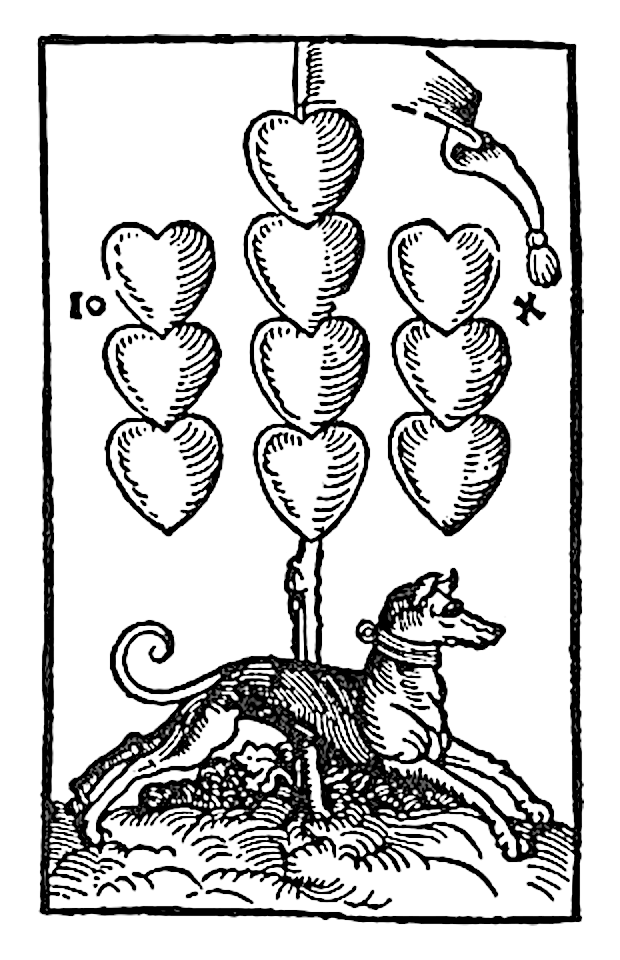 | 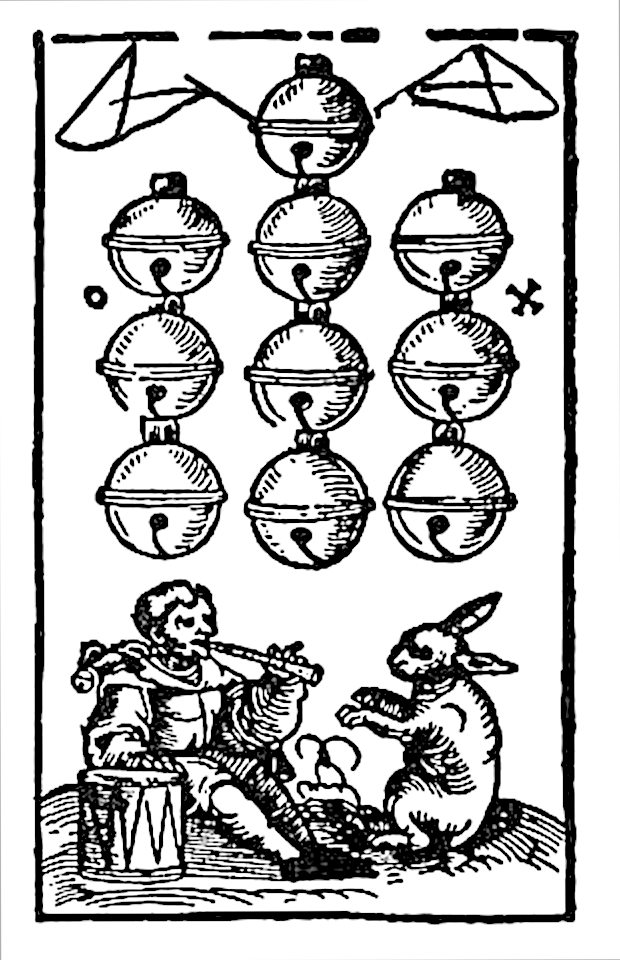 |
| Unter ❖ Under-knave | 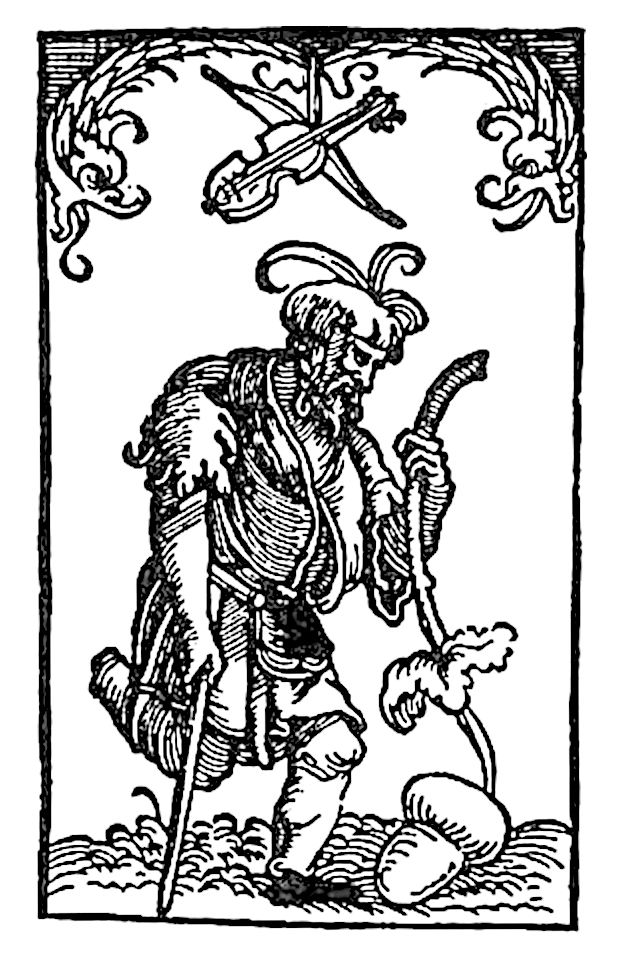 | 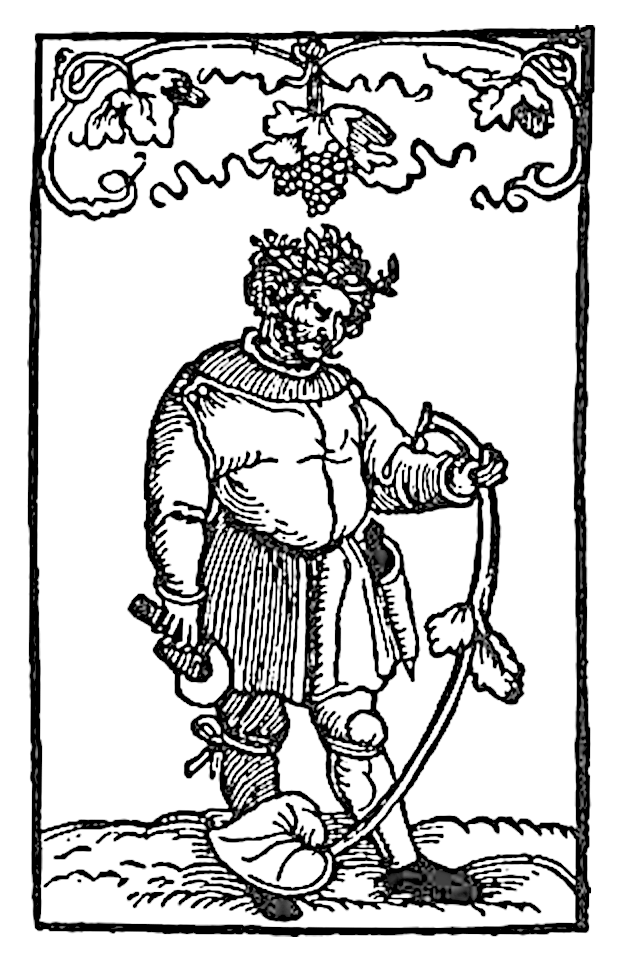 | 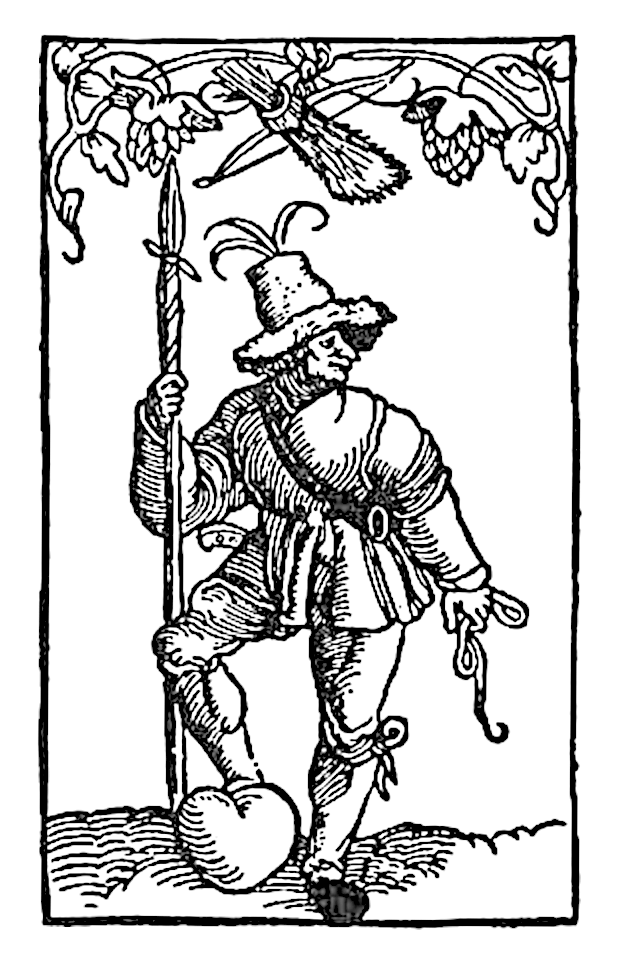 | 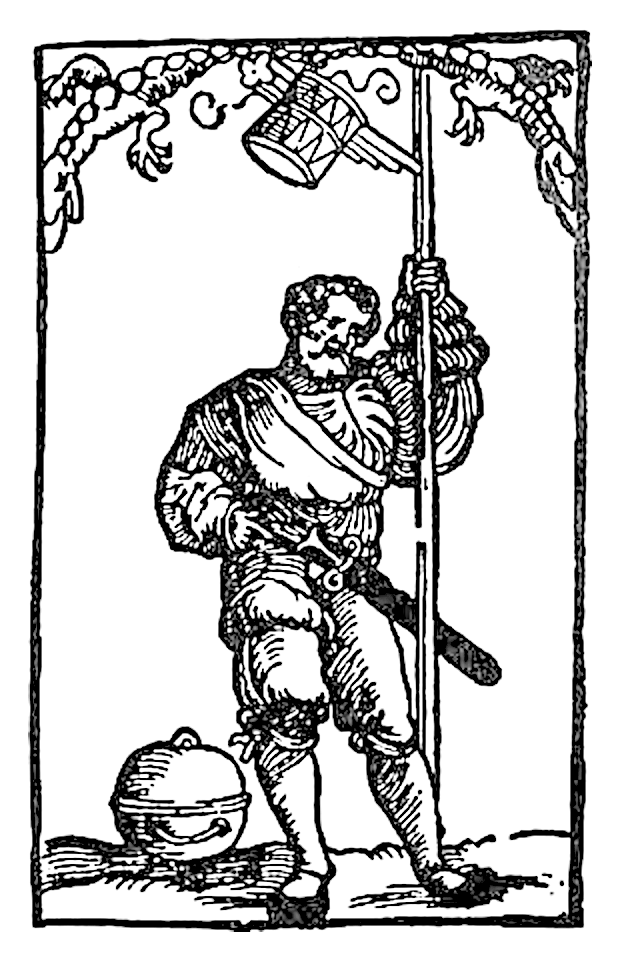 |
| Ober ❖ Over-knave | 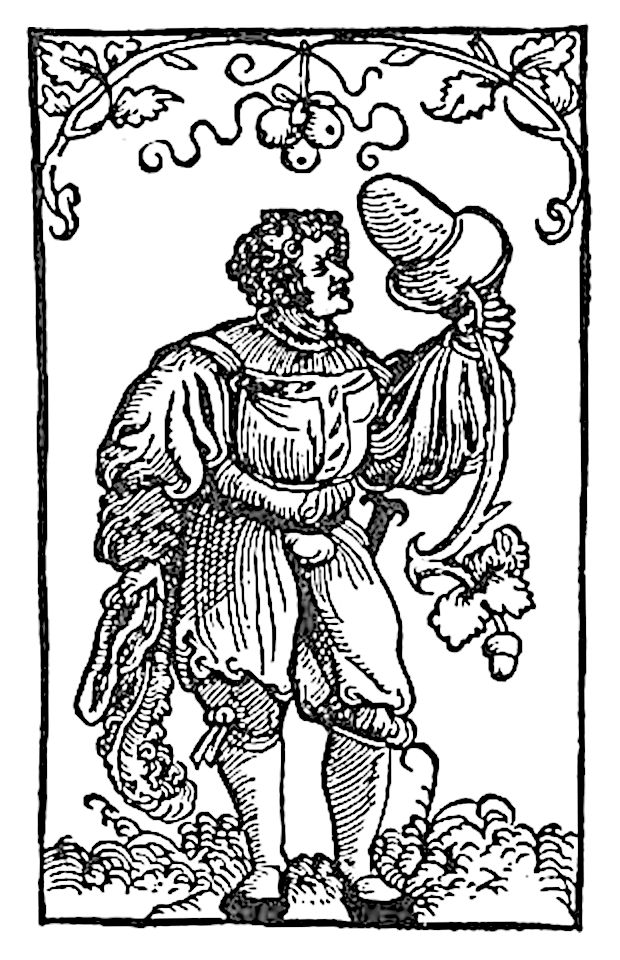 | 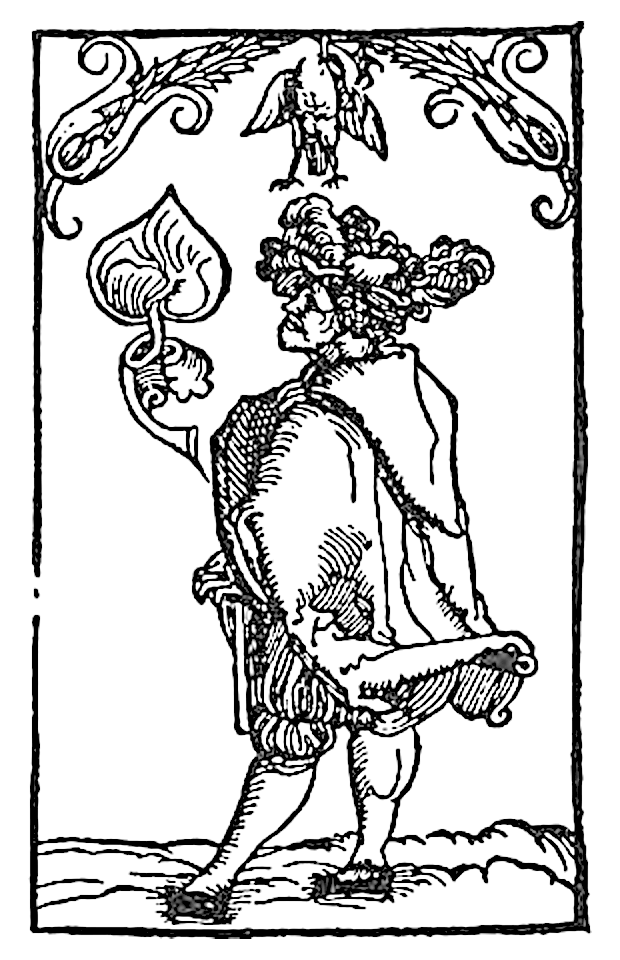 | 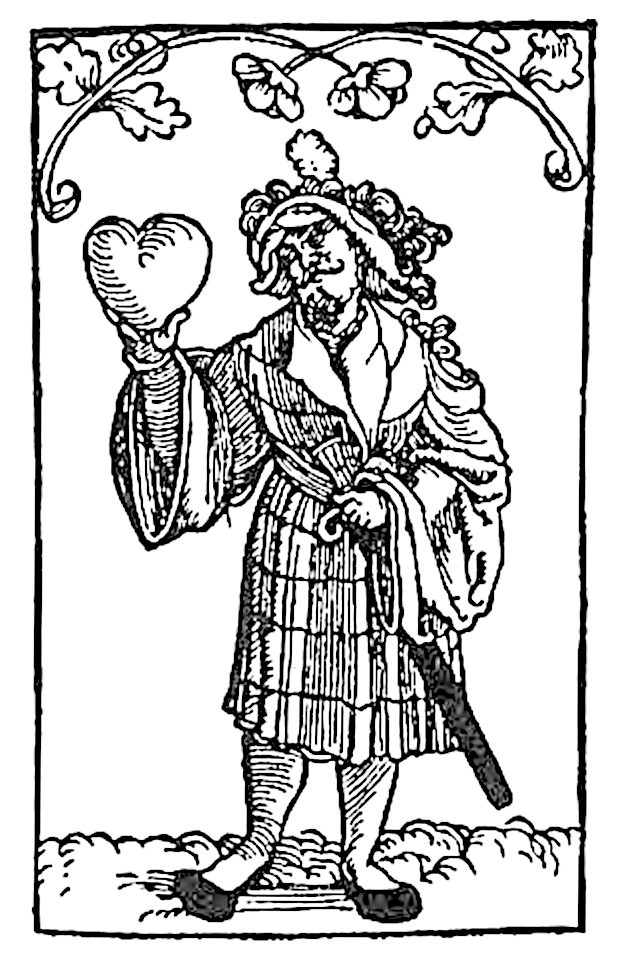 | 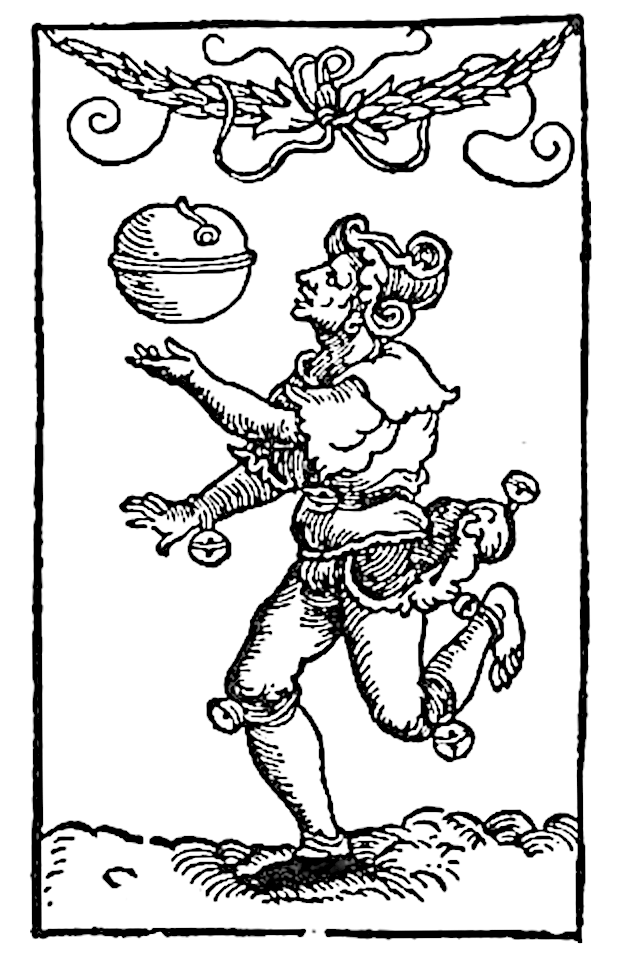 |
| König ❖ King | 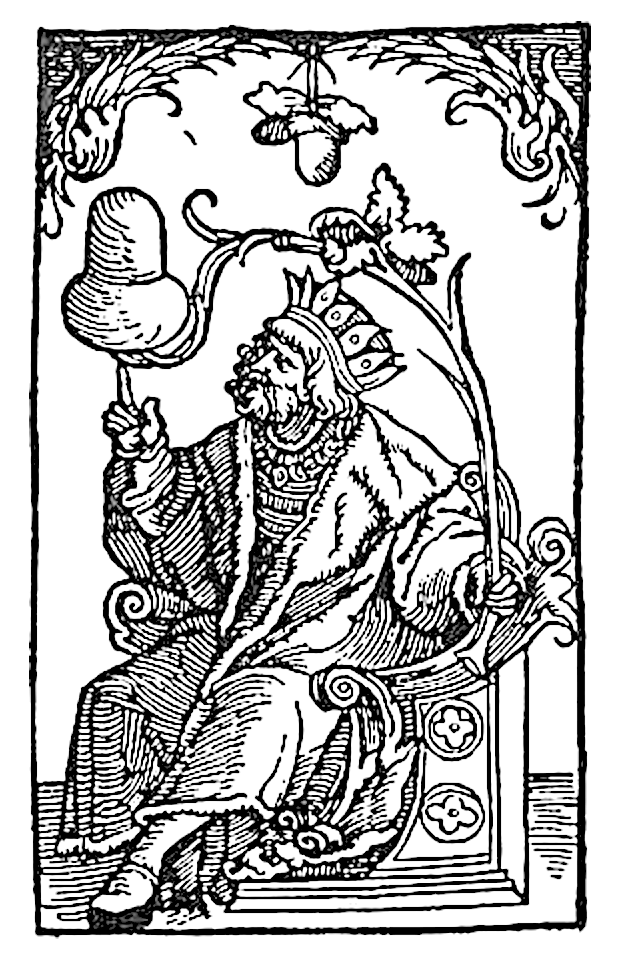 | 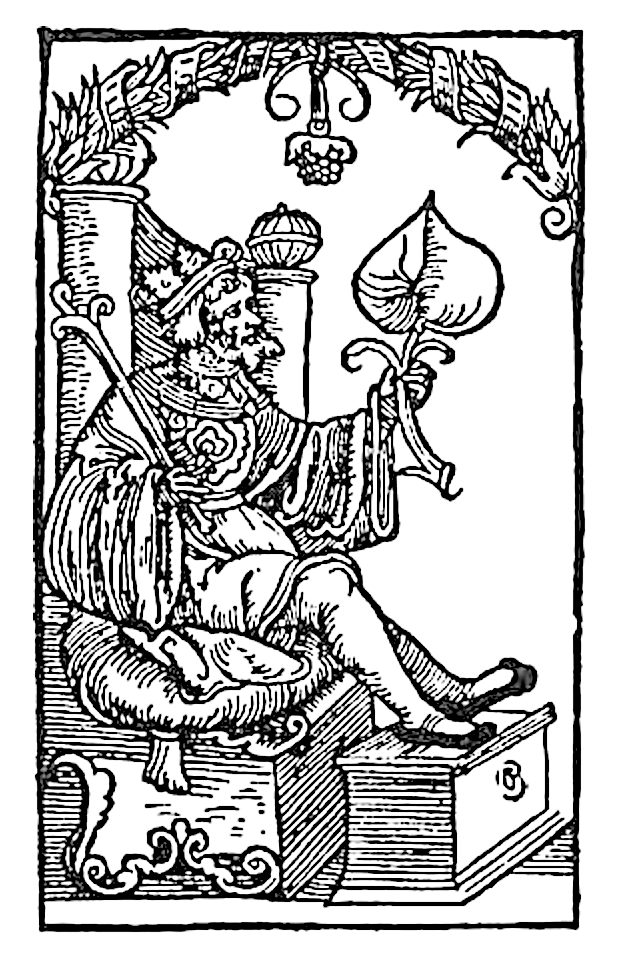 | 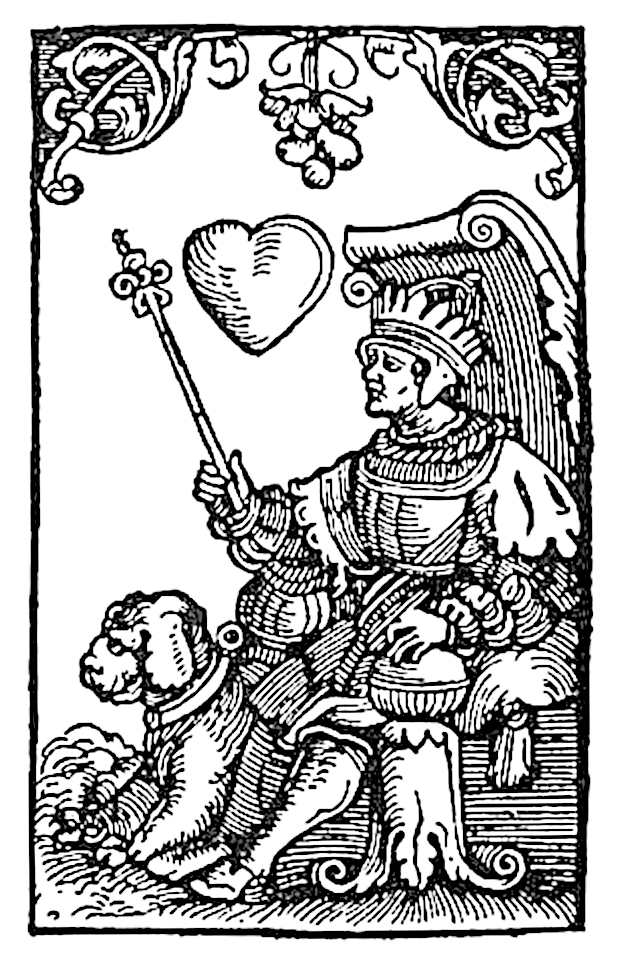 | 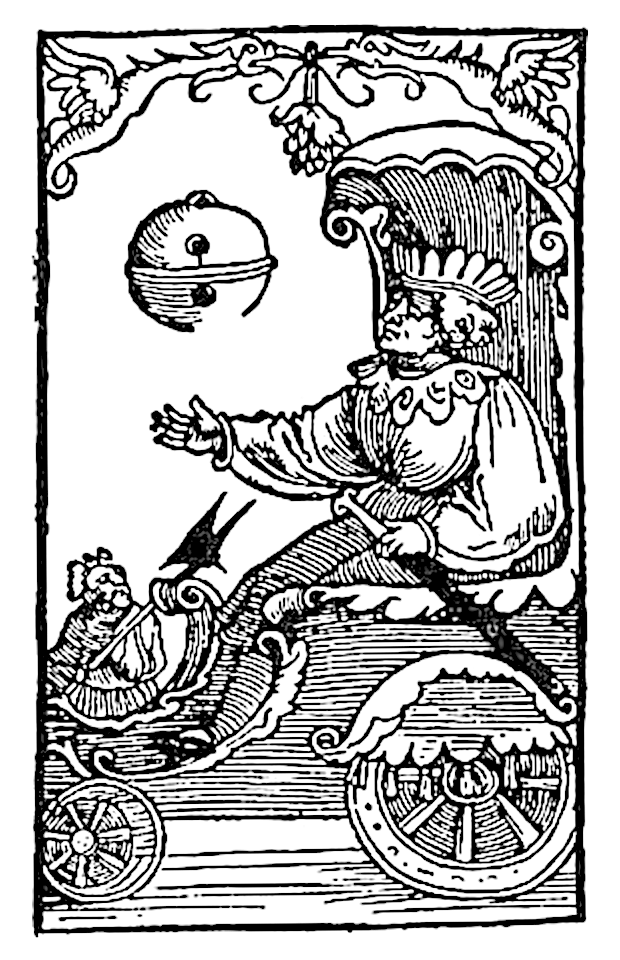 |
56-card pack
This is not a complete variant, but additional designs to be used alongside the originals to add the ranks of ace and queen. These are not made by the original designer, but by Anton Woensam. The resulting pack structure is the most common one for German luxury packs.
| Königin ❖ Queen | 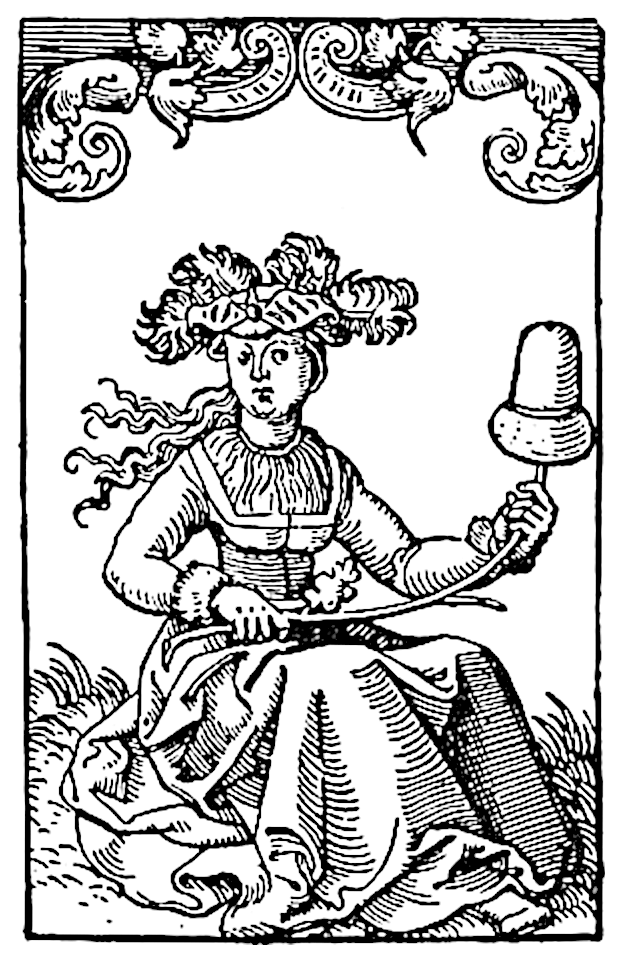 | 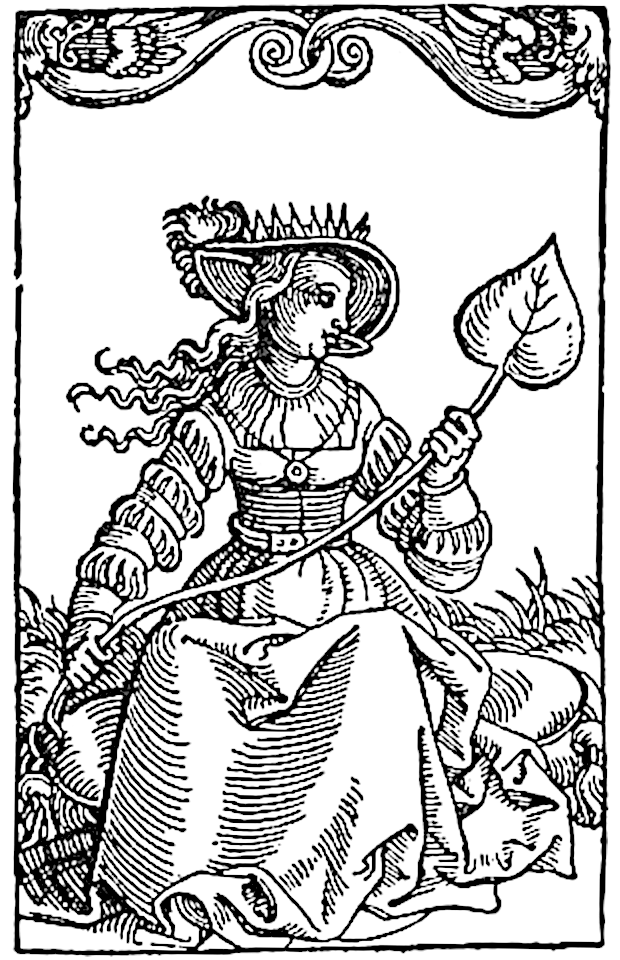 | 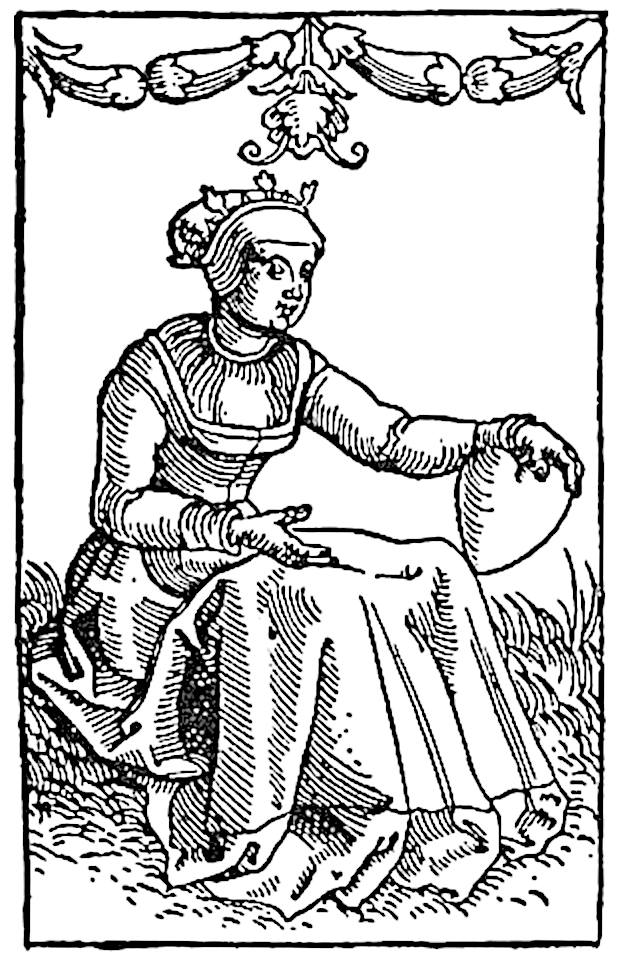 | 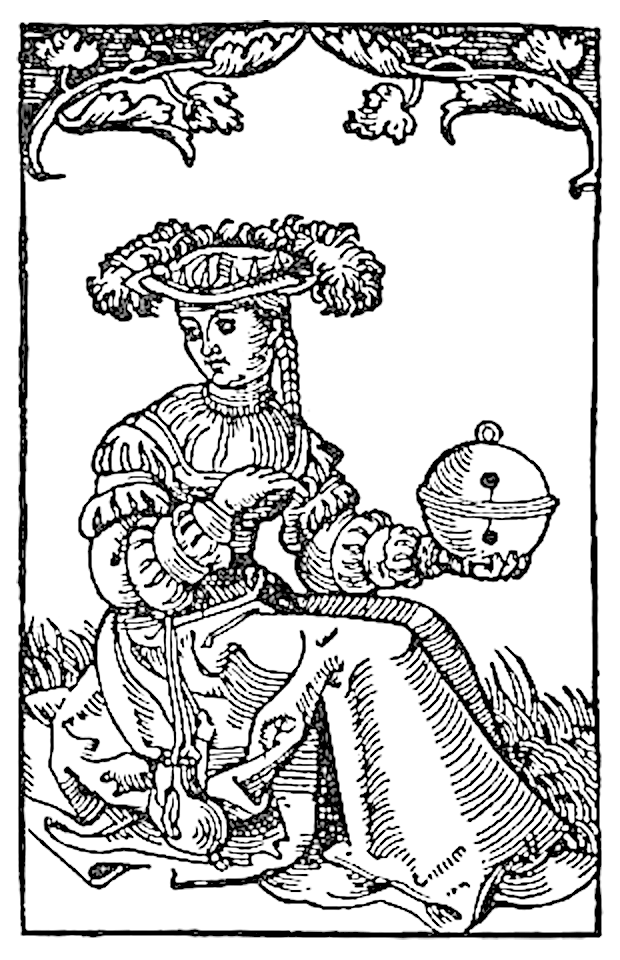 |
|---|---|---|---|---|
| Ass ❖ Ace | 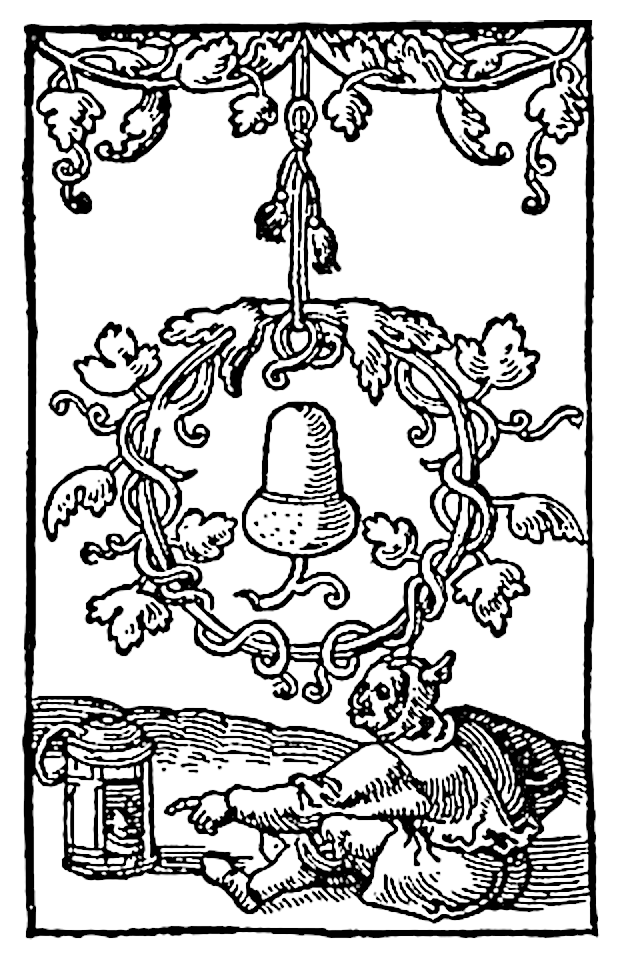 | 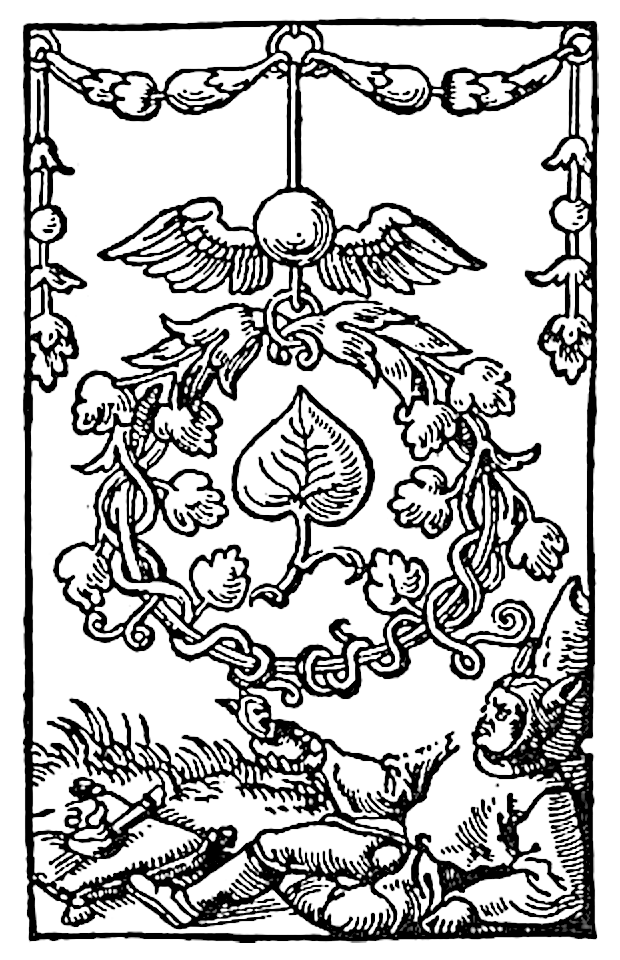 | 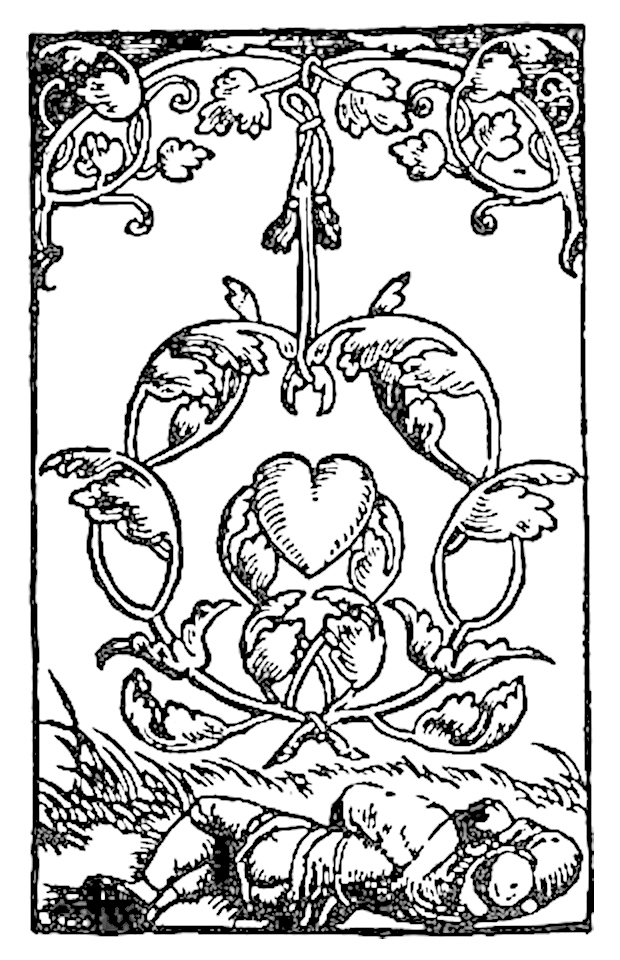 | 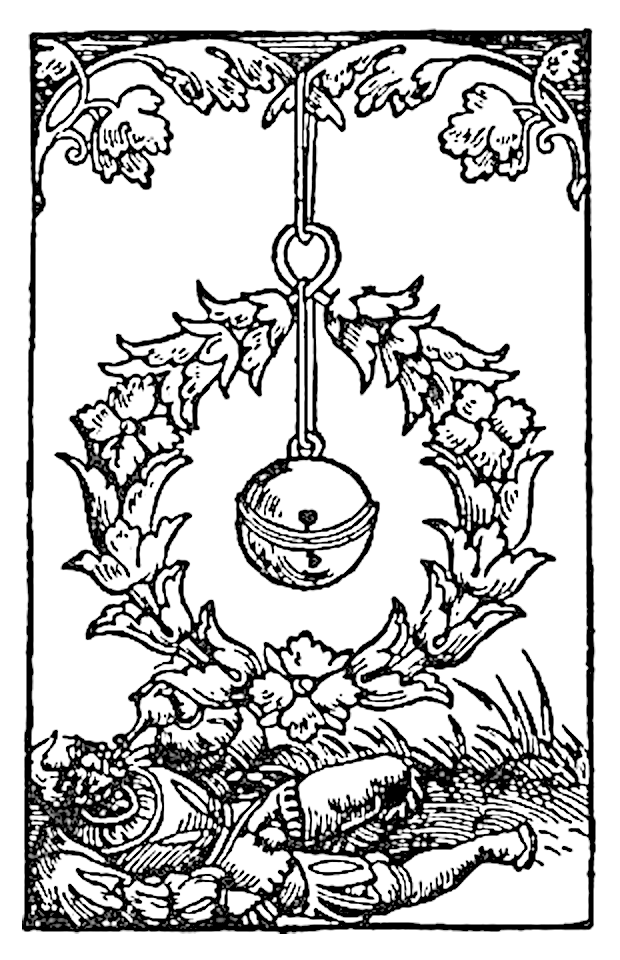 |
52-card packs
I know of two 52-card variants. Both add aces/ones, of which they share three designs, but differ in the fourth. Both also have a small number of changed pip cards, while all court cards are identical to those in the 48-card version. One of them is used for a modern reproduction of which I have seen only half of the cards, but is presumably based on a complete surviving set. Here, the two of bells is a mirror image of the original, but this could possibly be an error in the modern reproduction. Close comparison with the linework of the original indicates that the cards the reproduction is based on were not printed from the original woodblocks, but a very preceise recreation of them. The other version lacks five cards, but I have low resolution photos of all surviving cards, which are fully coloured in contrast to all other versions. Here several cards have gaps between the top parts with the pips and the lower part, showing that the woodblocks had been cut apart to make it possible to create alternative combinations of the elements, although this includes cards where both elements match the originals.
The aces of acorns and leaves reuse the illustrations from the deuce/two of leaves and three of acorns respectively in this way. The replacement three of acorns takes its illustration from the original ten of hearts, which in turn gets a new vignette. In the coloured pack at least, the replacement deuce/two of leaves has a new design with three coats of arms, as would be expected in a pack with deuces, not aces, being the first cards of each suit. In this pack, the deuce of hearts is unfortunately missing, but in the other one, this has a very different new design with three coats of arms, namely the arms of the Holy Roman Empire above the great and the small arms of the city of Nuremberg — an arrangement that is also used on deuces by Erhard Schön and Peter Flötner. This card also bears the name of the maker, which I read as Wolffganng Bosch, despite the beginning of the surname being somewhat unclear.
For the ace of bells, both 52-card versions employ the same new design, while they have different ones for the ace of hearts. For all other cards I have images of, they retain the designs of the original pack.
| Eicheln ❖ Acorns | Laub ❖ Leaves | Herzen ❖ Hearts | Schellen ❖ Bells | |
|---|---|---|---|---|
| 1 / Ass ❖ 1 / Ace | 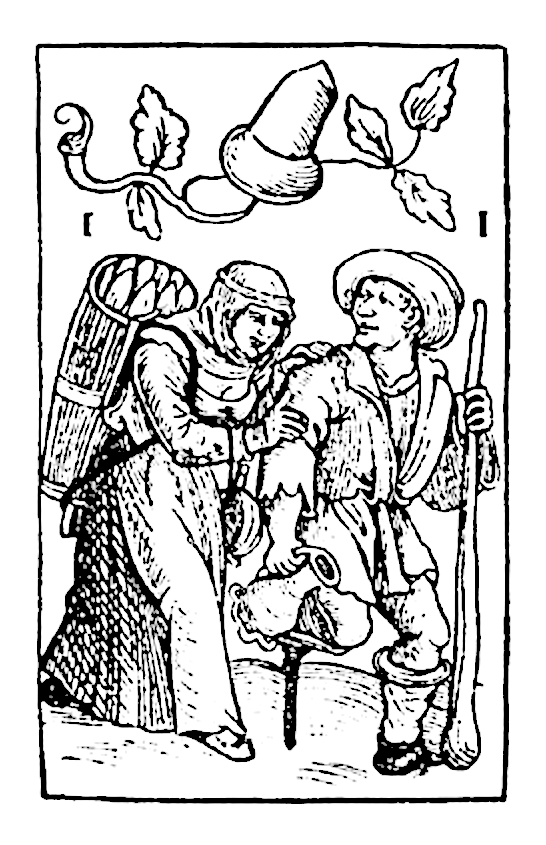 | 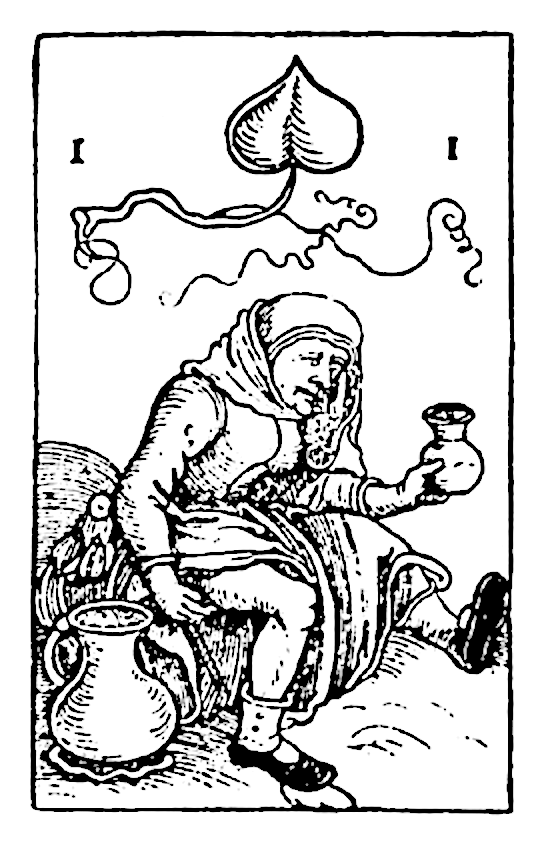 | 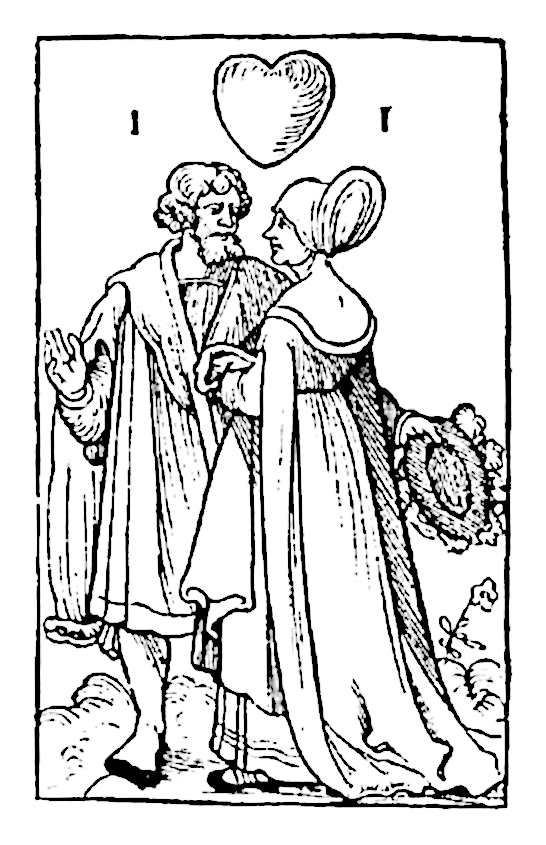 | 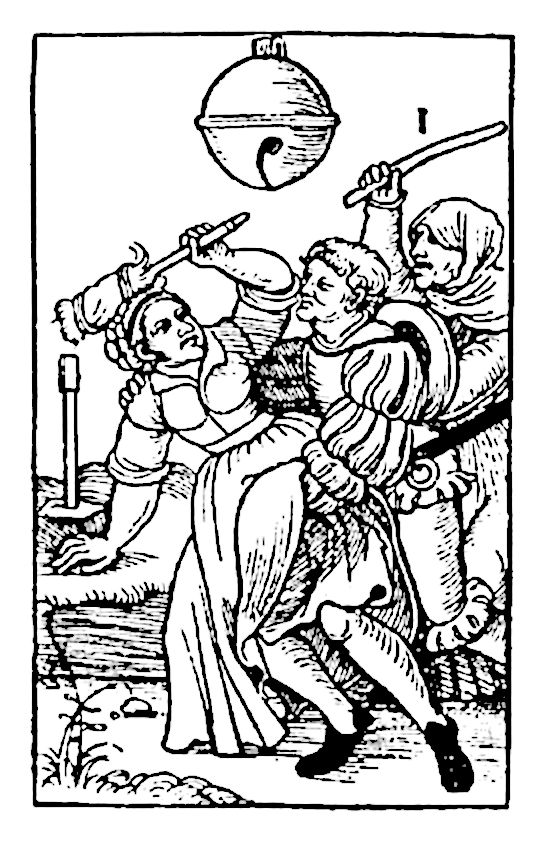 |
| 2 / Daus ❖ 2 / Deuce | 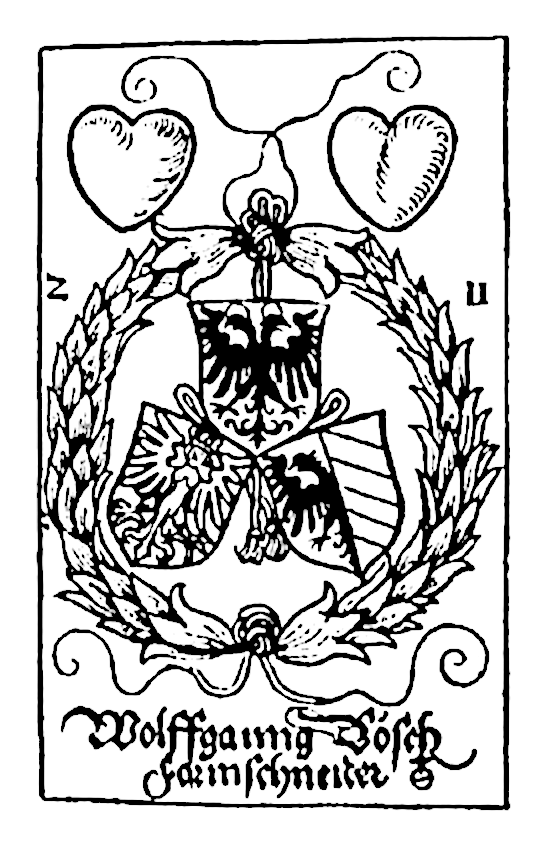 | 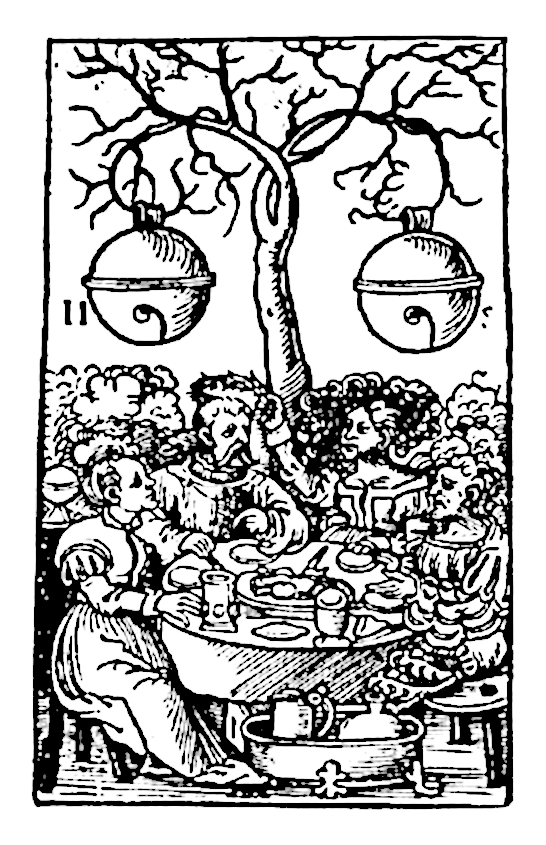 | ||
| 1 / Ass ❖ 1 / Ace |  |  | 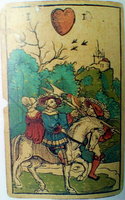 | 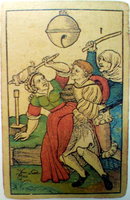 |
| 2 / Daus ❖ 2 / Deuce | 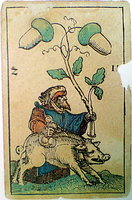 | 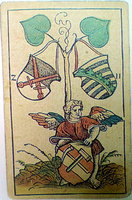 | 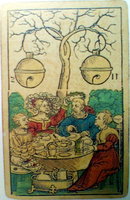 | |
| 3 | 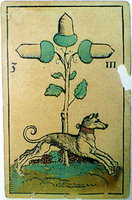 | 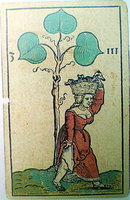 | 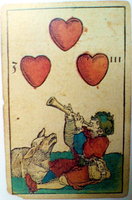 | 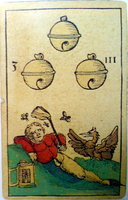 |
| 4 | 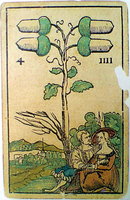 | 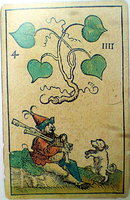 | 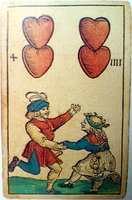 | 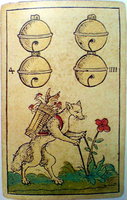 |
| 5 | 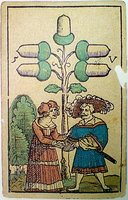 | 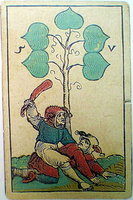 | 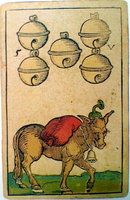 | |
| 6 | 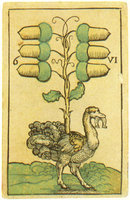 | 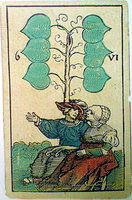 | 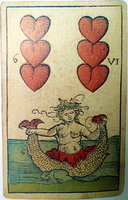 | 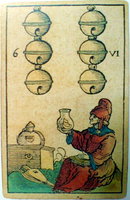 |
| 7 | 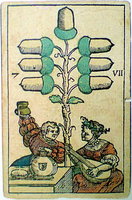 | 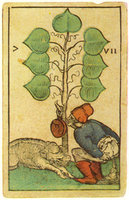 | 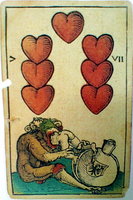 | 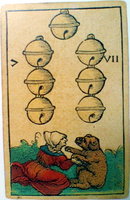 |
| 8 | 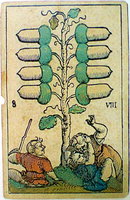 | 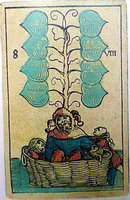 | 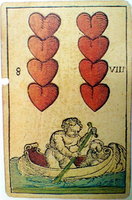 | 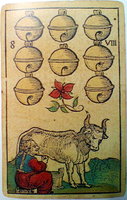 |
| 9 | 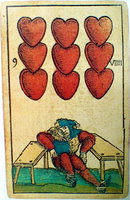 | 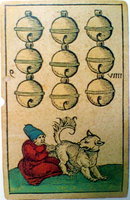 | ||
| 10 | 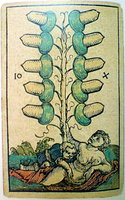 | 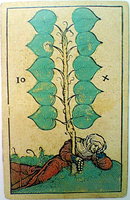 | 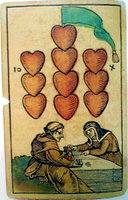 | 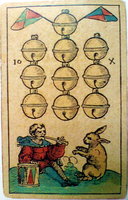 |
| Unter ❖ Under-knave | 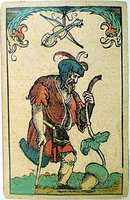 | 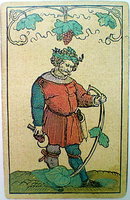 | 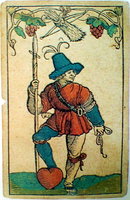 | 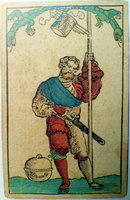 |
| Ober ❖ Over-knave | 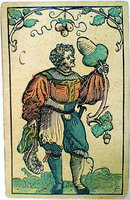 | 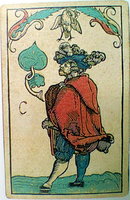 | 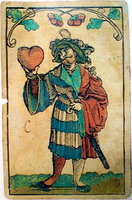 | |
| König ❖ King | 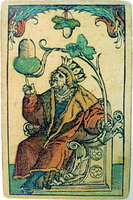 | 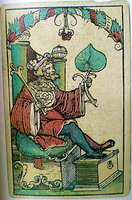 | 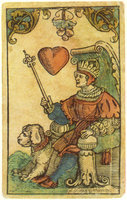 | 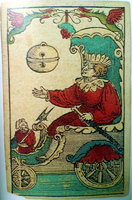 |
 Tor Gjerde <i@old.no>