Sebald Beham, c. 1523
This pack is based on the standard 48-card German cards, only with the suits of hearts and bells replaced by roses and pomegranates, and with leaves drawn more naturalistically. Since both hearts and roses were coloured red, and both bells and pomegranates yellow or orange with a red band, the cards would still feel familiar to users accustomed to standard cards. At the same time, using items that grow on stems allowed the artist to extend the use of trees from which acorns and leaves grows in standard cards to all four suits, and then draw them much more detailed and naturalistically. The resulting lush vegetational theme was then extended to the court cards.
The artist’s name is Sebald Beham, but he used a monogram consisting of the letters HSP. The last letter is due to the High German sound shift continuing one step further in Nuremberg than in most other Upper German dialects, changing initial b to p, and he changed the monogram to HSB after leaving Nuremberg. The H is harder to explain, but might represent the second element of the surname. Its existence has caused an extra name to be assumed, therefore he is sometimes incorrectly referred to as Hans Sebald Beham.
| Eicheln ❖ Acorns | Laub ❖ Leaves | Rosen ❖ Roses | Granatäpfeln ❖ Pomegranates | |
|---|---|---|---|---|
| 2/ Daus ❖ 2/ Deuce | 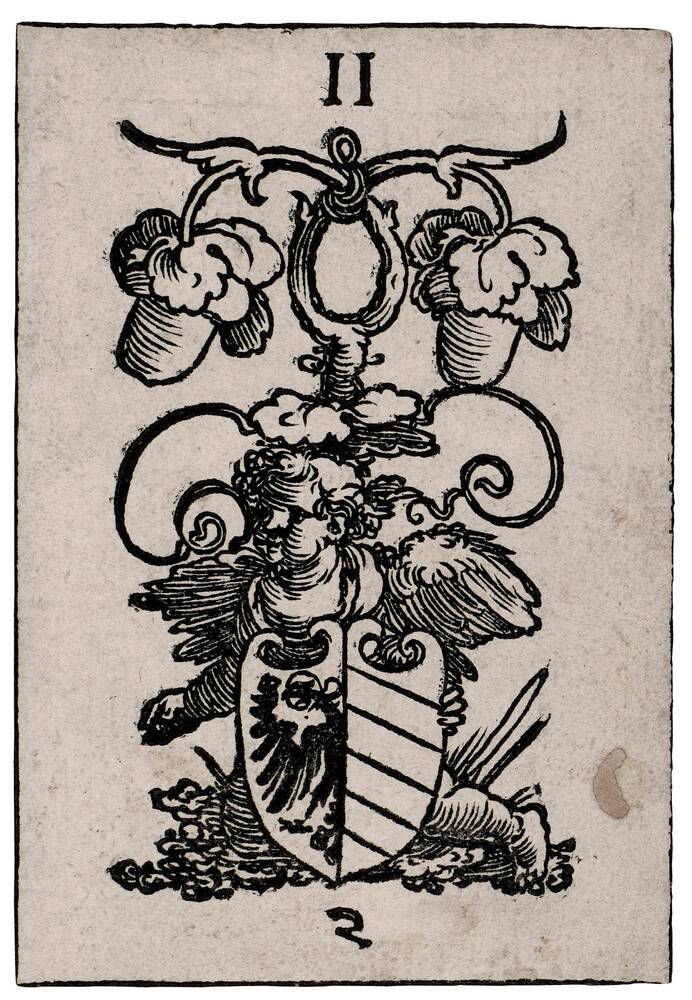 | 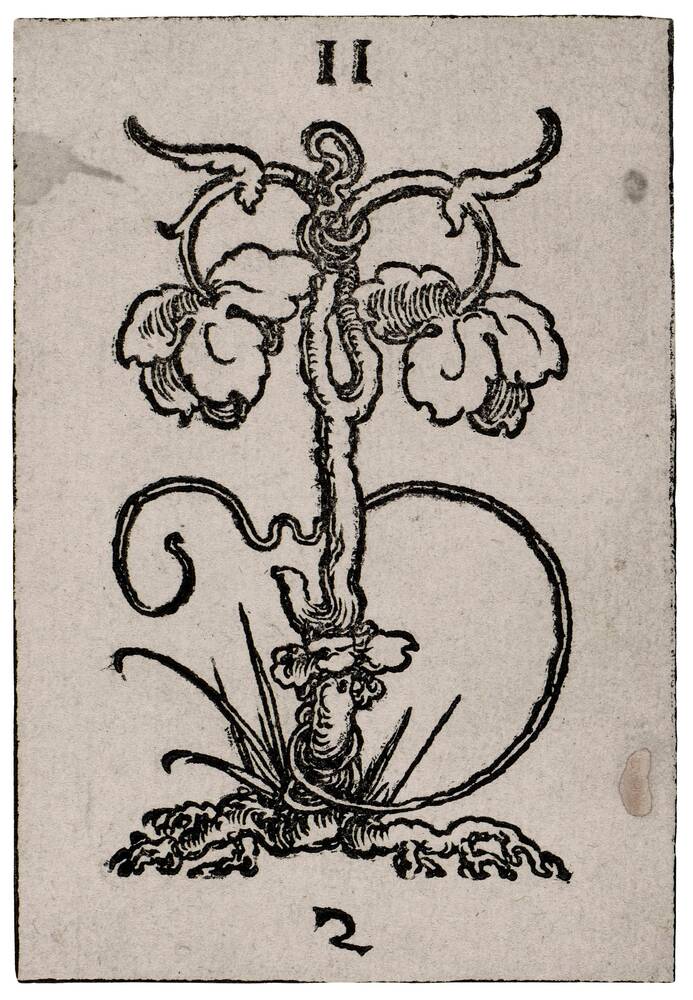 | 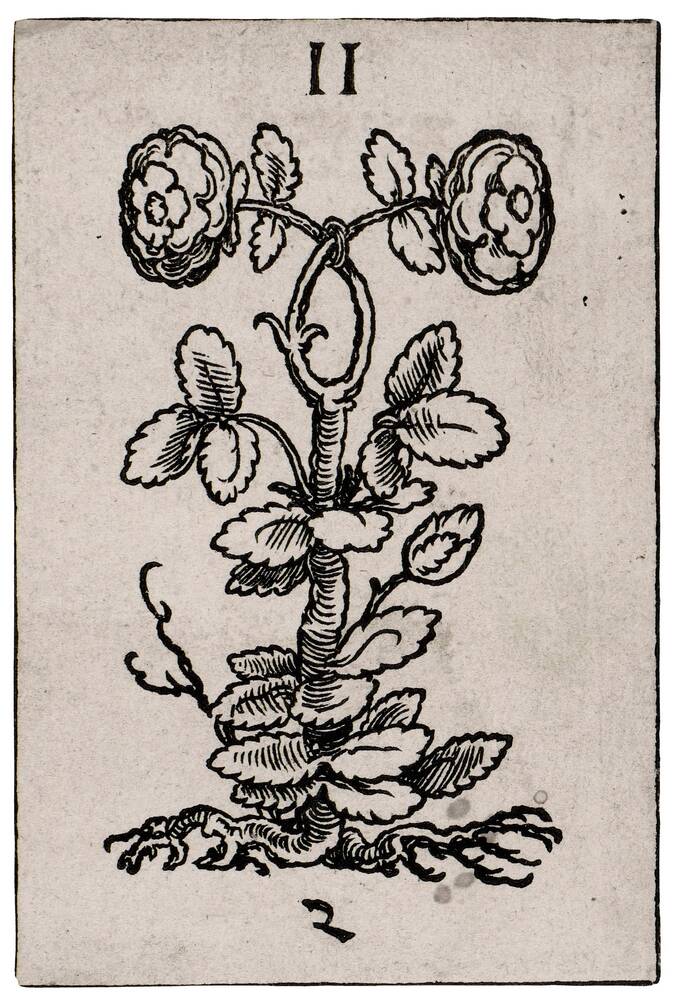 | 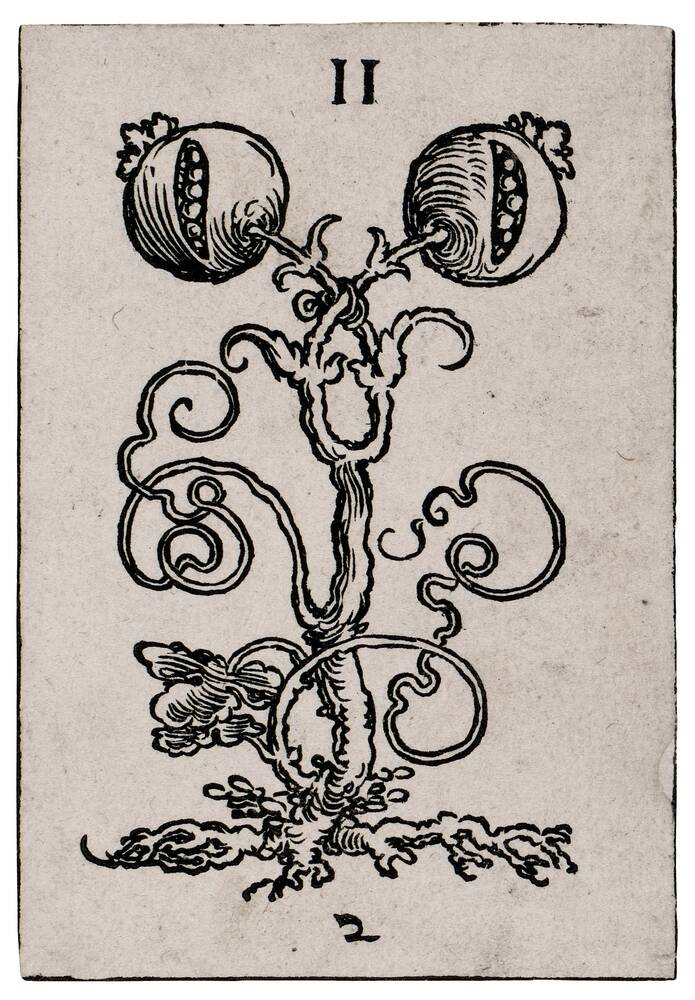 |
| 3 | 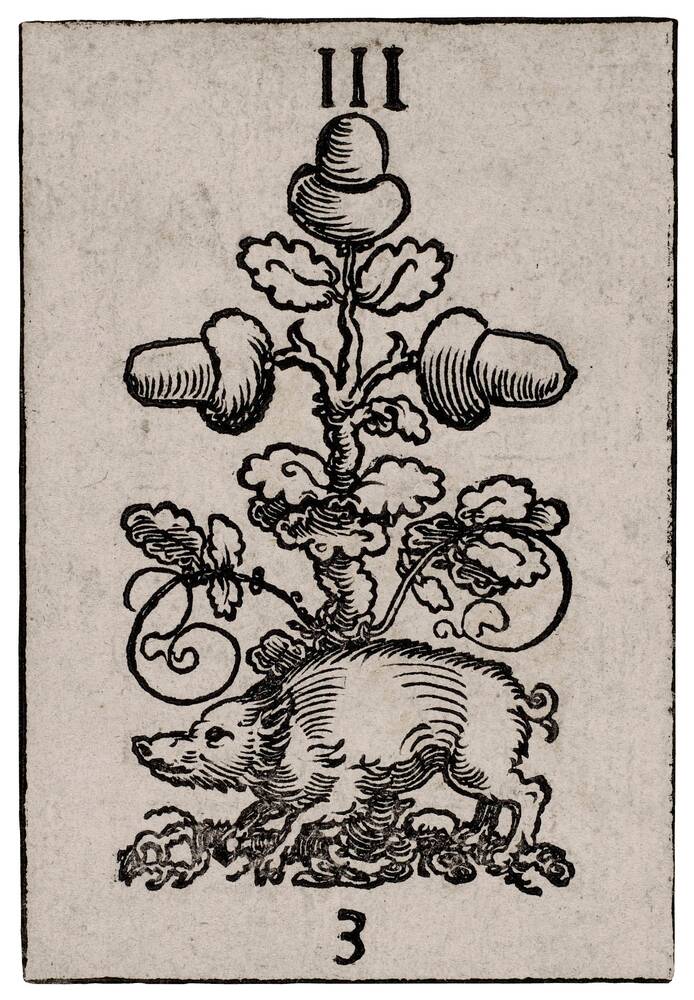 | 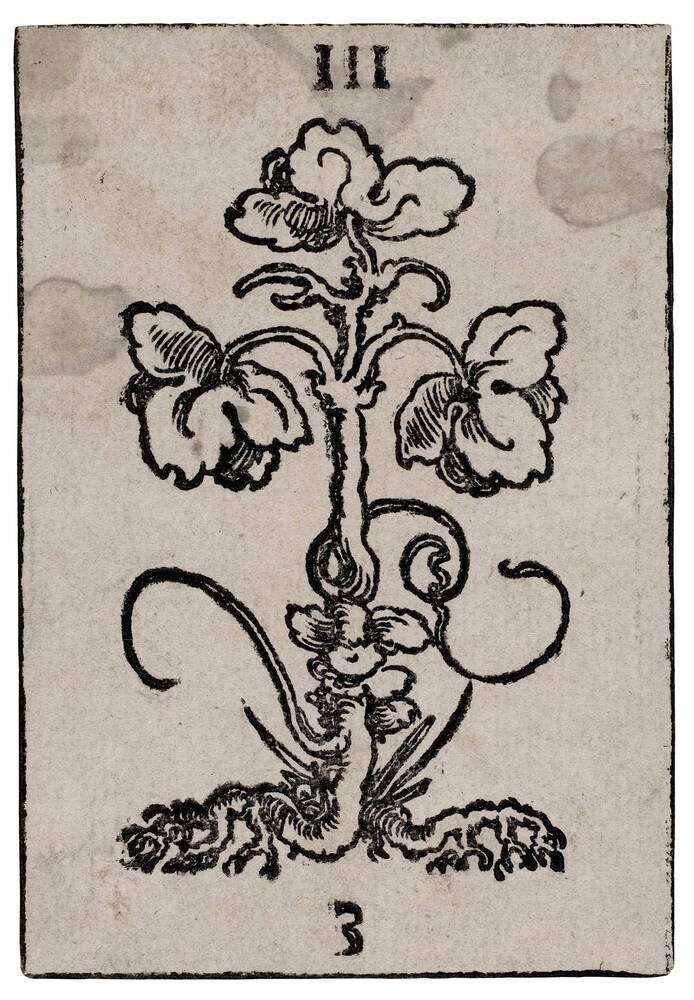 | 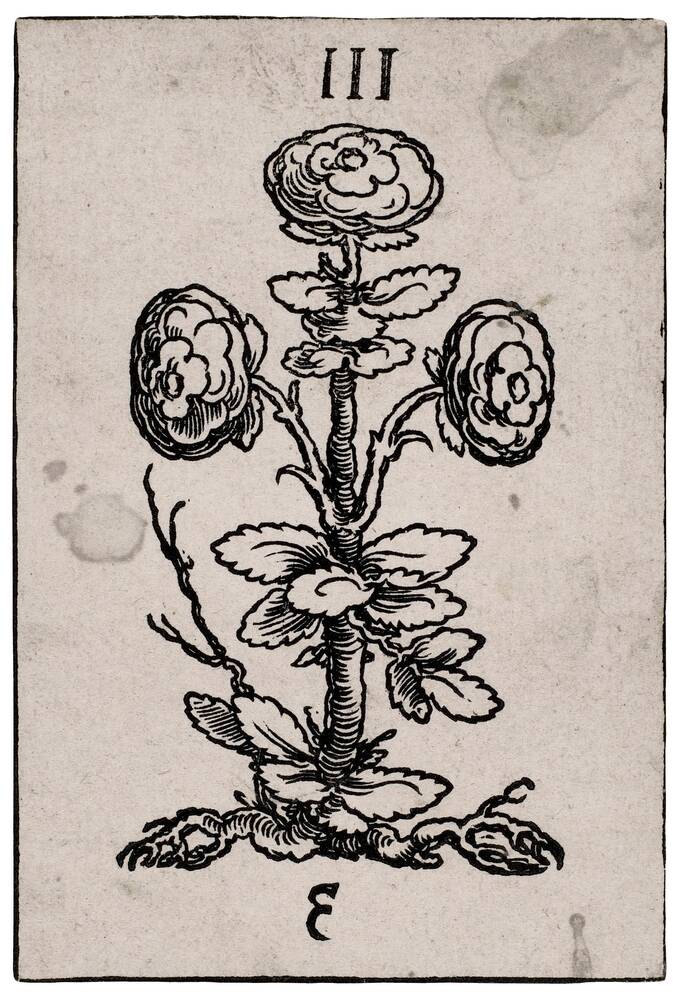 | 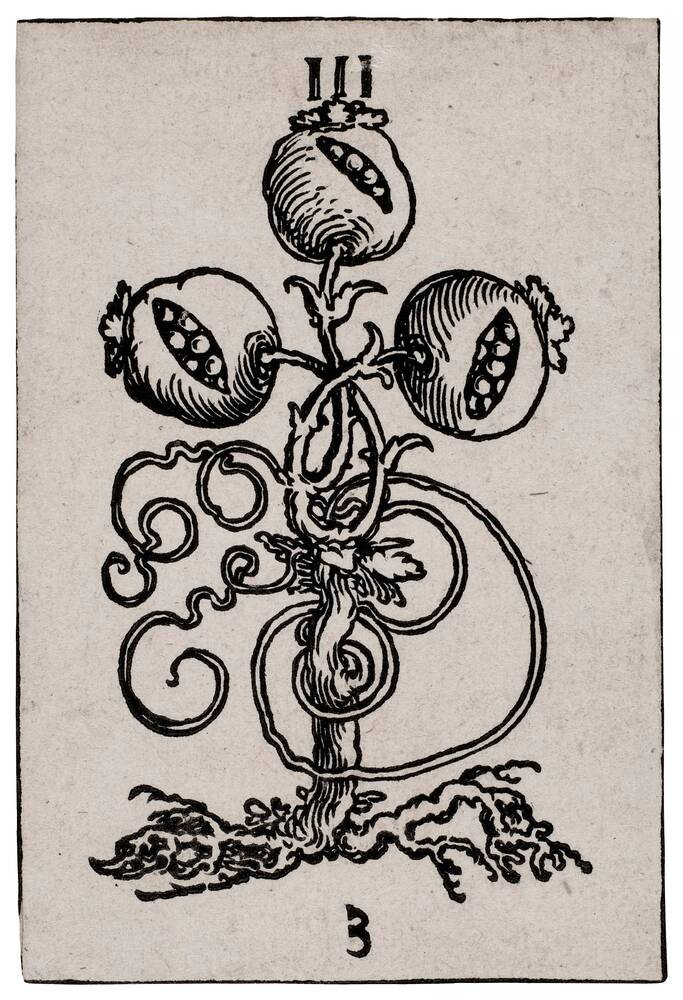 |
| 4 | 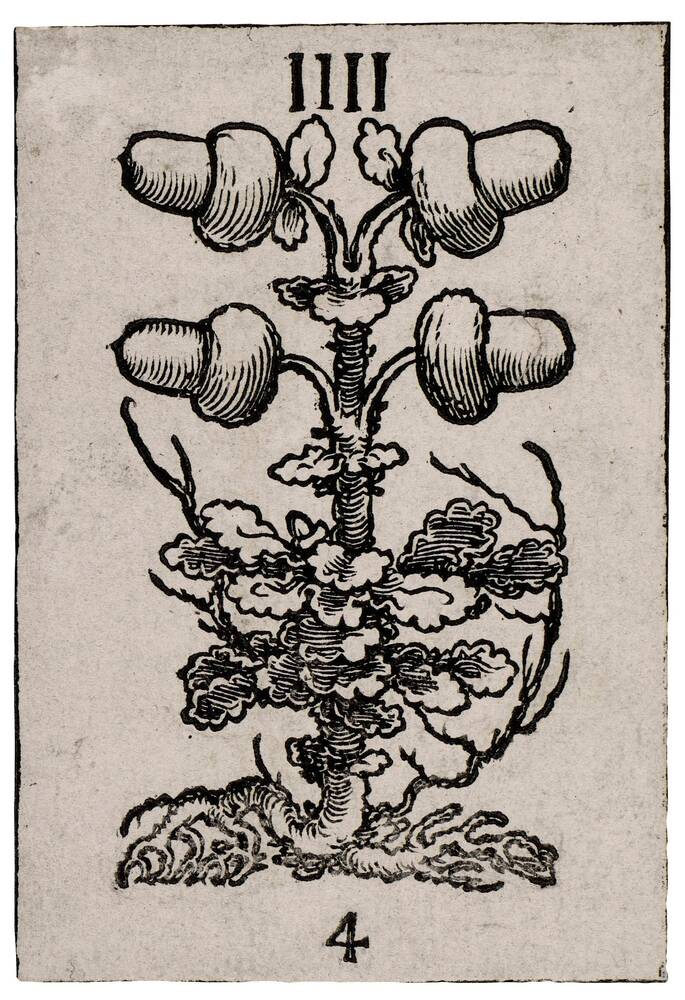 | 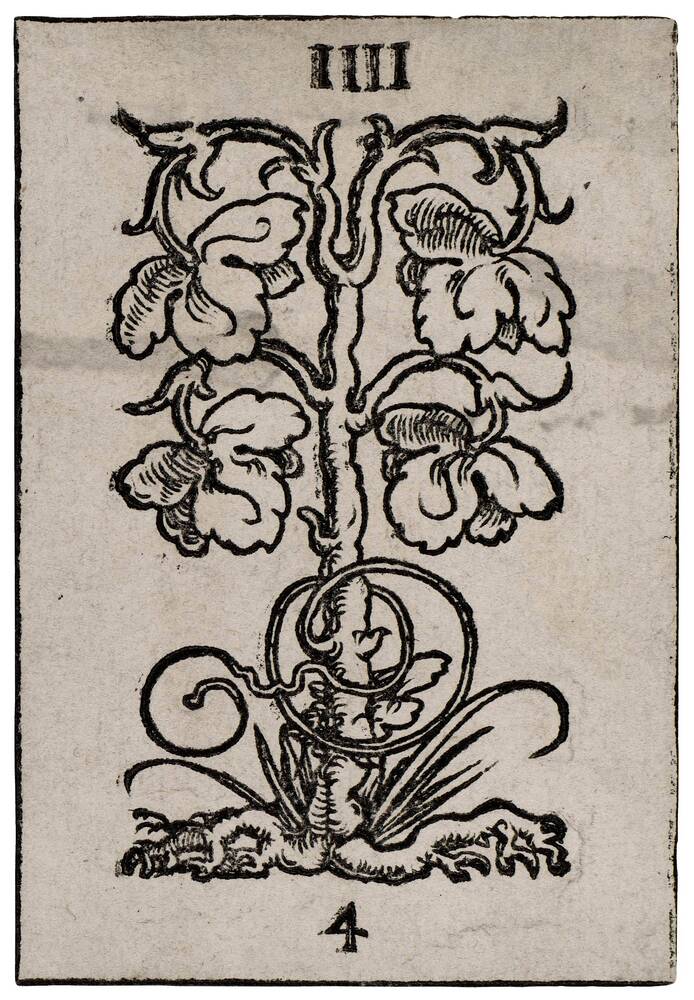 | 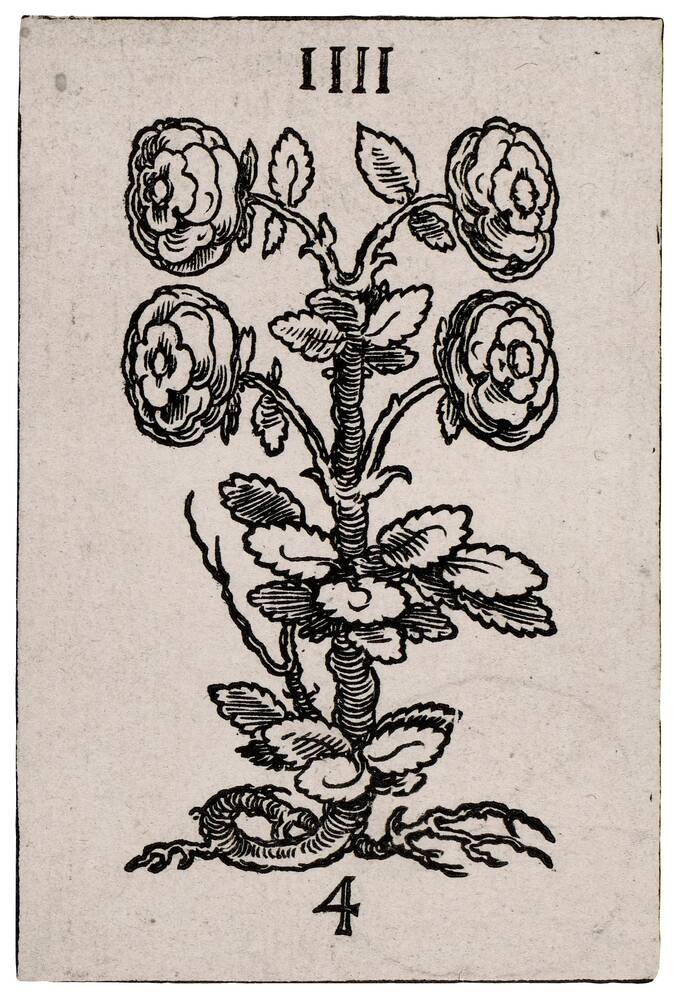 | 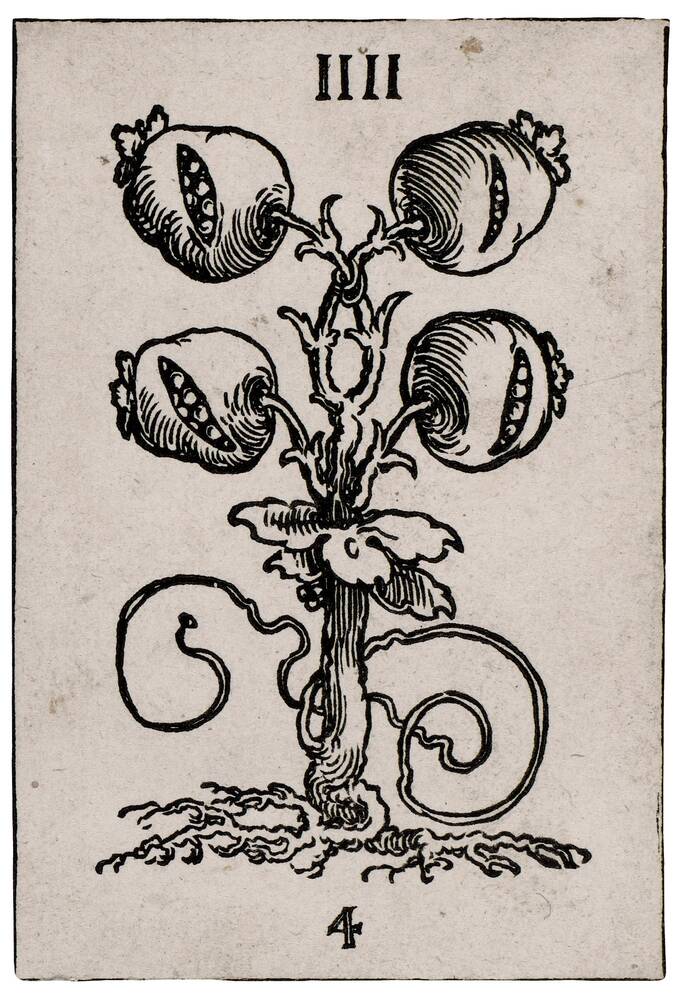 |
| 5 | 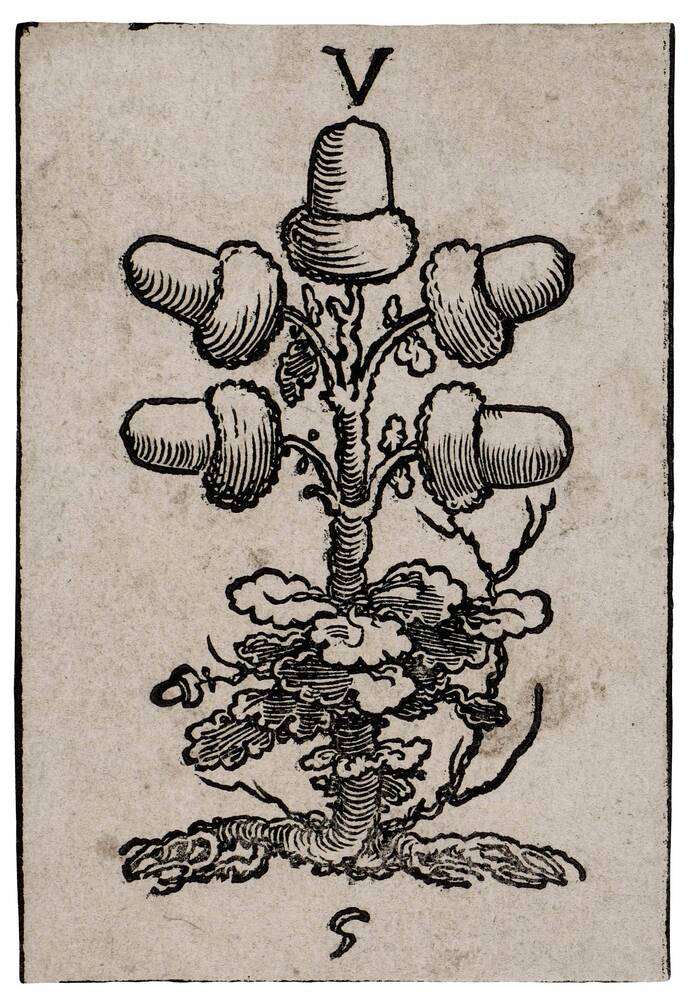 | 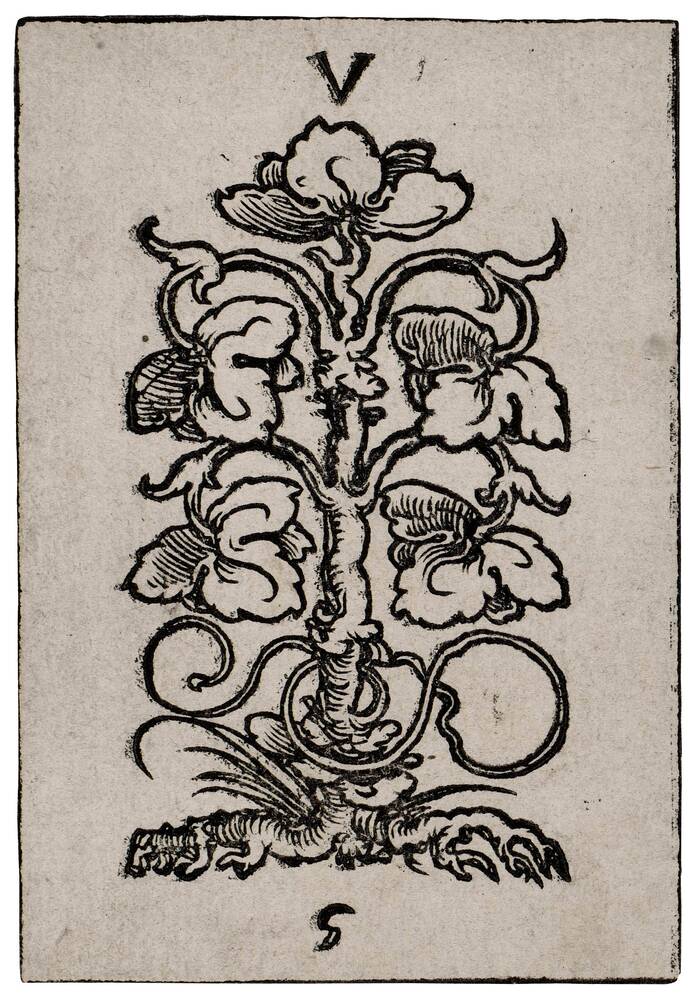 | 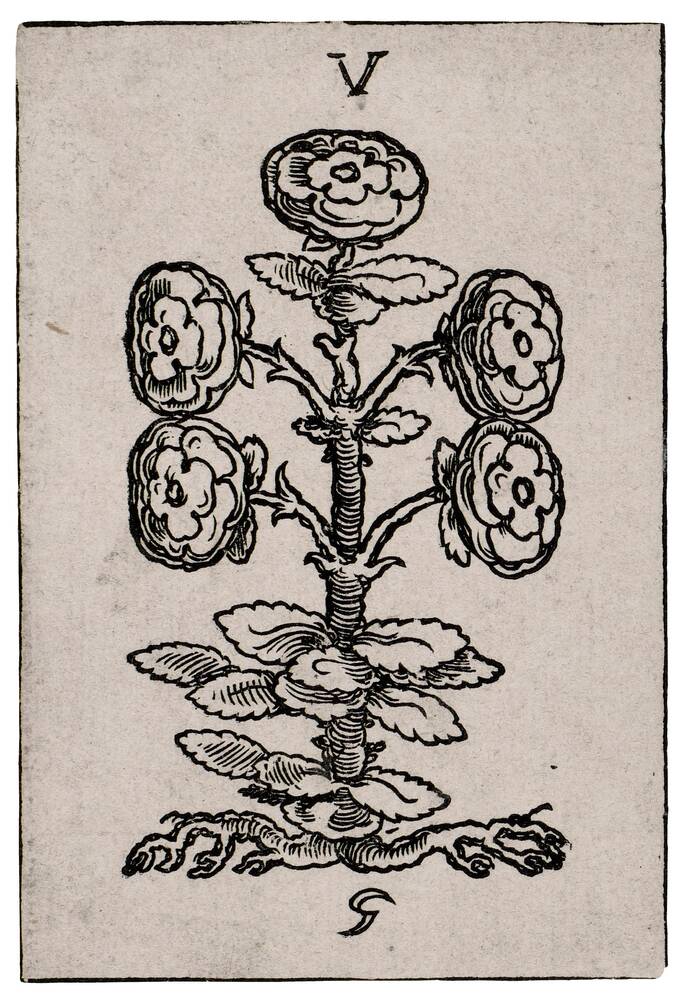 | 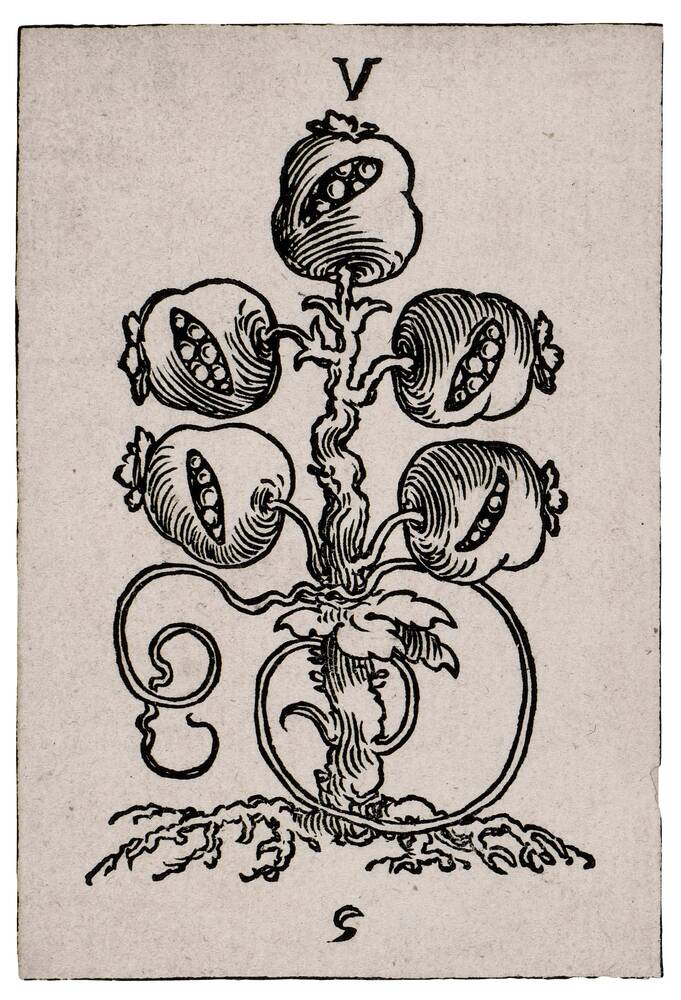 |
| 6 | 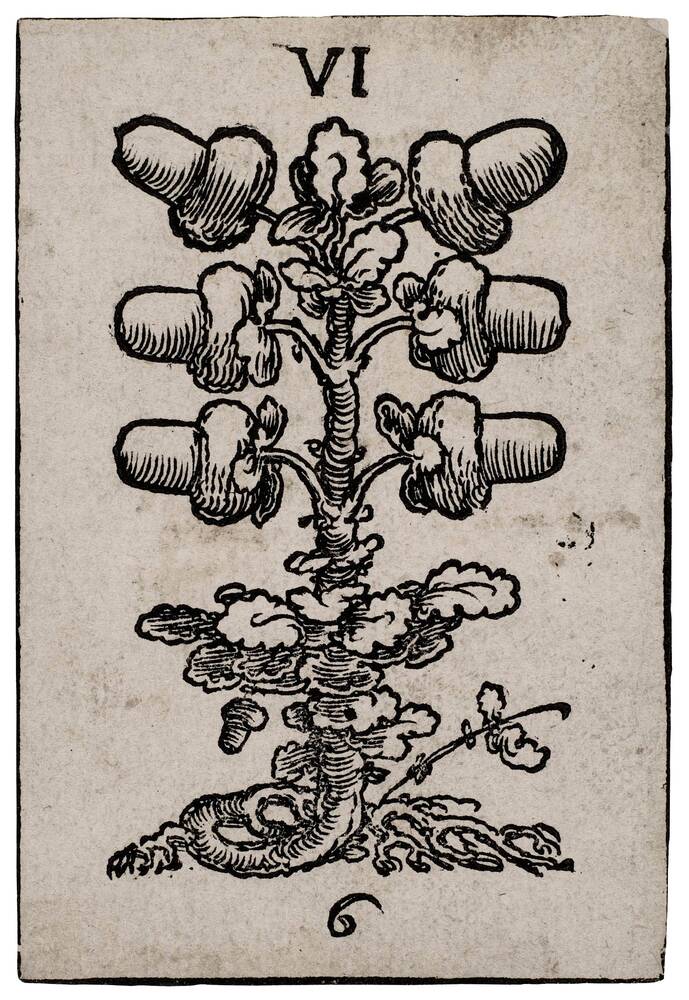 | 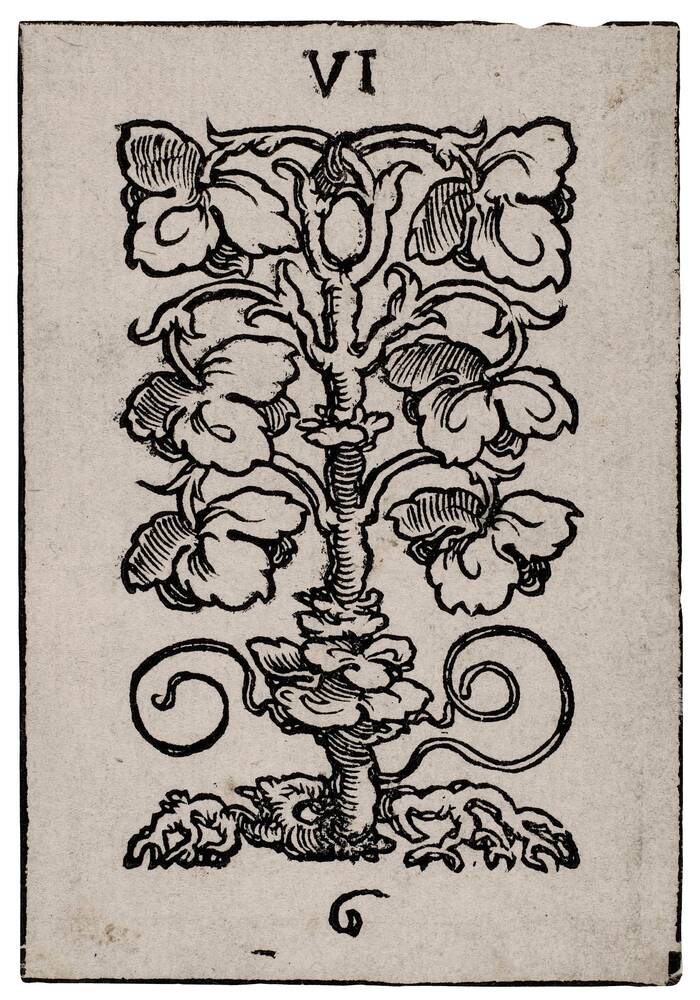 | 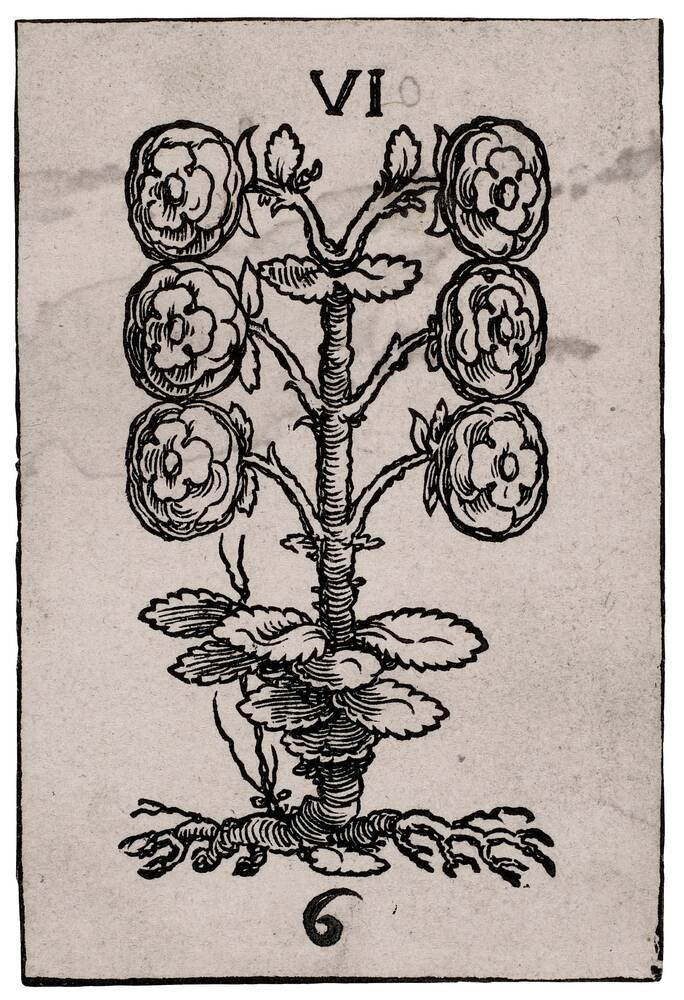 | 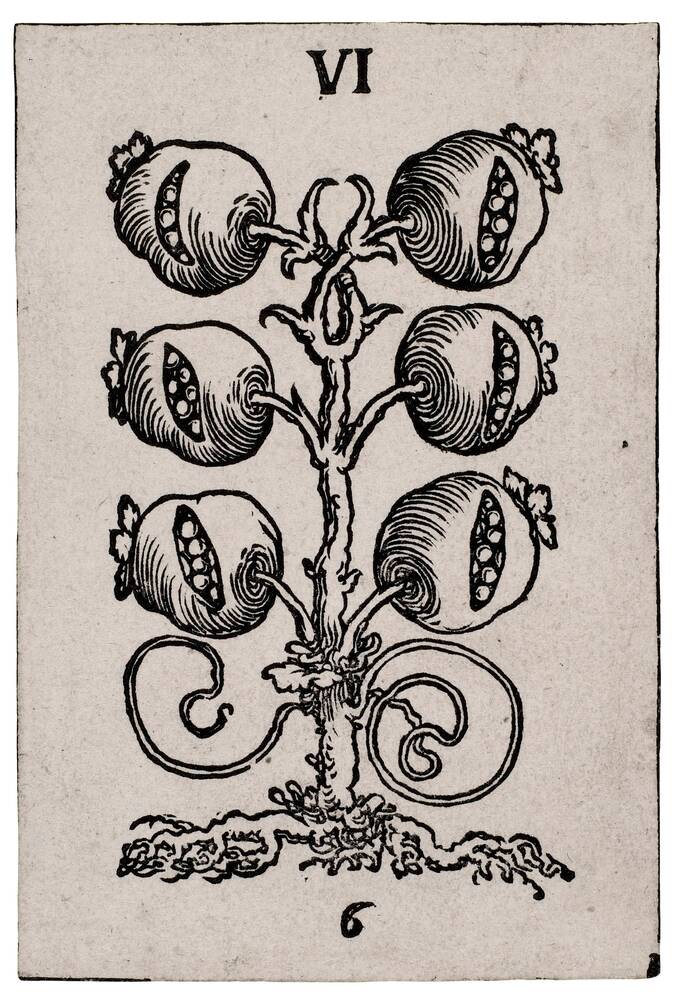 |
| 7 | 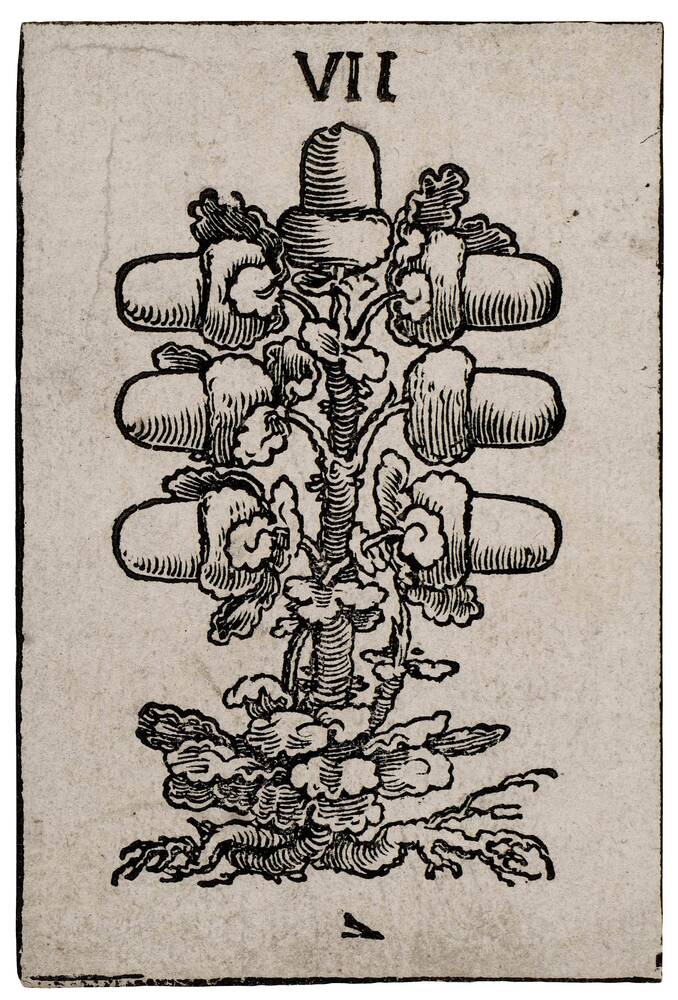 | 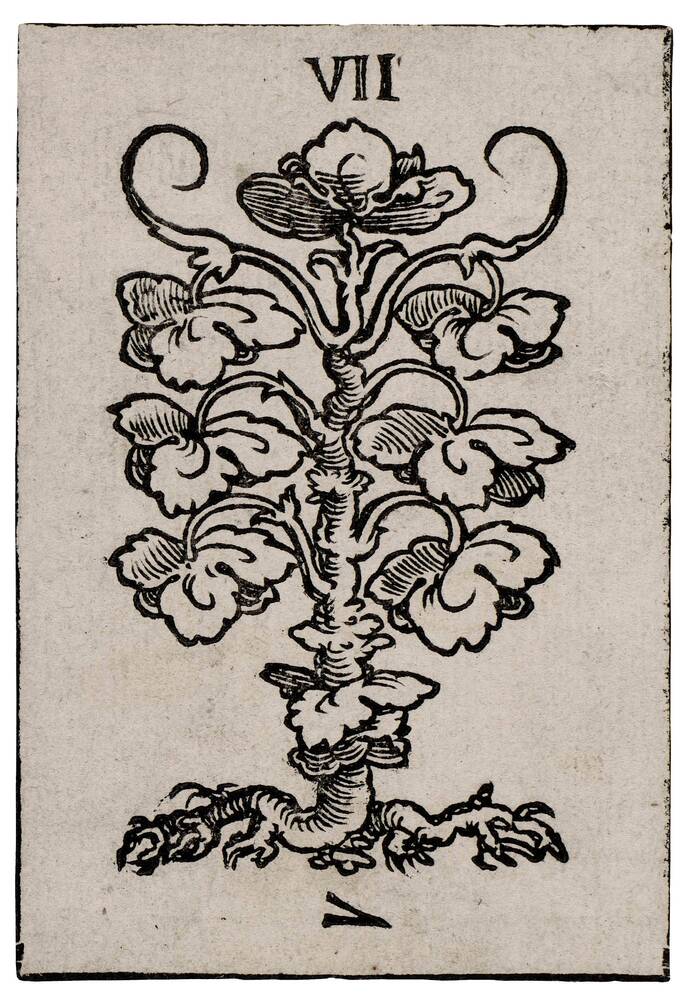 | 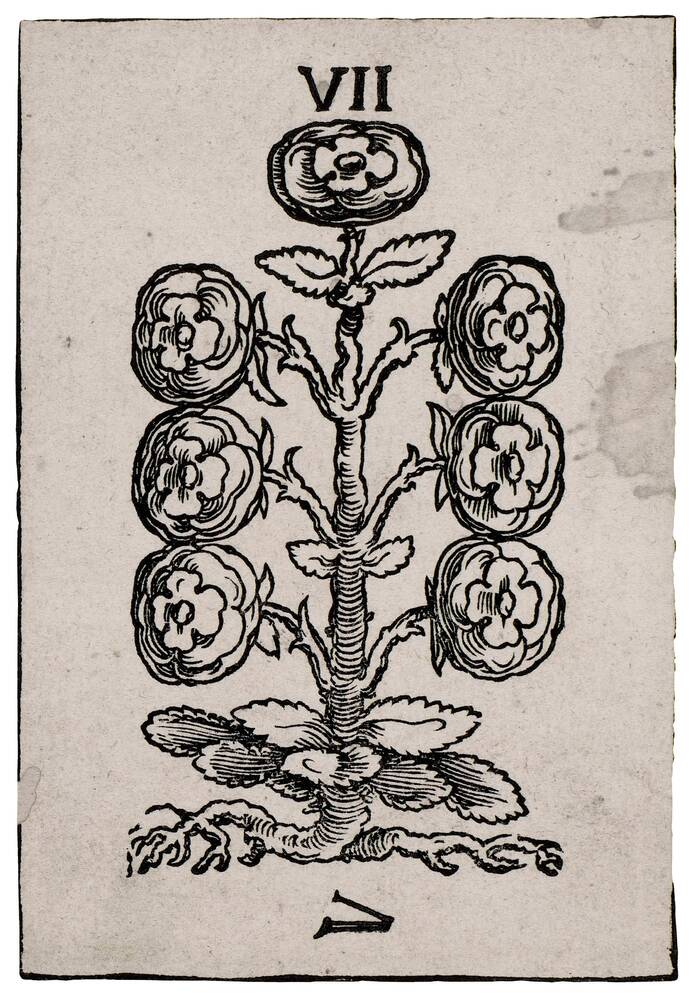 | 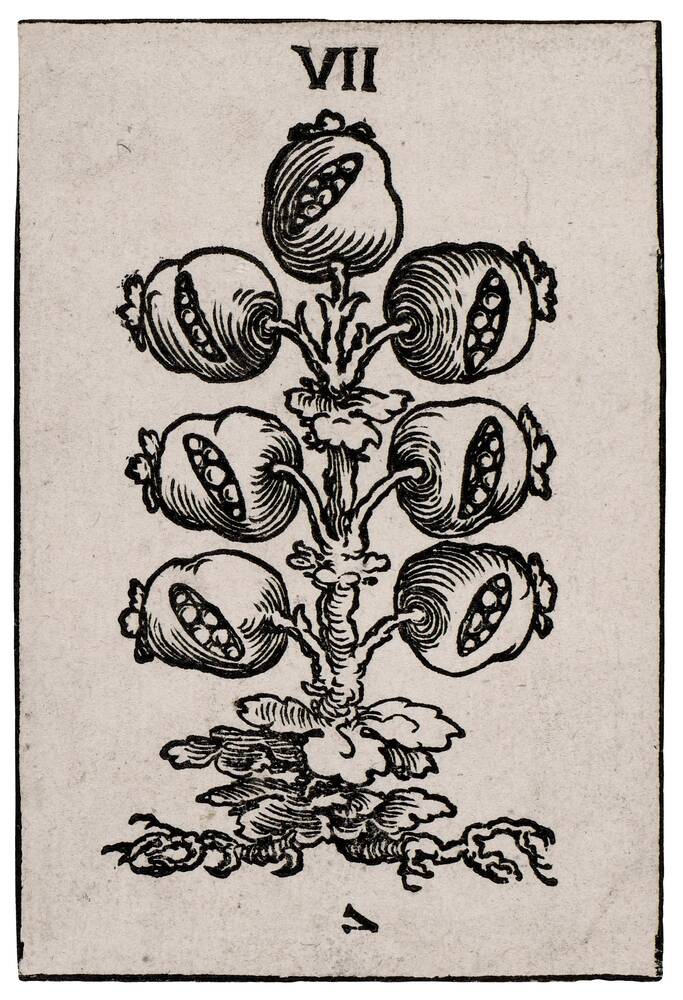 |
| 8 | 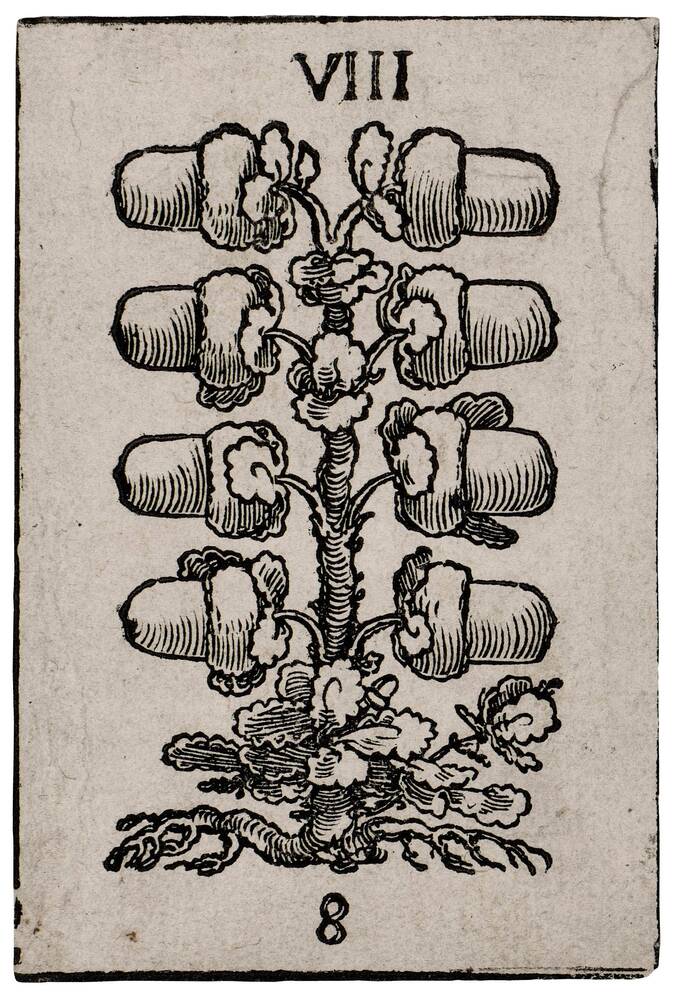 | 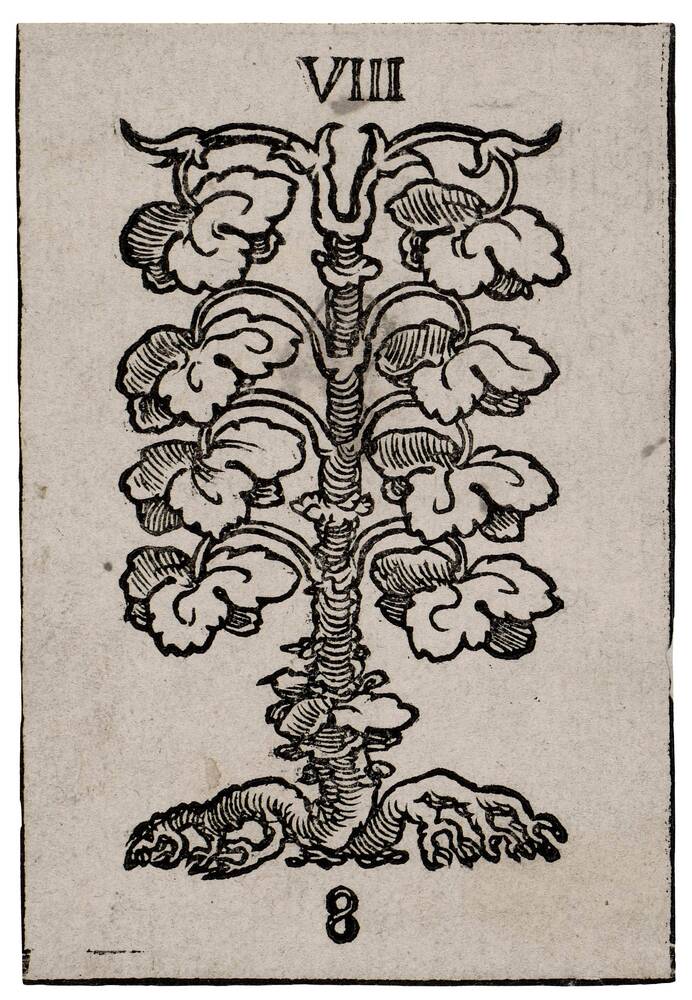 | 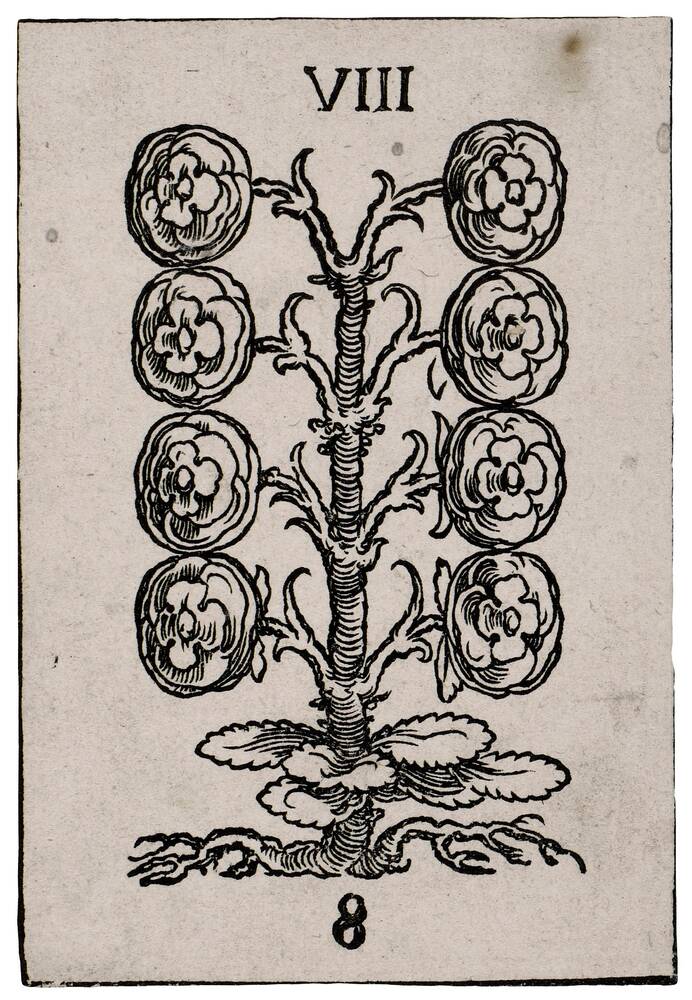 | 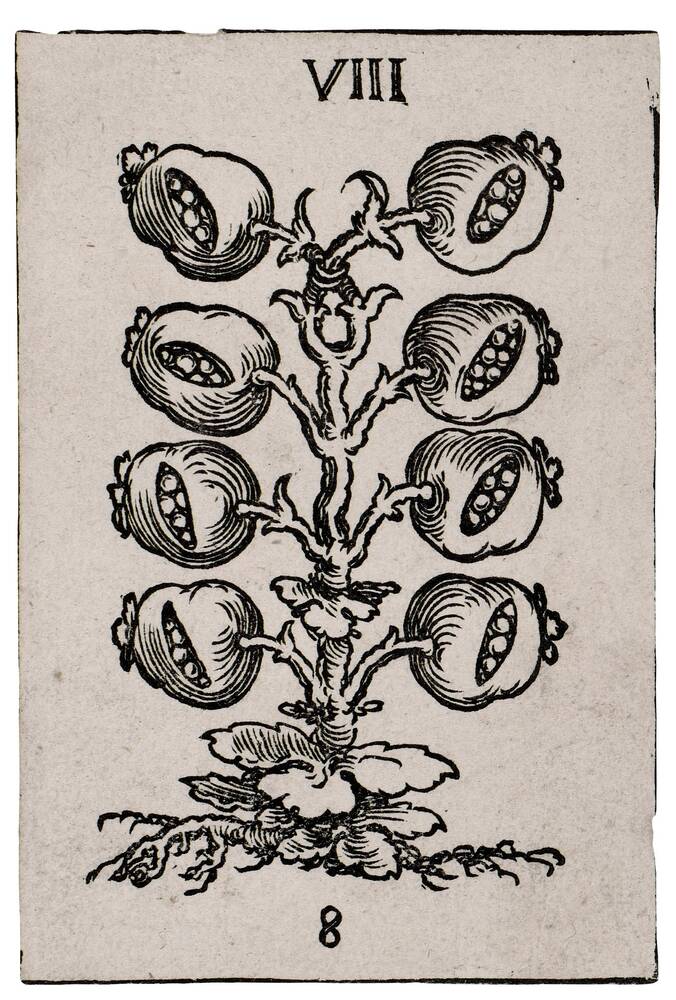 |
| 9 | 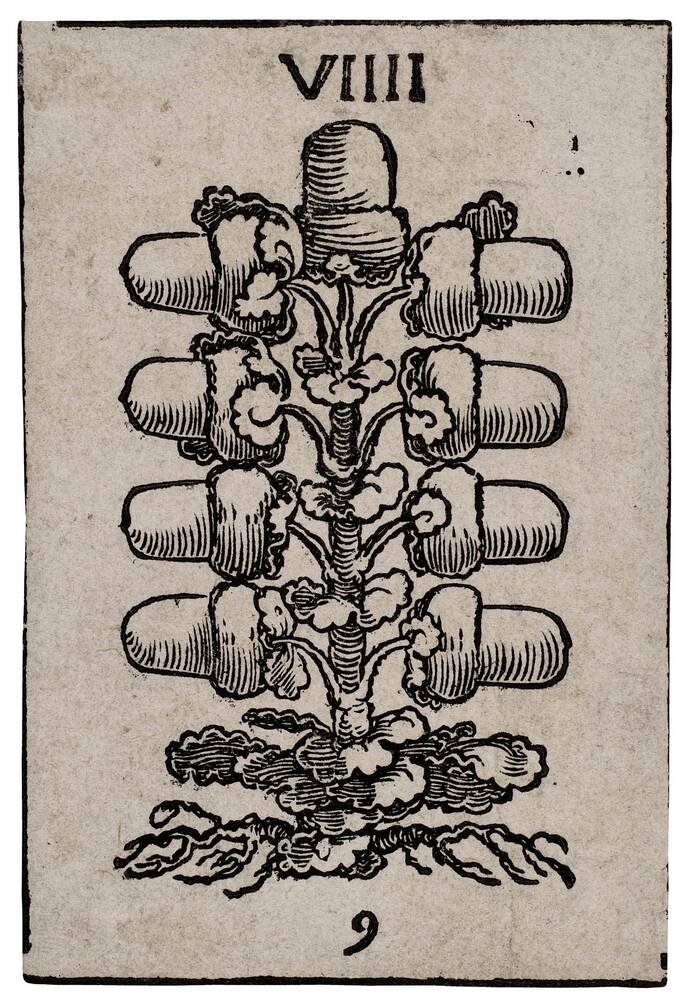 | 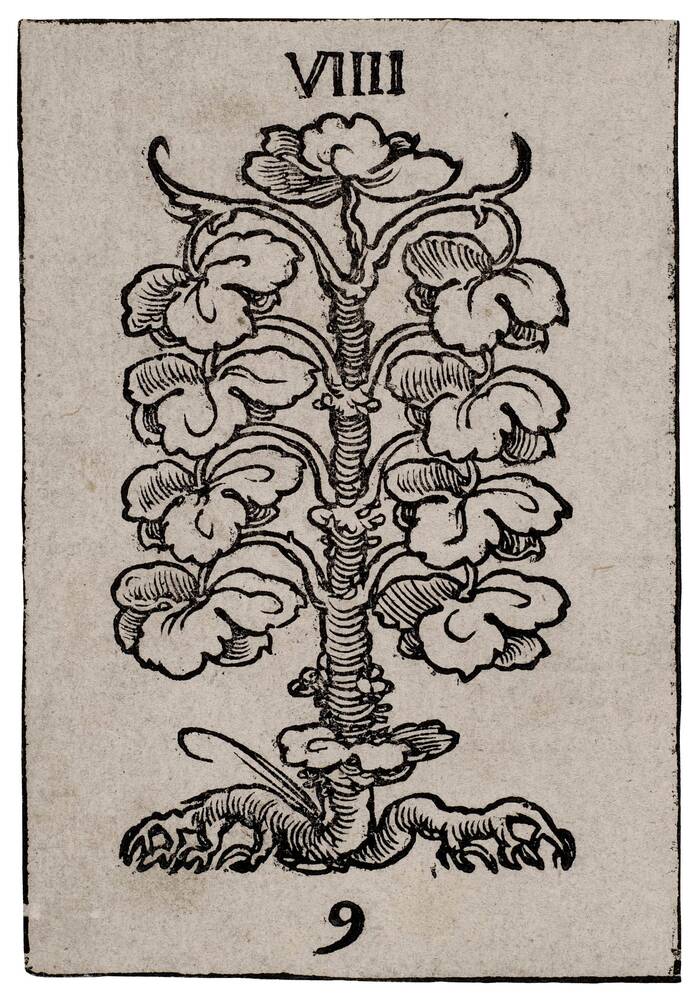 | 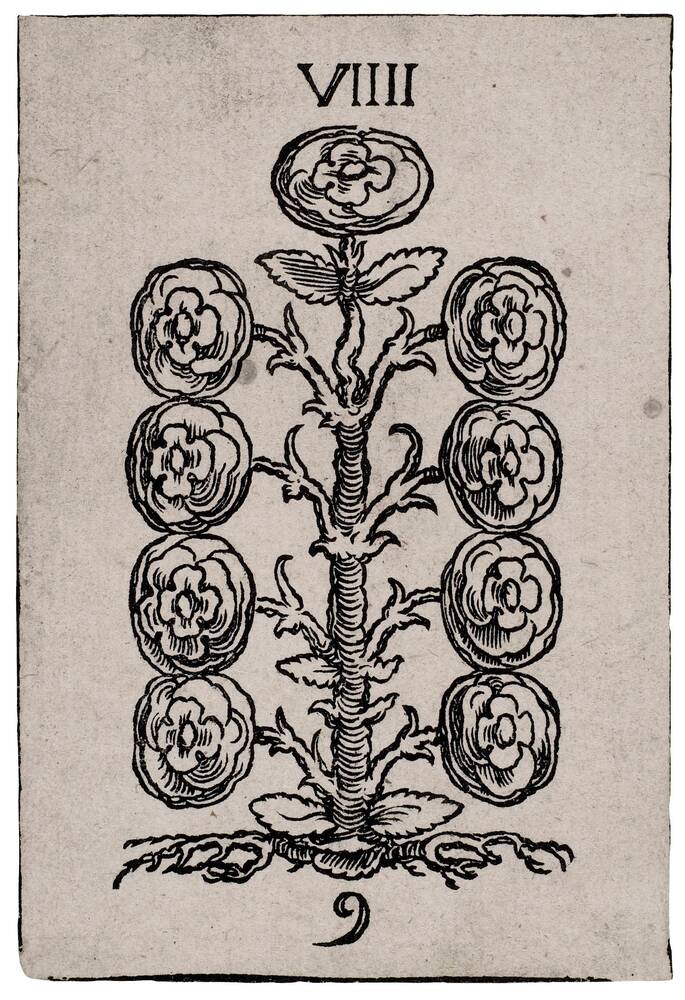 | 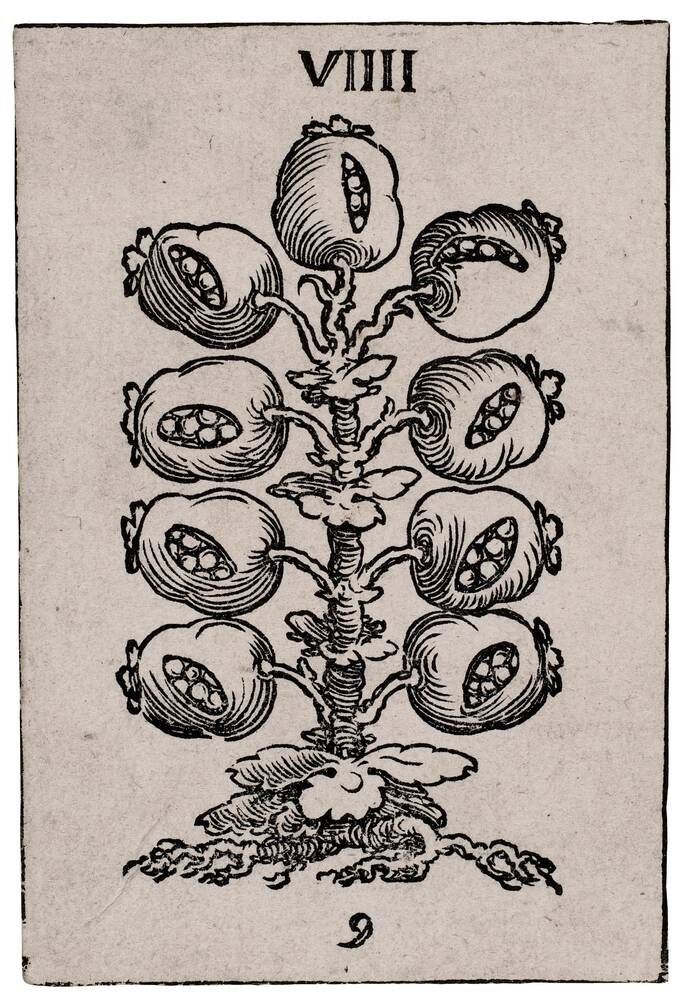 |
| 10 | 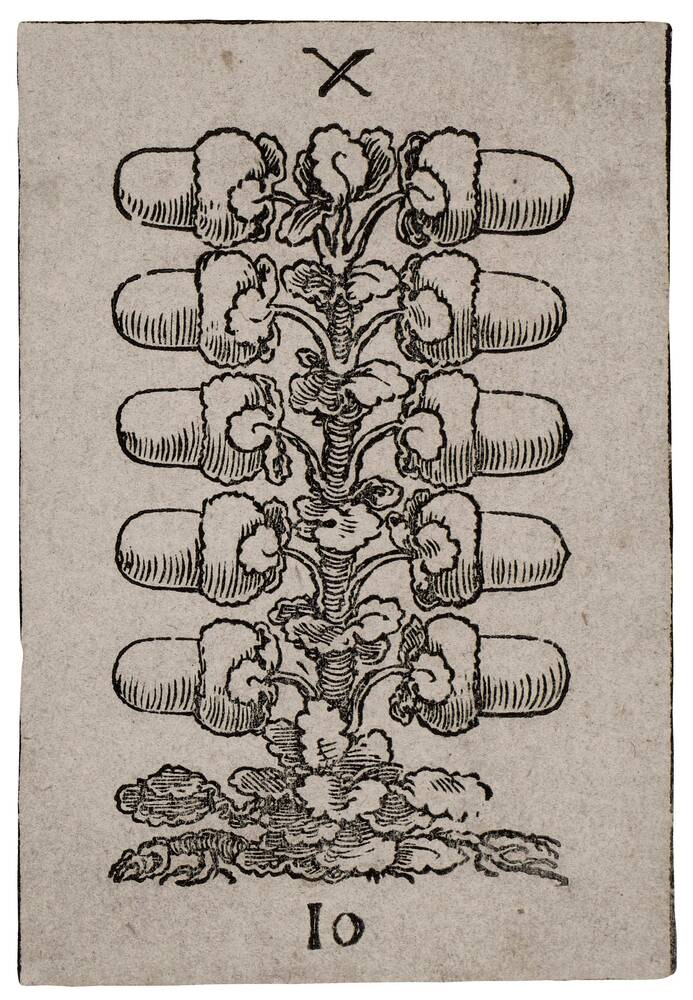 |  | 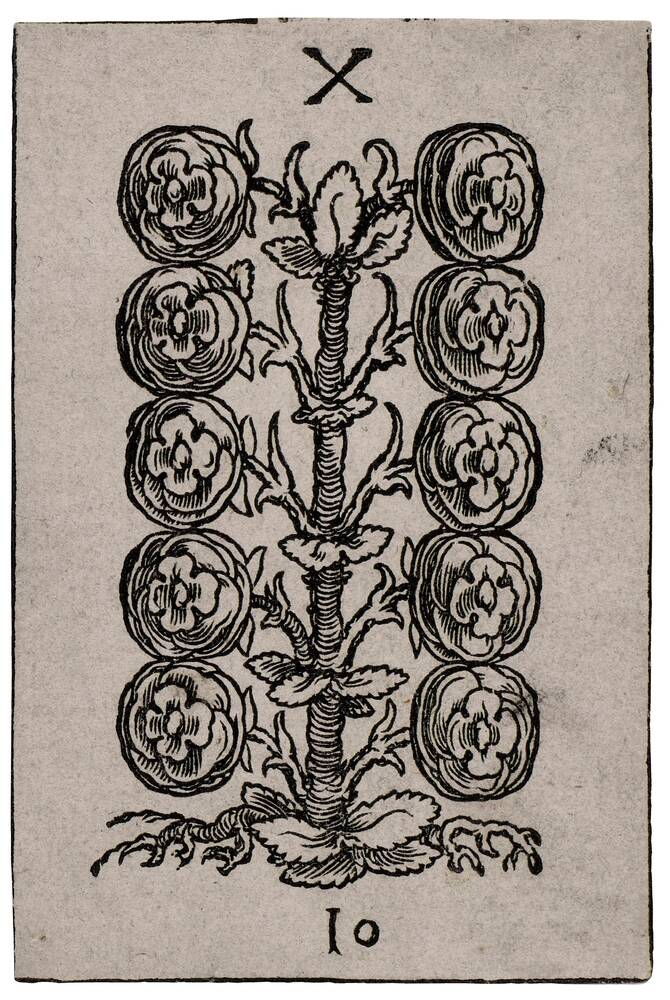 | 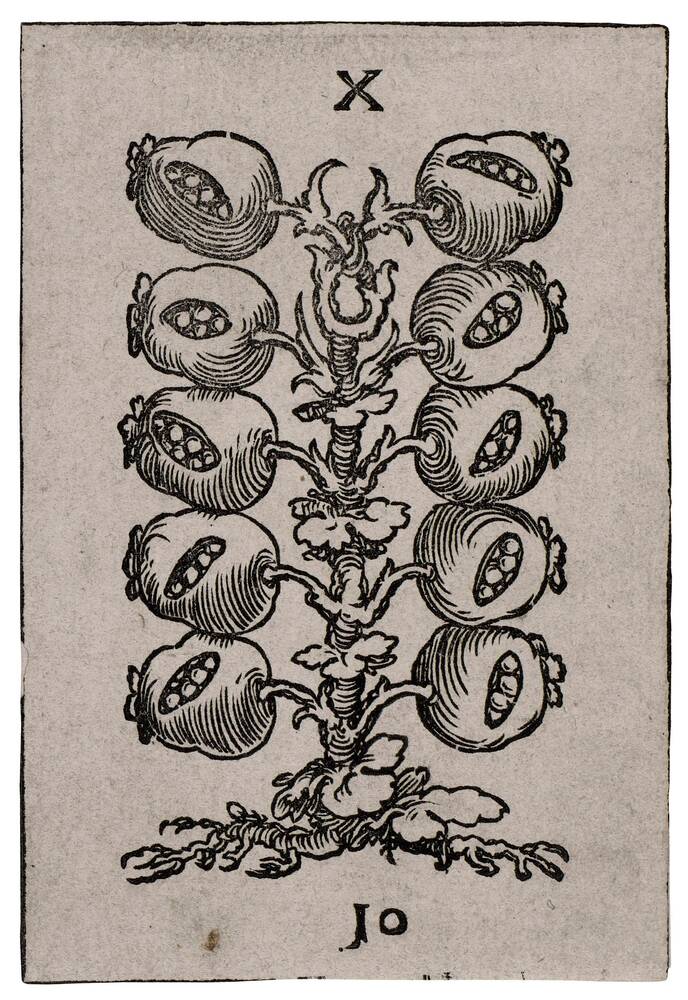 |
| Unter ❖ Under-knave | 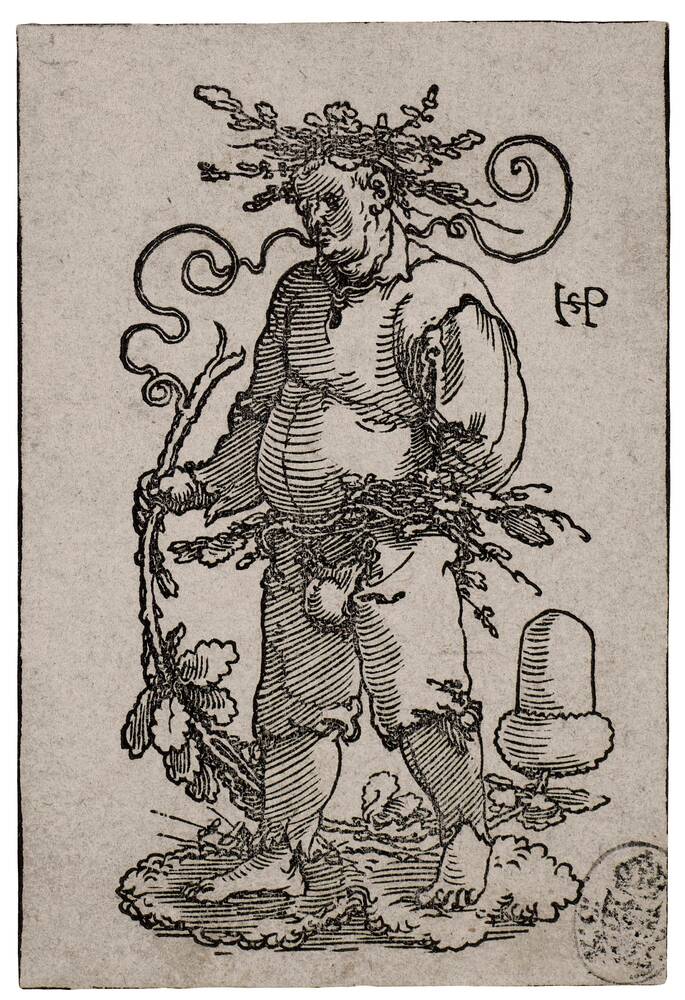 | 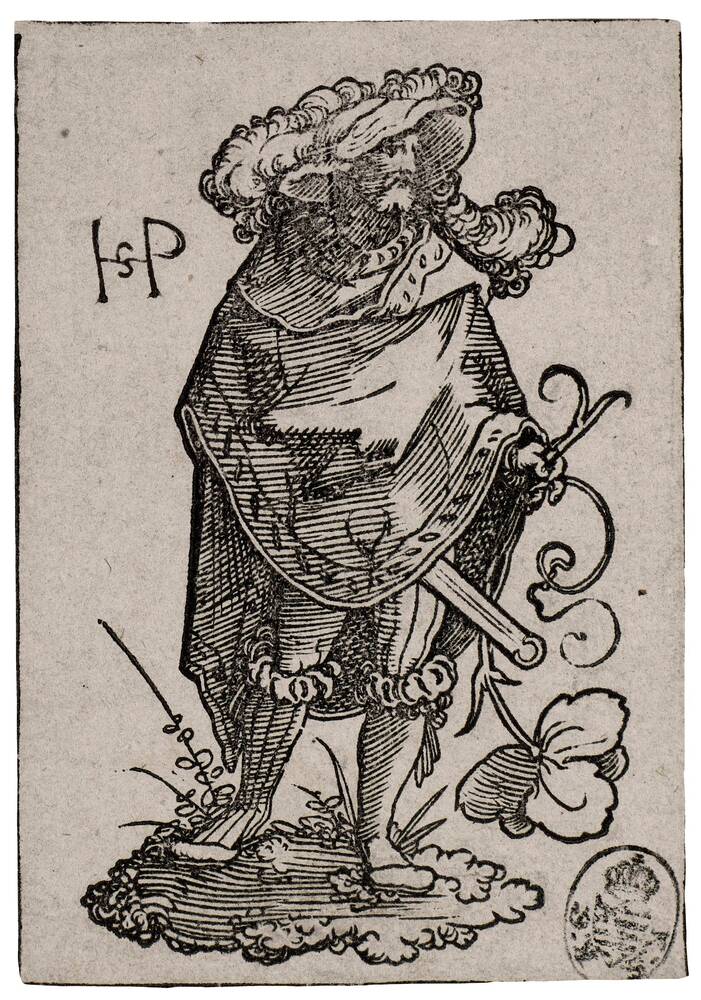 | 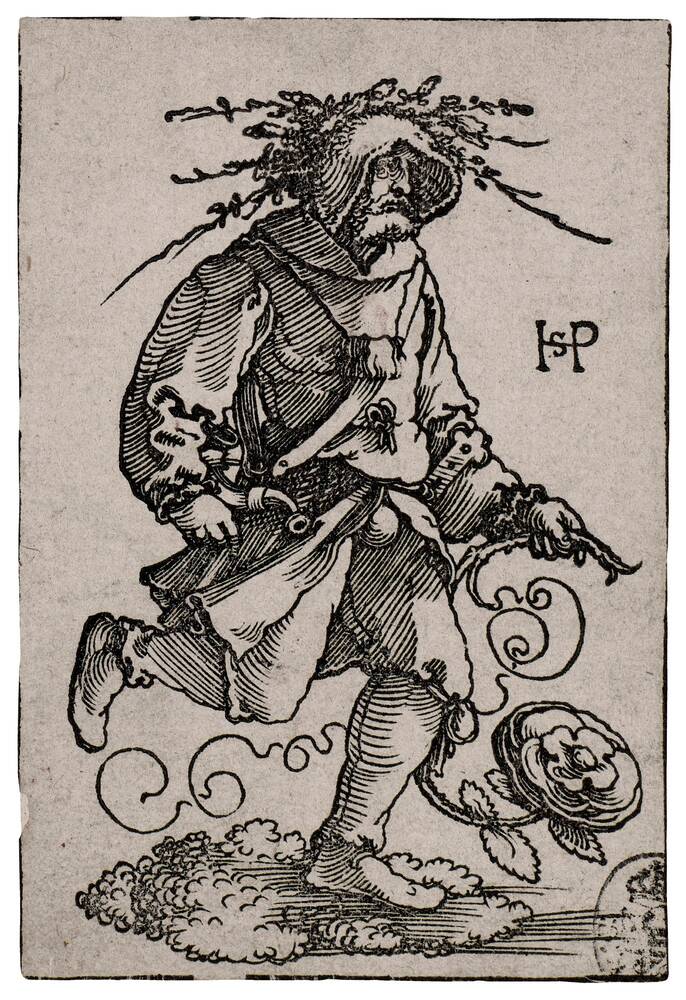 | 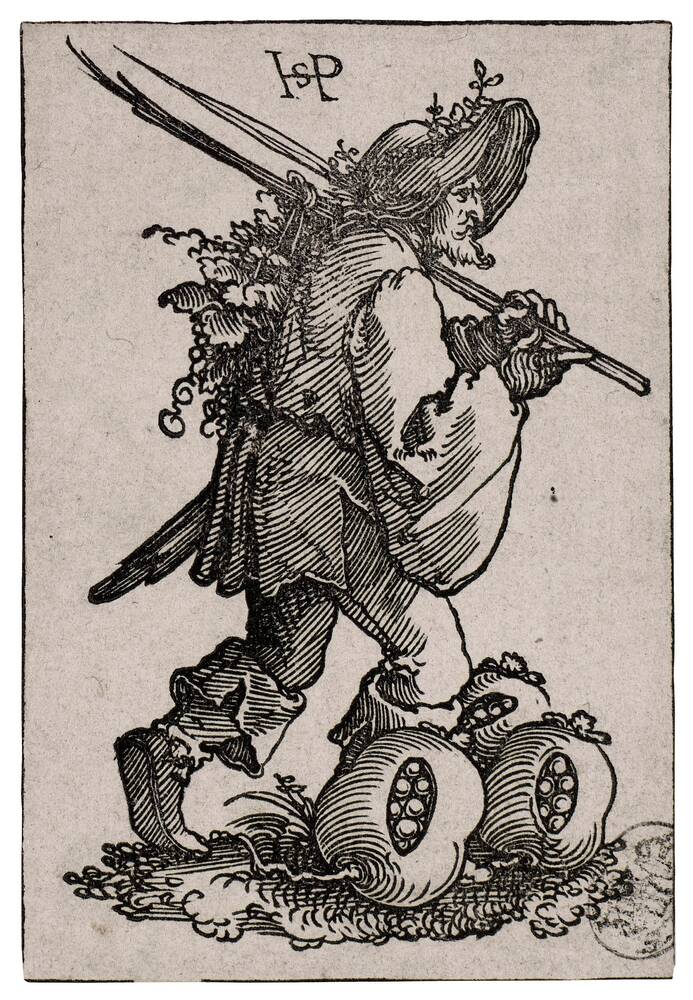 |
| Ober ❖ Over-knave | 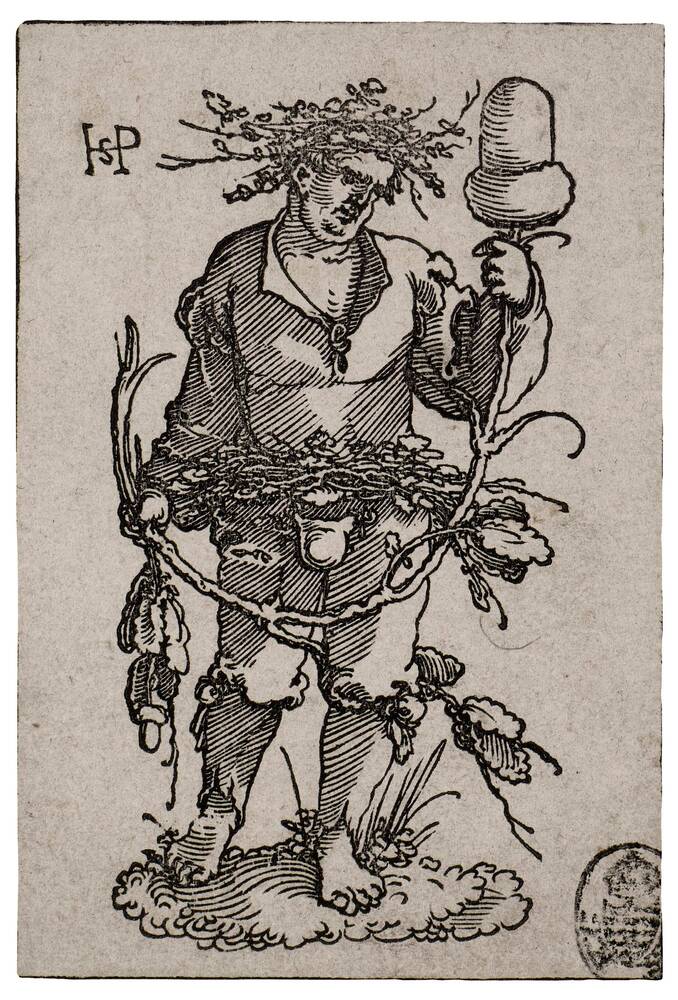 | 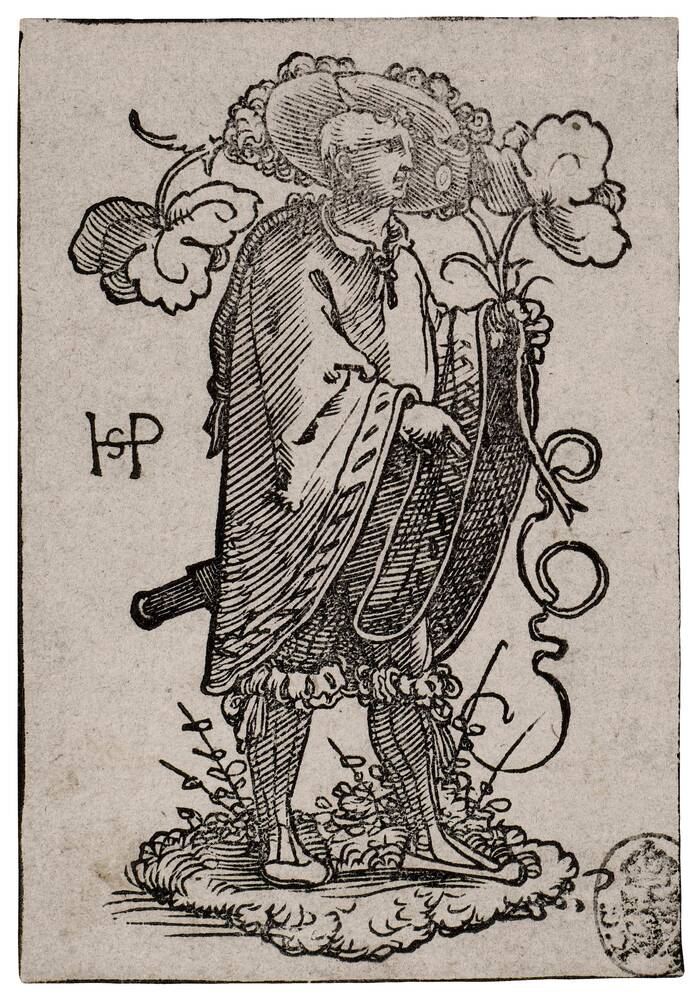 | 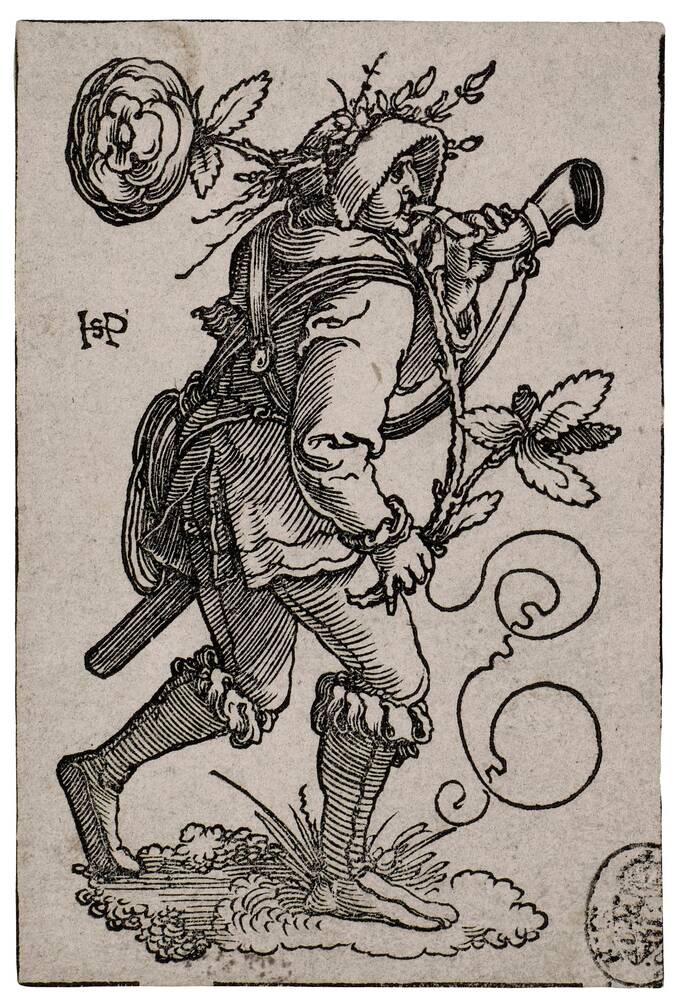 | 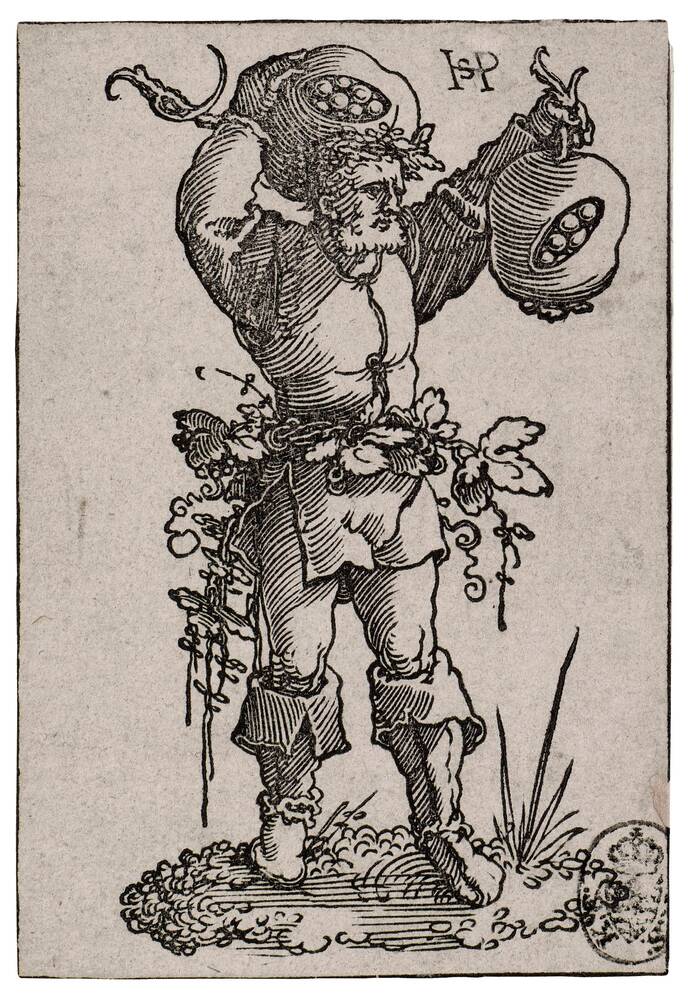 |
| König ❖ King | 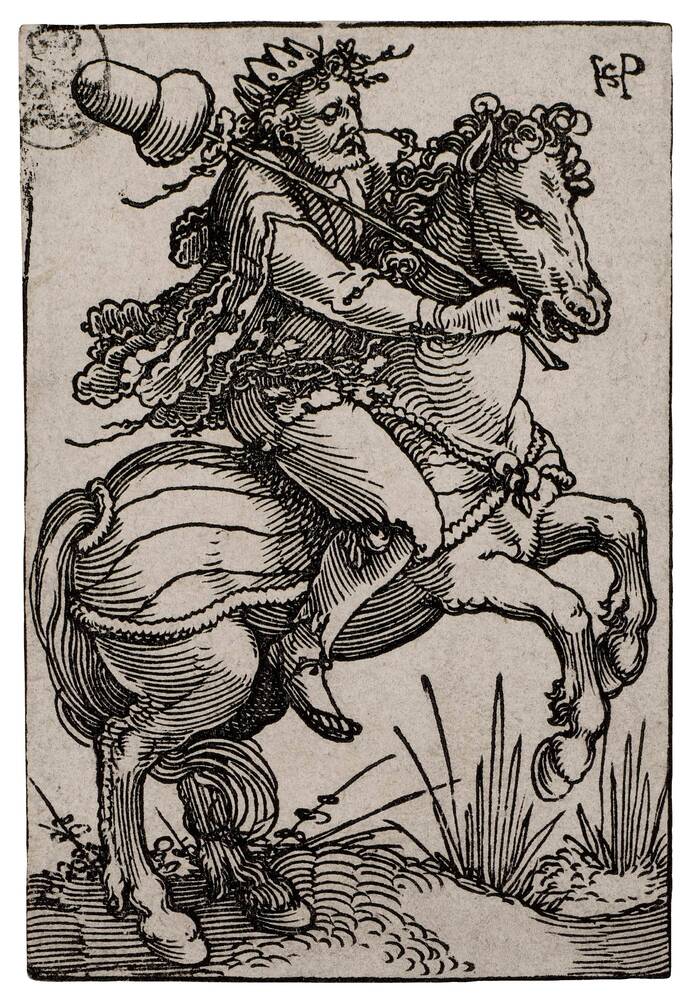 | 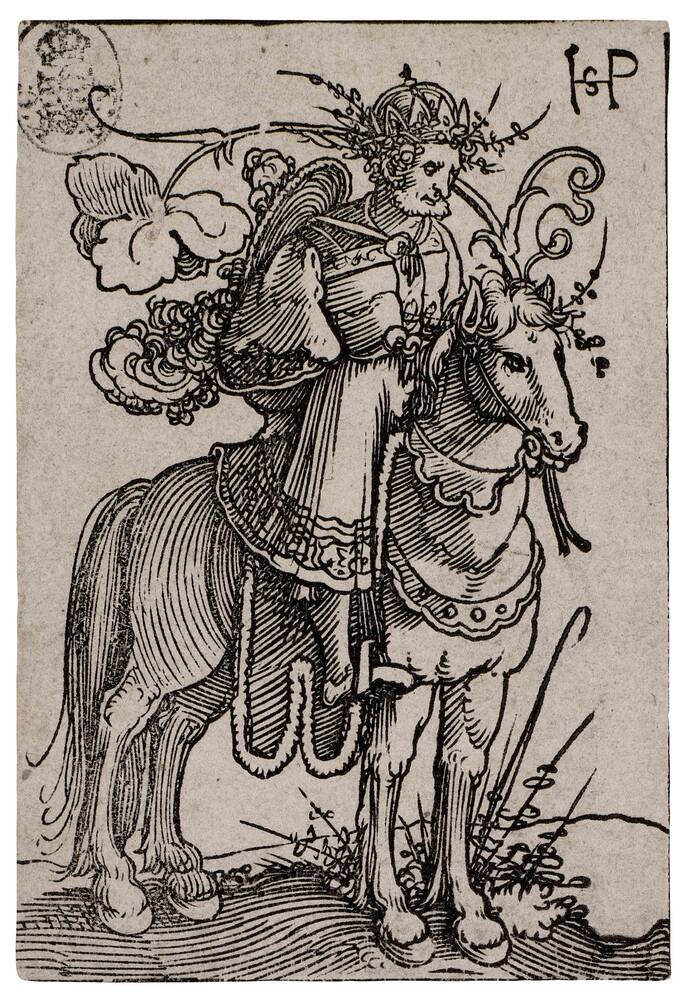 | 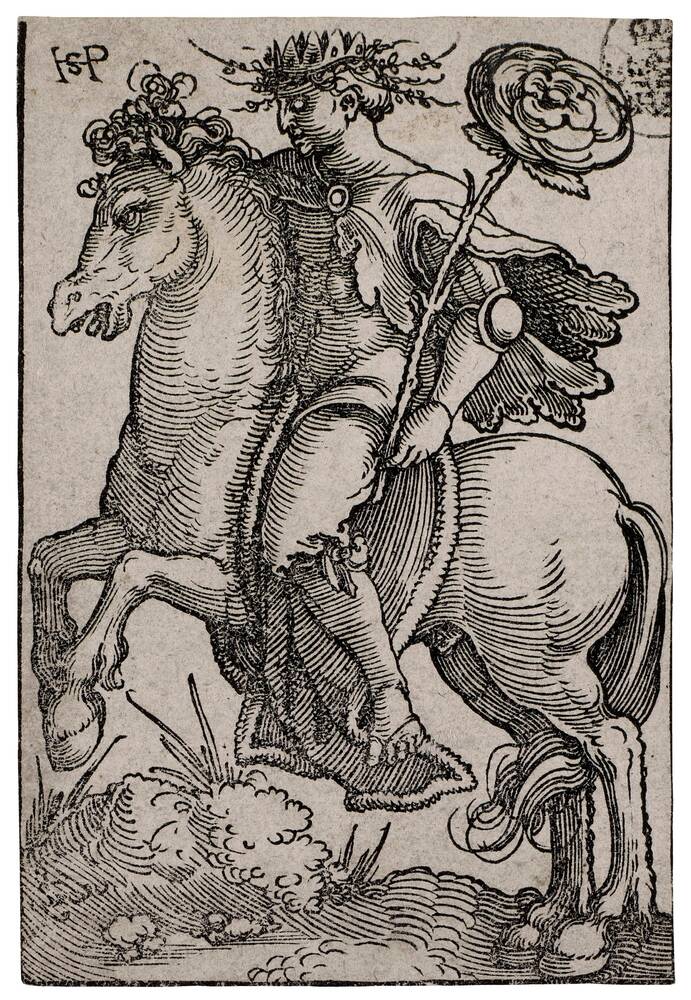 | 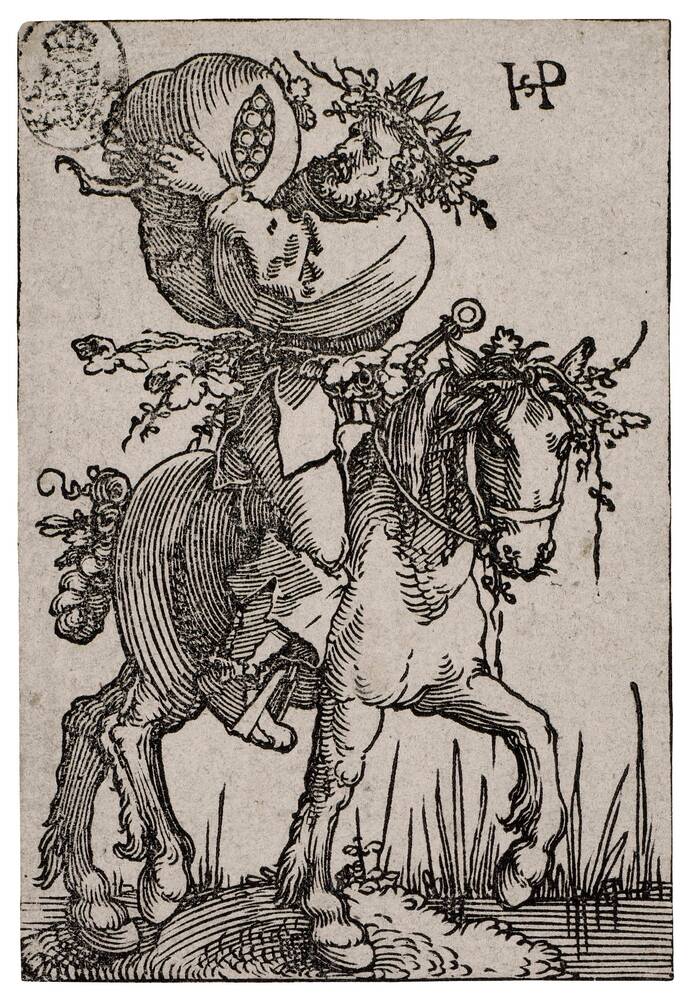 |
Apart from the mentioned changes to the suit system and generally much higher artistic quality, the pack has the characteristics of the standard German cards. Within the variation these display, it is worth mentioning that the kings are mounted, and that the tens are in the style of the other pip cards. The deuces are likewise treated just as normal pip cards, with the exception of a putto with the coat of arms of Nuremberg on the deuce of acorns.
A rather rare feature is that all pip cards have their values indicated both by Roman and Arabic numerals in addition to the pips themselves. Both this and the use of roses as a suit might well have been inspired by the cards of Master PW from c. 1500, while the use of pomegranates as a suit symbol most likely is inspired by the use of this as a replacement for coins in the Spanish-suited cards of the South German Engraver from 1496.
Later revisions by Beham
The images above are from Kupferstichkabinett Dresden. The cards have plain backs, and their size is given as 65×95 mm. The Bodleian Library has one complete and one partial set of coloured cards with minor alterations. Here, the card size is given as 63×95 mm. The discrepancy in height seems to be due to the former being cut to the border lines, while the latter extends slightly beyond these. The change in width is instead due to the latter having added border lines at the sides closer to the printed content.
In the first and complete set, the only difference is that the coat of arms of Nuremberg on the deuce of acorns is replaced by a house mark. At the same mark appears alongside the initials FCZ on the same cards in the Peter Flötner’s pack, and the same initials appear on the same card in Beham’s c. 1527 pack, it seems likely that this is the mark of the publisher Franz Christoph Zell.
| Eicheln ❖ Acorns | Laub ❖ Leaves | Rosen ❖ Roses | Granatäpfeln ❖ Pomegranates | |
|---|---|---|---|---|
| 2/ Daus ❖ 2/ Deuce | 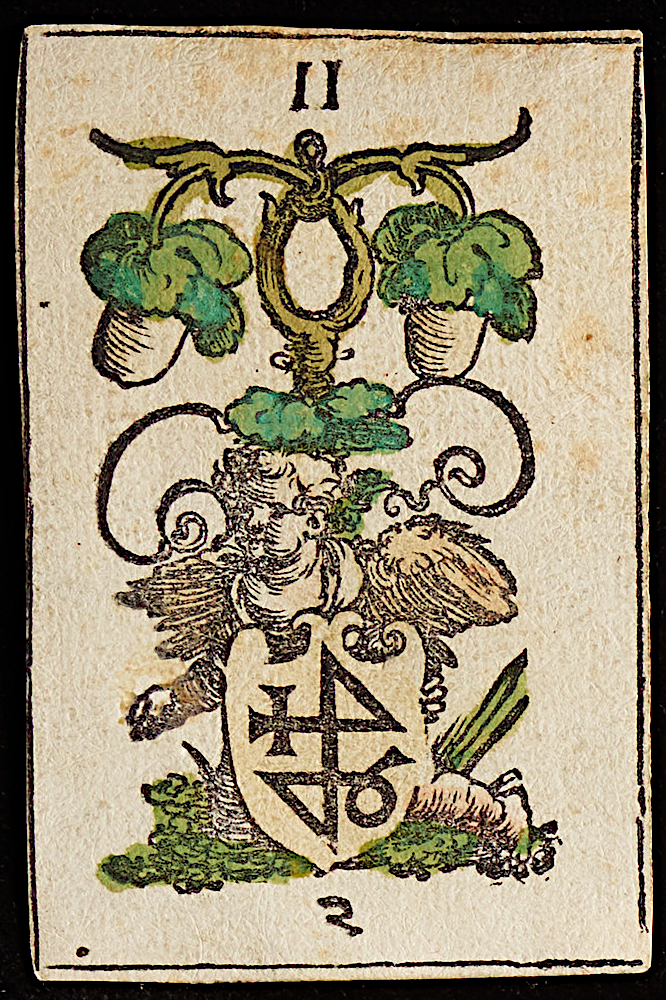 | 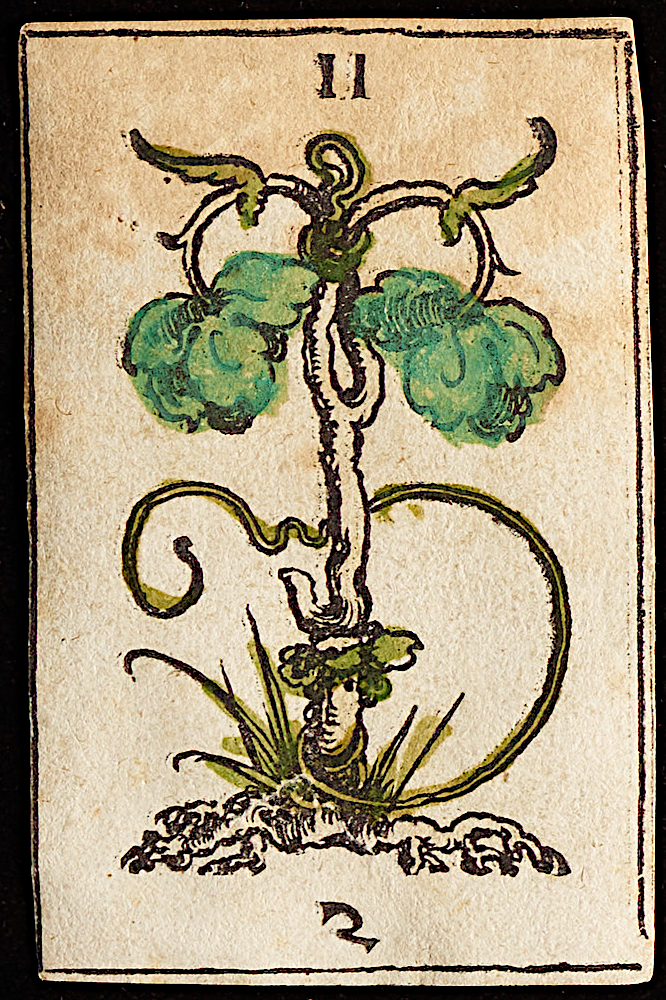 | 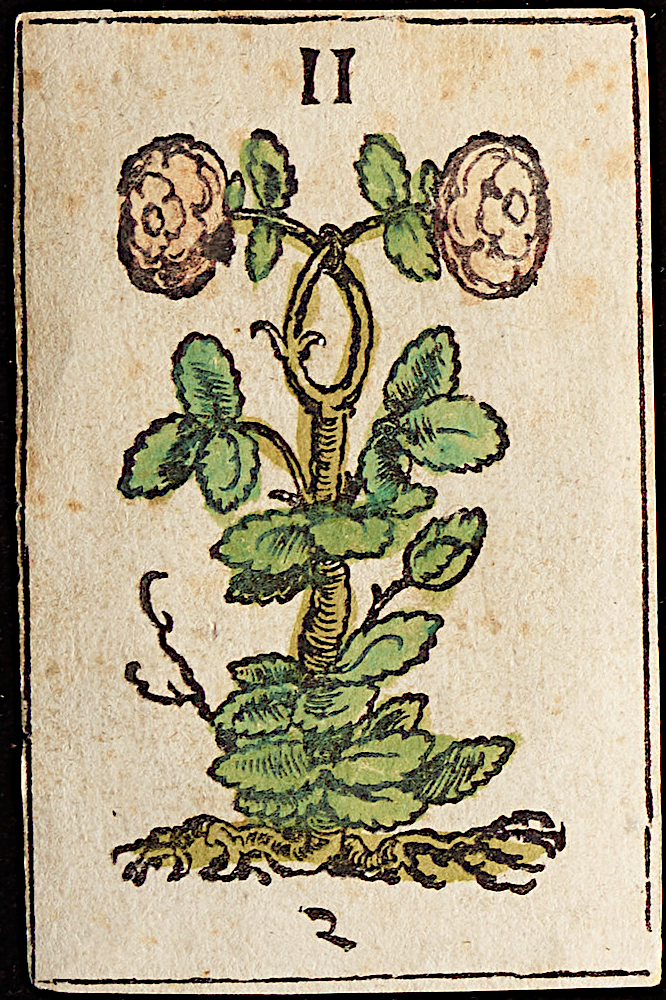 | 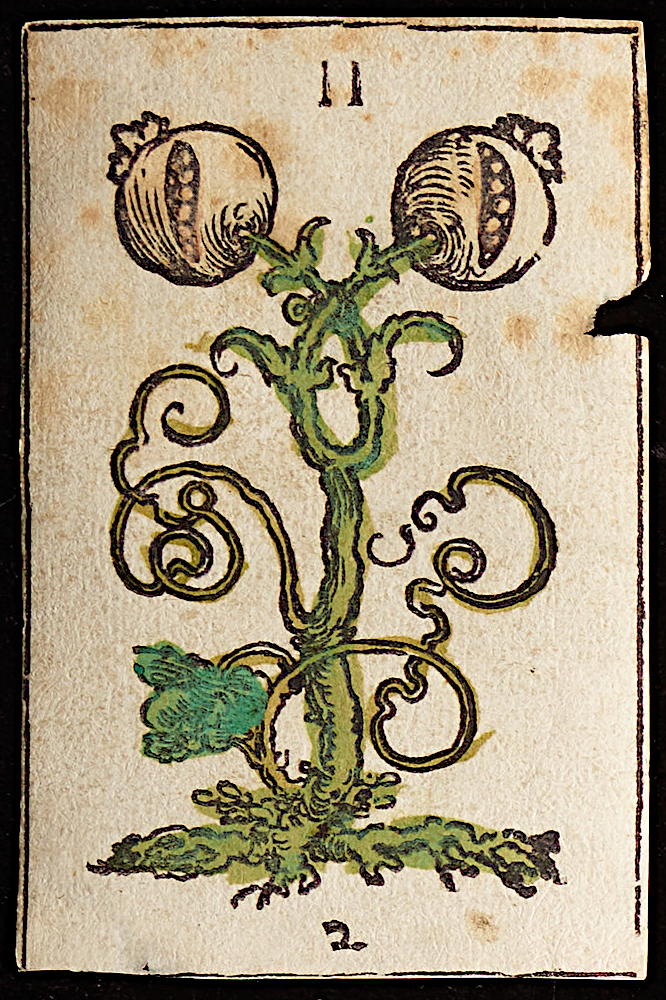 |
| 3 | 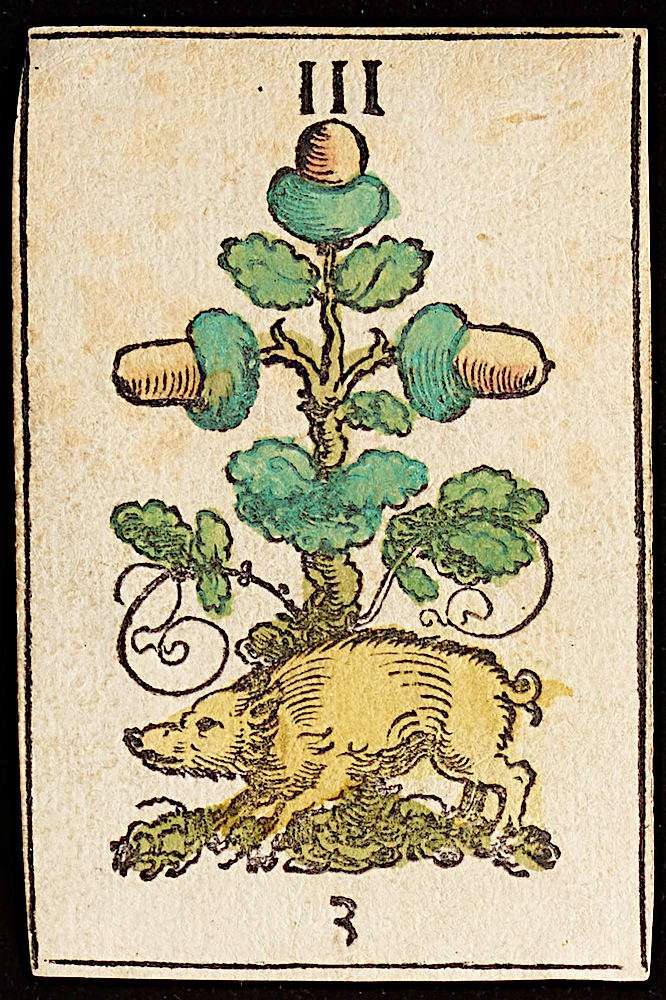 | 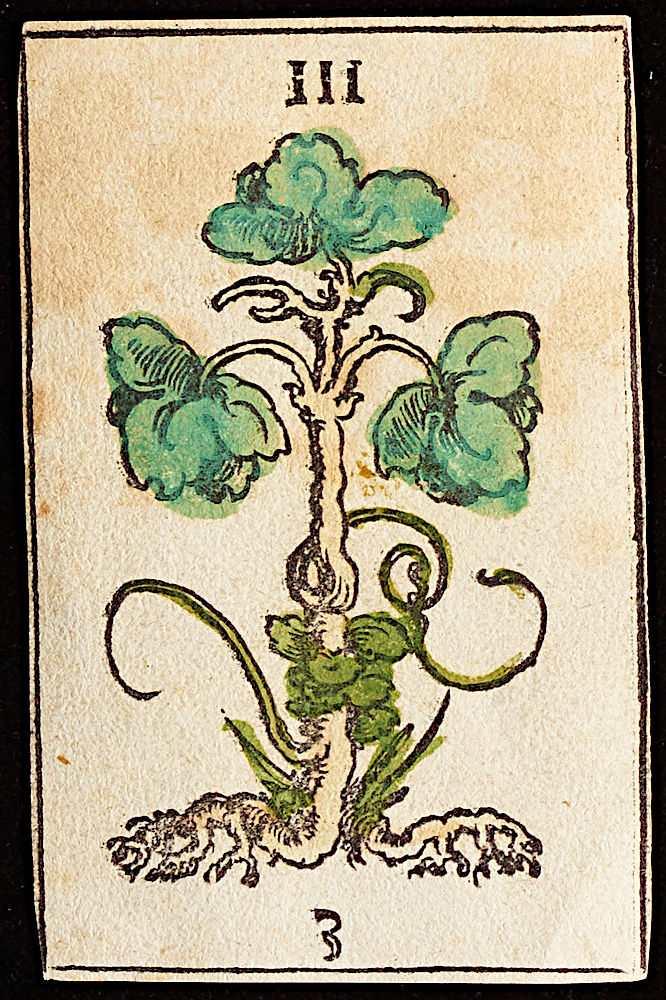 | 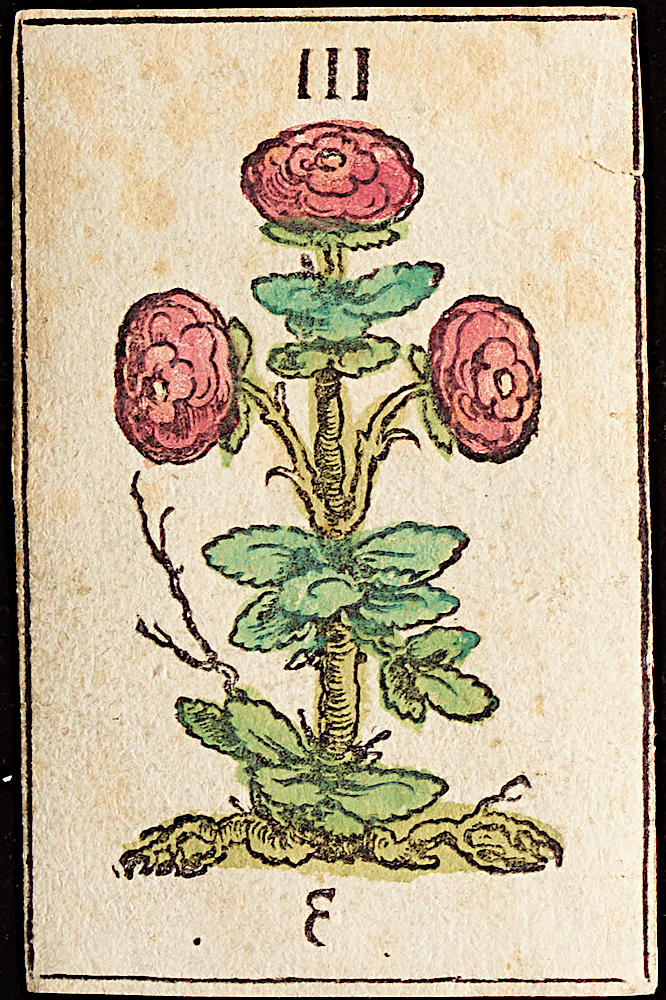 | 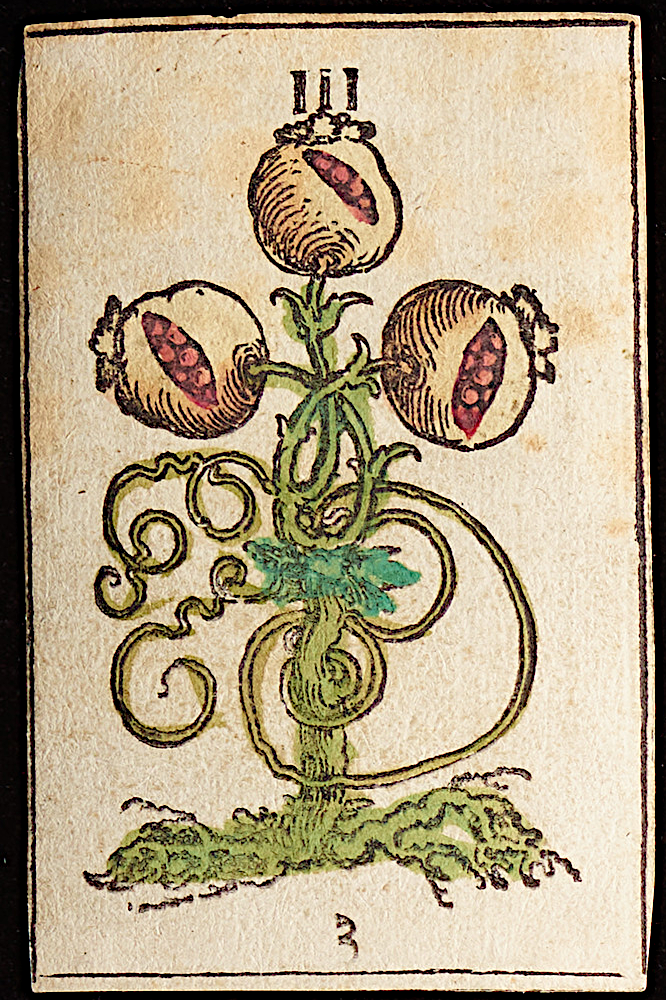 |
| 4 | 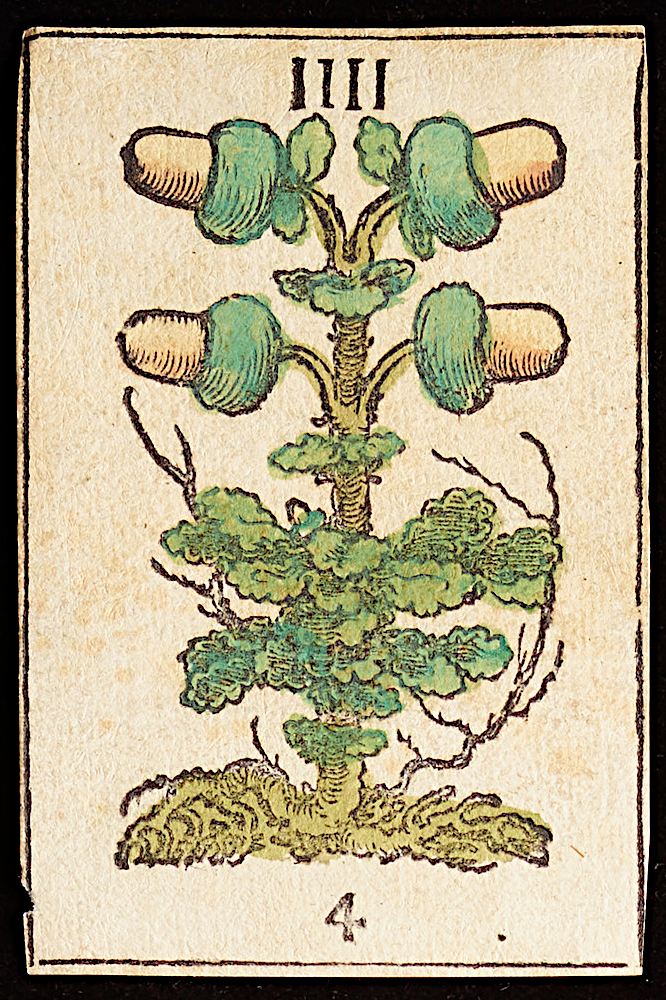 | 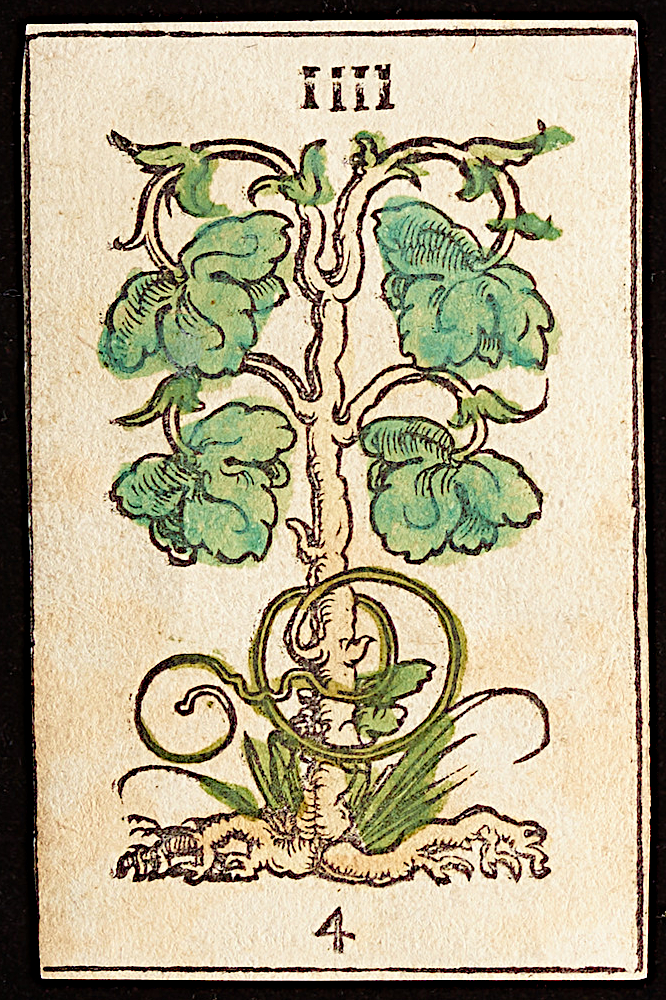 | 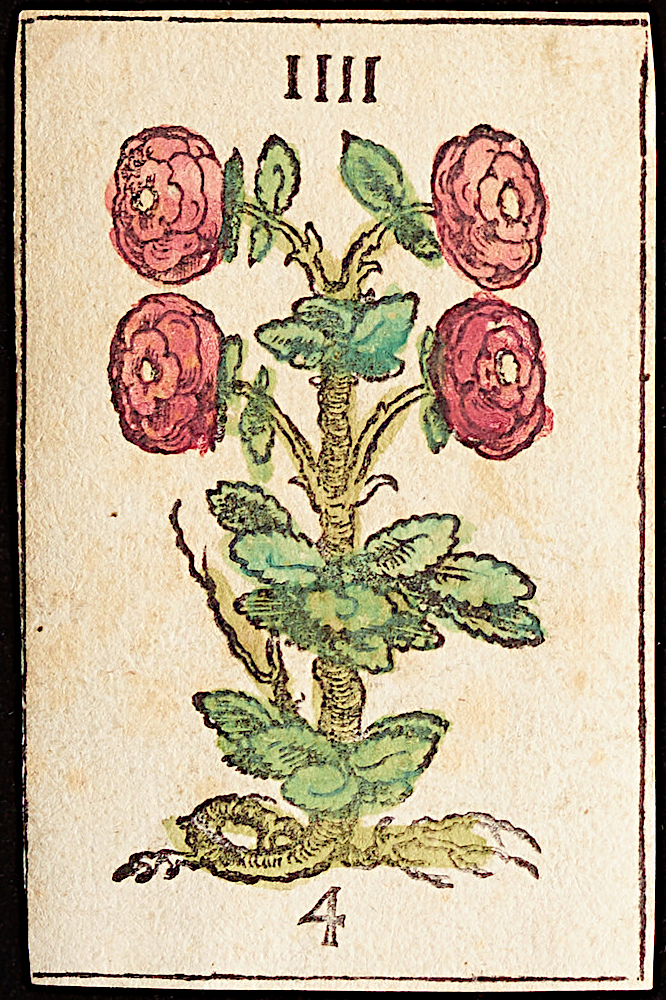 | 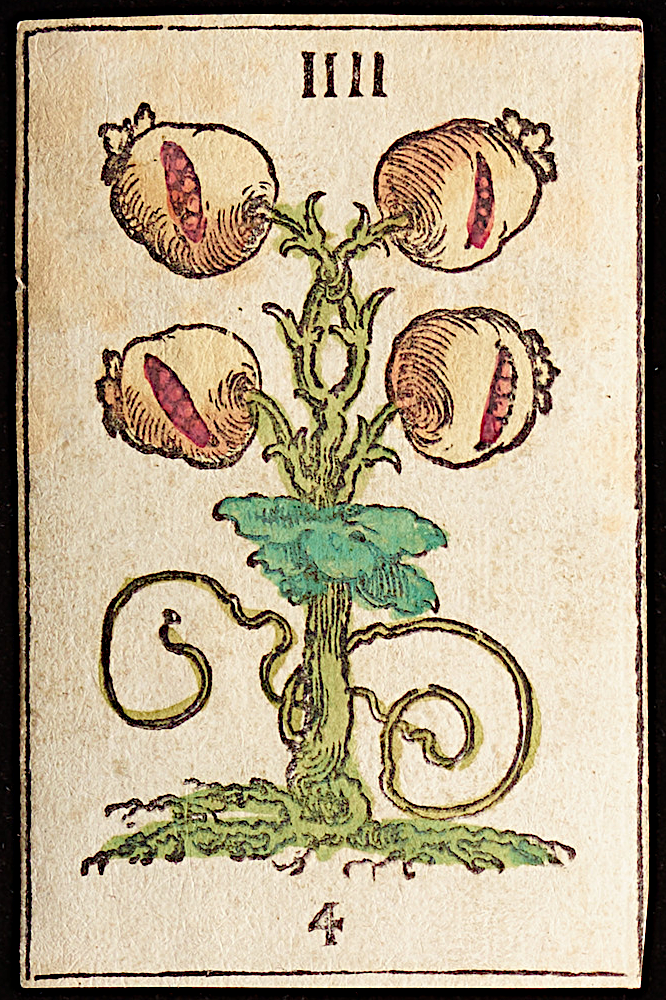 |
| 5 | 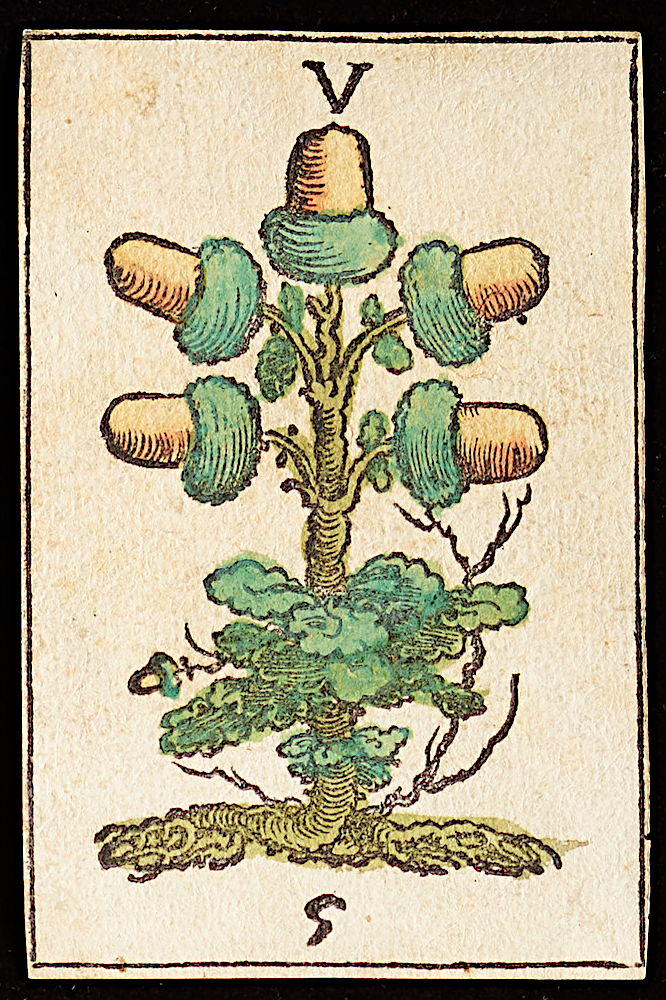 | 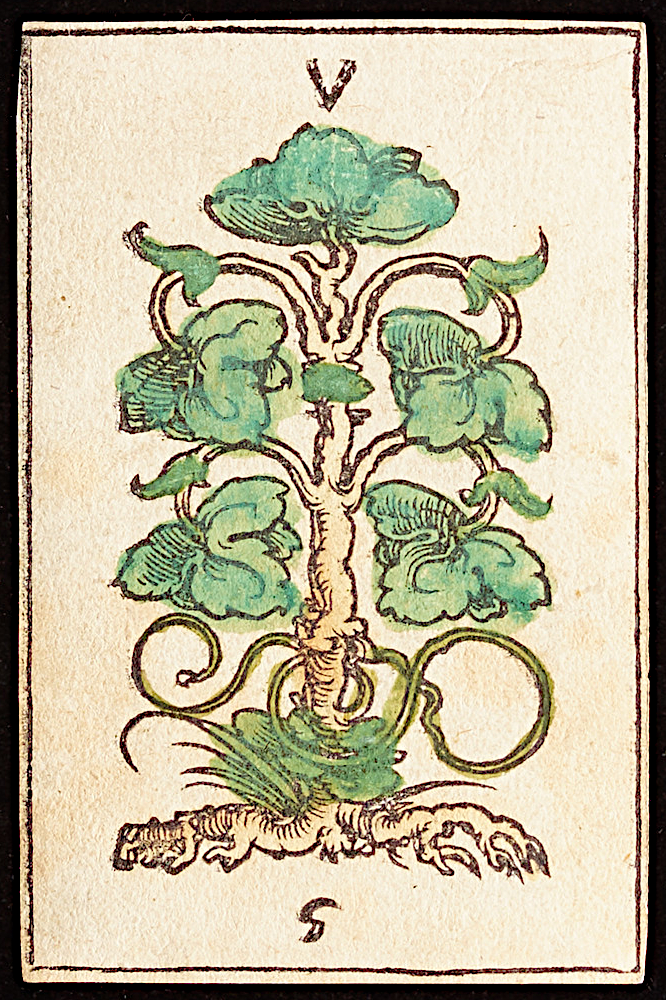 | 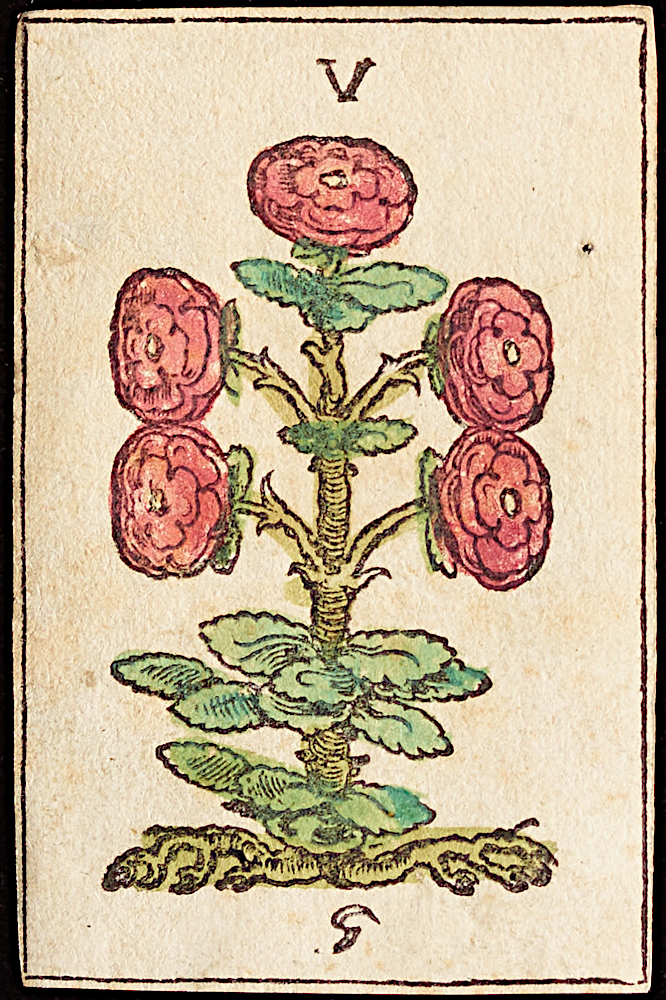 | 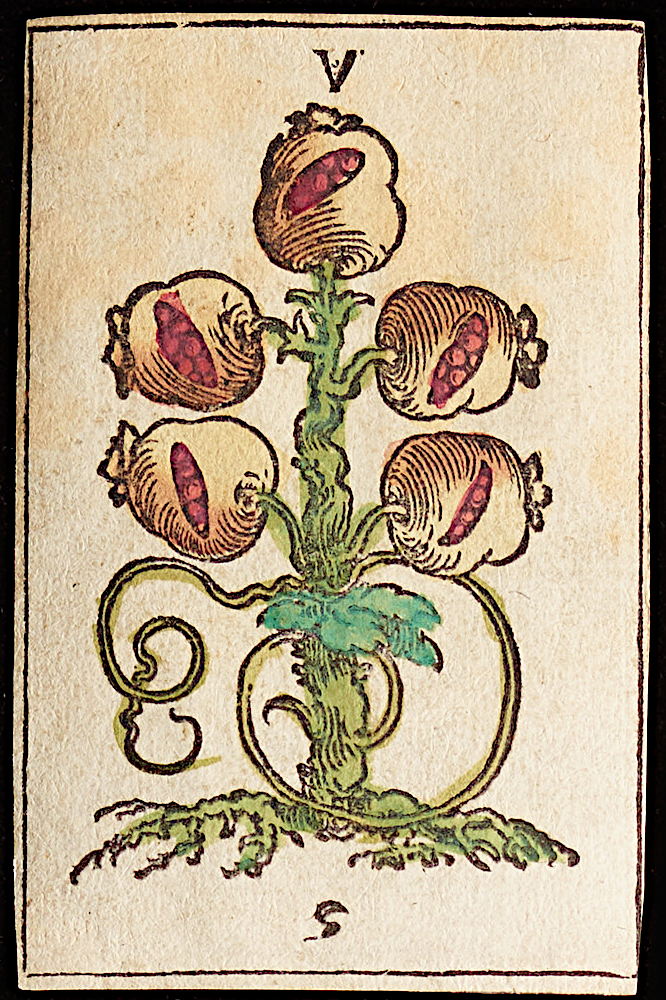 |
| 6 | 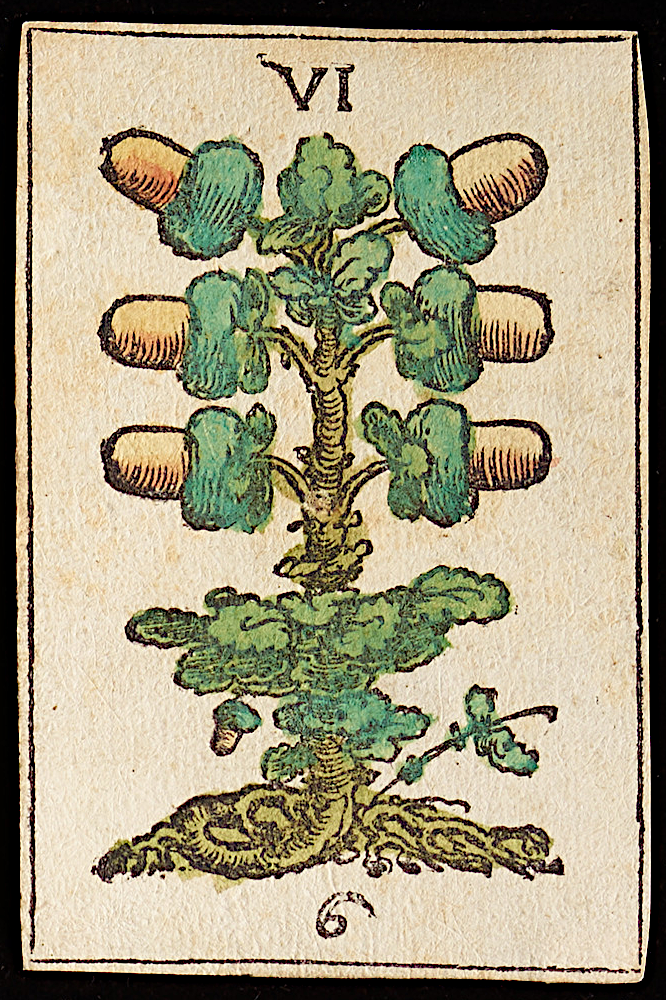 | 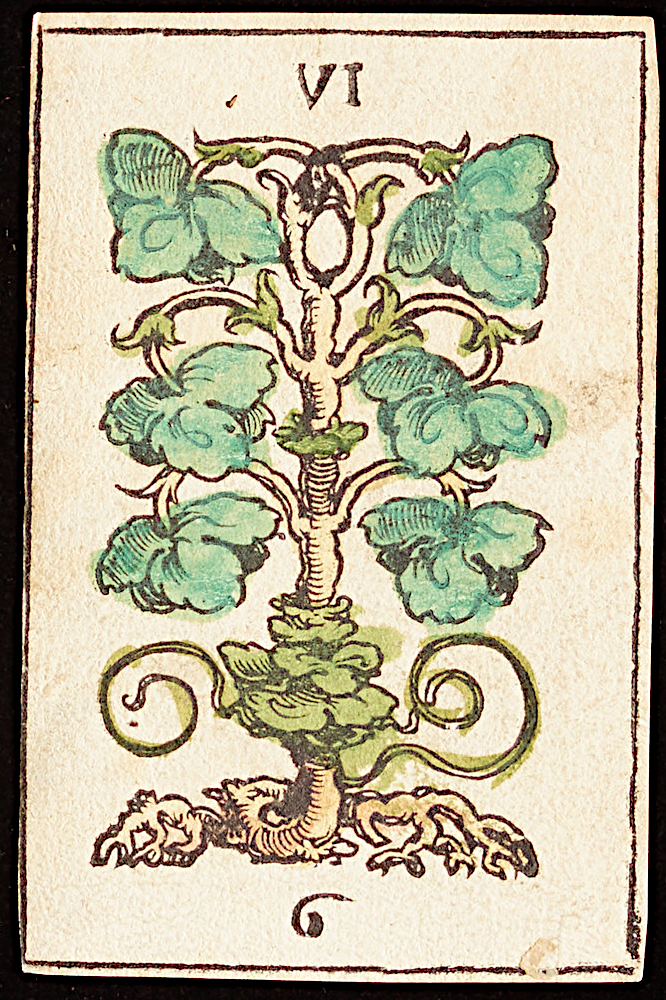 | 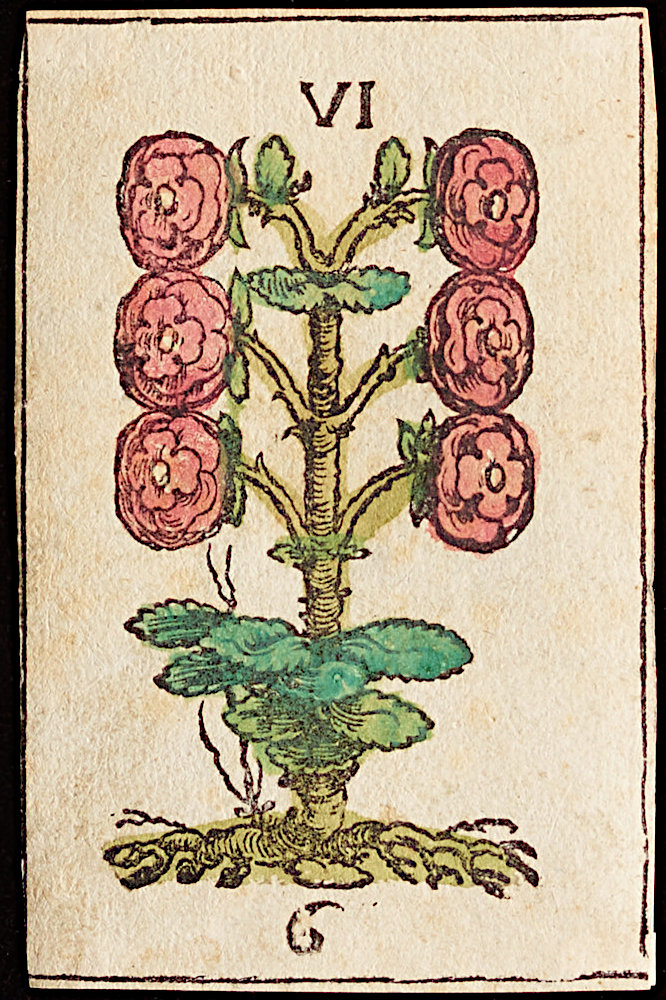 | 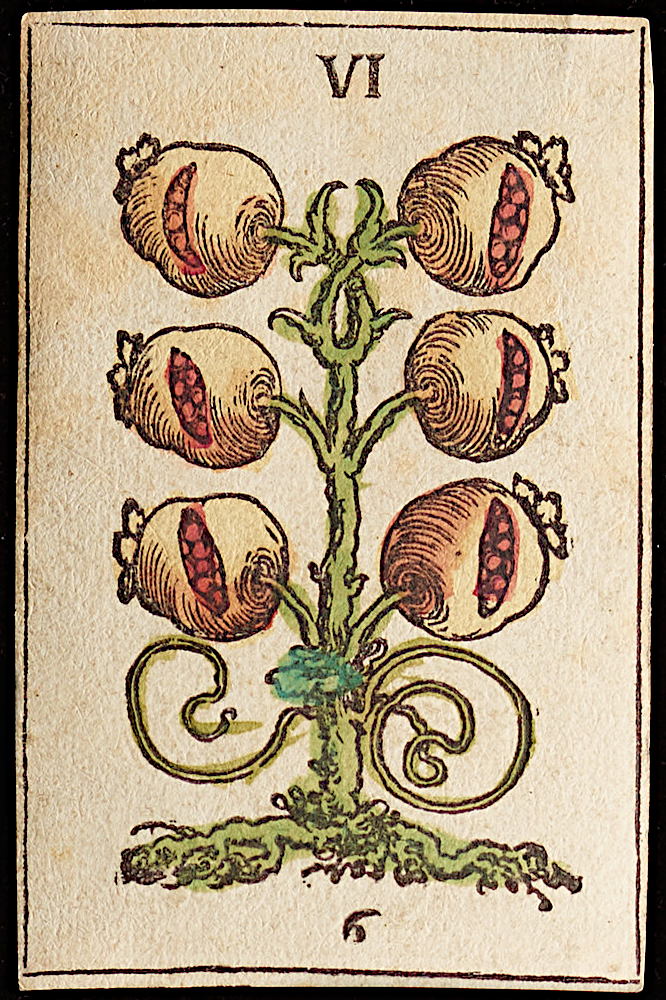 |
| 7 | 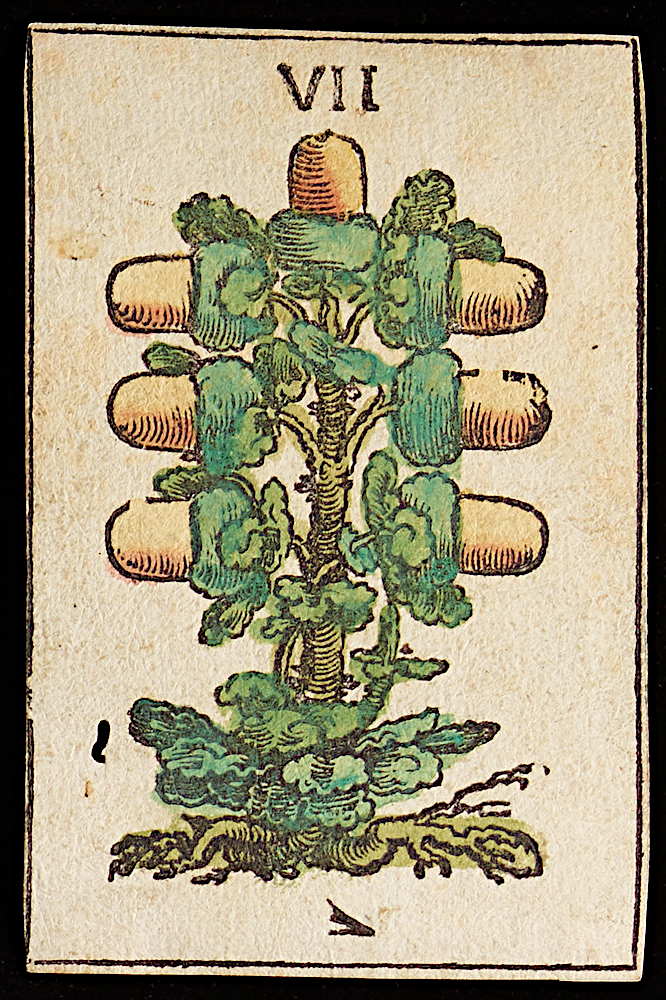 | 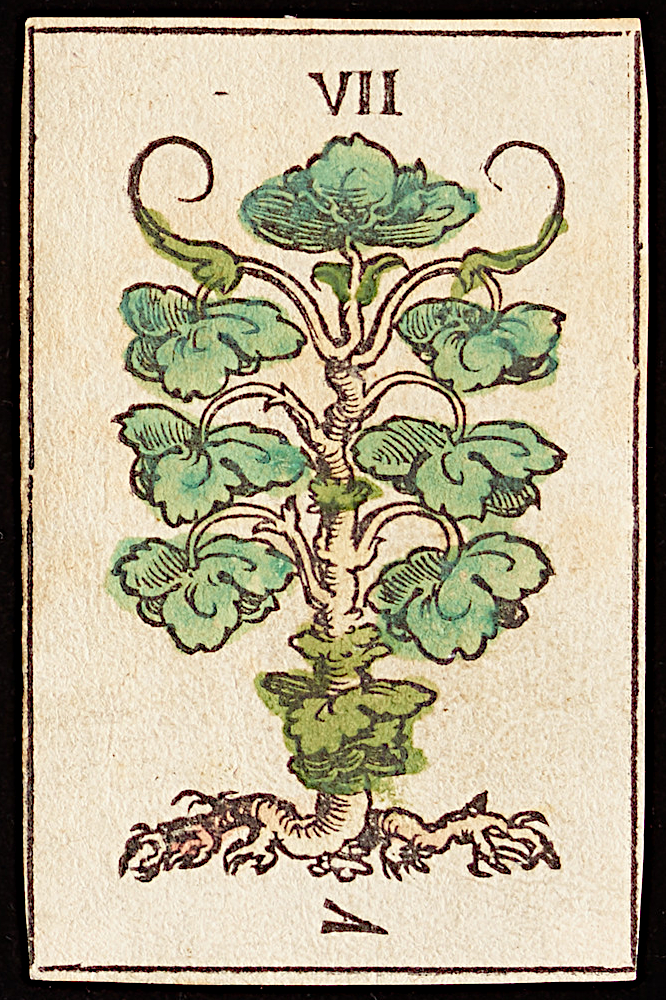 | 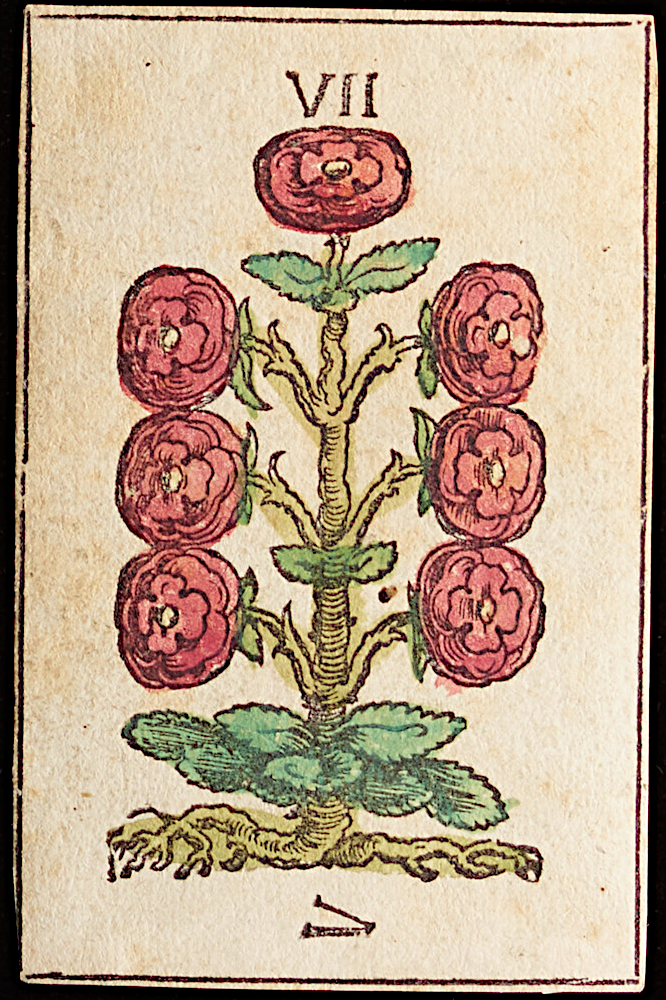 | 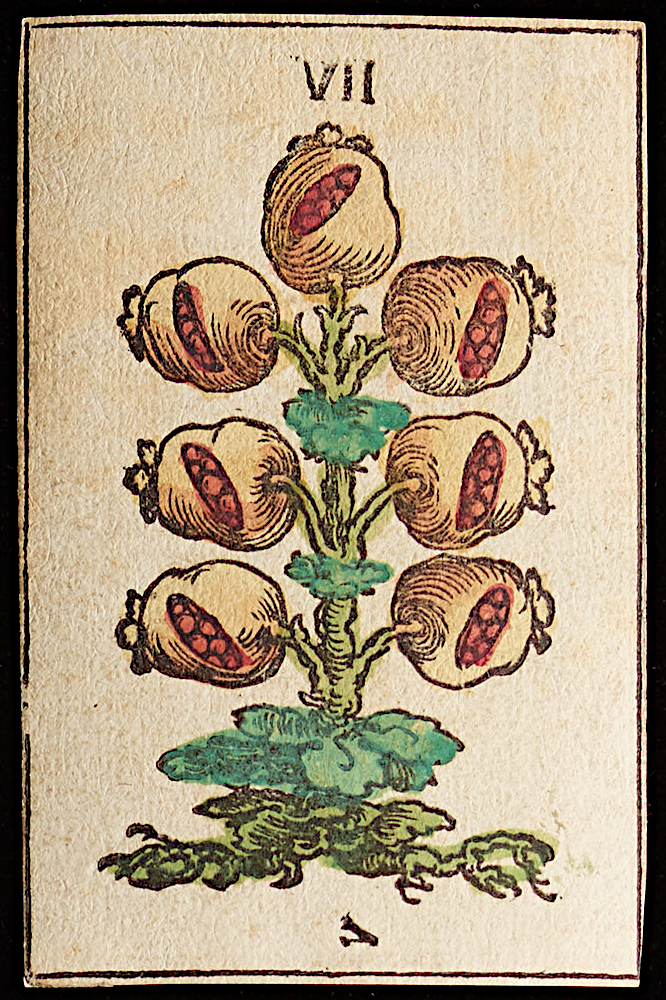 |
| 8 | 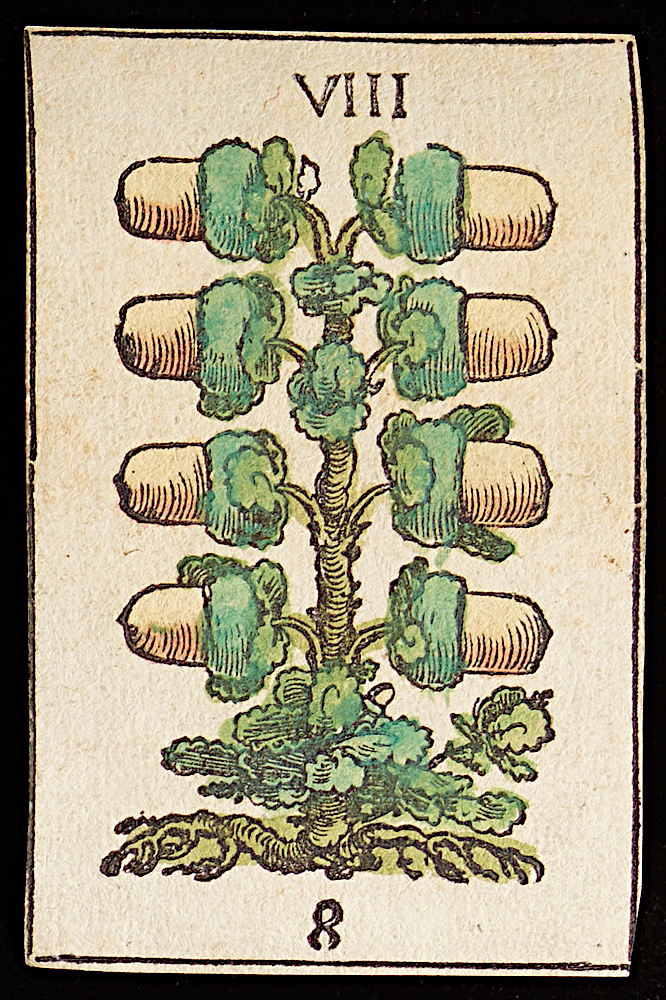 | 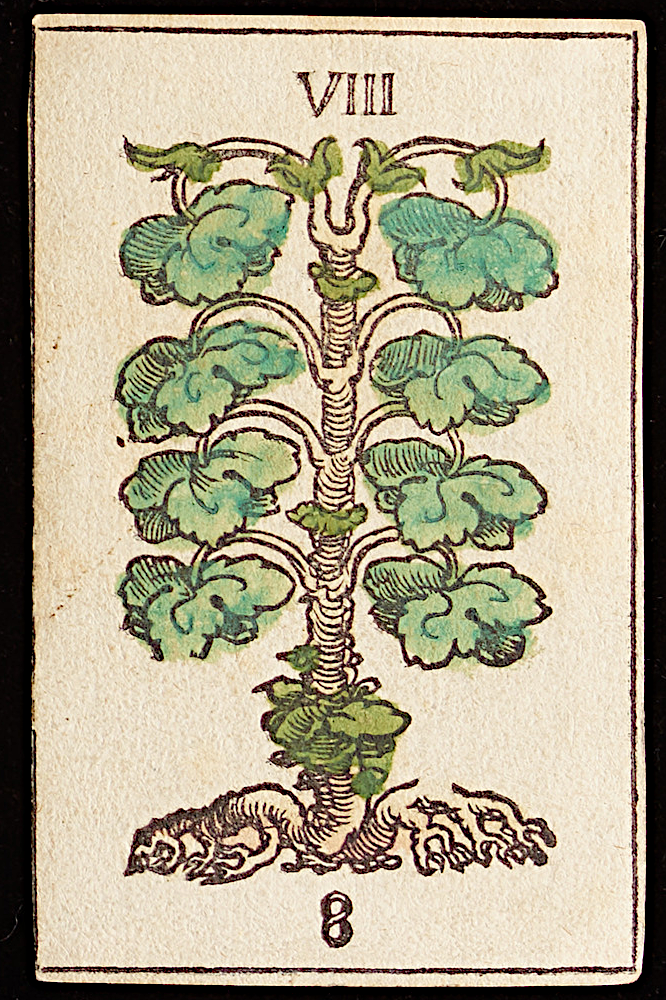 | 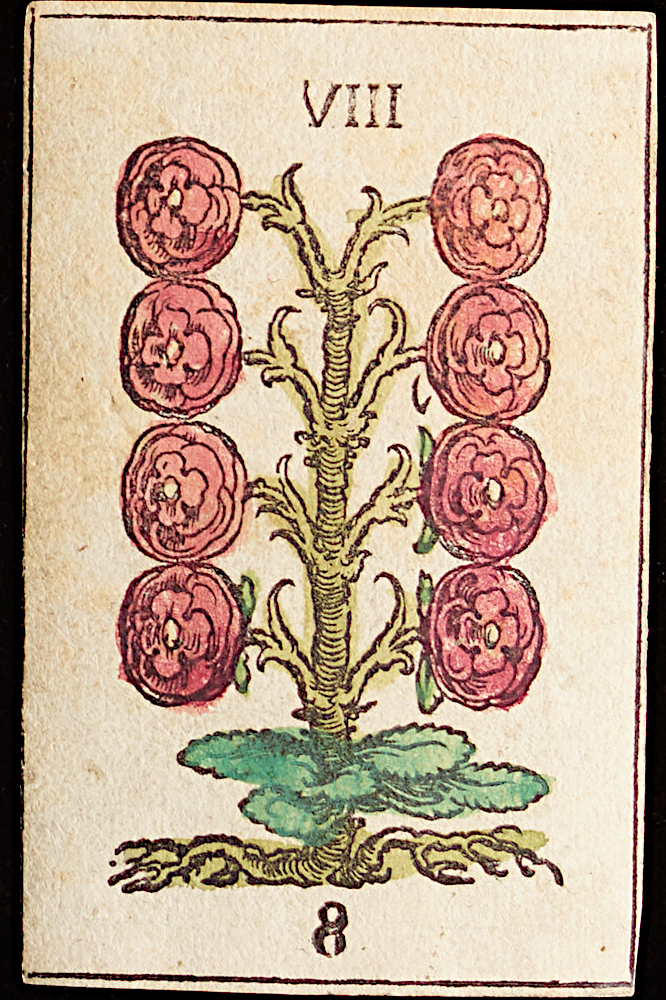 | 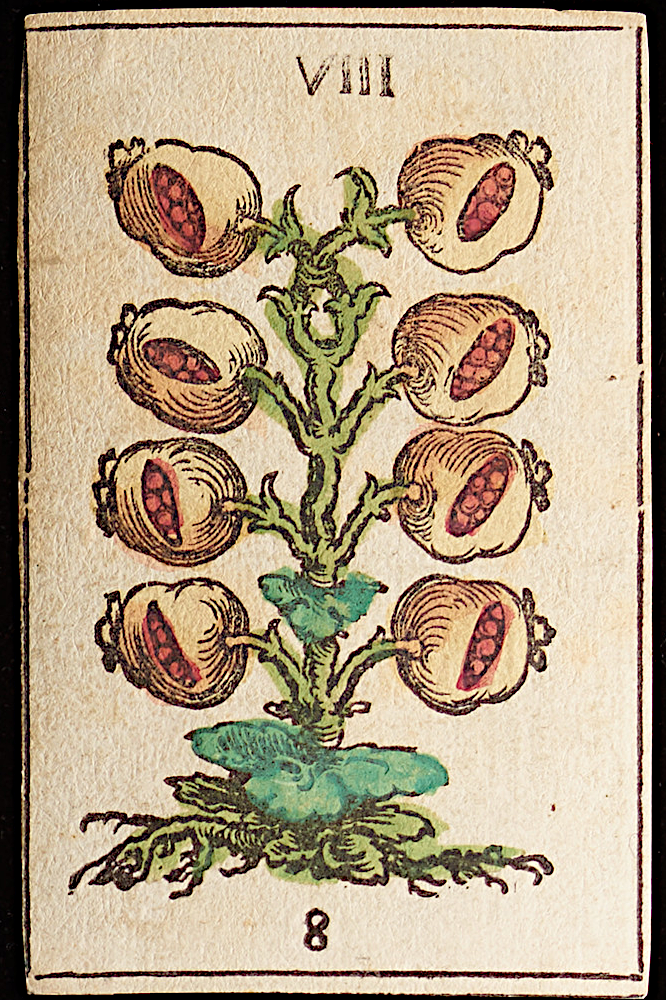 |
| 9 | 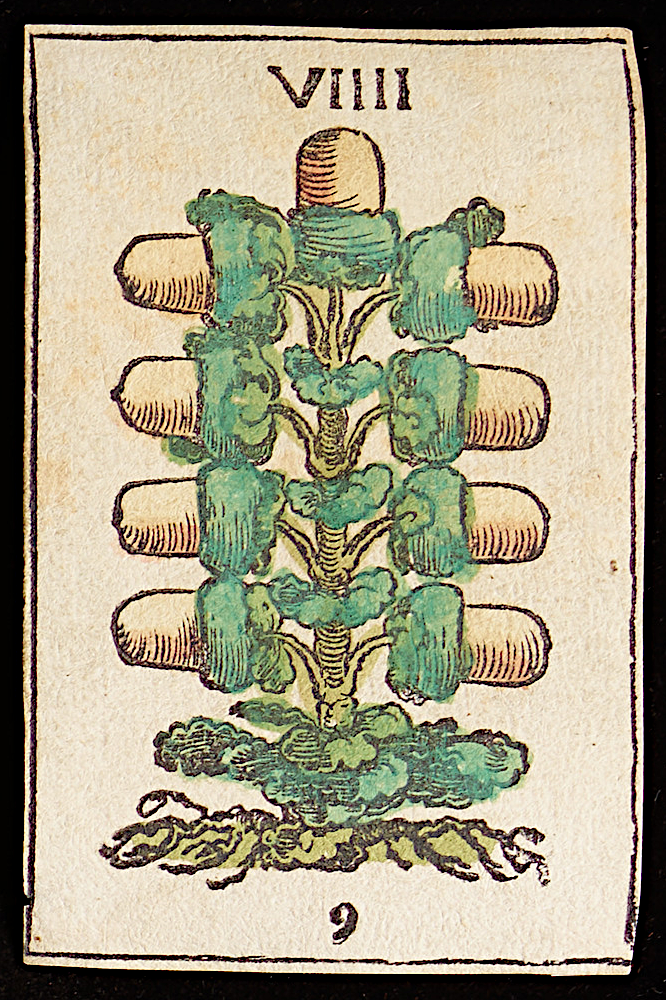 | 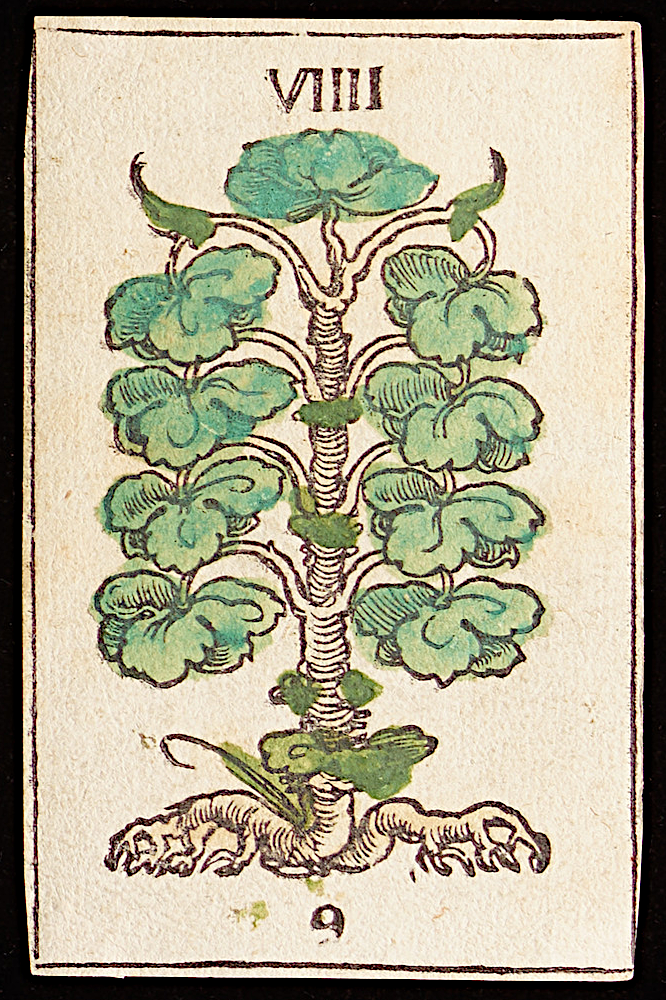 | 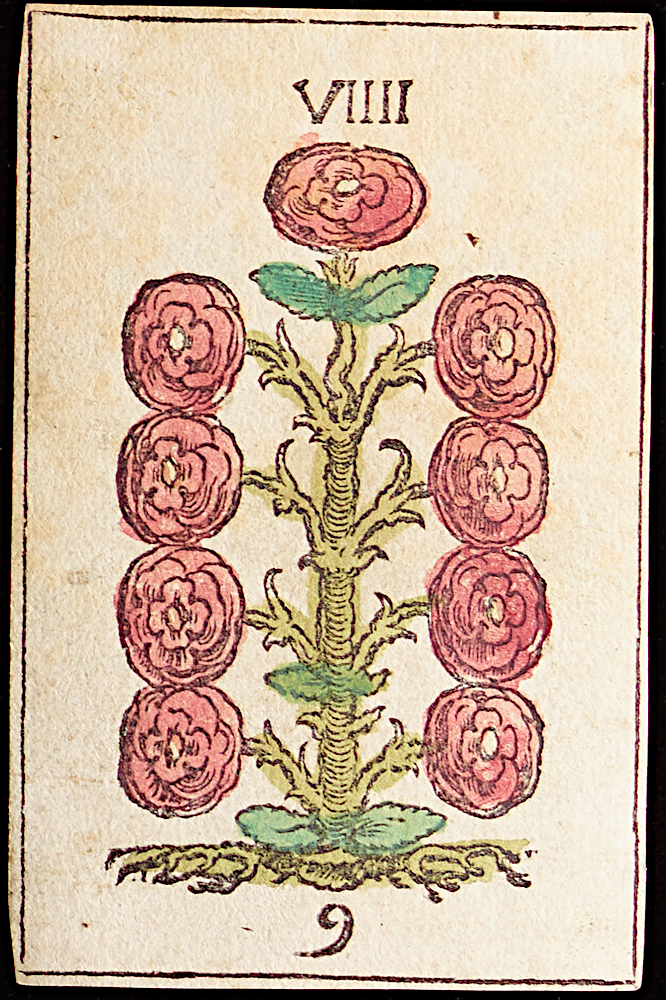 | 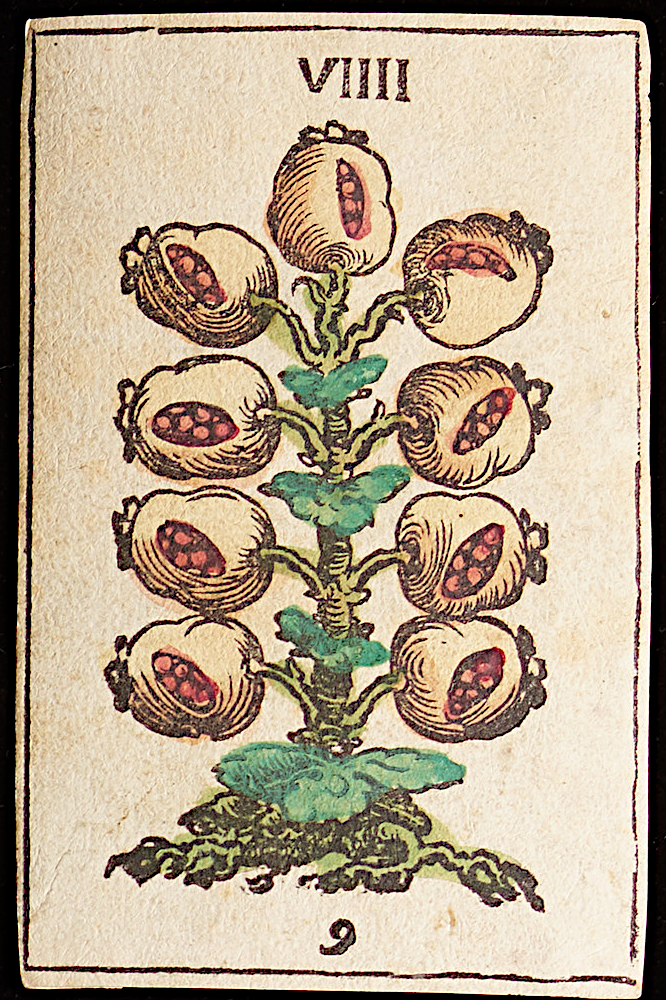 |
| 10 | 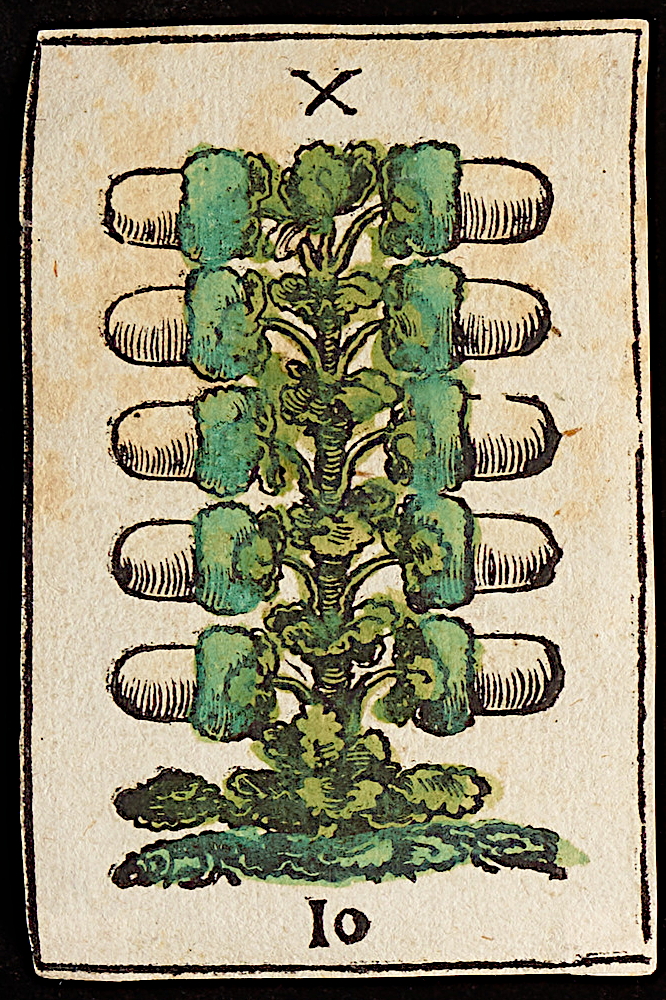 |  | 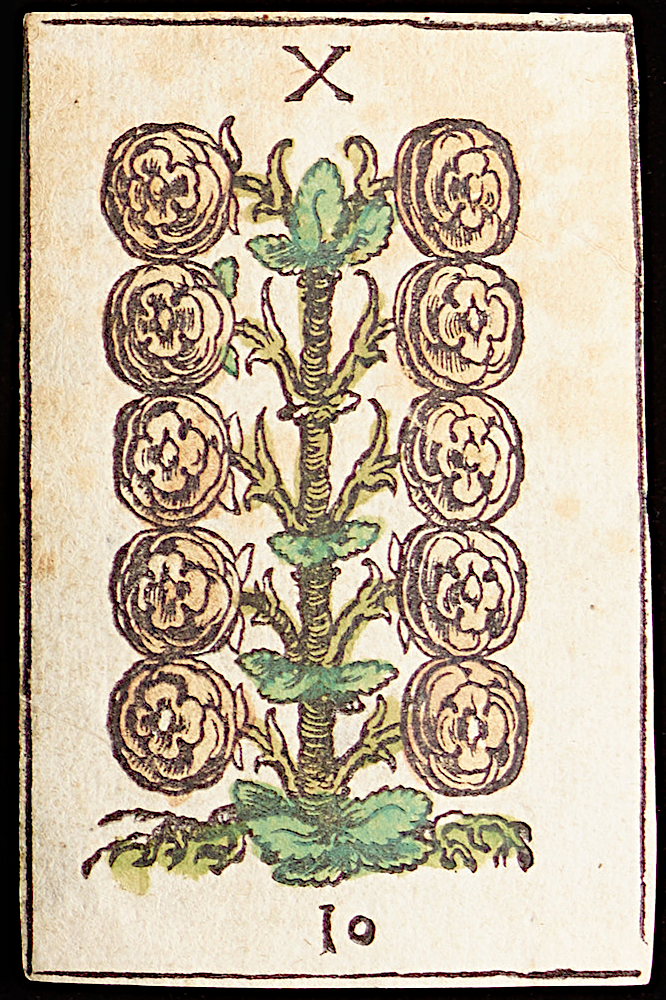 | 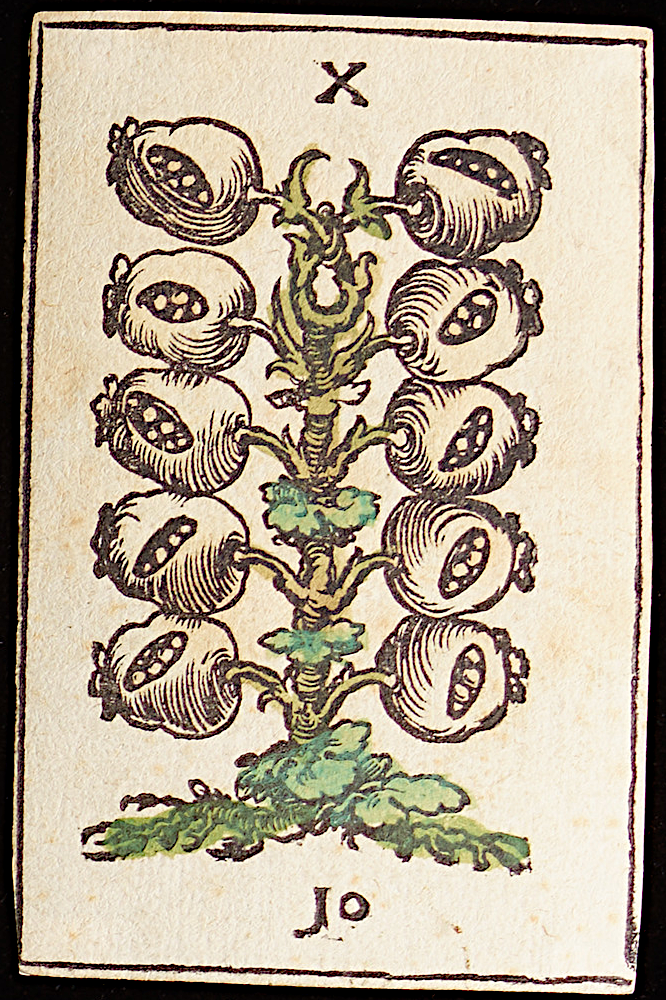 |
| Unter ❖ Under-knave | 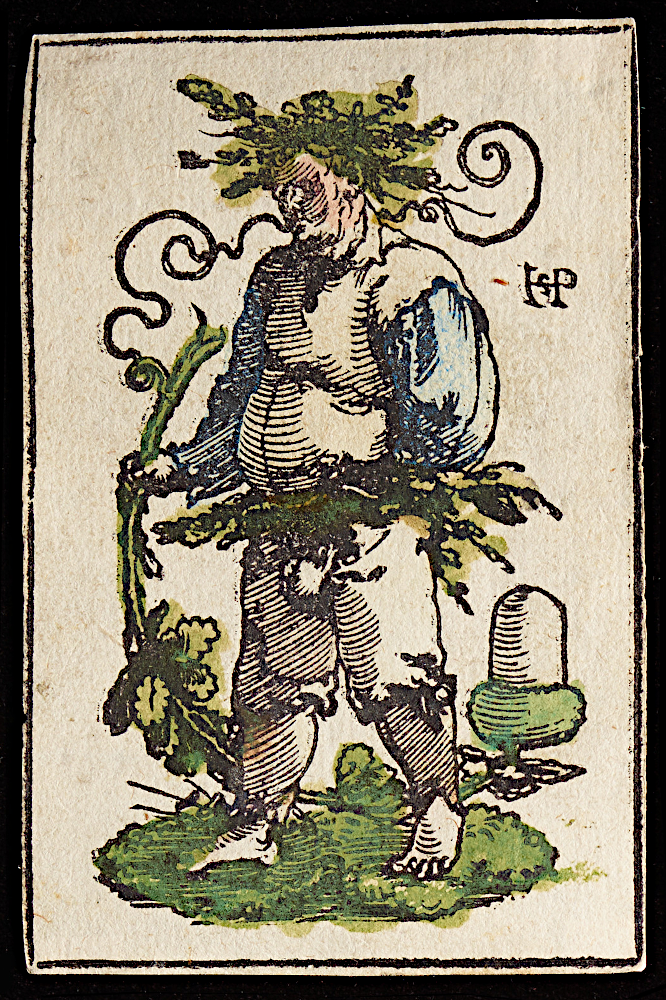 | 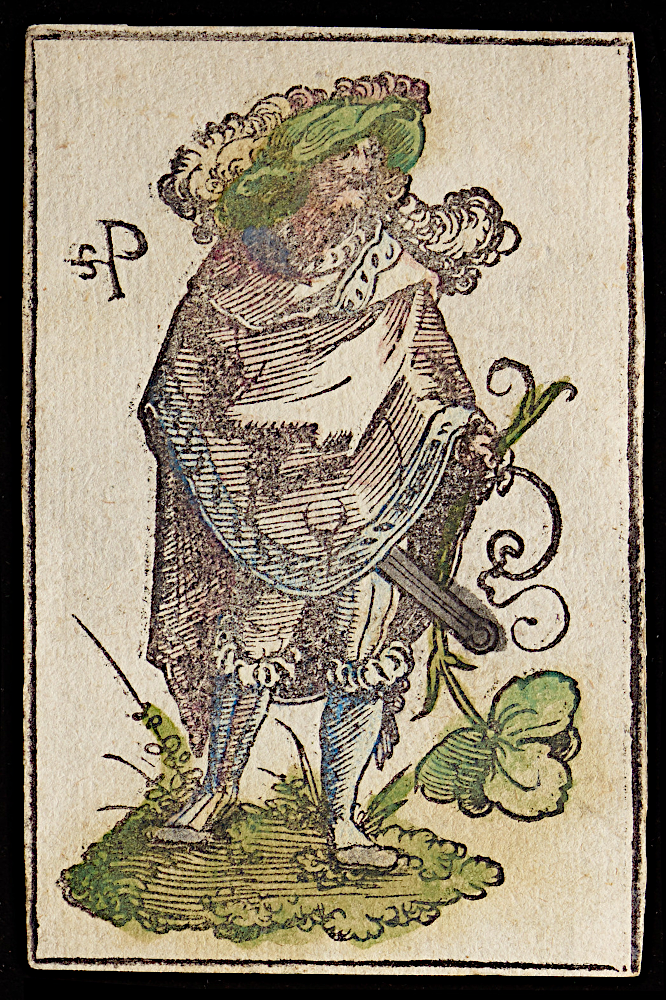 | 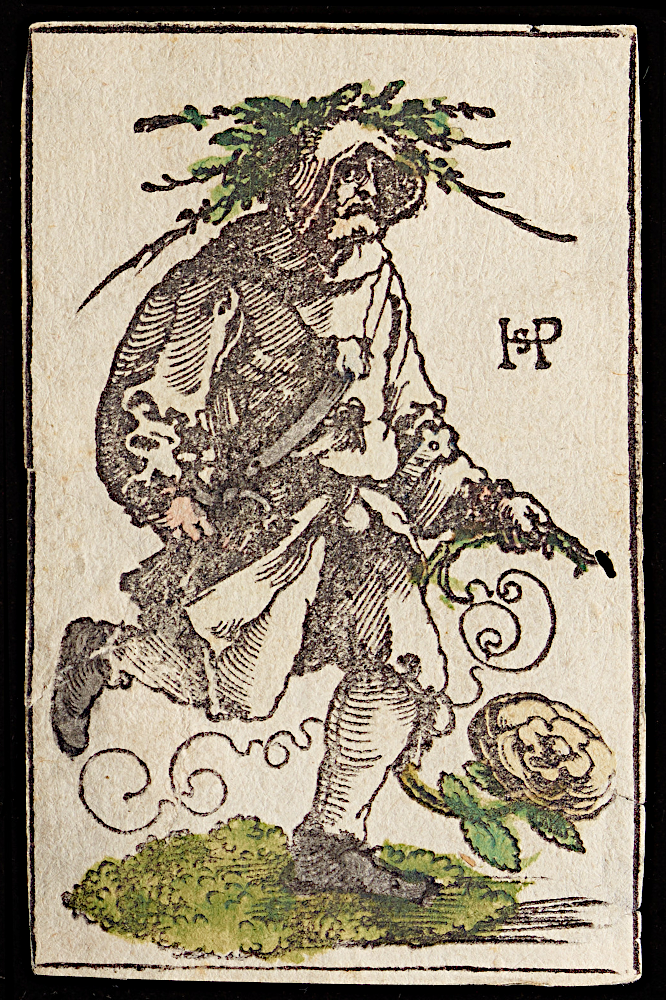 | 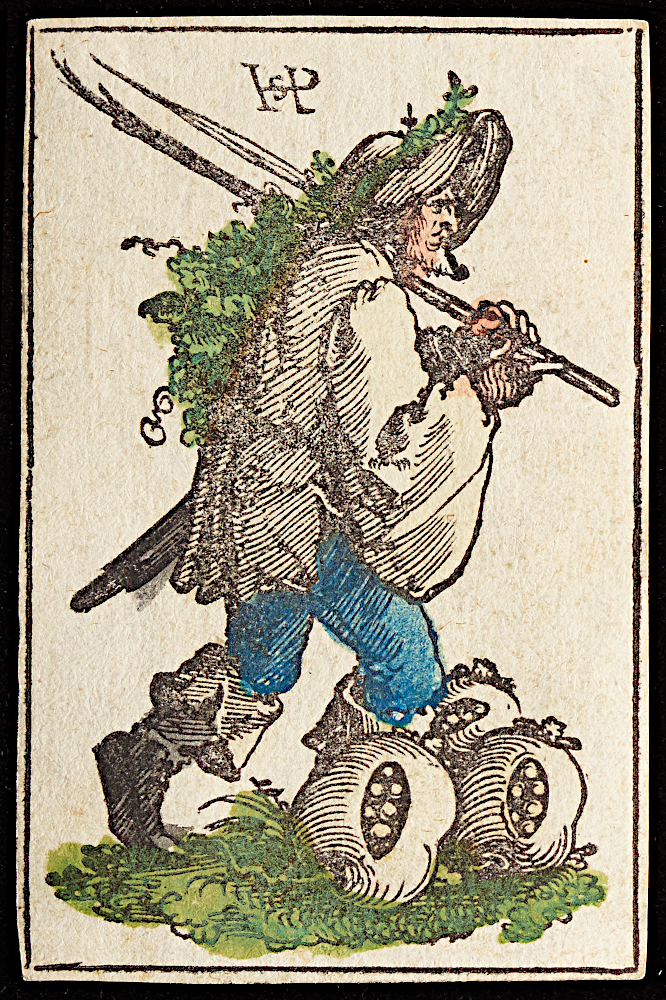 |
| Ober ❖ Over-knave | 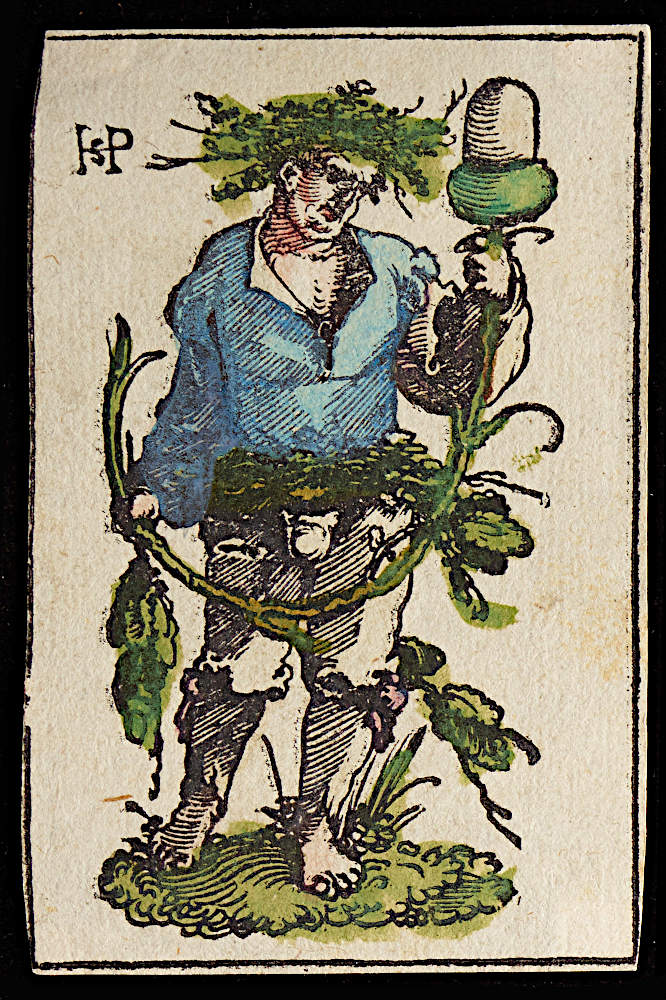 | 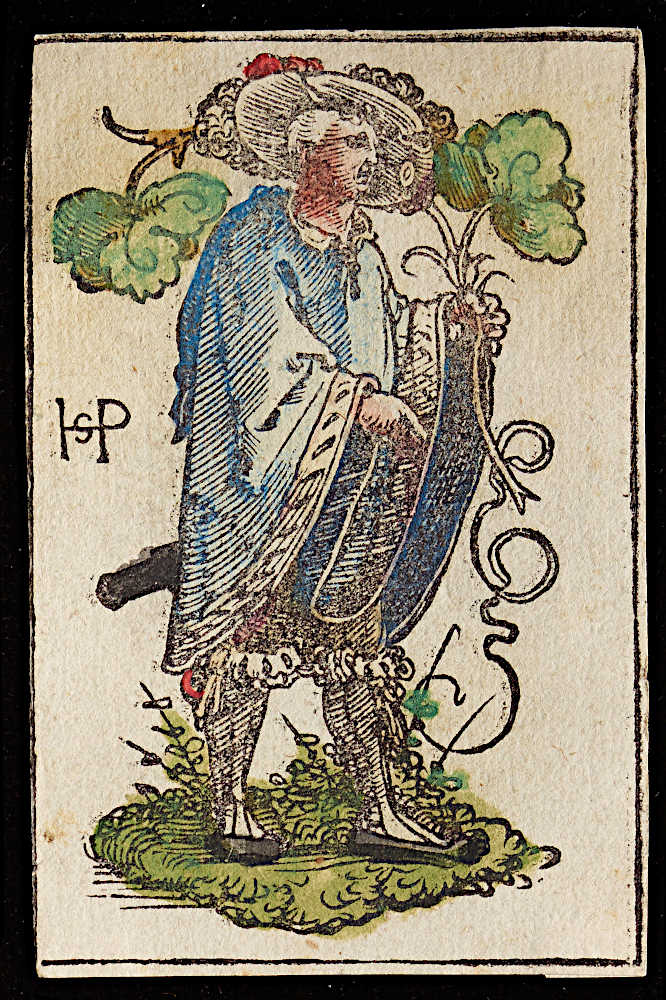 | 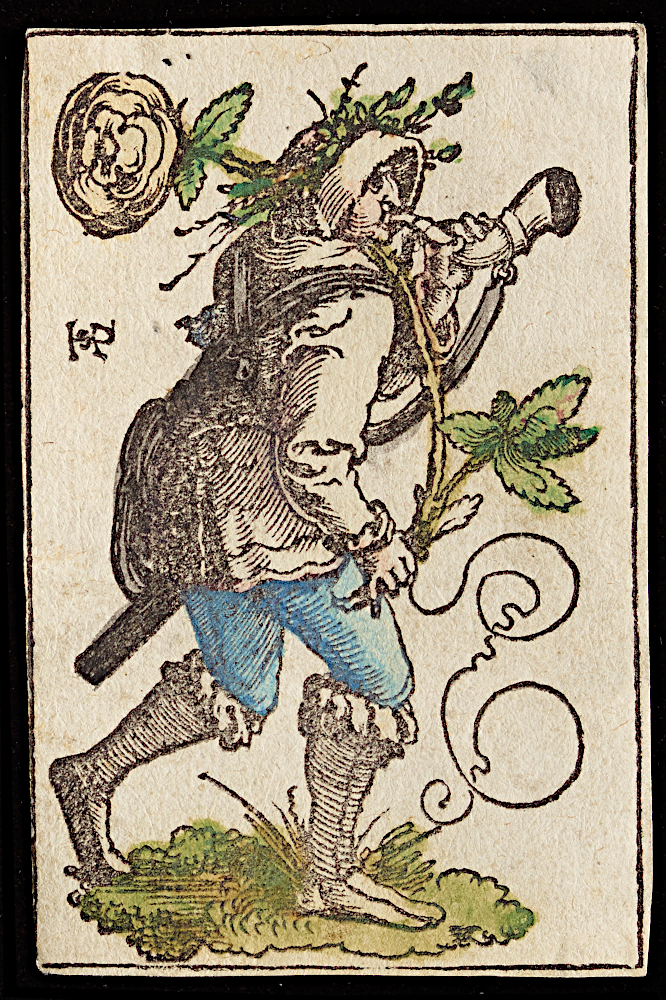 | 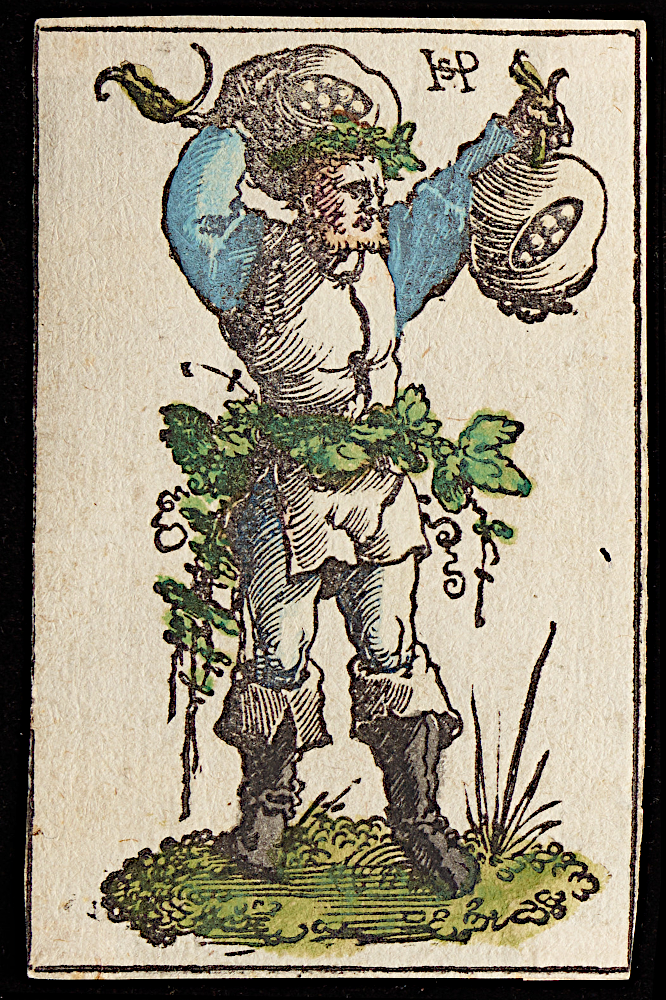 |
| König ❖ King | 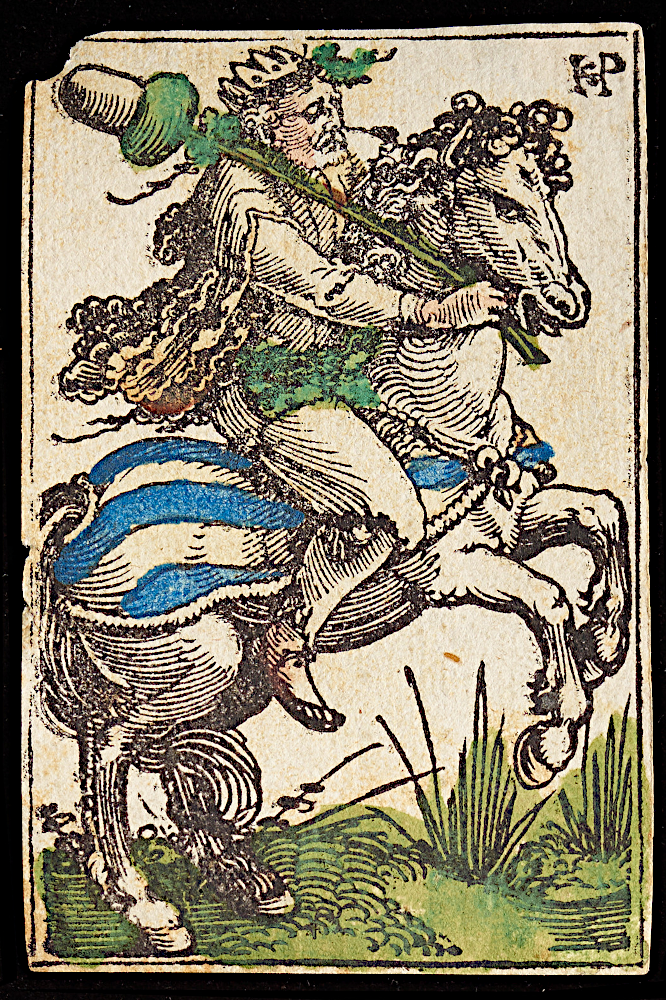 | 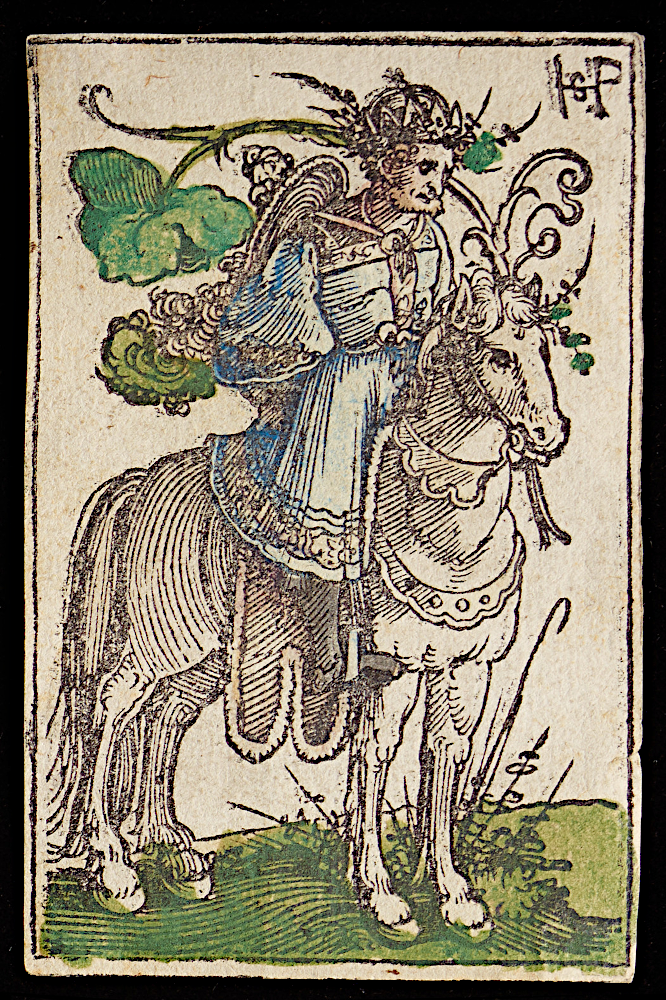 | 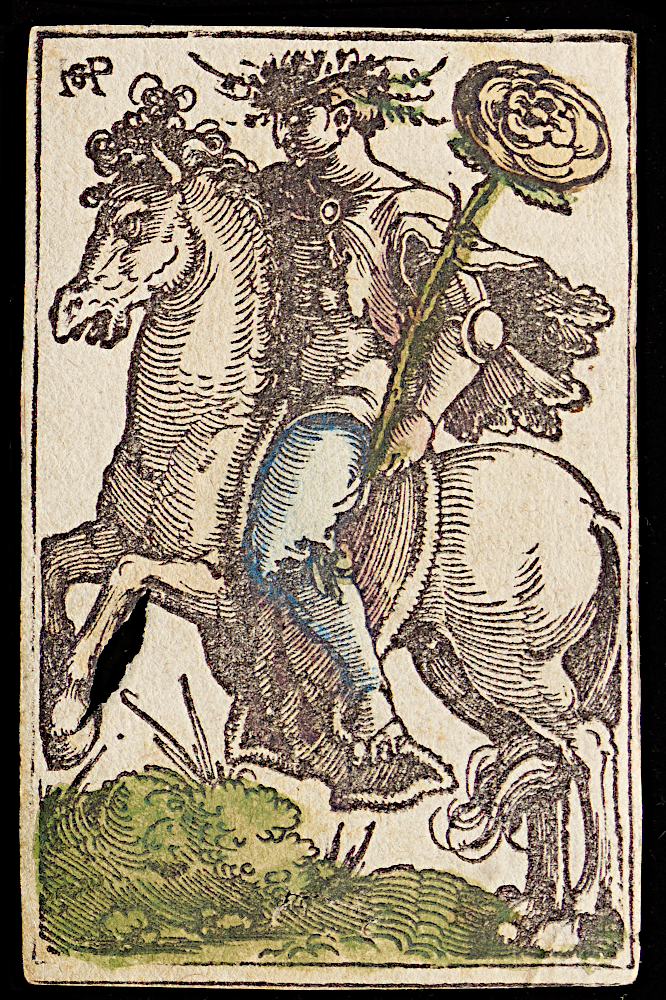 | 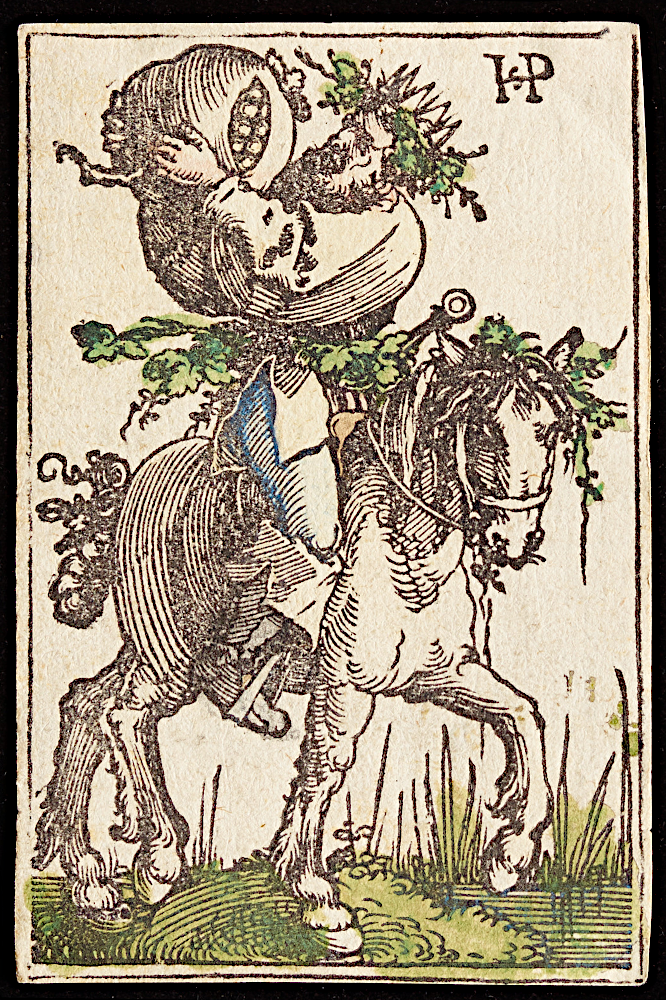 |
The second set consists solely of the deuce of acorns and the court cards. In the former, the escutcheon is blank, while in the latter, the monogram is changed from HSP to HSB – not by changing the printing blocks, but by adding the second bow of the B with a pen. These cards are thus probably but not necessarily later than the complete set. There is no reason to believe that there are any differences in the cards not present in this set.
| Eicheln ❖ Acorns | Laub ❖ Leaves | Rosen ❖ Roses | Granatäpfeln ❖ Pomegranates | |
|---|---|---|---|---|
| 2/ Daus ❖ 2/ Deuce | 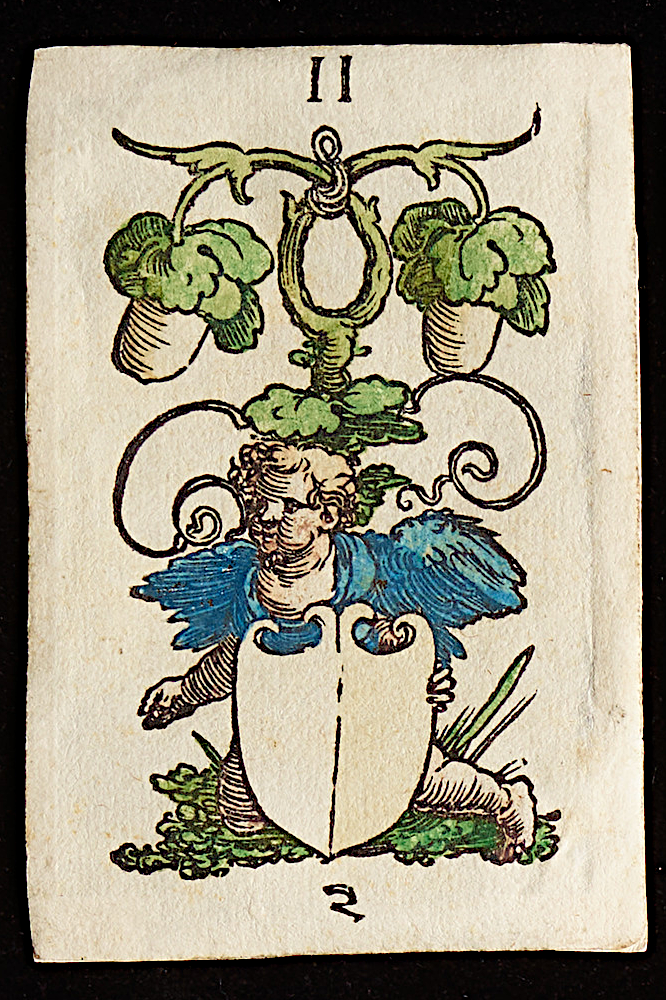 | |||
| Unter ❖ Under-knave | 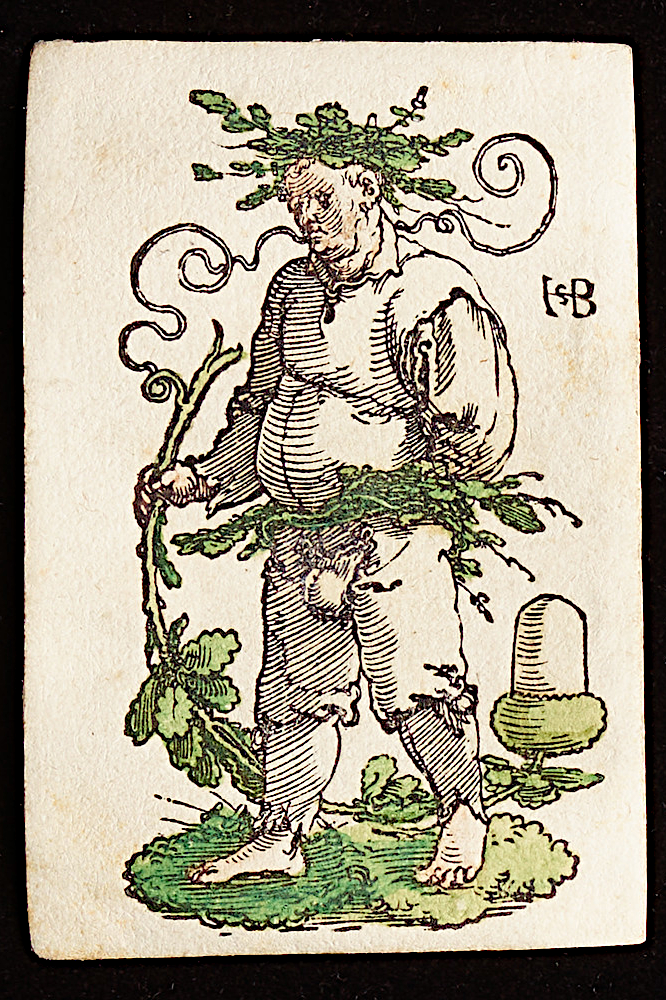 | 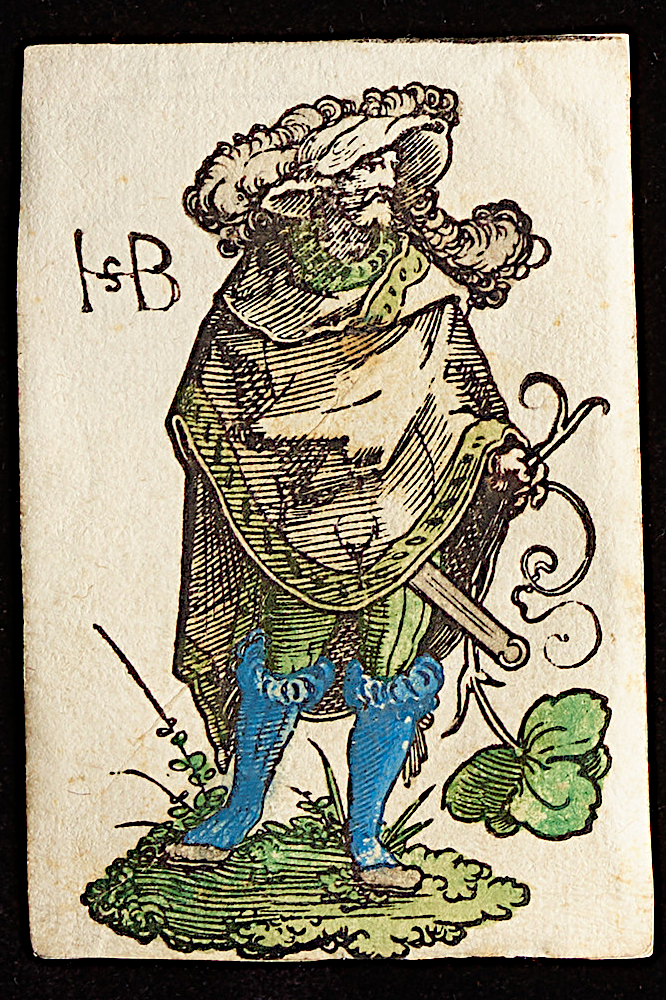 | 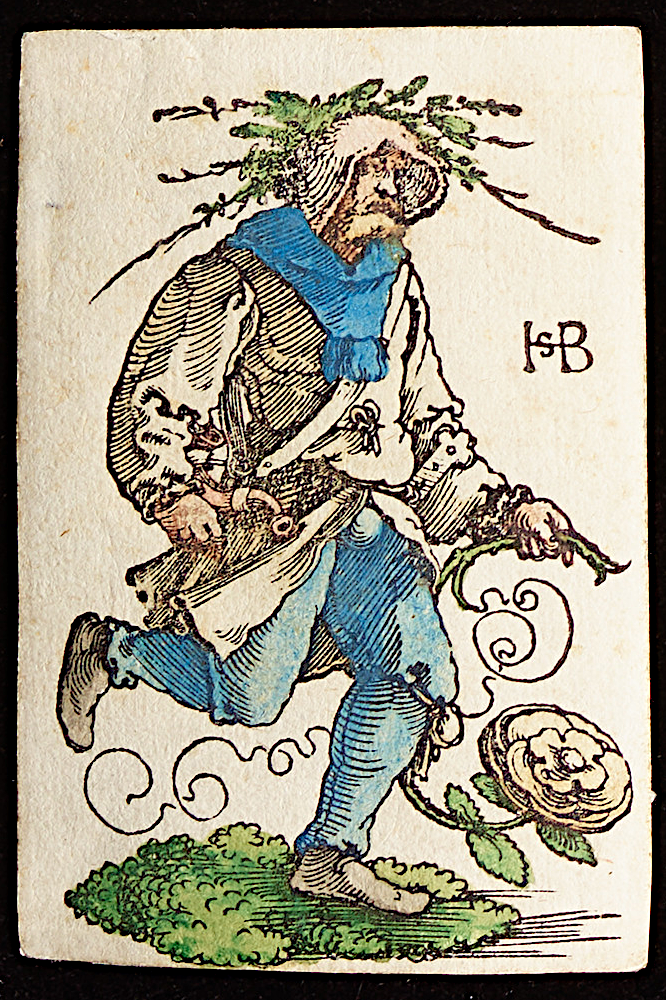 | 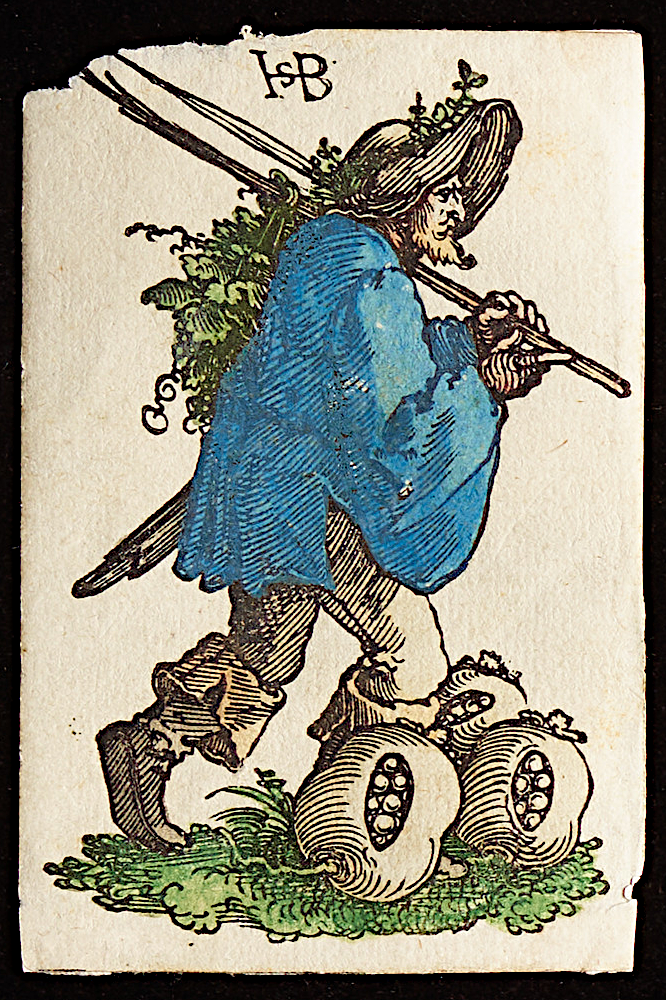 |
| Ober ❖ Over-knave | 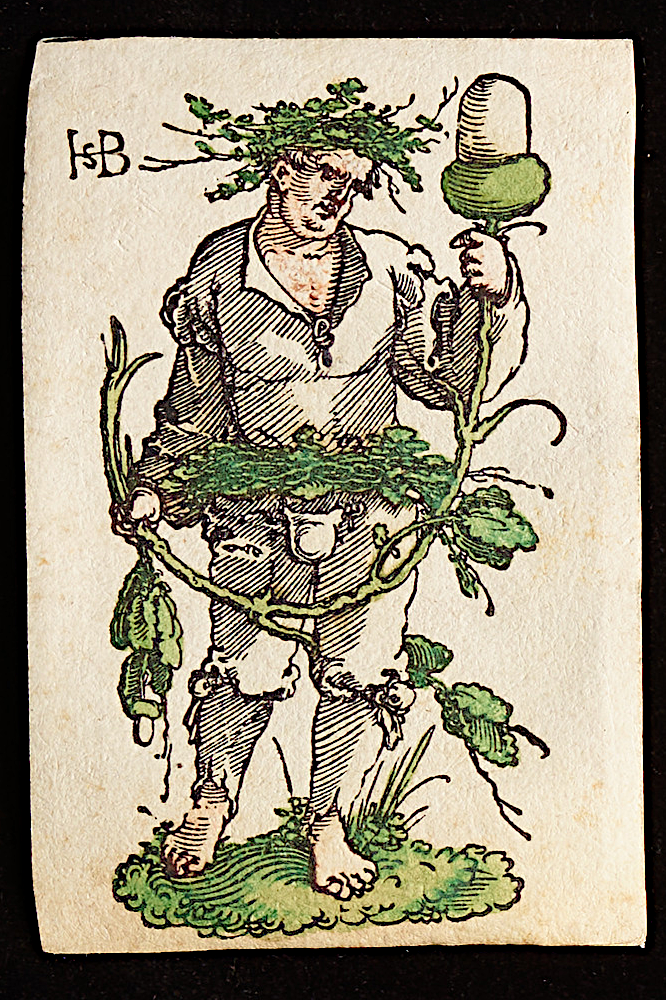 | 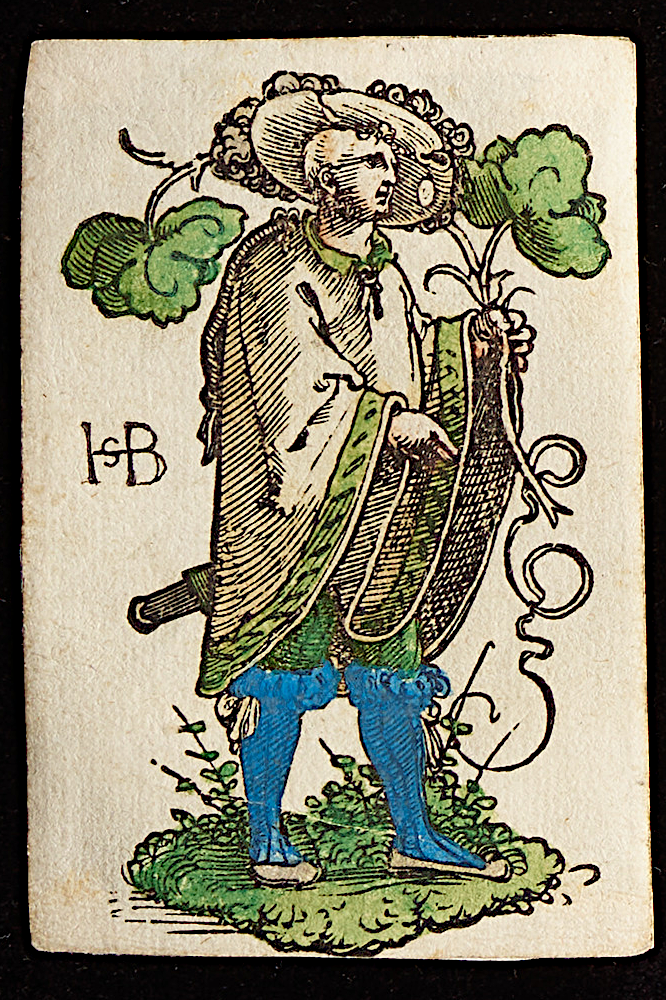 | 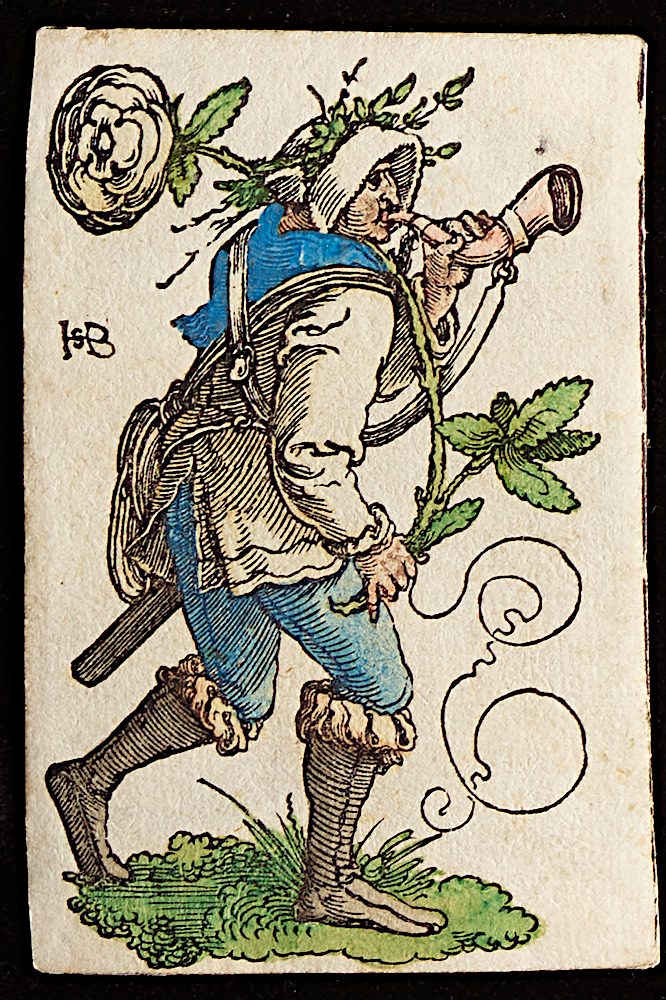 | 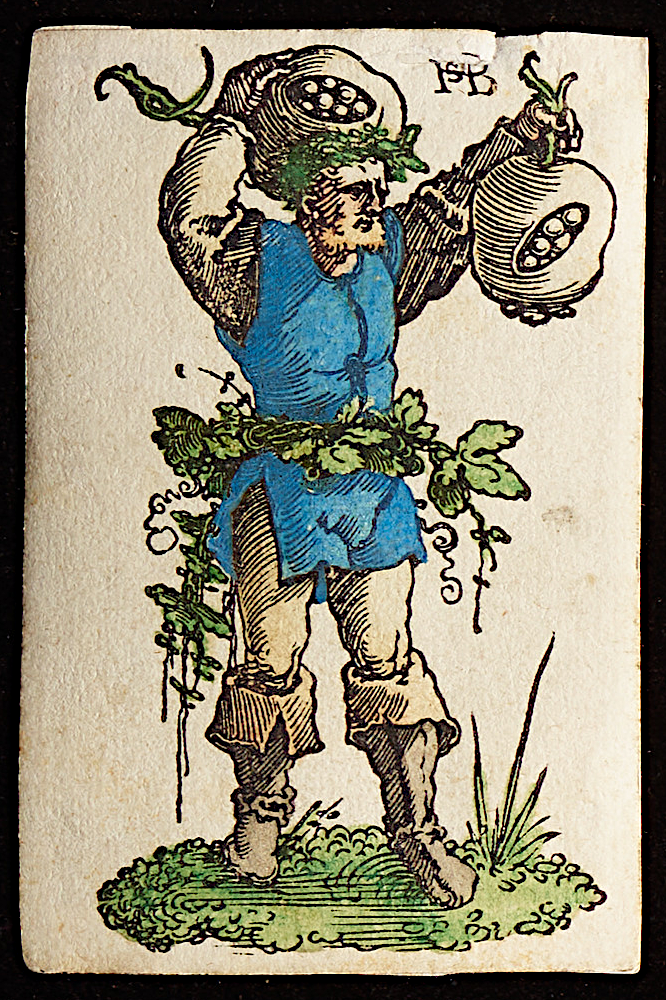 |
| König ❖ King | 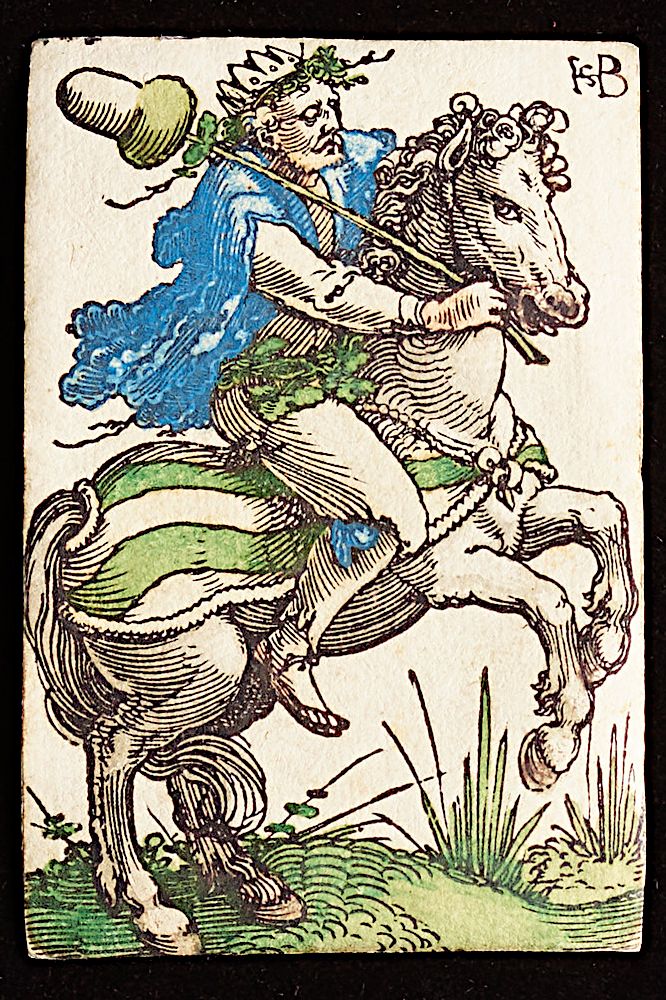 | 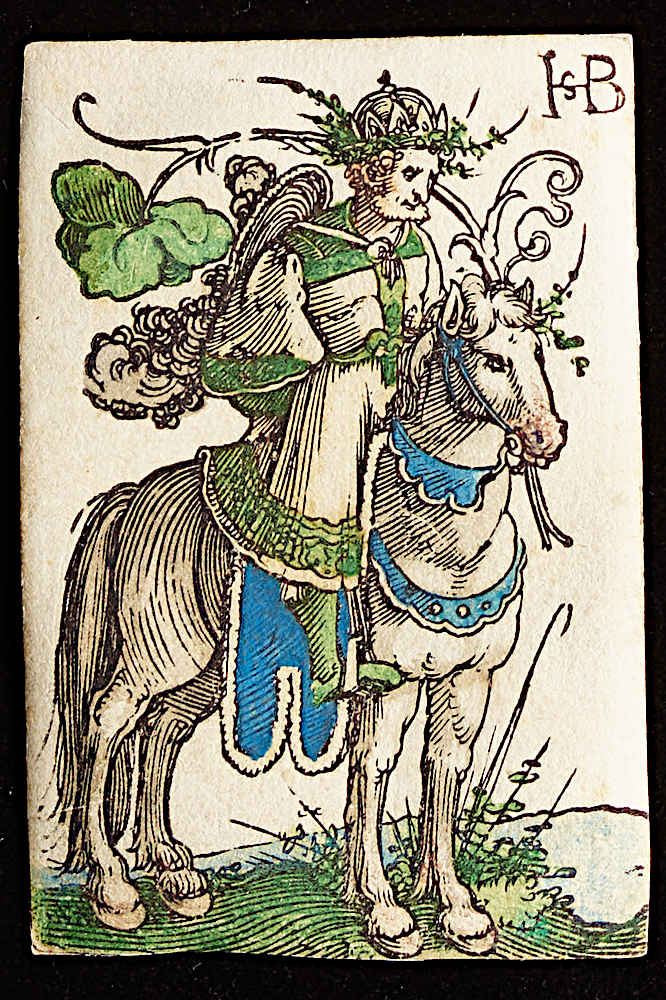 | 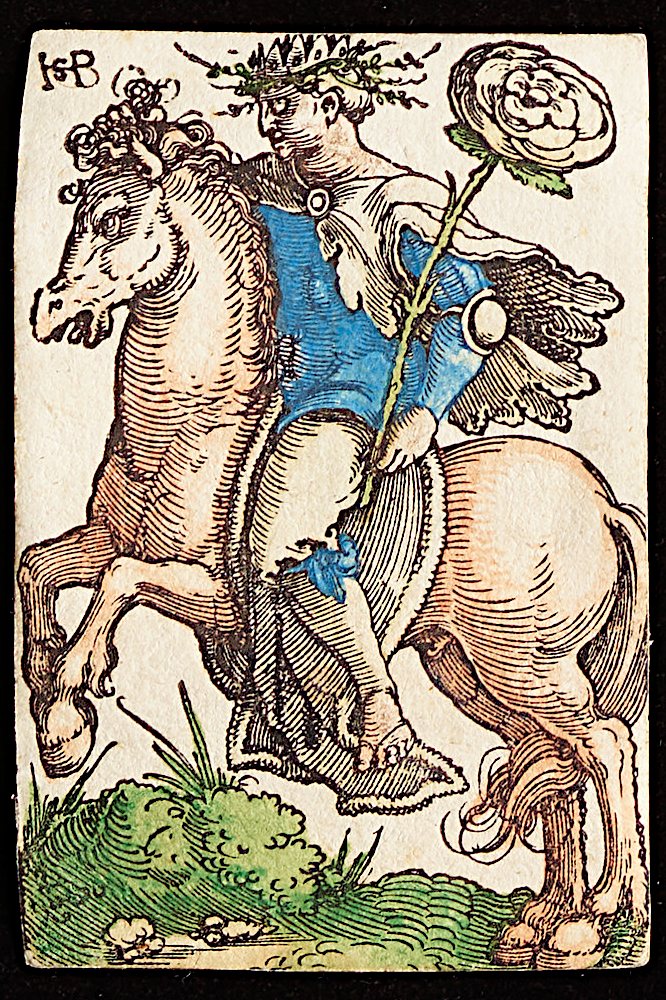 | 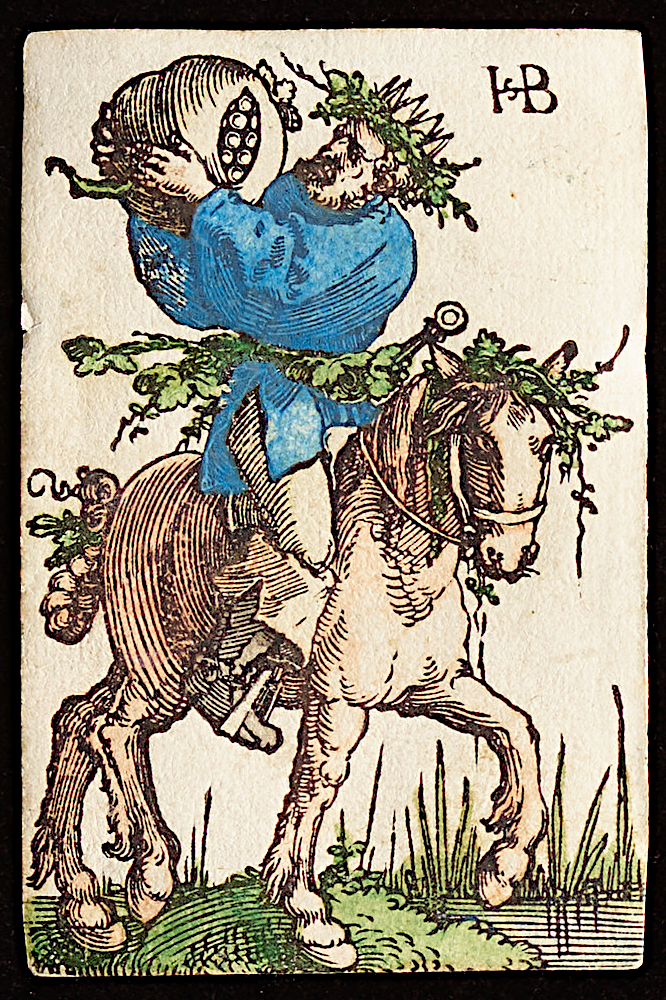 |
A source of inspiration
German playing cards was always the subgroup most often varying the suit signs, but the first pack to use pomegranates as a suit sign was actually Spanish-suited — albeit created in the South German area. An anonymous artisan known only as the South German engraver or Schongauer’s follower created an elaborate pack where coins were replaced by pomegranates. It is thought to commemorate the 1496 marriage of Felipe I of Spain and Doña Juana, daughter of Ferdinand and Isabella. The latter pair had only four years earlier completed the reconquista by annexing Granada, the last remaining area under muslim rule in the Iberian peninsula.
Whether it is correct or not, the name Granada was at the time believed to derive from granata, the Latin word for pomegranate. For this reason, the pomegranate was used as an heraldic device for the area. In 1497, a new coin bearing the coat of arms of the Kingdom of Granada was minted, and given the name excelente de granada. This ties in nicely with the suit of coins specifically being replaced by pomegranates in the near contemporary pack of luxury cards.
An inferior “pirate” copy from Augsburg
Three uncut sheets containing a complete simplified copy is located in the British Museum. Here, the monograms, the grassy ground beneath the court figures and much floral embellishment are removed, and the coat of arms of Nuremberg on the deuce of acorns is replaced with the coat of arms of Augsburg. The inverted arabic numeral 3 of the original three of roses is corrected, and the arabic numeral 7 in all four sevens is given a more modern form. The size of the cards is given as only 60×93 mm, but this seems to have been achieved by making the surrounding outlines tighter, not by scaling down the designs.
| Eicheln ❖ Acorns | Laub ❖ Leaves | Rosen ❖ Roses | Granatäpfeln ❖ Pomegranates | |
|---|---|---|---|---|
| 2/ Daus ❖ 2/ Deuce | 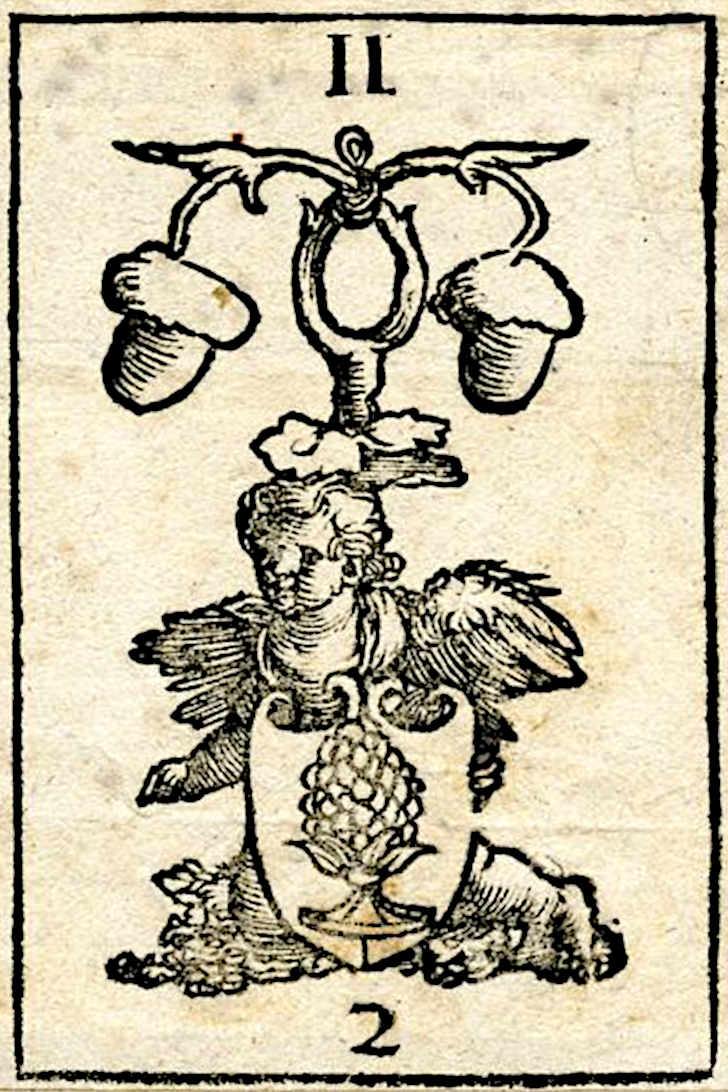 | 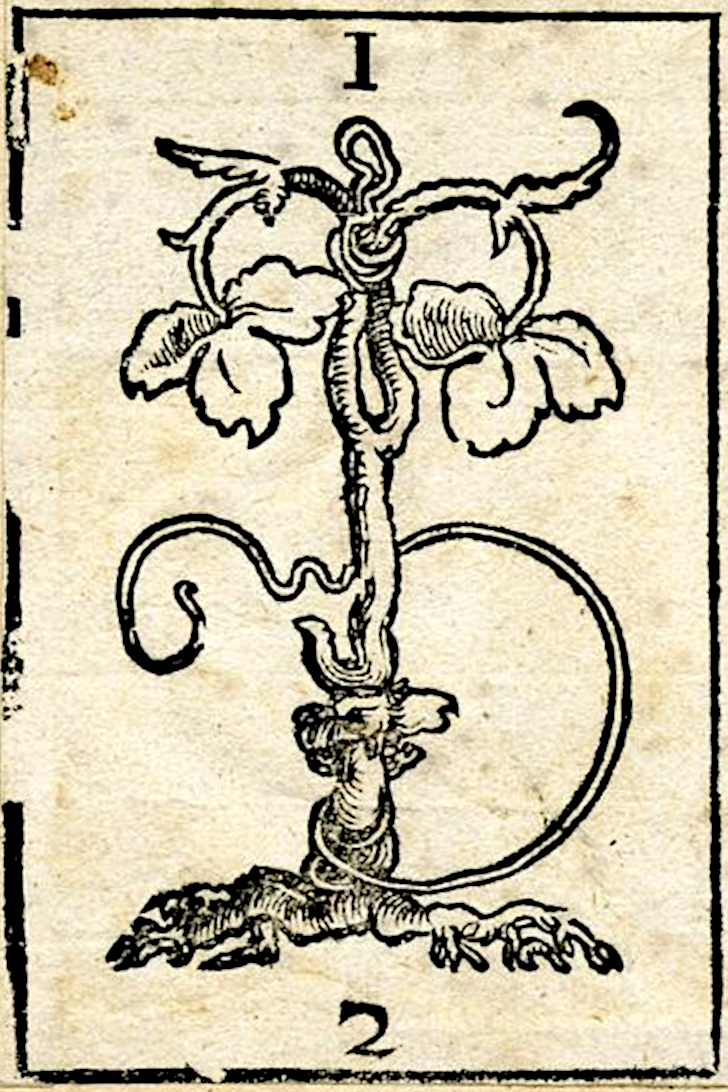 | 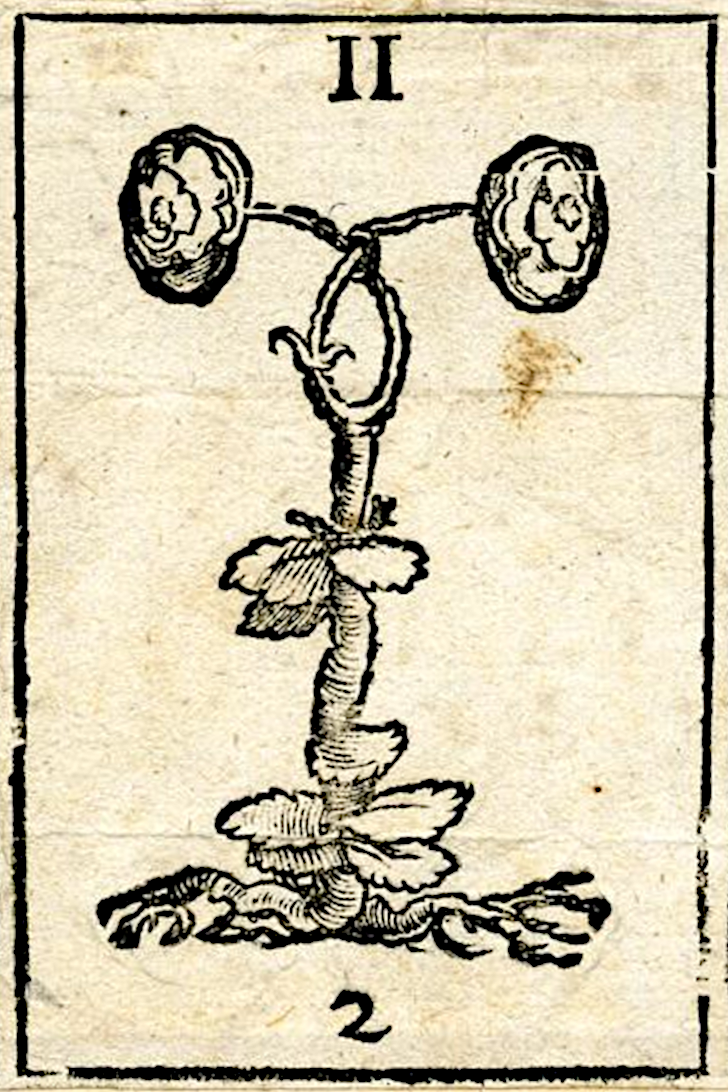 | 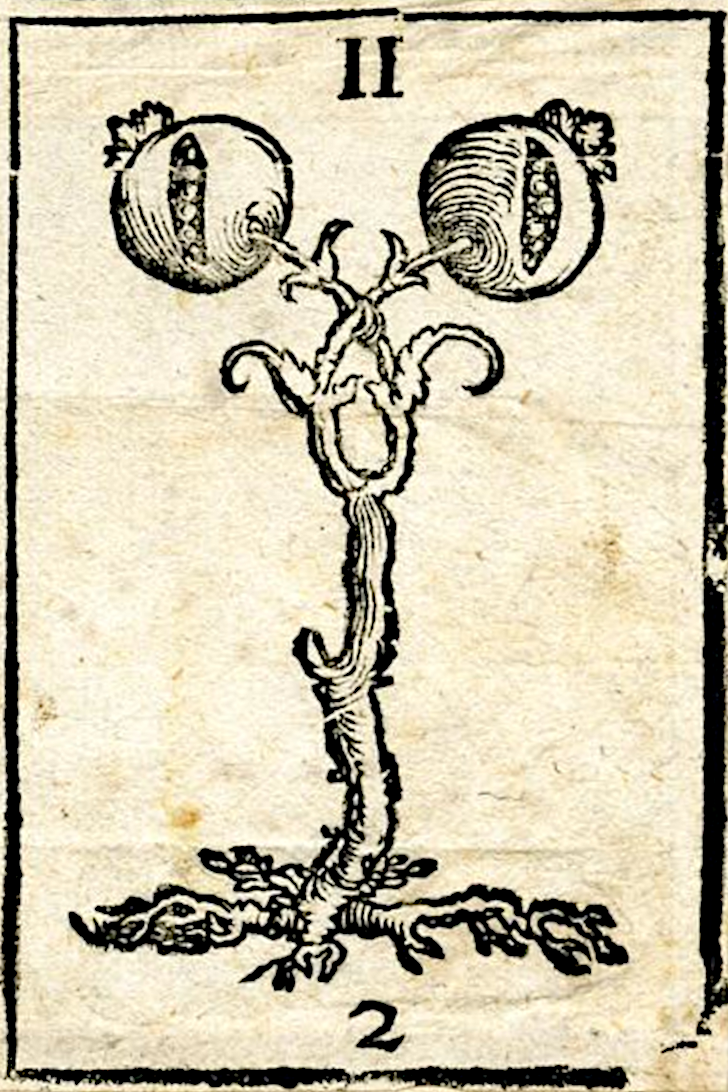 |
| 3 | 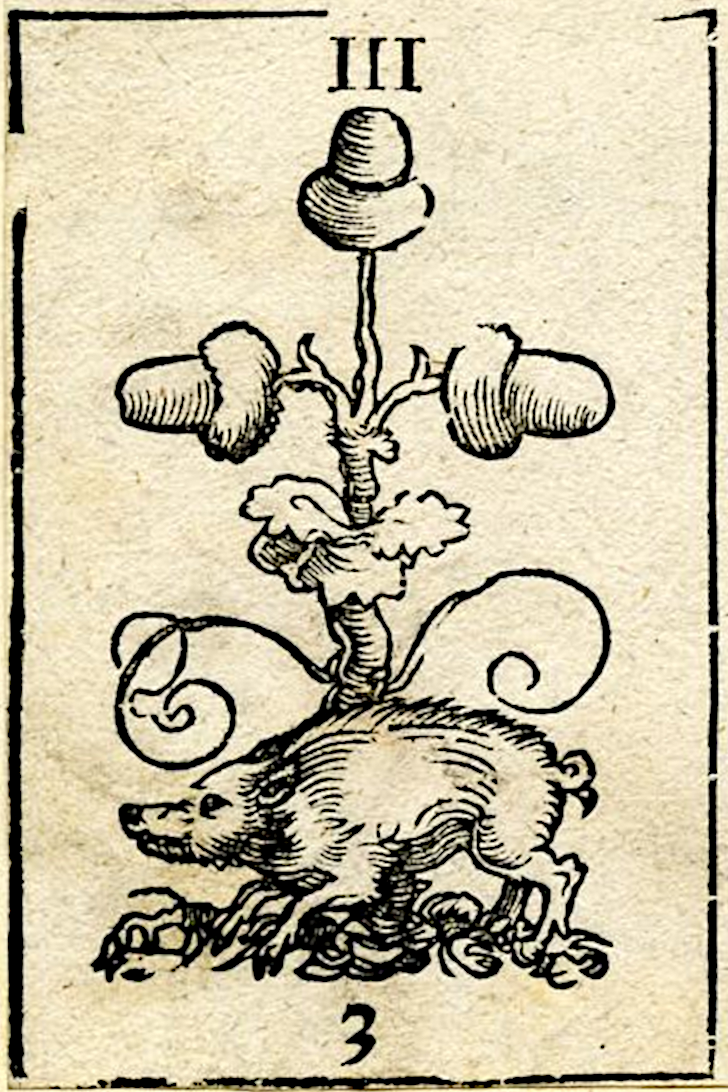 | 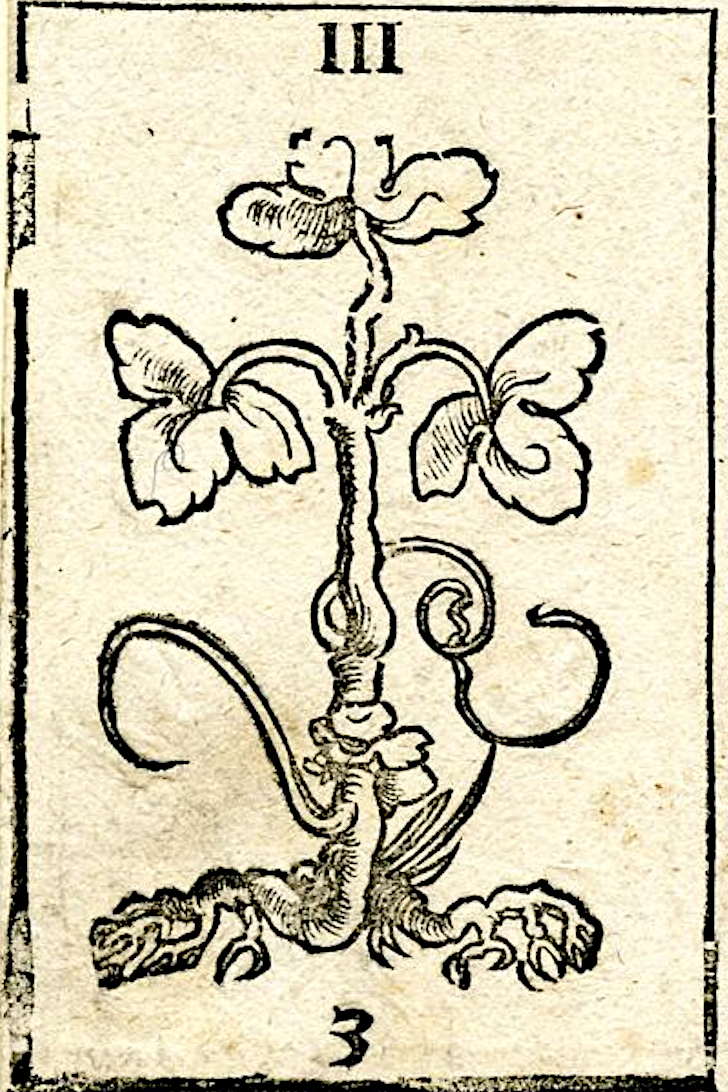 | 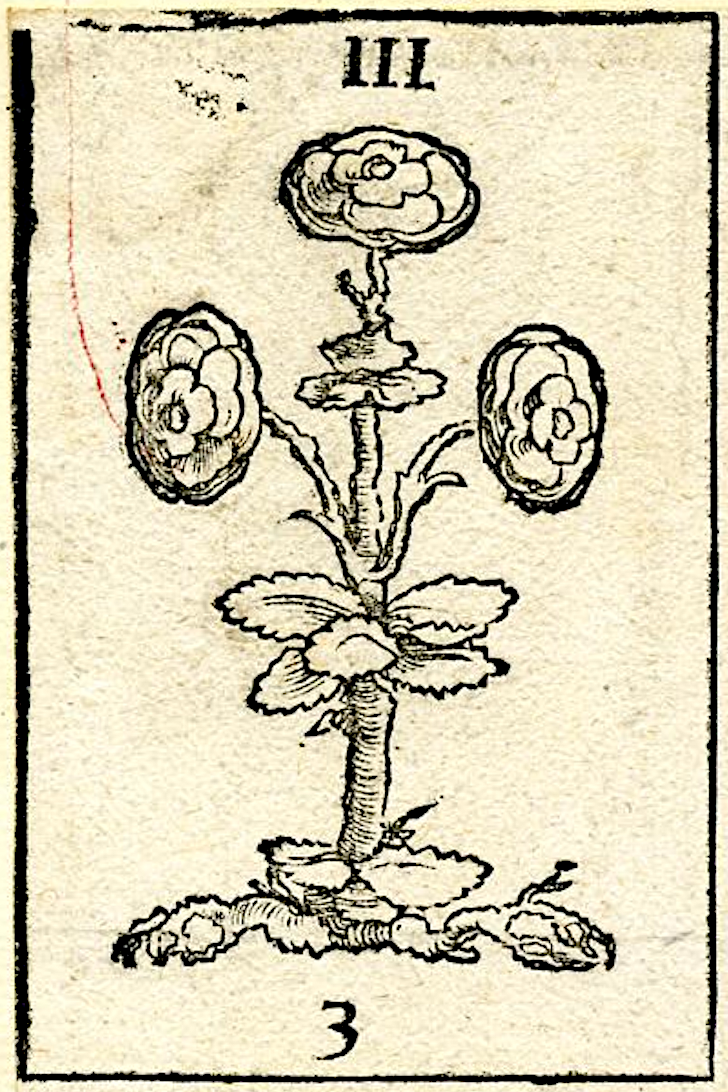 | 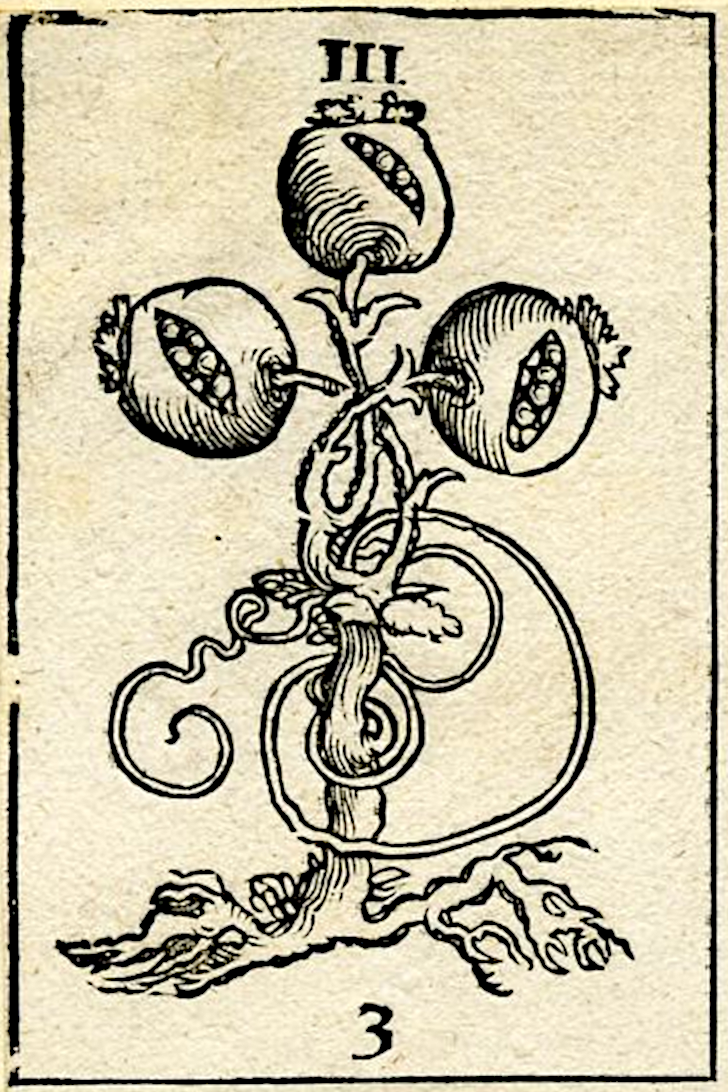 |
| 4 | 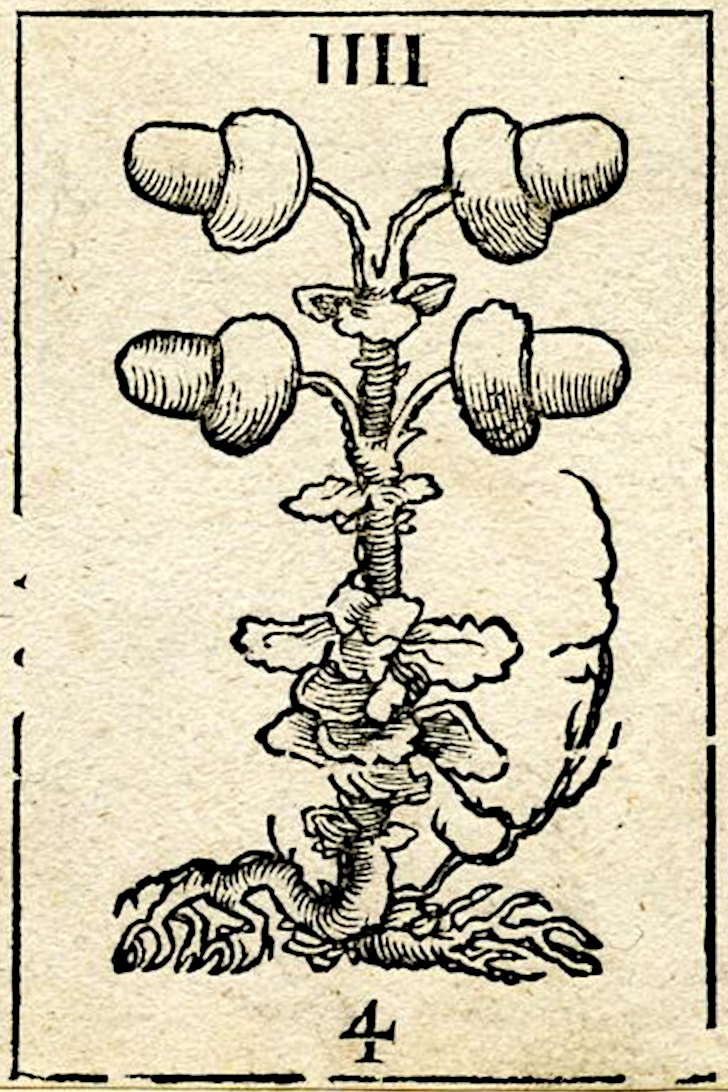 | 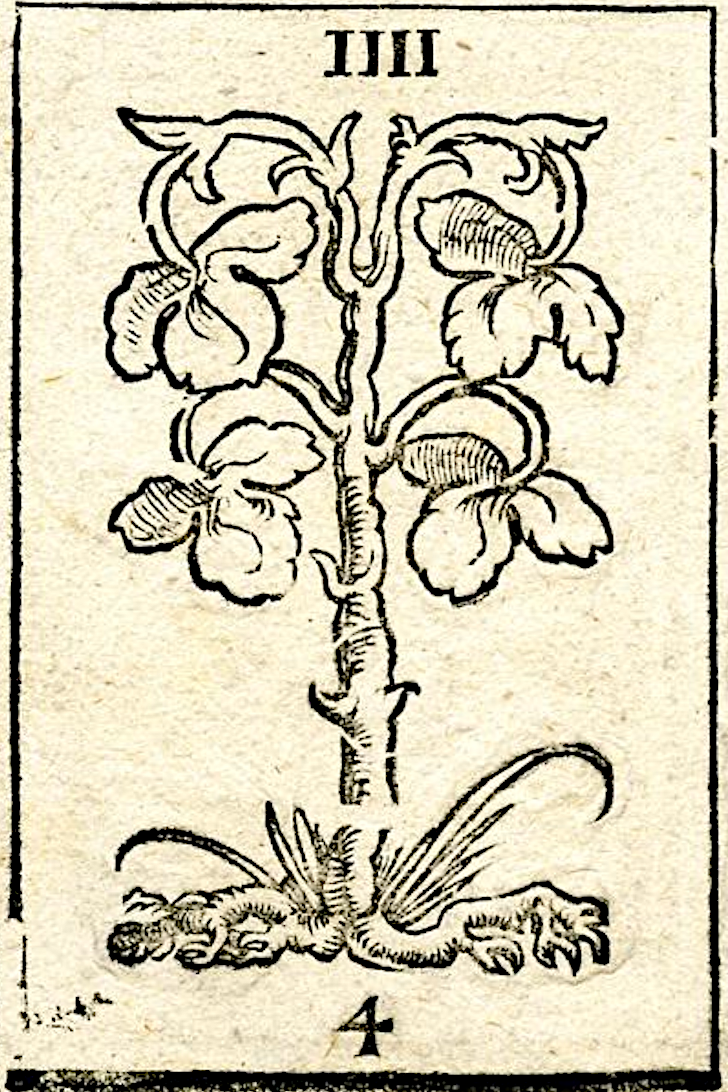 | 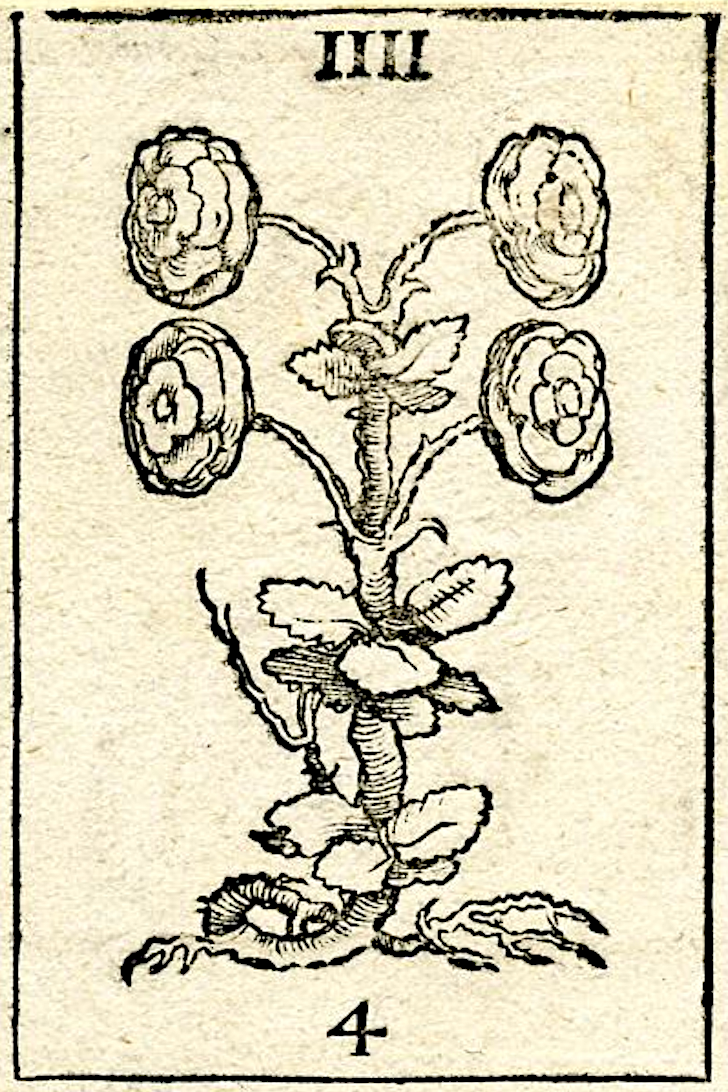 | 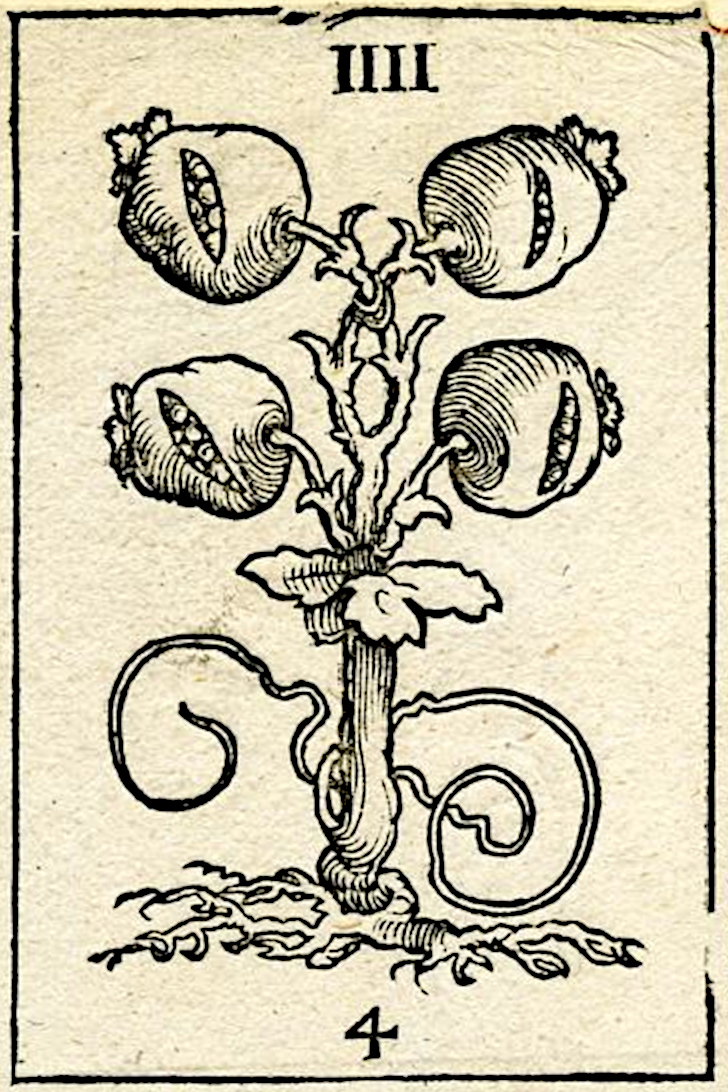 |
| 5 | 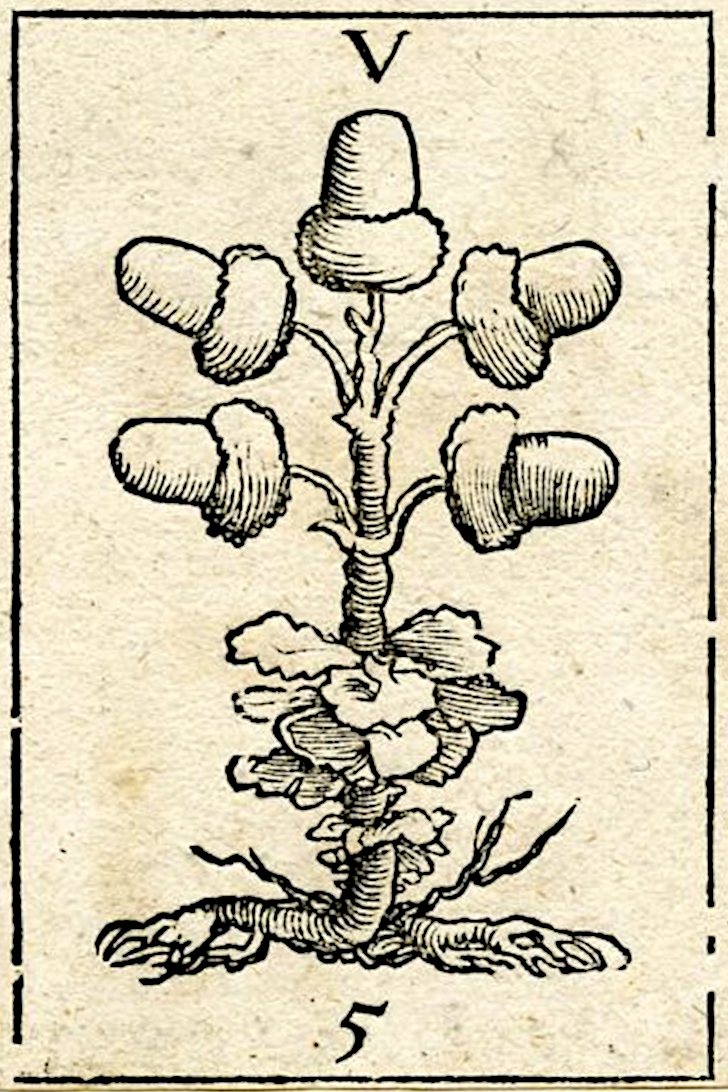 | 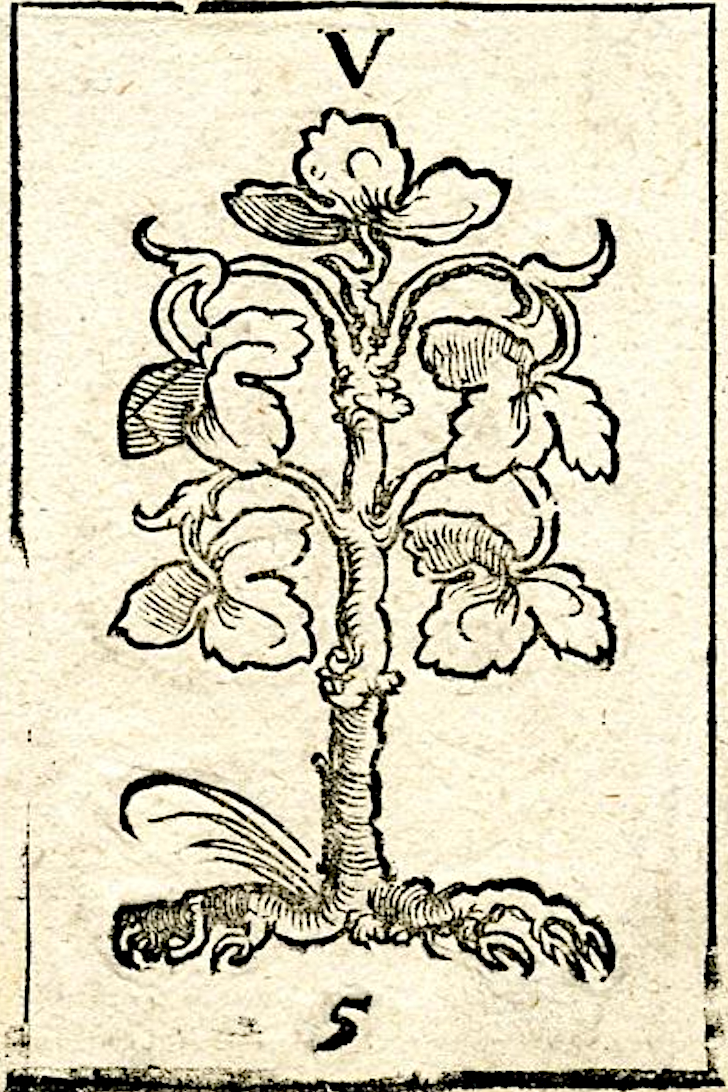 | 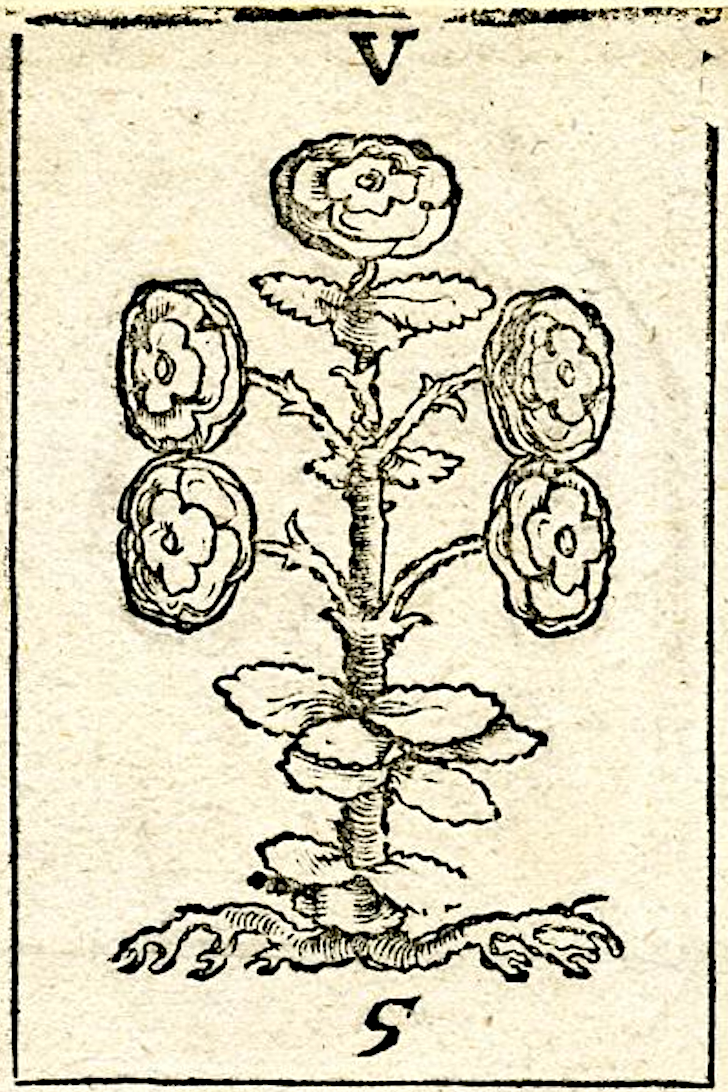 | 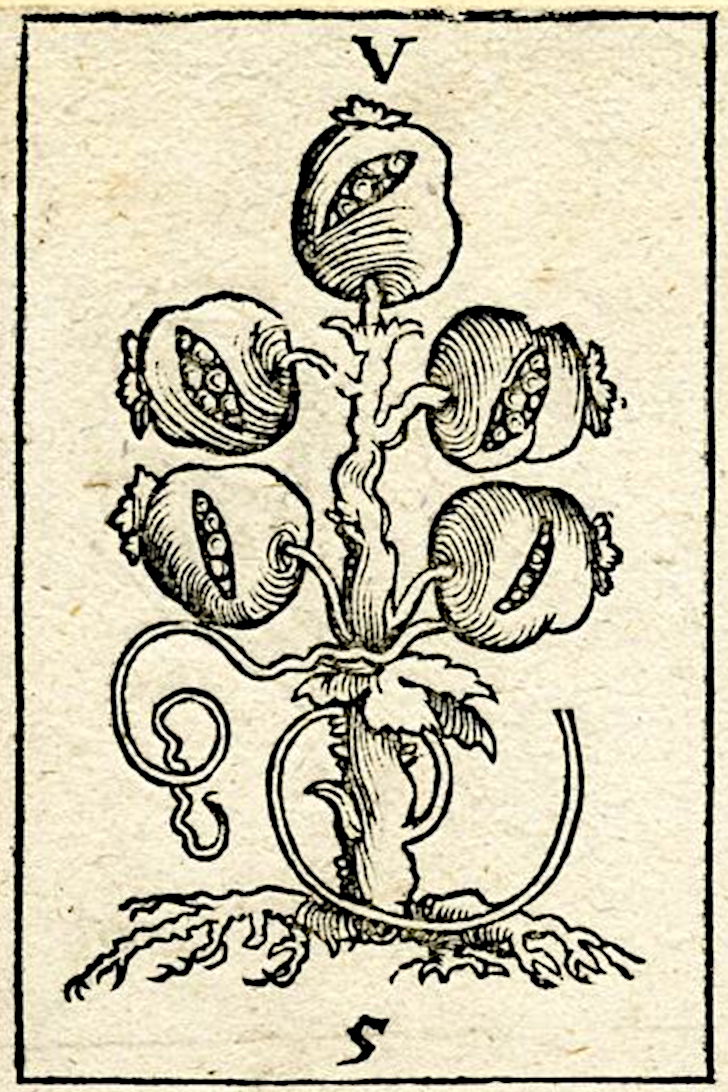 |
| 6 | 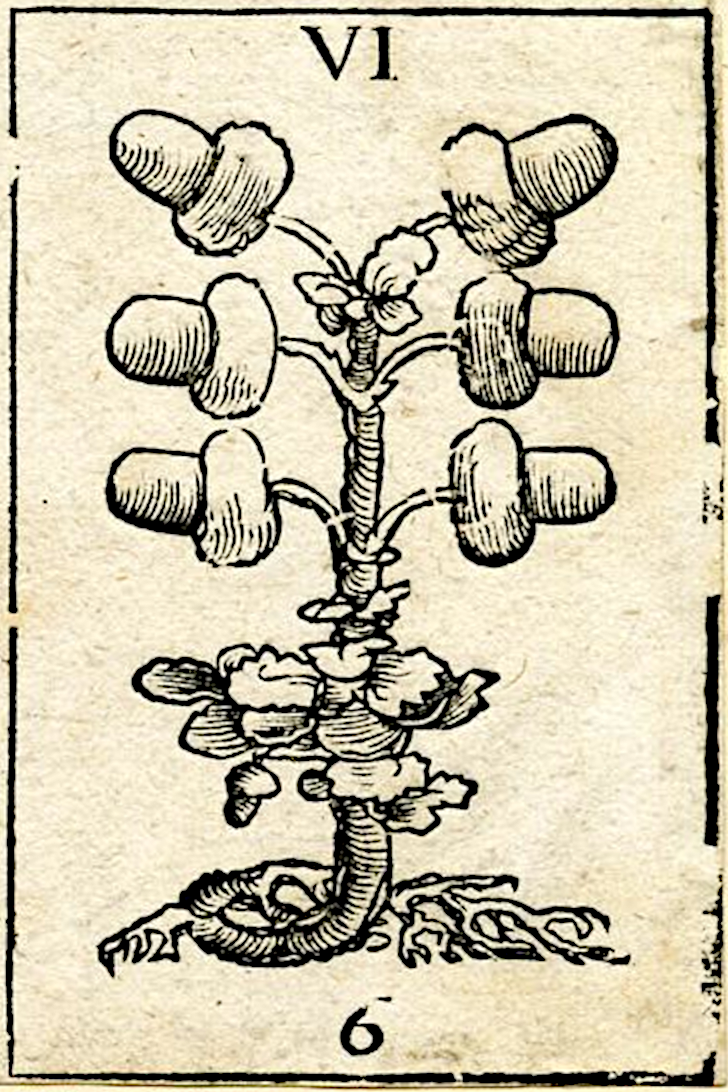 | 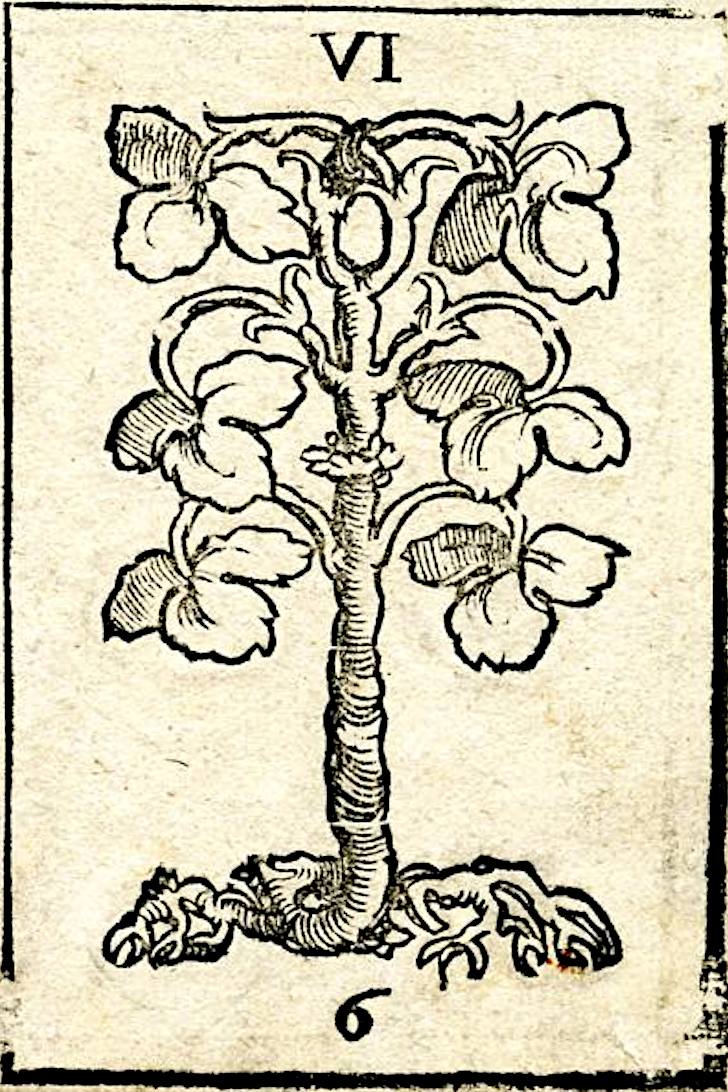 | 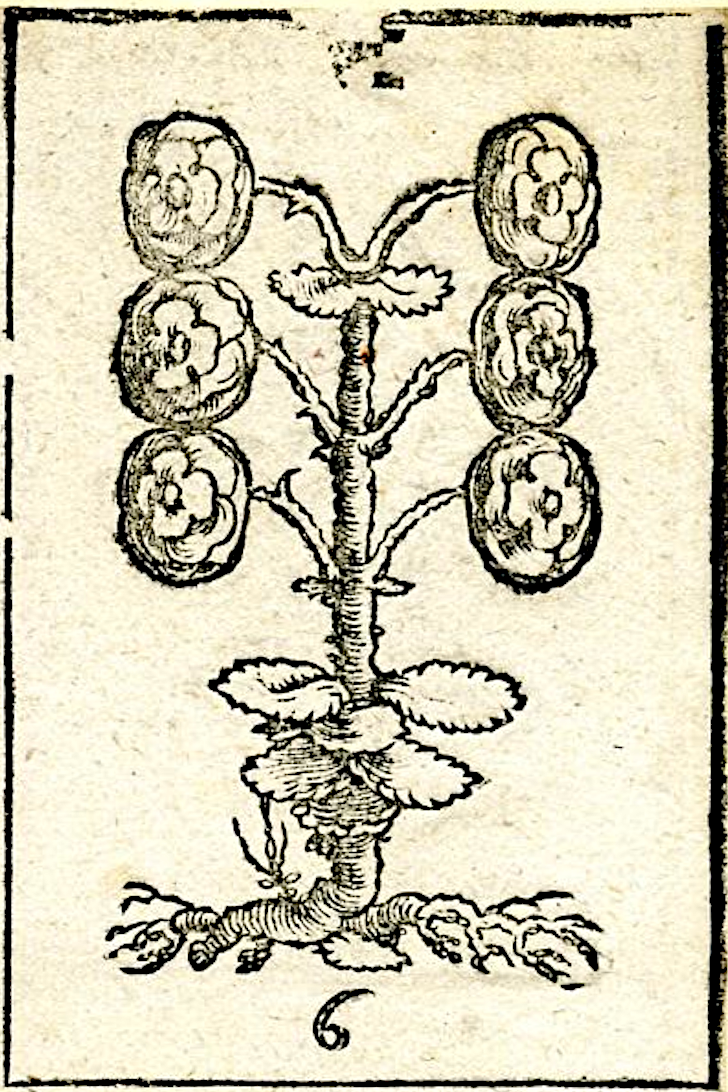 | 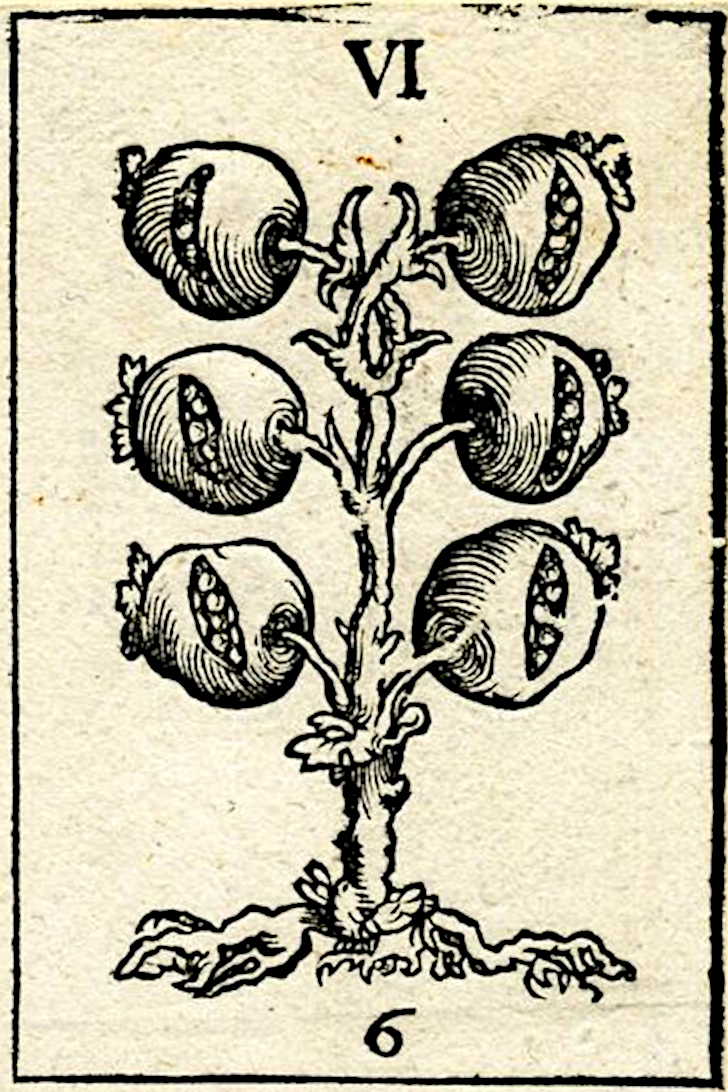 |
| 7 | 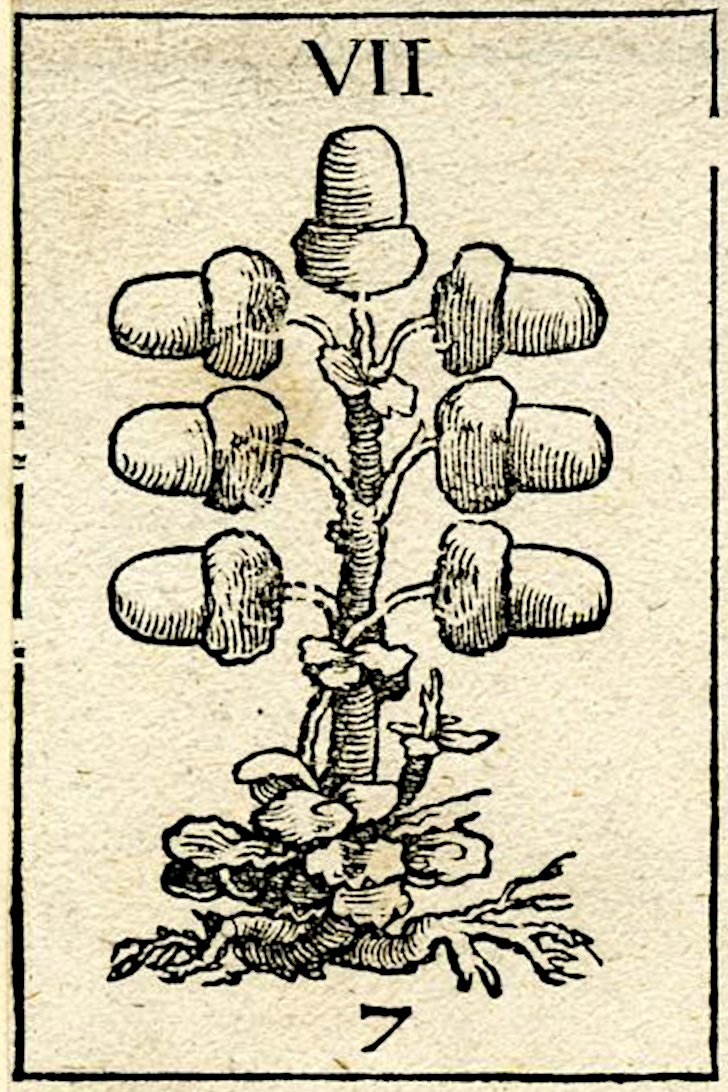 | 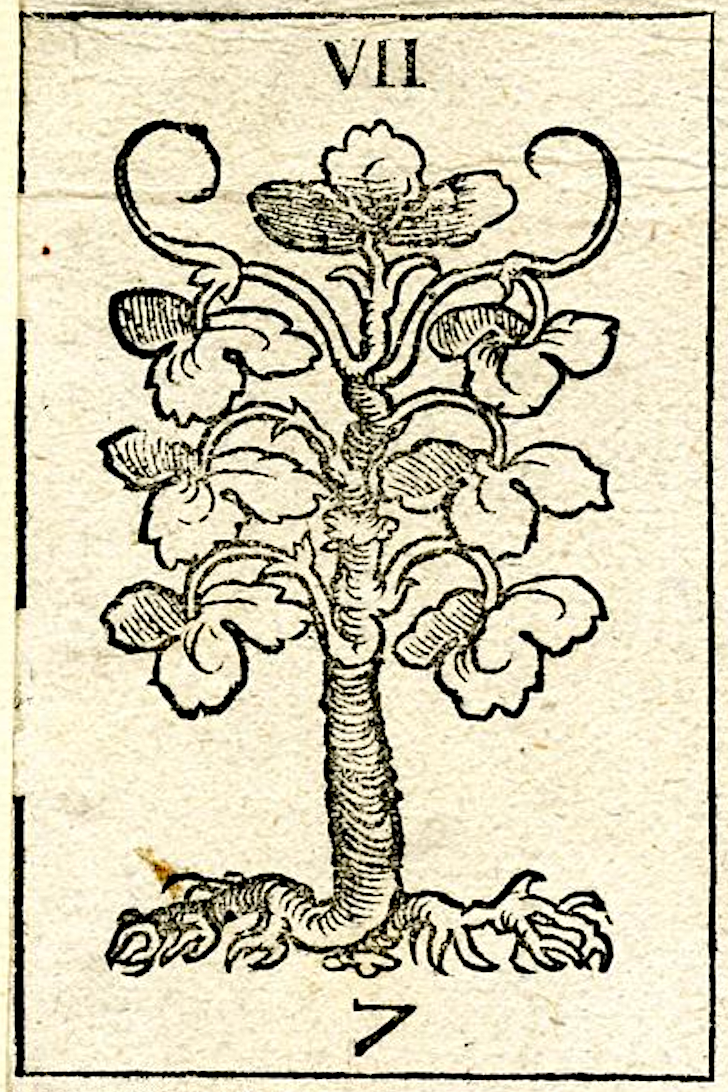 | 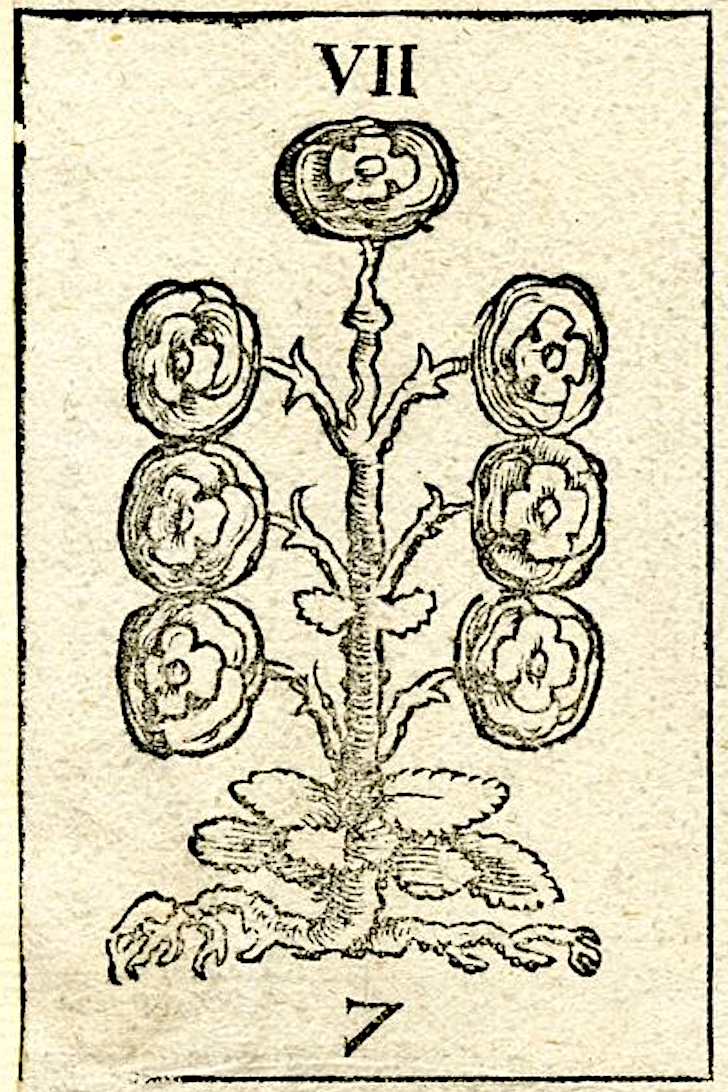 | 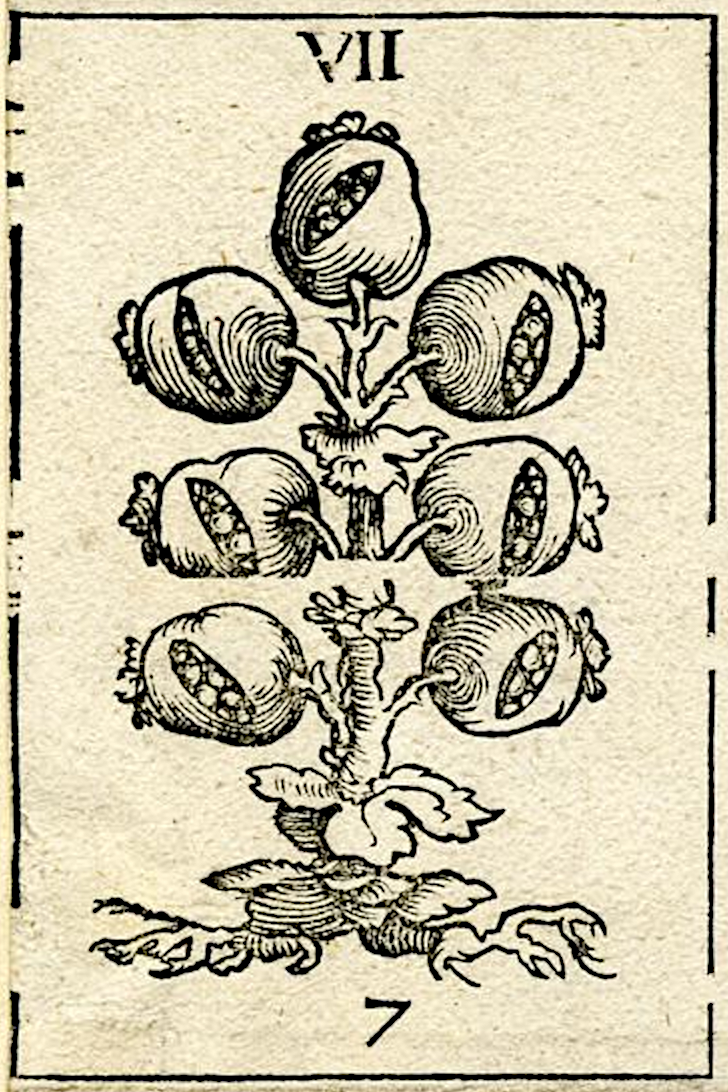 |
| 8 | 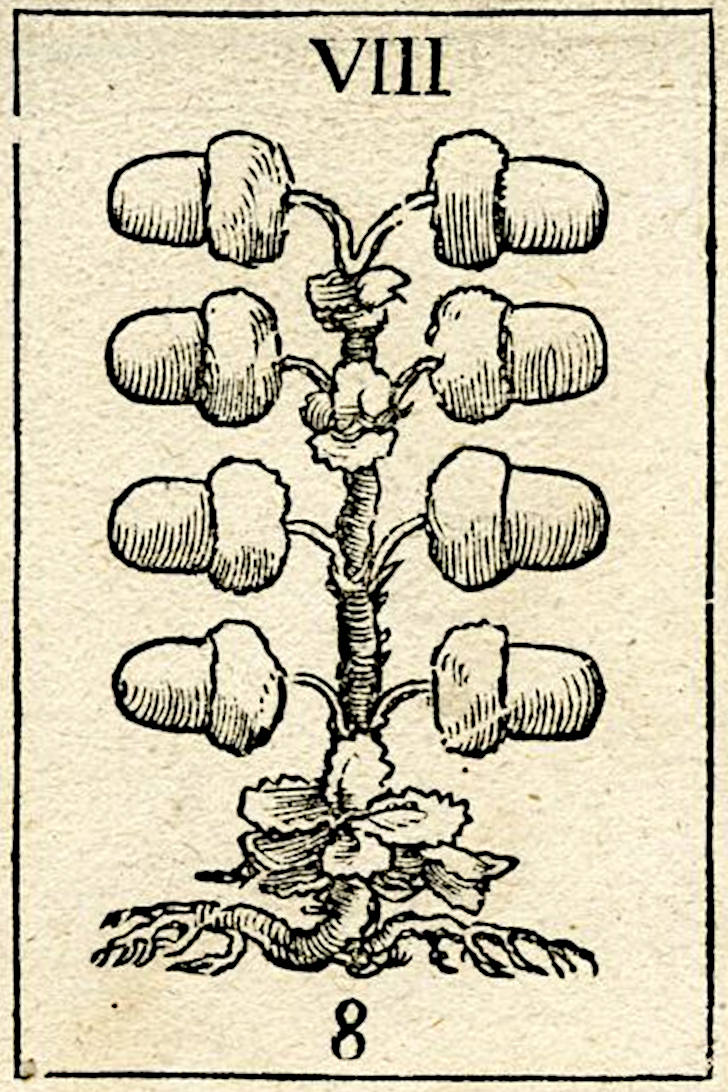 | 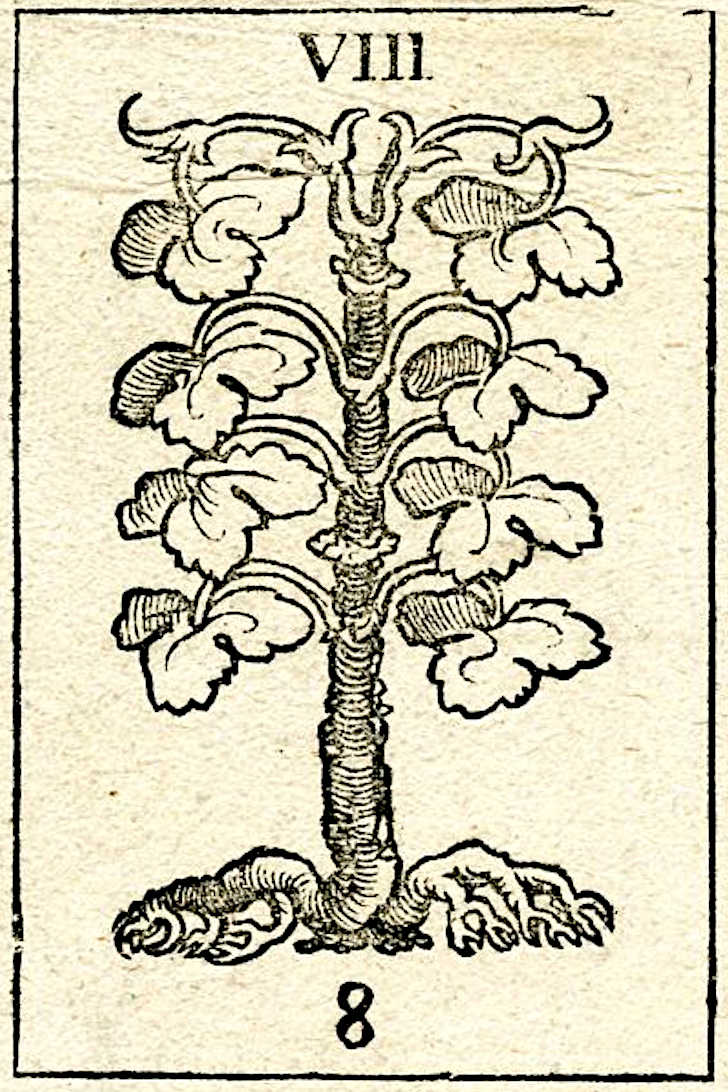 | 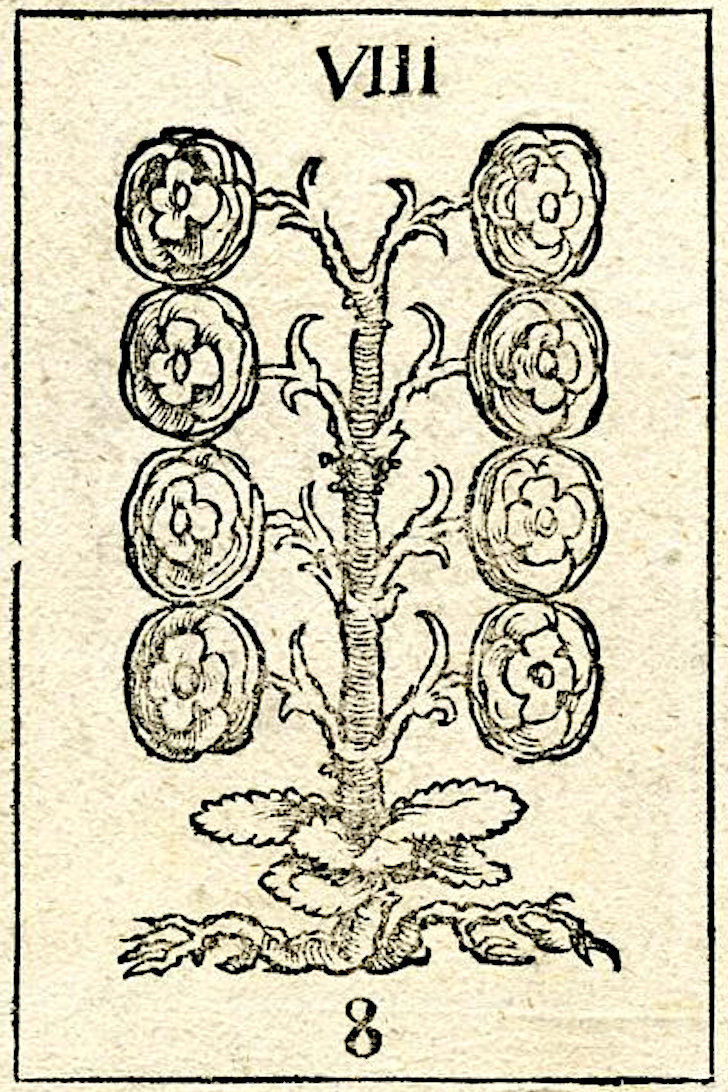 | 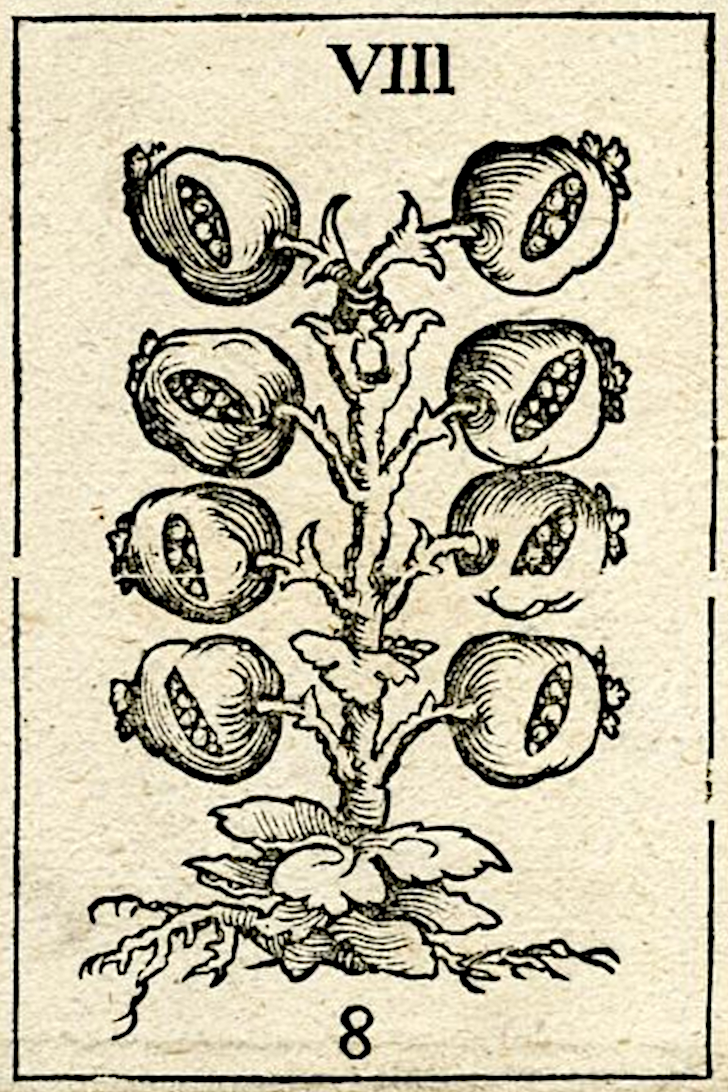 |
| 9 | 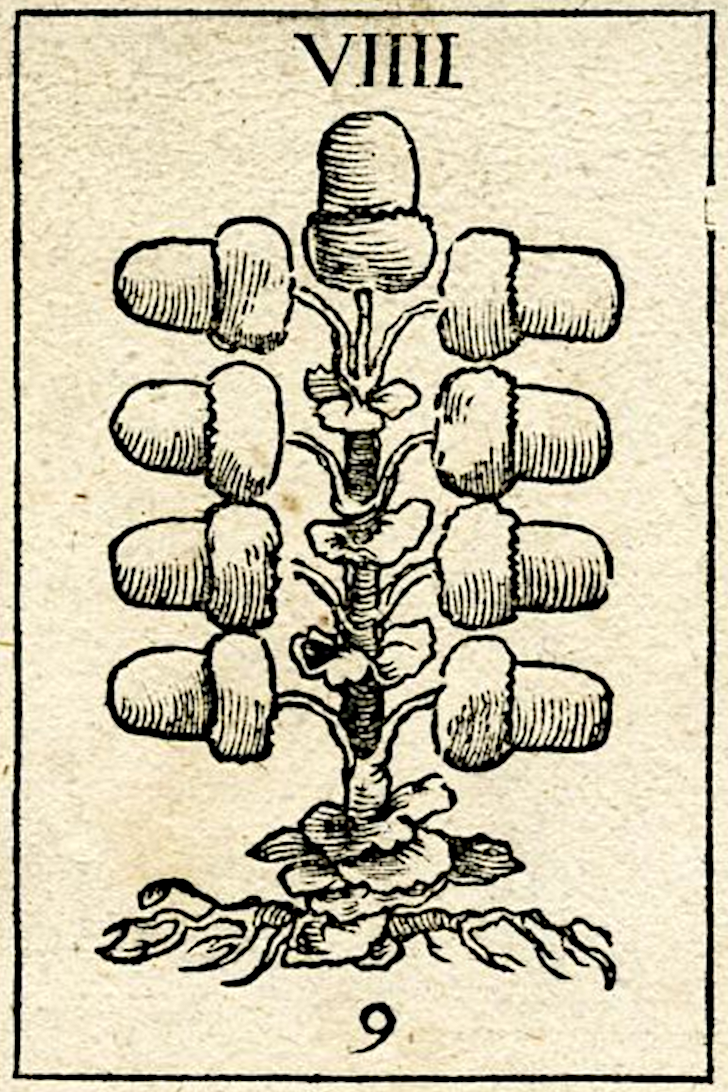 | 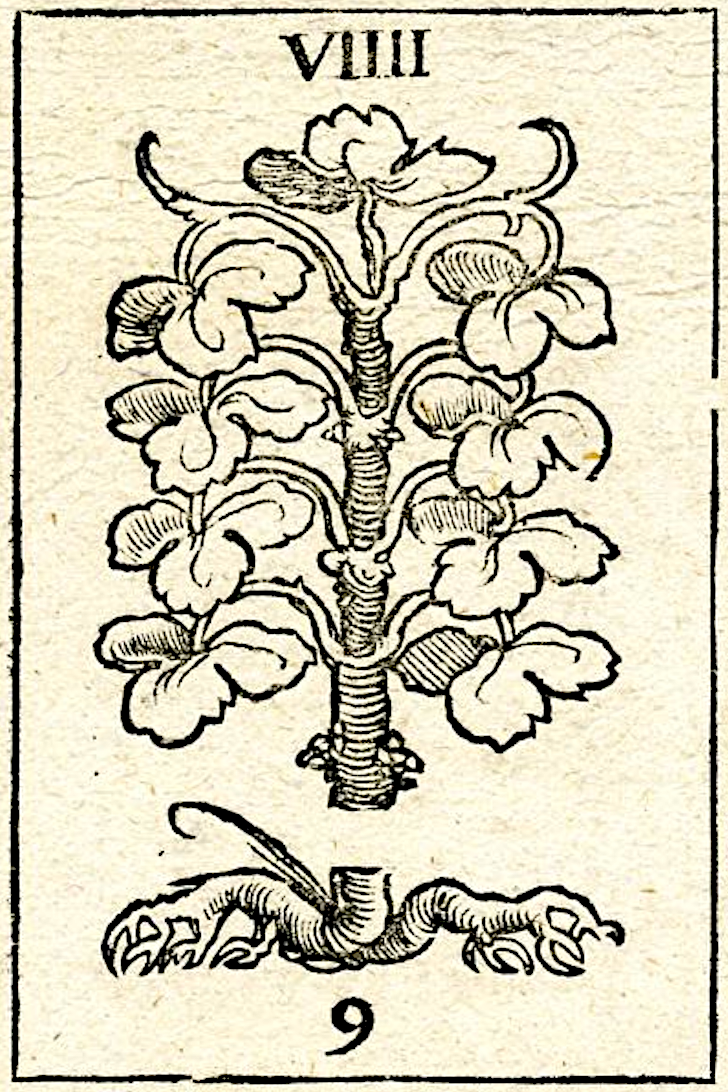 | 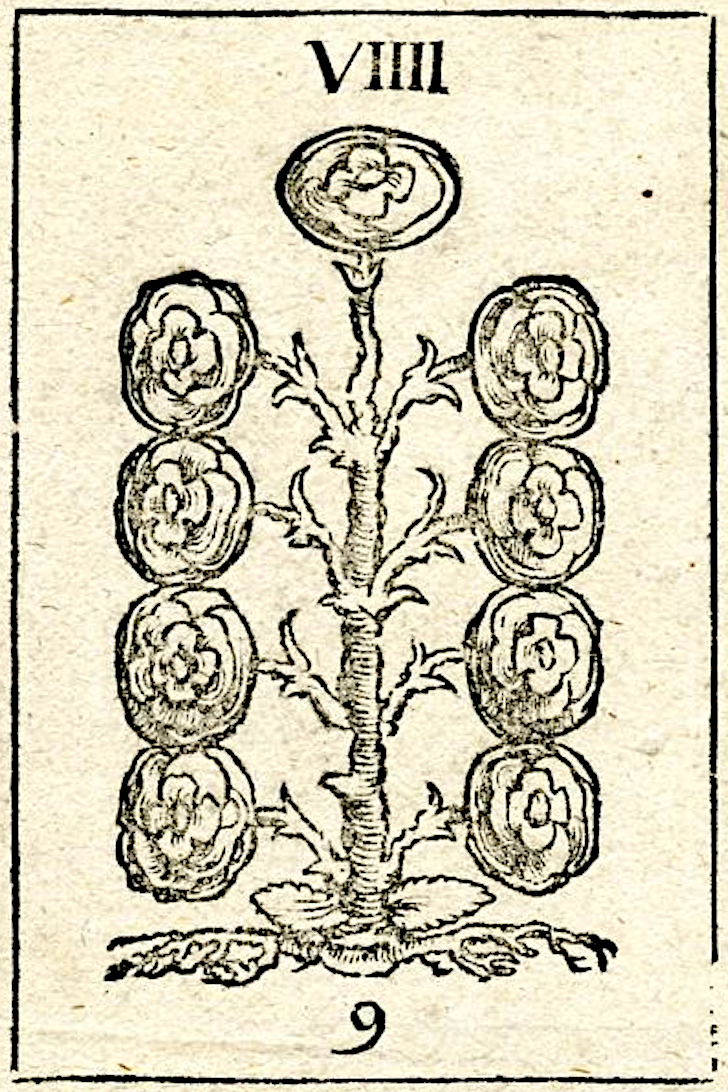 | 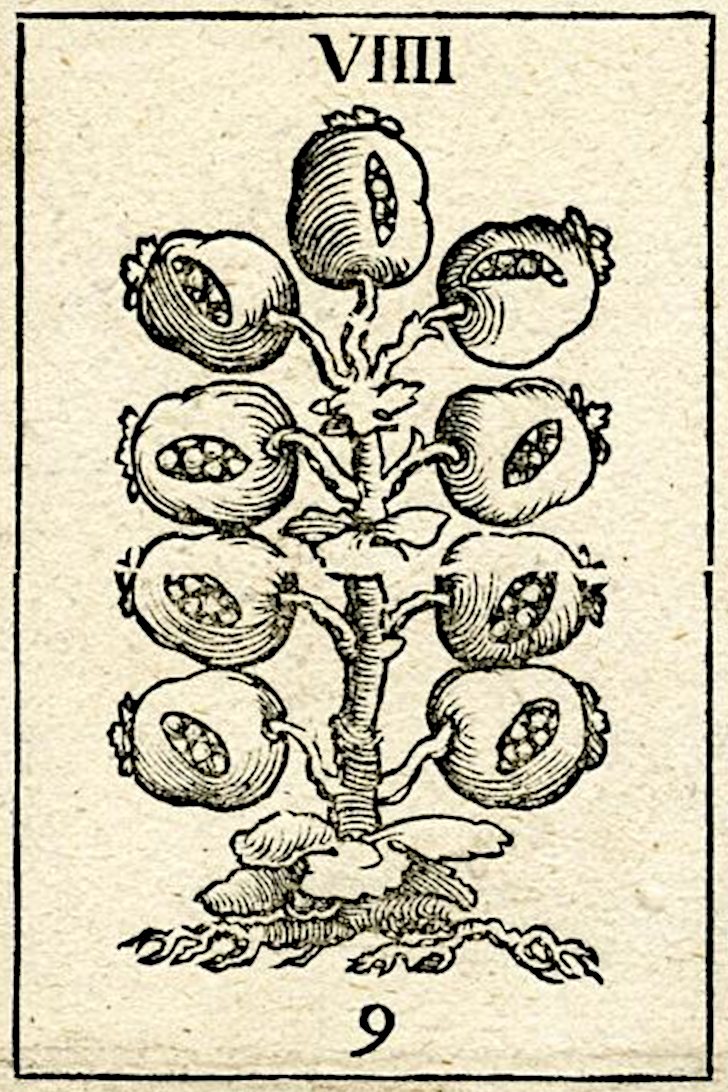 |
| 10 | 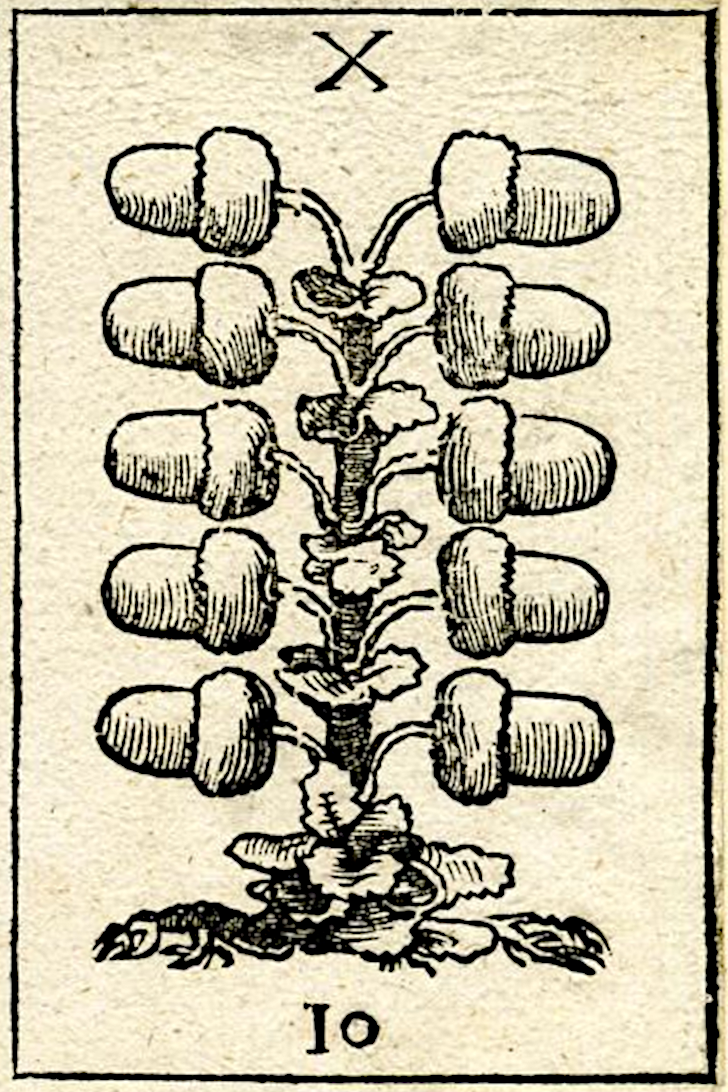 | | 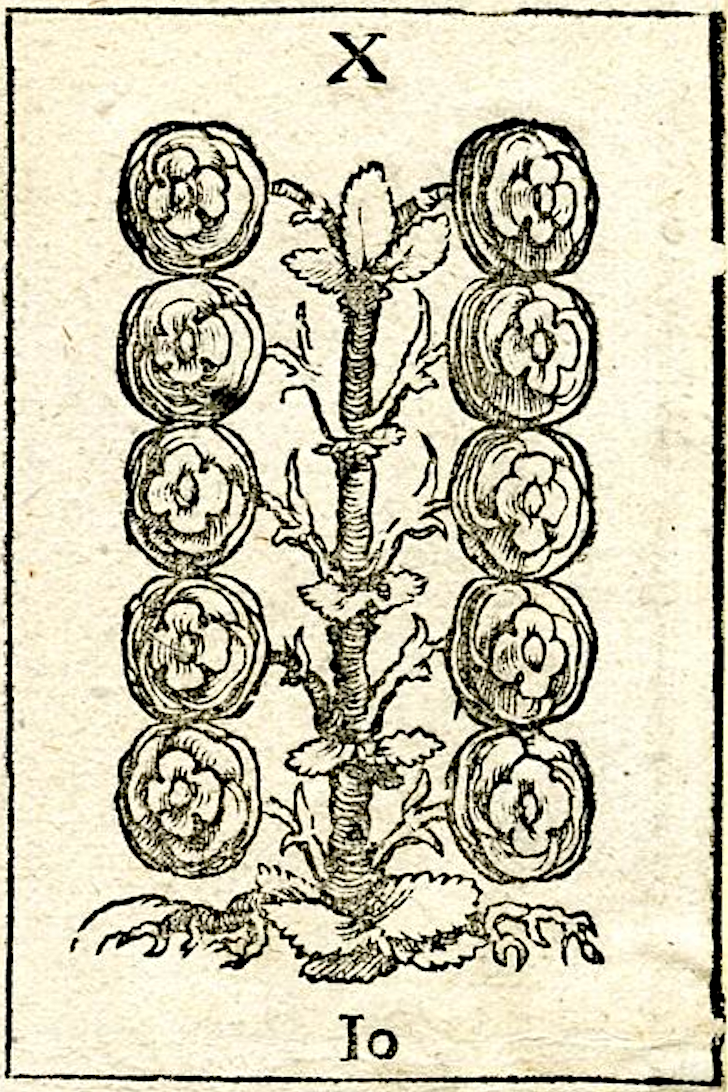 | 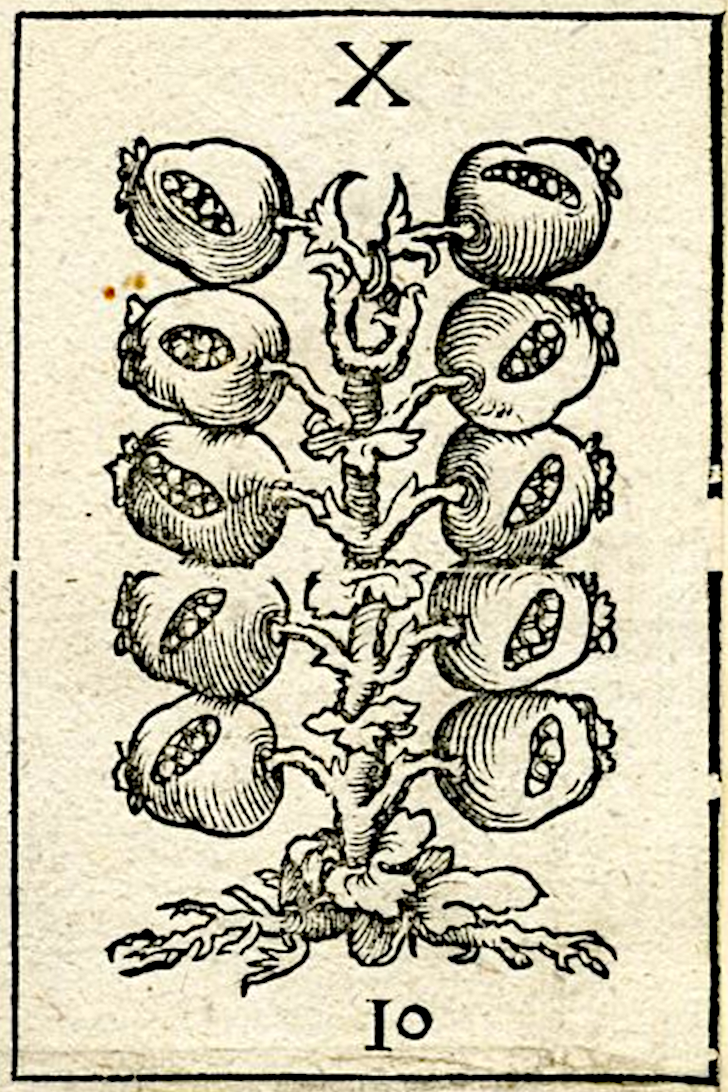 |
| Unter ❖ Under-knave | 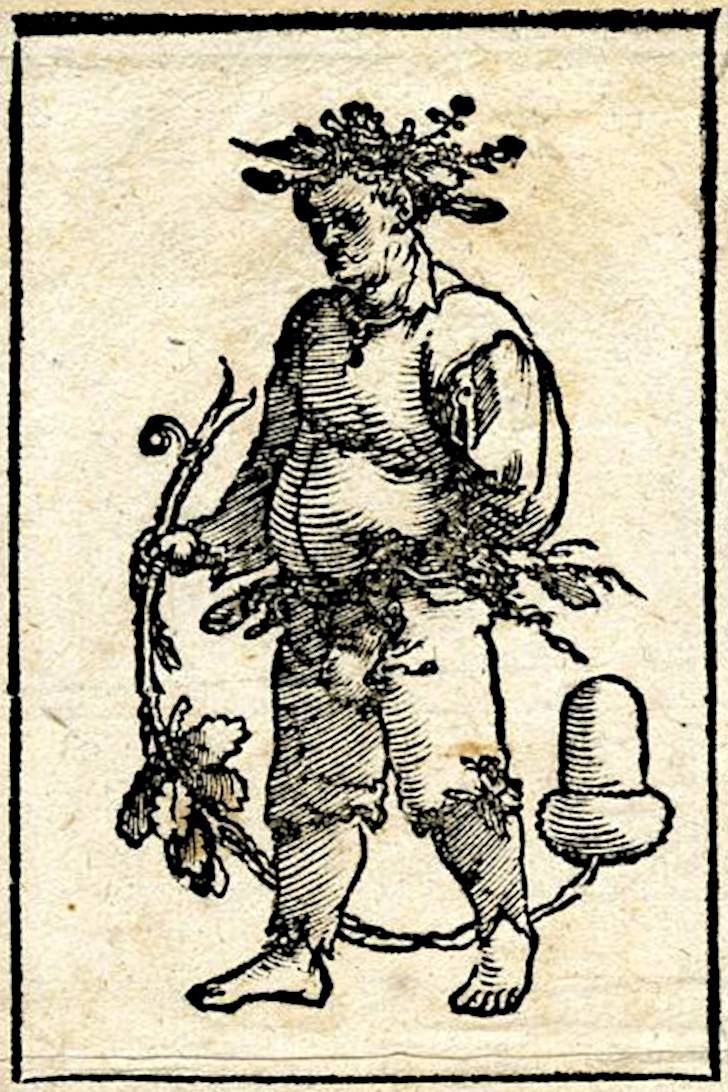 | 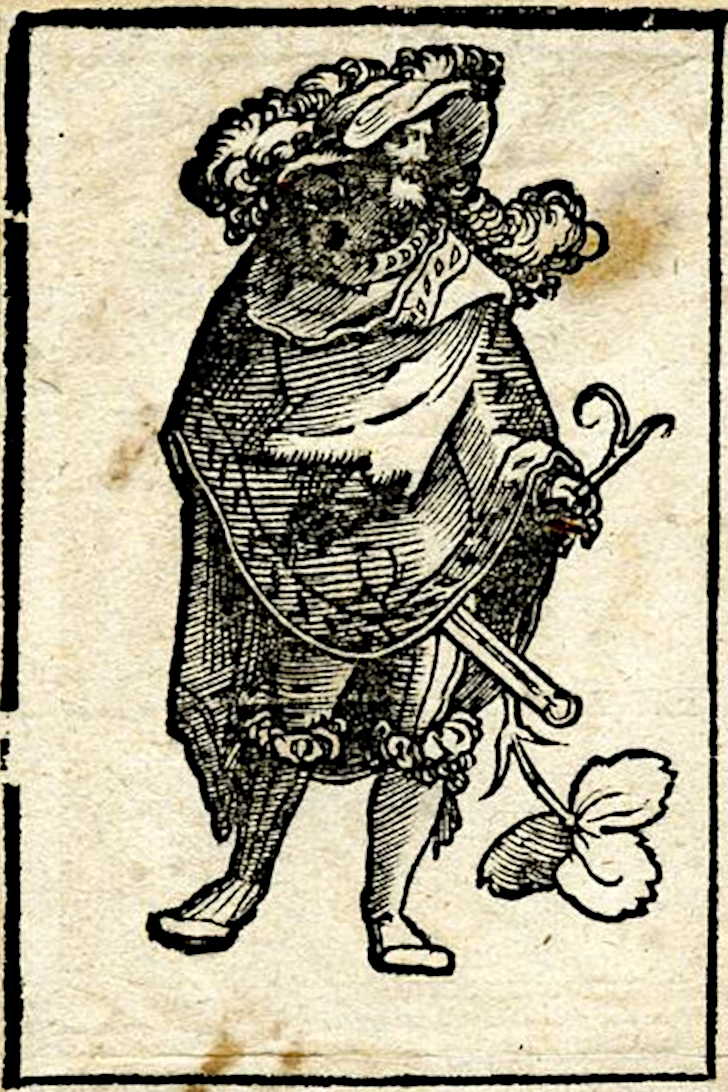 | 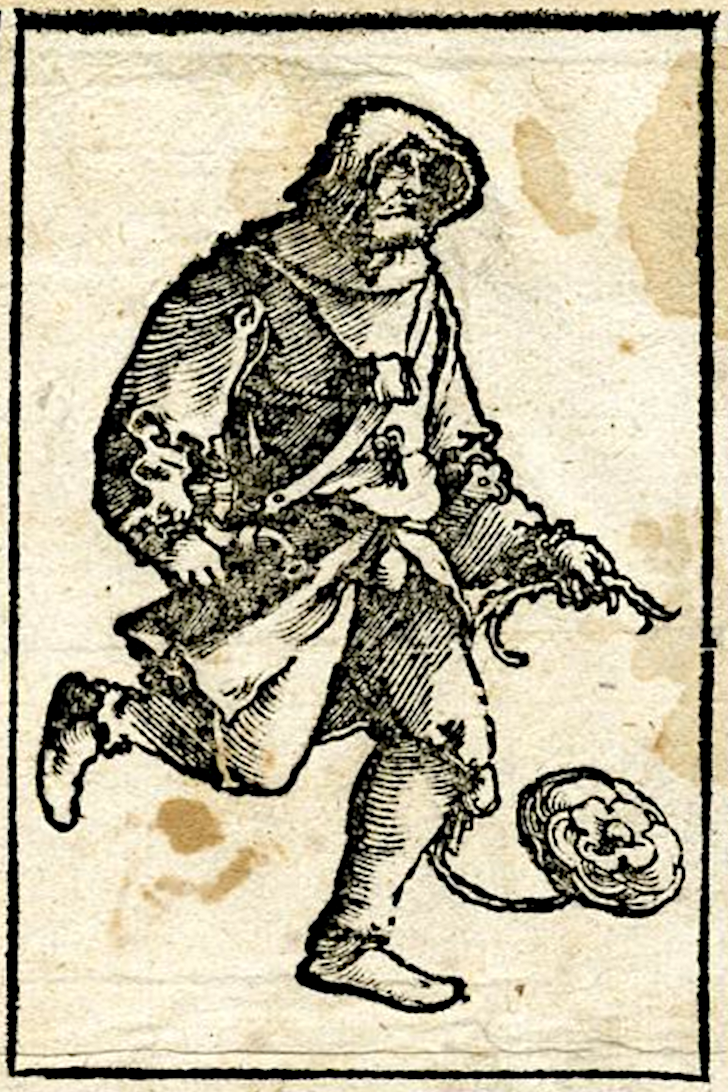 | 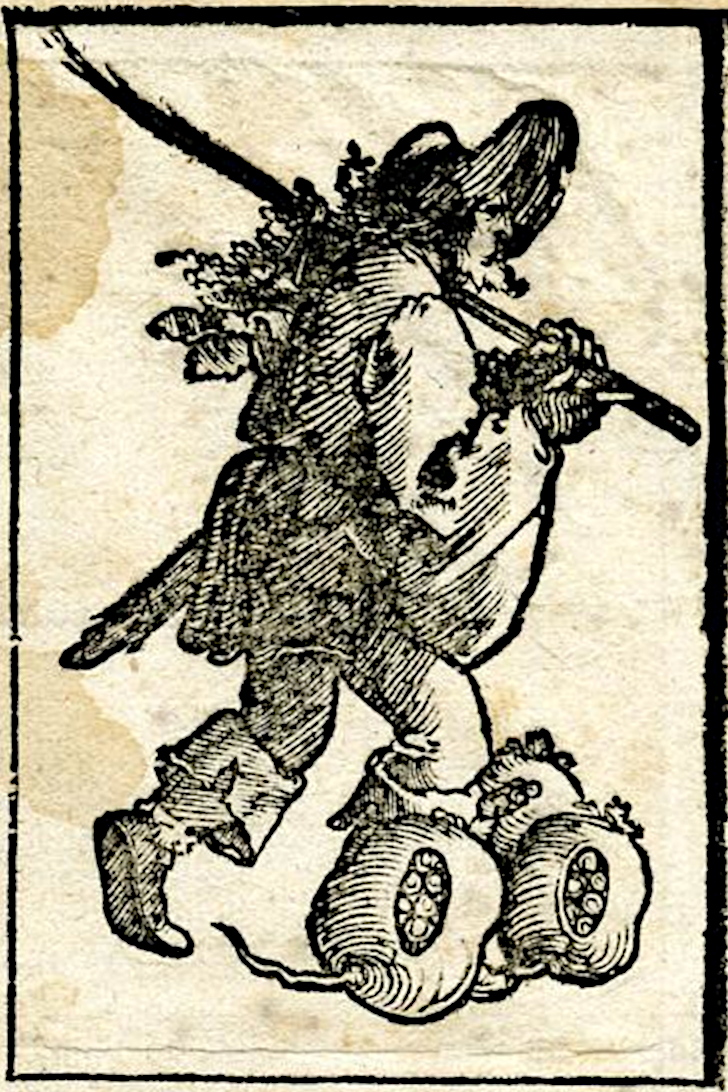 |
| Ober ❖ Over-knave | 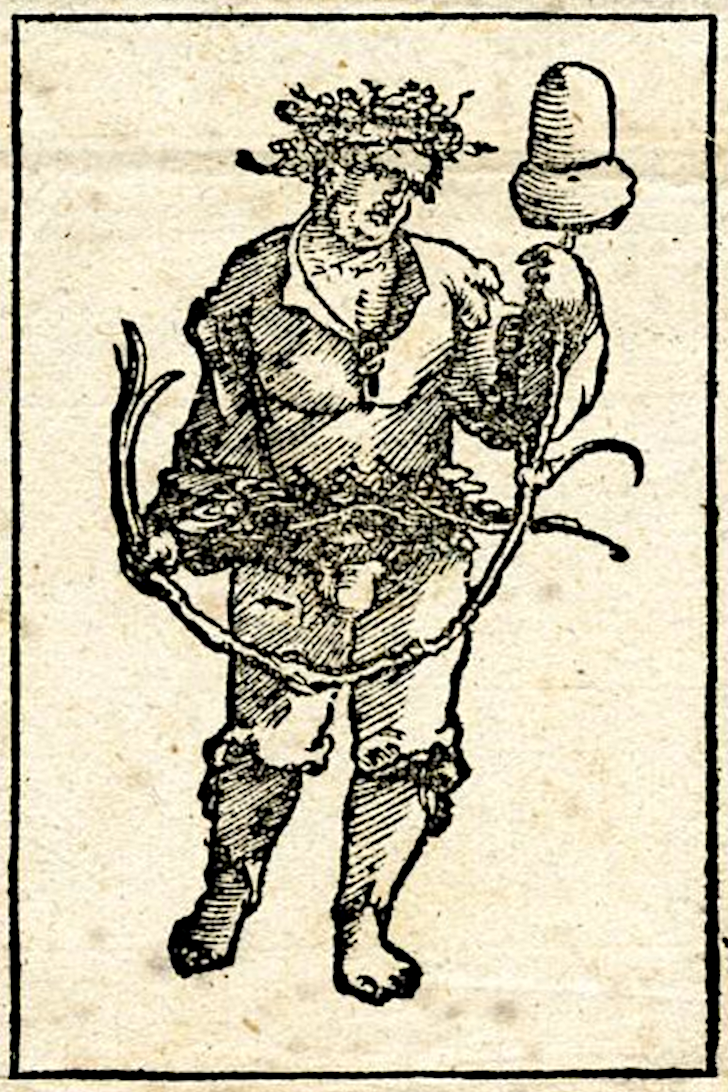 | 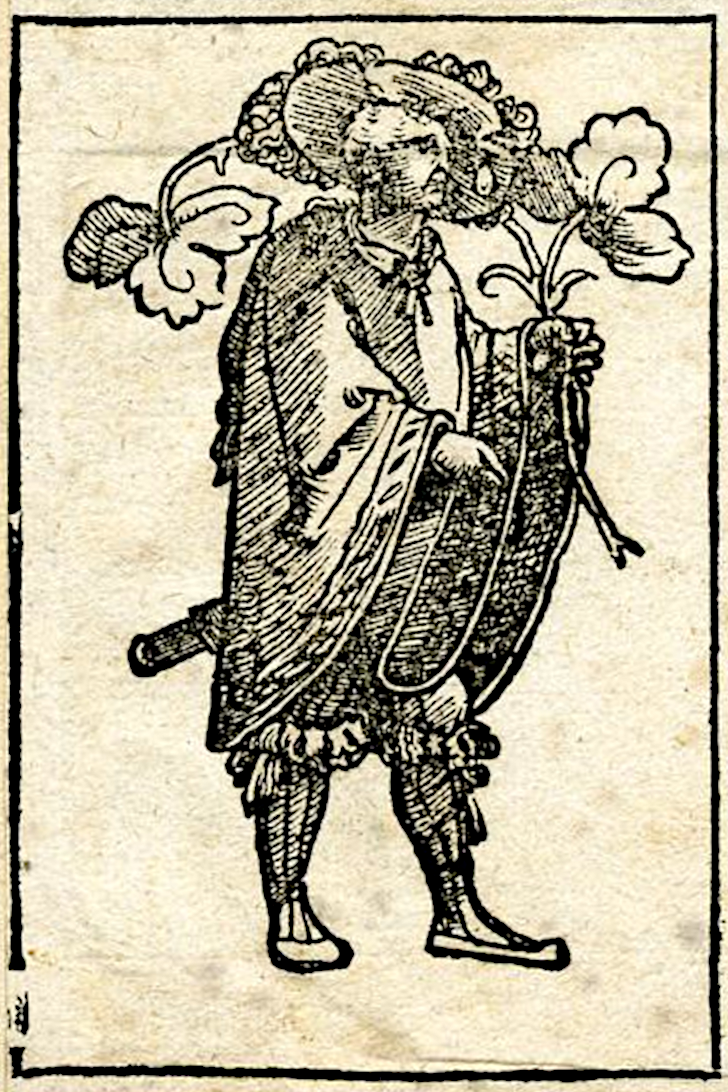 | 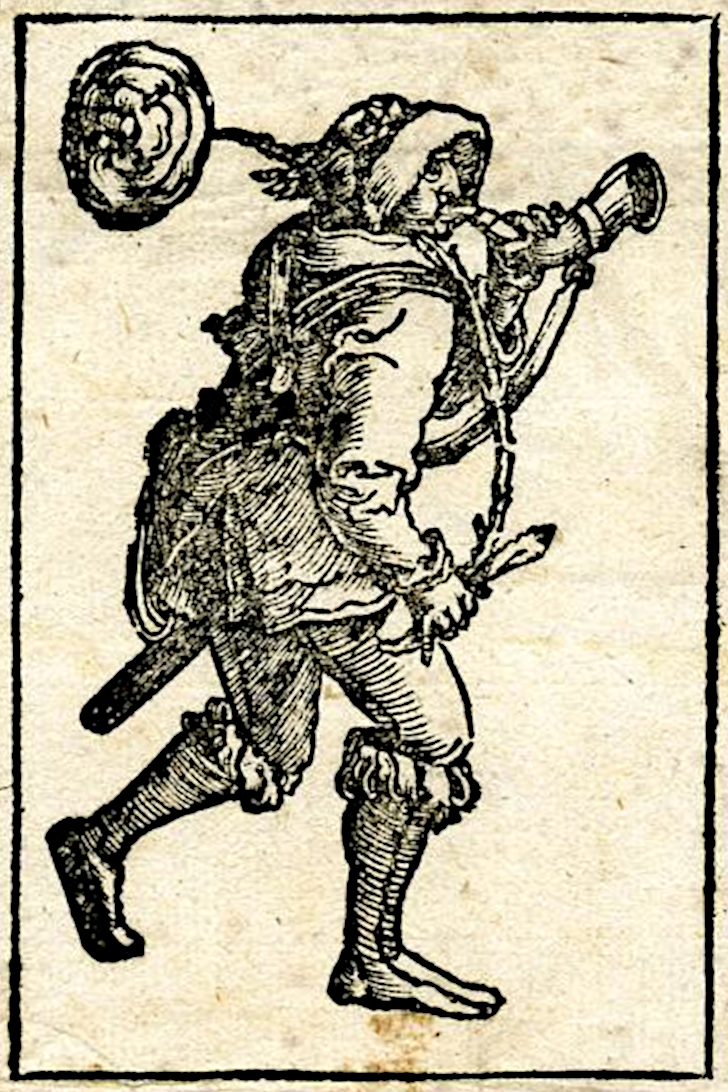 | 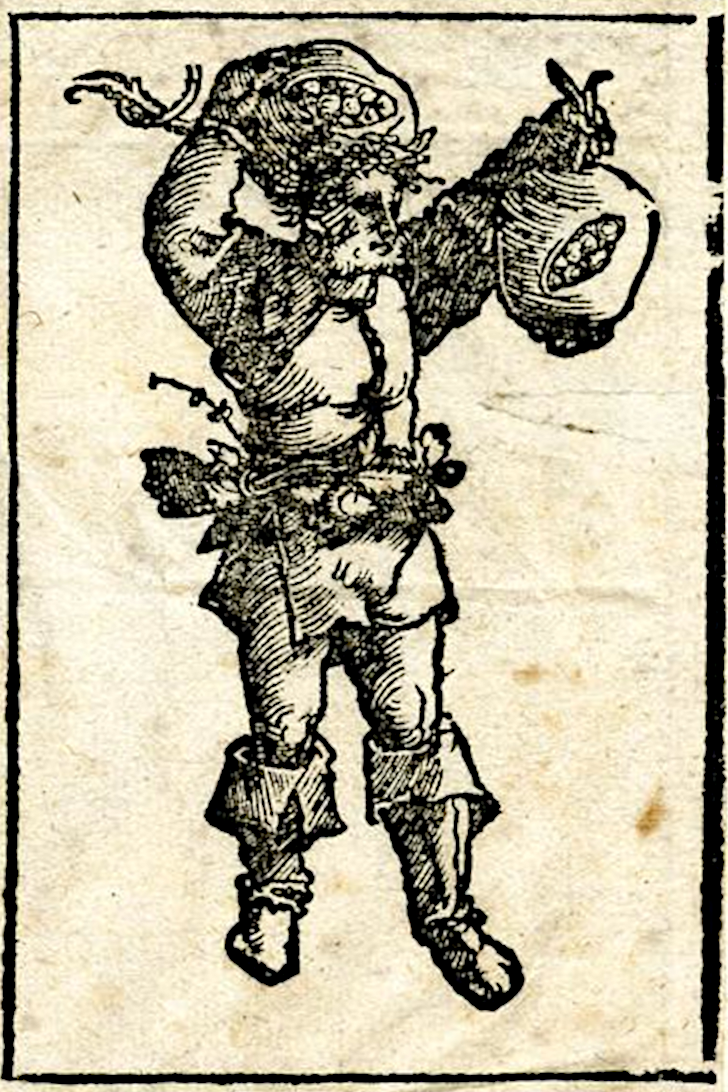 |
| König ❖ King | 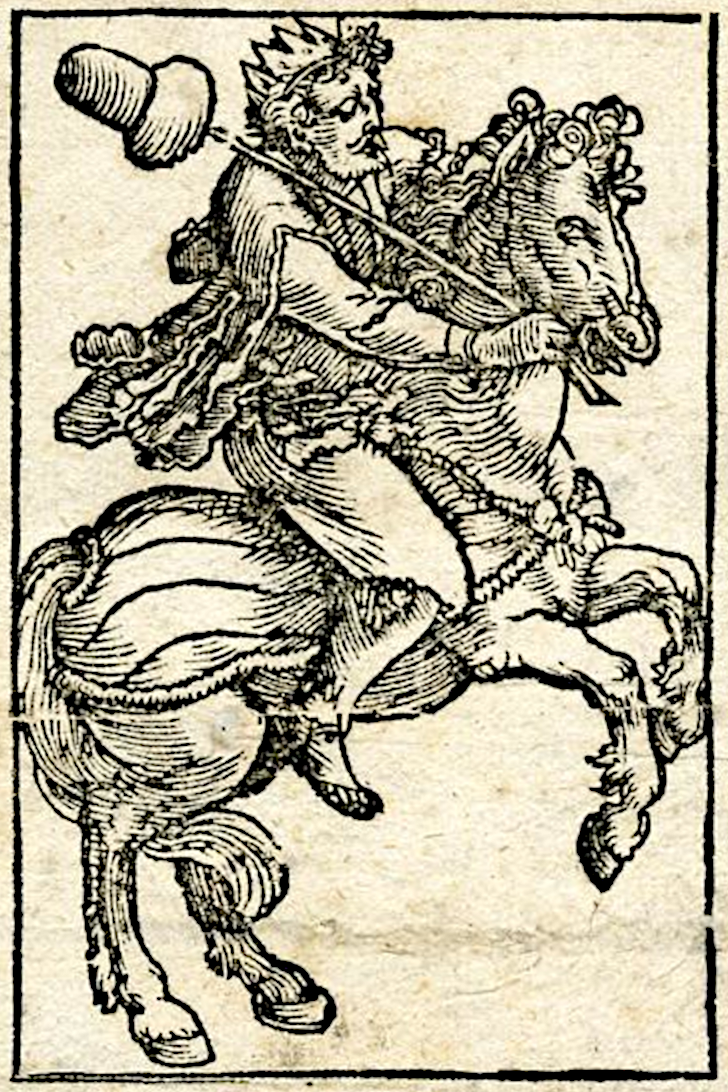 | 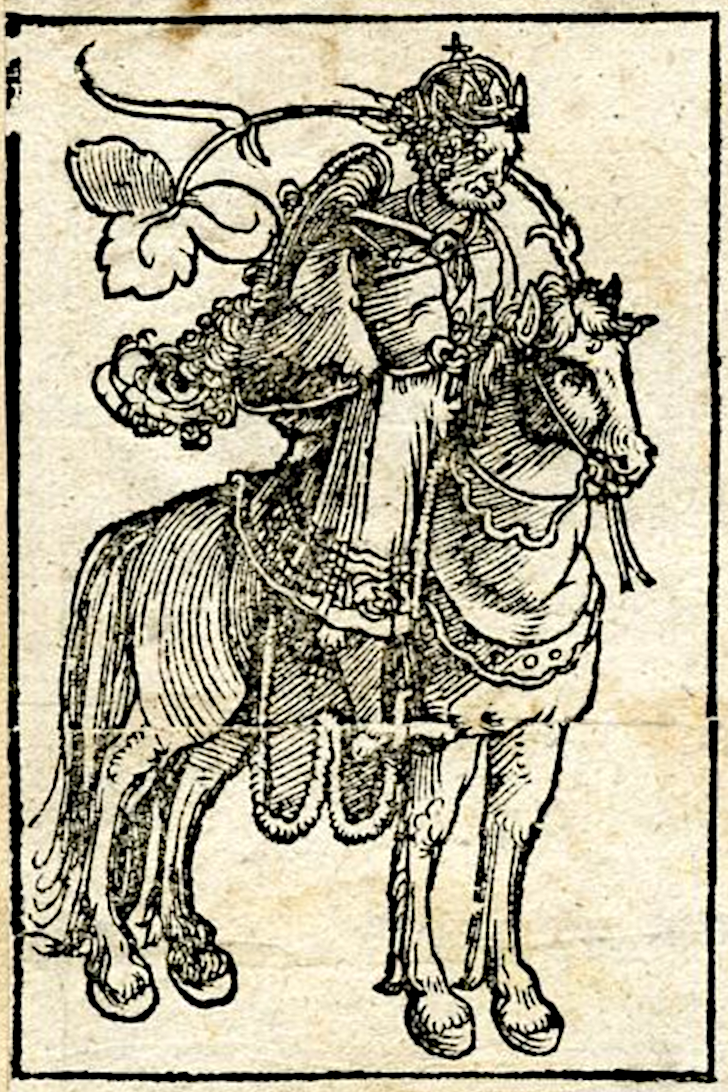 | 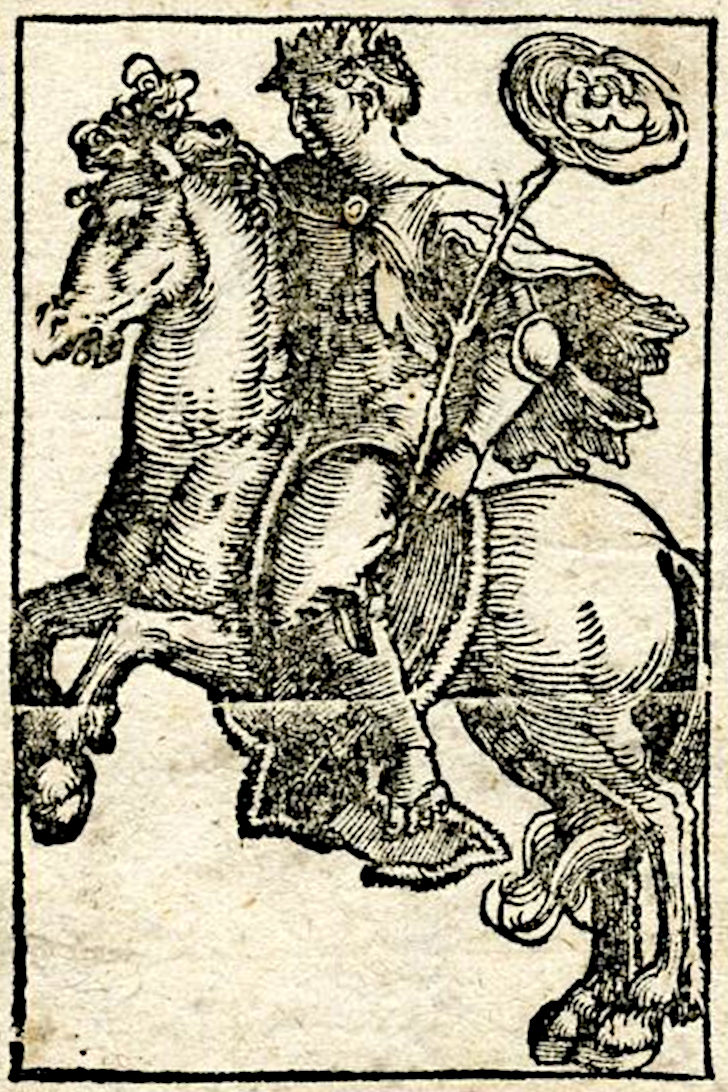 | 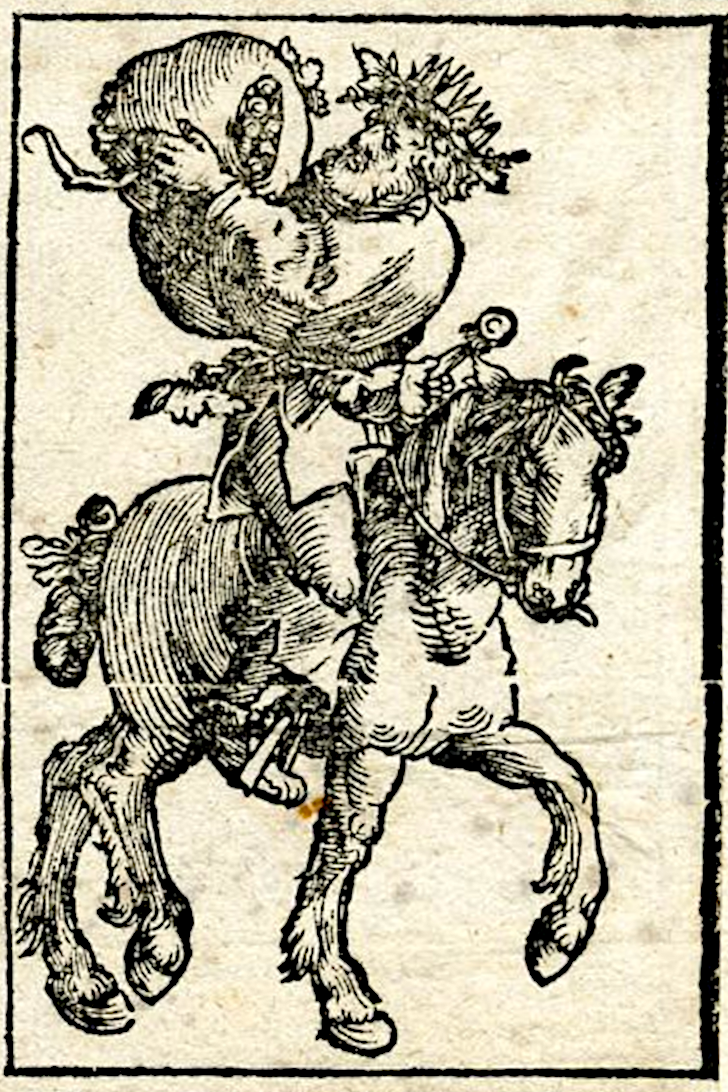 |
A more worthy successor
Not a copy, but a heavily inspired pack was made by Erhard Schön c. 1528. This maintained pomegranates, roses and the more elaborate form of leaves, but changed the sole remaining standard suit from acorns to bunches of grapes. In addition, it introduced satirical vignette scenes below the suit symbols in the pip cards, just like in the later cards by Hans Leonhard Schäufelein and Peter Flötner.
 Tor Gjerde <i@old.no>